

Diagram preview
Armando’s illustrations. Personal or Commercial use.
Diagram · For Personal or Commerial use
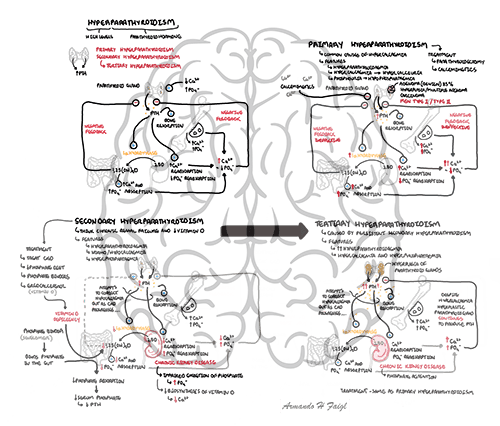
Hyperparathyroidism
Understand complex ideas with Armando’s illustrated explanations.
Download this diagram as a PDF for your own study, or choose a commercial licence to include it in your products or courses.
- Downloadable PDF for study and reference
- Personal or commercial licence to suit your needs
- One-time purchase. No subscription.
One-time payment · Downloadable PDF
About this diagram
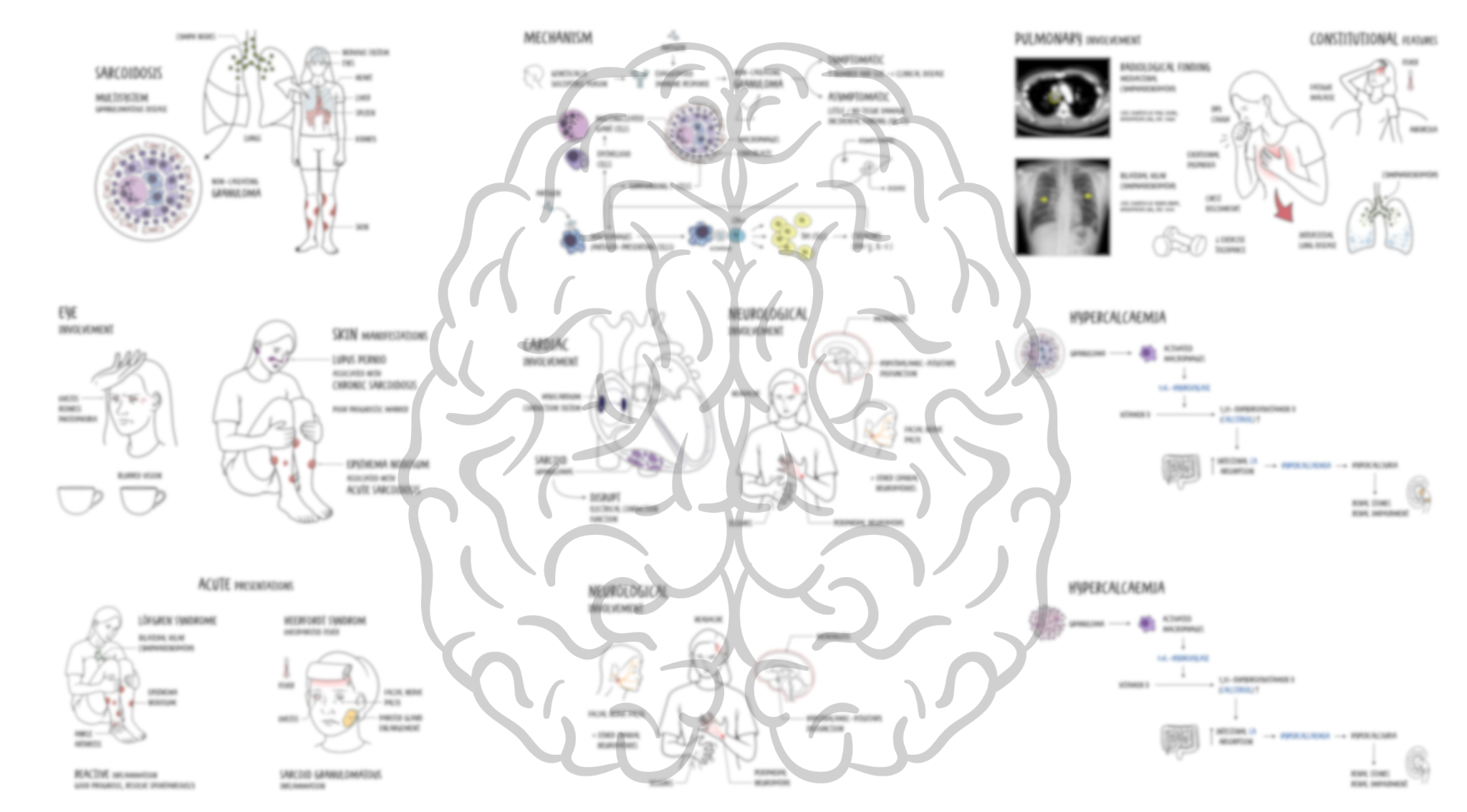
Hyperparathyroidism is a condition in which the parathyroid glands, which are small glands located in the neck, produce too much parathyroid hormone (PTH). PTH helps to regulate the levels of calcium in the body by releasing calcium from the bones and increasing its absorption from the intestine. There are two main types of hyperparathyroidism: primary and secondary. Primary hyperparathyroidism is caused by an overactive parathyroid gland, which may be due to a tumor or other abnormal growth. Secondary hyperparathyroidism is caused by a deficiency of calcium in the body, which may be due to kidney disease, malnutrition, or other conditions that affect calcium metabolism. Symptoms of hyperparathyroidism may include fatigue, weakness, bone pain, and an increased risk of fractures. In severe cases, it can lead to kidney stones and osteoporosis. Diagnosis of hyperparathyroidism typically involves a combination of blood tests to measure PTH and calcium levels and imaging tests to evaluate the parathyroid glands. Treatment may include medications to reduce PTH production or surgery to remove the overactive gland or abnormal growth. In conclusion, hyperparathyroidism is a condition in which the parathyroid glands produce too much PTH, which can lead to an imbalance of calcium in the body. There are two main types of hyperparathyroidism: primary, which is caused by an overactive parathyroid gland, and secondary, which is caused by a deficiency of calcium in the body. Symptoms may include fatigue, weakness, bone pain, and an increased risk of fractures, and it can lead to kidney stones and osteoporosis in severe cases. Treatment may involve medications or surgery to correct the underlying cause of the condition.
Good teaching keeps growing
Your purchase helps the next lesson take shape.
When you purchase Armando’s product, you support the creation of more high-quality visual content for clinical education.
Your licence
More visual lessons
Clinical education
Frequently asked questions
READY FOR YOUR NEXT LESSON
Bring this diagram into your learning or teaching.
Study the details yourself, or choose a commercial licence to include Armando’s illustrations in your products or courses.
One-time payment · Downloadable PDF
