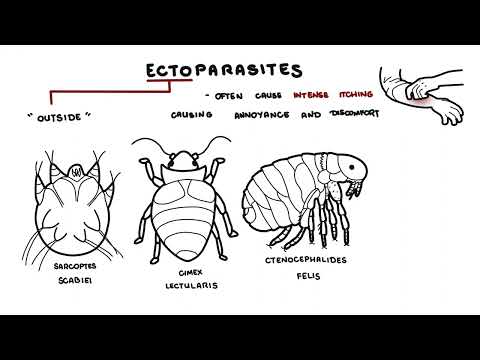
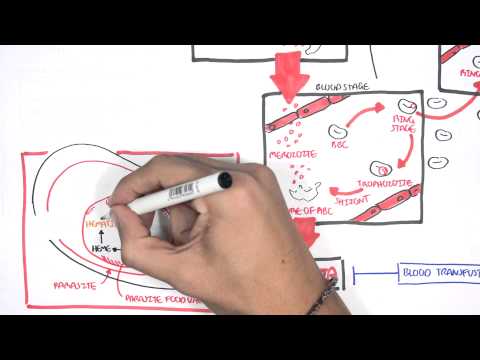
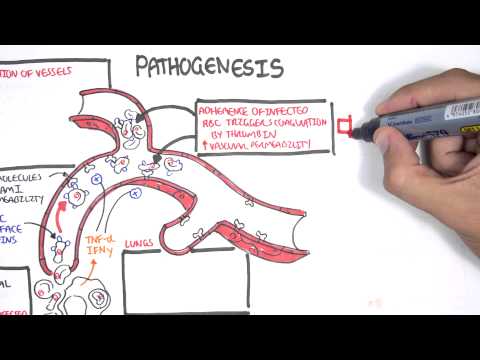
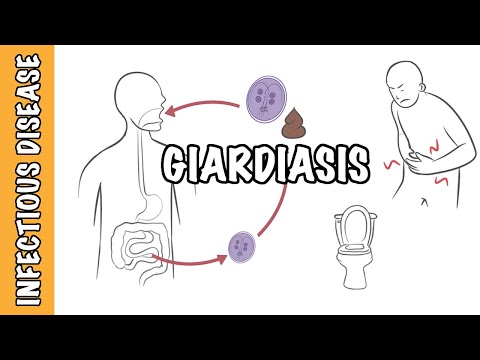
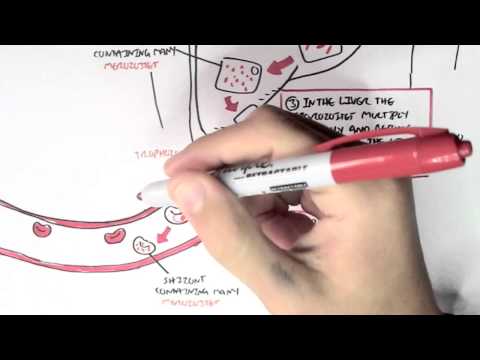
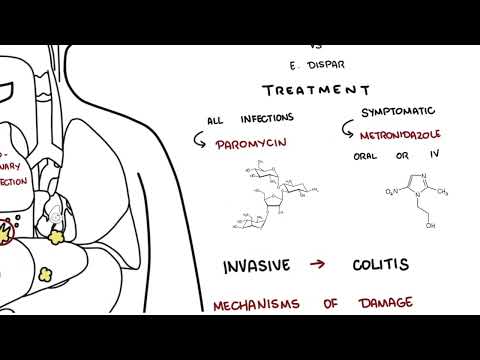
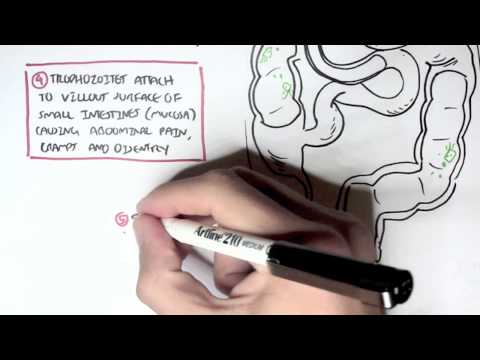
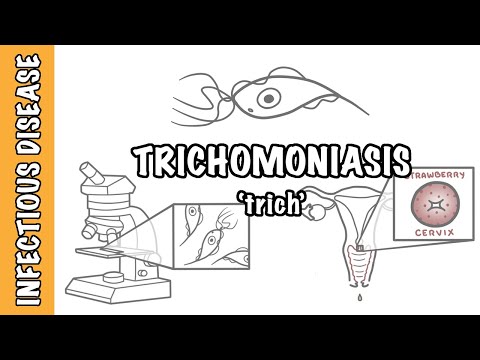
0:00 In this video, we will focus on protozoan parasites. 0:09 To recap, parasites can be divided into three main types; protozoa, helminths, 0:16 and ectoparasides. 0:21 Protozoa are single-celled eukaryotic organisms. Protozoaans are a class of " 0:29 pro-tists", 0:31 and so are other organisms such as slime molds and alga. 0:38 All these guys are unicellular eukaryotes. Protozoan comes from the Latin and 0:43 Greek 0:44 to mean "first animal", thought to be the earliest animal to have existed. All 0:51 protozoans 0:52 are eukaryotes and therefore possesses what's called a true or membrane-bound 0:57 nucleus. However, 0:59 protozoans have no cell wall. Protozoans can either be free-living or parasitic 1:07 in nature, 1:08 meaning they can live in the outside world without issues mostly in the water, 1:14 or they 1:15 can be parasitic in nature and live and infect humans. 1:21 Protozoa range in size from slightly more than 1 to more than 100 micrometers. 1:28 They 1:28 are single-celled organisms and have a true membrane-bound nucleus, but they do 1:32 not have 1:33 a cell wall as mentioned. Protozoa obtain nutrition from absorption of small 1:38 molecules, 1:39 or by ingestion of them, from the environment. They are predators preying on 1:45 bacteria, algae, 1:46 and even other protozoa species. The cytoplasm is frequently divided into the 1:52 inner endoplasm 1:53 and thin outer ectoplasm. The endoplasm contain granules, which, where they 1:59 store their foods, 2:01 the ectoplasm contains organelles, which are mainly responsible for movement. 2:08 These organelles 2:10 responsible for movement include pseudopods, cilia, or flagella. 2:21 It is the mode of movement of the protozoa that is used to help classify them 2:25 into four 2:26 groups. The amoeba, also known as the sarcodena, the flagellates, the mestigo 2:33 fora, the ciliates, 2:36 the ciliophora, and the sporozoa, the apecomplexa. Let's focus on each of these 2:43 groups and learn 2:44 a bit about their unique characteristics. Beginning with the amoeba, also known 2:54 as the 2:55 sarcodena. These guys live in freshwater, sea, or moist soil. The movement is 3:03 by pseudopodia. 3:04 They extend the cell membrane and allow the cytoplasm to flow into this 3:12 extension, 3:13 and thus they're able to move in this way. They capture their prey also by 3:20 pseudopodia through 3:21 phagocytosis, engulfing things from the outside. The reproduction is by binary 3:27 fission and they 3:28 also can form cysts. An example of a pathogenic amoeba is intameba histolytica. 3:41 Intameba histolytica 3:43 is a major cause of amoebic dysentery, severe diarrhea worldwide. The cysts and 3:49 trophozoites are 3:50 ingested in humans from fecally contaminated food, water, or hands, or from fec 3:57 al contact during 3:59 sexual practices. The cysts and trophozoites travel to the large intestine. 4:04 Here they can remain, 4:06 causing diarrhea and colitis. They can also be pooped out, or rarely they can 4:14 invade the bloodstream 4:16 and travel to other organs such as the brain, liver, and lungs. 4:21 The next group of protozoan parasites are the flagellates, the mastigophora. 4:30 As the name suggests, they have flagella that help them with movement. Their 4:36 body is covered by 4:38 something called "curgical" or "pelical". Their oval in shape and reproduction 4:44 is again by binary 4:45 fission. Some examples of pathogenic flagellates include tripanosoma, Giardia, 4:52 Lishmania, and trichomonas. 5:00 Tripanosoma cruis is a transmitted by triatamine bugs and causes chaga's 5:06 disease, 5:06 a condition characterized by heart and gastrointestinal lesions in a chronic 5:12 phase of this disease. 5:13 Giardia-Lamblia causes Giardiasis. The cysts of Giardia-Lamblia are ingested 5:20 from contaminated 5:21 water, food, or fomites, and travel in the small intestine where they become tr 5:26 ifozoids. At this 5:27 stage, they attach this small intestine and cause watery diarrhea. 5:31 Lishmania, transmitted by sandflies, can cause lishmaniasis. Clinical 5:43 manifestations range from 5:45 self-limiting skin ulcers, known as oriental sores, to a highly lethal 5:50 infection of the 5:52 reticular endothelial system, termed kala azar. Trichomonas is a very common 6:00 cause of sexual 6:01 transmitted infections, specifically through trichomonas vaginalis, and there's 6:07 a separate video on this. 6:09 The third group of protozoan parasites are the ciliates, the ciliophora. They 6:20 derive their name 6:21 from the Latin word for eyelash, which describes the appearance of many cili 6:25 ates quite well. 6:26 Some, or all the surface of the ciliate is covered with relatively short, dense 6:32 hair-like 6:32 structures, the cilia, which beat to propel the ciliate through the water, and/ 6:38 or to draw in food 6:40 prodigals. They are aquatic. They are abundant in almost every environment with 6:46 liquid water, 6:47 the ocean, marine sediments, lakes, ponds, rivers. 6:50 Examples of a pathogenic ciliate is balsantidium coli. It is the only ciliate 7:05 known to be capable 7:06 of infecting humans. It is often associated with swine, the pig, as the primary 7:12 reservoir host. 7:14 The cysts of balsantidium coli are ingested through contaminated food and water 7:19 . 7:19 They become trapezoids and colonize the large intestine. They replicate through 7:25 binary vision. 7:25 They can cause acute or chronic abdominal pain or symptoms complicated by 7:32 diarrhea or dysentery. 7:39 Finally, the fourth group are the sporozoae, the AP complexa. These guys don't 7:46 have any 7:46 specialized organelles for locomotion. They are non-motile protozoae. Examples 7:54 include plasmodium, 7:55 which is the cause of malaria and requires the anophilus mosquito for 7:59 transmission. 8:00 Toxoplasma gondi is a non-motile sporozoan that is carried by cats. 8:08 It has a serious effect in immunocompromised people and can cause congenital 8:13 defects. 8:13 Cryptosporidium and microsporidium causes chronic diarrhea also in immunocomp 8:19 romised people. 8:20 So in summary, protozoan are a type of unicellular eukaryotes, which are known 8:34 to be one of the first 8:35 living animals in the world. They are eukaryotic because they have a true 8:40 membrane-bound nucleus, 8:41 however they have no cell wall. They are classified into groups based on how 8:46 they move. 8:47 These are four groups, the meba, flagellate, ciliates and the sporozoae, which 8:53 are actually 8:53 non-motile. Thank you for watching. 9:05 [ sub by sk cn2 ]