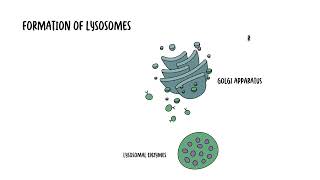
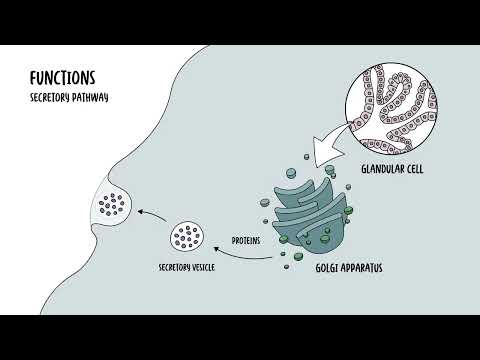
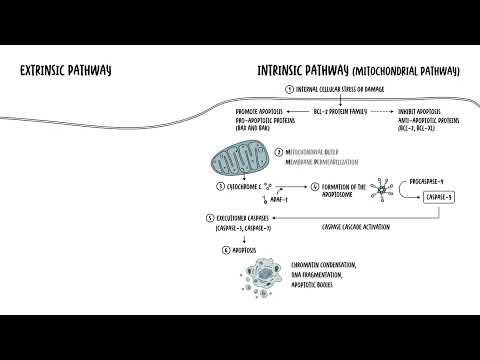
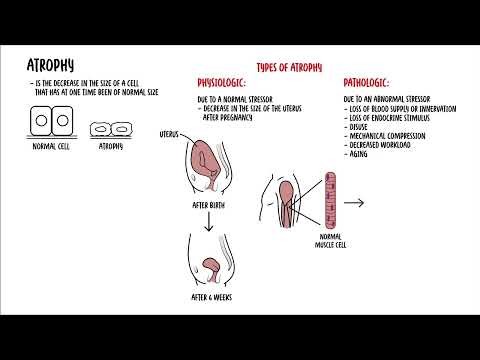
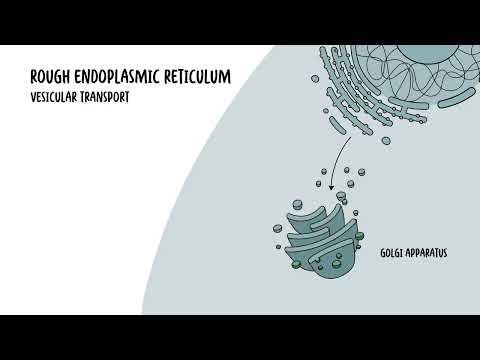
0:00 Lysosomes are membrane-bound organelles that serve as a cell's digestive system 0:16 , playing 0:16 a vital role in breaking down and recycling cellular waste, damaged organelles 0:23 and macromolecules. 0:25 Inspired by Belgian biochemist Christian Vadouv in 1955, Lysosomes are critical 0:33 in cellular 0:34 homeostasis and survival, particularly because they help in the removal, again 0:40 of damaged 0:41 cellular components and the recycling of essential nutrients as well. 0:49 Let's talk about the structure of the Lysosomes. 0:55 So Lysosomes are spherical vesicles. 0:58 They contain a variety of hydrolytic enzymes, so digestive enzymes, capable of 1:04 breaking 1:05 down biomolecules including proteins, lipids, carbohydrates and nucleic acids. 1:13 These enzymes are active under acidic conditions, with an optimal pH of around 1:20 5.5 to 5. 1:22 This acidic environment is maintained by the proton pups, the V-type ATPases, 1:28 located 1:29 in the Lysosomal membrane, which really actively transports hydrogen ions from 1:36 the cytosol 1:37 into the Lysosome, making it acidic. 1:41 The Lysosomal membrane is a lipid bilayer that contains specialized proteins 1:47 responsible 1:48 for maintaining its integrity, allowing selective transport of breakdown 1:53 products and also electrolytes 1:55 as well and it also helps protect the cell itself from accidental leakage of 2:01 the digestive 2:02 enzymes. 2:03 So you can imagine if the acidic environment from the Lysosomes stills out, 2:07 that can be 2:08 devastating for the actual cell. 2:16 The Lysosomes contain a variety of enzymes, including proteases which break 2:22 down proteins 2:23 to amino acids, lipases which hydrolyse lipids into fatty acids and glycerol, 2:31 glycosidases 2:32 which basically degrade carbohydrates into monosaccharides, nucleases which 2:38 digest nucleic 2:40 acids including DNA and RNA. 2:43 These enzymes function optimally in the acidic environment of the Lysosomes, 2:47 which is an 2:47 important safety mechanism to prevent accidental damage to the cell in case Lys 2:54 osomal enzymes 2:55 leak into the cytoplasm itself. 2:59 And if they delink into the cytoplasm, the enzymes will be less active. 3:04 But again, the acidic environment of the Lysosome is not a good thing for the 3:14 cell. 3:15 So how are Lysosomes formed? 3:18 So we know the brief structure and the enzymes that are found within the Lysos 3:22 omes, but how 3:23 are they actually formed? 3:24 Well, Lysosomes are formed by the Golgi apparatus, which supplies all the 3:31 necessary enzymes 3:32 and membrane components. 3:34 The actual hydrolytic enzymes that digest have enzymes, they are synthesized in 3:39 the rough 3:39 endoplasmic reticulum, because they are proteins. 3:43 Then they are brought to the Golgi apparatus, where they are modified, and 3:47 tagged with manose 3:48 six phosphate, this tag serves as a signal to direct them to form Lysosomes. 3:57 Lysosomes are formed through a process called maturation, where essentially 4:01 late endosomes 4:02 or just endosomes, which contain debris or whatnot, they will fuse with the ves 4:09 icles containing 4:11 the digestive enzymes containing the hydrolytic enzymes from the Golgi 4:16 apparatus. 4:17 Ultimately, creating a fully functional Lysosome. 4:27 So what are the functions of the Lysosomes? 4:29 They play an essential role in a variety of things. 4:33 But the major functions include intracellular digestion. 4:39 Lysosomes break down cellular macromolecules, such as proteins, lipids, 4:44 carbohydrates and 4:45 nucleic acids, and they break them down into their building blocks, which can 4:49 also be 4:50 reused by the cell, so recycled. 4:53 Another important function of Lysosomes is autophagy, which is where Lysosomes 4:59 essentially 5:00 degrade the cell's own damaged or old organelles and proteins, or misfolded 5:07 proteins, and this 5:09 is in order to not cause troubles with the actual cell and maintain overall 5:15 cellular 5:16 health. 5:17 The breakdown of these old organelles or proteins can also be recycled. 5:23 Another function is endocytosis, so Lysosomes also participate in endocytosis, 5:28 where extra 5:29 cellular materials, such as debris or proteins or whatnot, are internalized by 5:37 the cell and 5:38 transported to Lysosomes for degradation. 5:42 Phagocytosis is a specialized form of endocytosis, seen in immune cells, which 5:47 lead us to the 5:48 next function, which is immune function. 5:52 See, Lysosomes are involved in the immune response. 5:55 In phagocytosis, specialized cells such as macrophages and neutrophils, they 5:59 actually 6:00 engulf particles such as bacteria or debris forming phagosomes, which then fuse 6:08 with the 6:09 Lysosome to destroy the engulfed material. 6:12 In immune cells like macrophages, Lysosomes digest pathogens such as bacteria 6:17 and viruses, 6:18 and they engulf this through the process phagocytosis. 6:23 Finally, something that we've already touched on is recycling of cellular 6:28 components. 6:30 The breakdown products from Lysosomal digestion, such as the amino acids, the 6:34 fatty acids, 6:35 the sugars, can all be transported back to the cell organelles such as the end 6:42 oplasm, 6:42 the reticulum, the Golgi, or the cytoplasm, where they can be reused to synthes 6:47 ize new 6:48 molecules or used as an energy source. 6:58 Another function of Lysosomes is also their role in cell death, called apopt 7:03 osis. 7:04 They play a pretty big role in apoptosis. 7:07 This is what is called the programmed cell death. 7:11 When cells such as this one is damaged or stressed, Lysosomal membrane per me 7:18 abilization 7:19 can occur. 7:22 This leads to the release of the Lysosomal enzymes and the release of the 7:29 acidic environment. 7:31 But the Lysosomal enzymes in particular are these things called cathepsins. 7:38 Cathepsins in the cytoplasmum can then initiate the apoptotic pathway. 7:46 And so this response, the Lysosomal membrane per meabilization, only occurs in 7:53 cells that 7:54 are no longer needed, really, because they are damaged, they're all. 7:58 And so this allows the cell to die through a programmed pathway in order to 8:04 maintain the 8:05 overall health of the tissue, the overall health of the surrounding cells. 8:15 So what happens when there is an issue with Lysosomes? 8:18 Well, Lysosomal dysfunction can lead to a group of genetic disorders known as 8:23 Lysosomal 8:23 storage diseases. 8:26 These occur when Lysosomal enzymes are either deficient or non-functional, 8:32 leading to the 8:33 accumulation of undigested substrates in the Lysosomes. 8:39 And there are many types of Lysosomal storage of disease, which I will create a 8:43 video on, 8:44 but some notable ones include their following diseases, Tay-Sach's disease. 8:50 This is caused by deficiency in the enzyme HEXO, aminidase A. 8:57 Deficiency of this enzyme leads to the buildup of GM2 ganglioside in the 9:02 neurons in particular. 9:04 And this will cause neurodegeneration, so all the symptoms associated with that 9:10 . 9:11 Glucose disease is a deficiency of glucose cerebrocydase, causing an 9:14 accumulation of 9:15 glucose cerebrocyd in macrophages, leading to liver and spleen enlargement, 9:19 bone abnormalities 9:21 and anemia. 9:23 Pumped by disease is caused by the deficiency of an enzyme acid alpha, glucose 9:28 cydase GAA 9:30 for short. 9:32 This leads to accumulation of glycogen in the Lysosomes. 9:35 And this will affect mainly muscle cells and lead to muscle weakness because 9:39 they can't 9:39 have the energy from glycogen, as well as respiratory issues. 9:44 Finally, nomenpic disease results in deficiency of sphingomyelinase, causing an 9:50 accumulation 9:50 of sphingomyelin. 9:52 The accumulation of these fats will lead to neurological and visceral symptoms. 10:02 So in summary, Lysosomes are essential organelles responsible for intracellular 10:07 digestion, recycling, 10:08 and cellular waste disposal. 10:10 Through otophagy, endocytosis, and phagocytosis, Lysosomes maintain cellular 10:16 homeostasis, 10:17 supporting the defense and ensure the cell remains free of harmful debris. 10:23 Deficiencies in Lysosomal enzymes lead to Lysosomal storage disease, 10:27 characterized by 10:28 the accumulation of undigested substances that can severely impact the cell and 10:34 organ 10:35 function. 10:36 Thank you for watching. 10:38 �