

Members have early access to this video
Learn about membershipPharmacokinetics Overview | ADME, Bioavailability, Half-Life & Clearance
Master pharmacokinetics quickly: ADME (absorption, distribution, metabolism, excretion) explained with real-world examples and clinical relevance. In this concise video you’ll learn how drugs enter the body, reach tissues, are chemically transformed, and are removed—key concepts like bioavailability, first-pass metabolism, volume of distribution, protein binding, clearance, and half-life are clearly defined and applied.
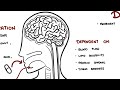
Watch to understand how administration routes (oral vs intravenous vs sublingual) affect onset and bioavailability, why some drugs undergo first-pass metabolism, and how distribution depends on blood flow, lipid solubility, and plasma protein binding. Learn practical implications—why glyceryl trinitrate is given sublingually, how warfarin’s high protein binding raises interaction risks, and why drugs like gentamicin require kidney monitoring to avoid toxicity.
The video breaks down liver metabolism (Phase I and II reactions, cytochrome P450) and explains enzyme induction and inhibition effects on drug levels. You’ll also get straightforward guidance on dosing principles: clearance, half-life, steady state, and how patient factors—age, pregnancy, renal or hepatic impairment, body composition, and drug interactions—demand individualized prescribing.
Perfect for medical students, pharmacists, clinicians, and informed patients, this engaging overview links pharmacokinetic theory to safe, effective clinical practice. Improve your prescribing decisions, monitoring strategies, and drug-safety awareness—watch now to master the ADME principles that determine drug action and toxicity.