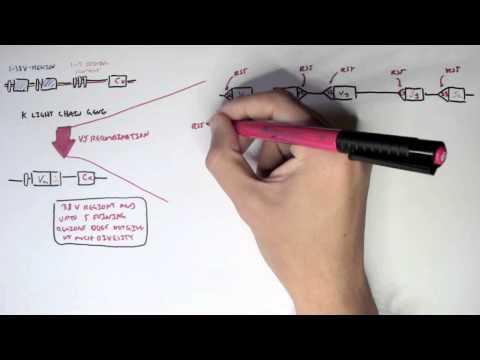
0:00 Armando Hasturigar, Biology and Medicine videos, please make sure to subscribe, 0:05 join the forming 0:06 group for the latest videos. Please visit Facebook, Armando Hasturigar, and 0:10 like. Also, 0:11 you can ask questions, answer some questions, and post some interesting things 0:15 including 0:15 outlooks, please. And change the quality settings for the highest one, such as 0:19 720p for better 0:21 graphics. We're continuing on on somatic recombination, also known as VDJ 0:25 recombination for antibodies. 0:27 So as we've learned, progenative B cells makes immature B cells, and a process 0:31 called 0:32 somatic recombination, or VDJ recombination, provides a unique antibody for the 0:37 immature 0:38 B cell. So for example, a progenative B cell makes an immature B cell, and 0:42 another progenative 0:43 B cell makes another immature B cell. Important information to know is that 0:47 there are two 0:48 types of light chains, not two types as in the genes shuffling within the light 0:53 changing, 0:54 but there are actually two classes of light chains as in two classes. So for 1:01 example, 1:01 if we look at these two immature B cells and we compare the antibodies, they 1:04 both have 1:05 antibodies. However, the light chain class is different, the light chain type 1:10 is different. 1:11 One is lambda light chain, and the other one is capon light chain. And so as 1:15 you can see, 1:16 this would increase the diversity of these antibodies. So if there's two light 1:22 chains, 1:22 two types of light chains, this would mean that there are two types of light 1:25 chain genes. 1:26 However, there's only one type of light heavy chain, which consists of many 1:31 type of constant 1:33 regions, but we won't get into that right now. So for example, if we go into 1:38 this progenative 1:38 B cell, chromosome 22 has the lambda light chain gene. Chromosome 2 has a capon 1:47 light chain 1:48 gene and chromosome 14 has a heavy chain gene. So as you can see with the two 1:55 types of light 1:56 chain and heavy chain mixing up, we can have a diverse types of antibodies. So 2:02 for example, 2:02 if we look at the chromosome 2 capon light changing and the chromosome 14 heavy 2:07 chain 2:07 gene, we can see how they can mix up to produce a unique antibody. 2:13 So let's begin with the heavy chain gene. As I mentioned in my previous video, 2:17 there's 2:17 not only one variable region, one diversity region, one joining region. There 2:20 are actually 2:20 many types of variable diversity in joining segments. And so for example, in 2:25 the heavy 2:25 chain gene of chromosome 14, we have about one to 40 variable regions, one to 2:29 23 diversity 2:31 segments, and one to six joining segments. And we have the constant mu, which 2:35 will essentially 2:35 transcribe for immunoglobulin and antibody. So as you can see, the mixing up of 2:40 these 2:40 variable regions, diversity regions, and joining segments will create a unique 2:44 antibody. 2:44 So what first happens with the heavy chain gene is it goes through DJ recomb 2:49 ination, 2:49 which essentially is where one of the diversity segments and one of the joining 2:52 segments bind together. So in this case, we have here diversity segment and 2:58 joining 2:58 segment bind together. Next, what happens after DJ recombination is V DJ recomb 3:03 ination, 3:03 where essentially the previously bound D and J will bind to one of the variable 3:09 segments 3:11 and then be transcribed. So in this case, they bound to a V1 variable, a 3:14 variable segment one, 3:15 and then we have the diversity two and joining two. And the constant mu 3:18 actually consists of 3:19 four constant regions. And essentially, this is already an RNA. And because it 3:24 's an RNA, it 3:25 has to go through splicing to remove the introns, which will make it mRNA, and 3:29 then a protein. And 3:30 this protein is the heavy chain part of the immunoglobulin. It consists of 3:36 variable one, 3:37 D2, J2, and four constant regions, which will fit in to this structure, which 3:43 is an immunoglobulin 3:44 antibody. So what about the light chain? As we mentioned, the light chain, we 3:50 're looking at the 3:50 capital light chain gene. And both the light chain, the lambda and the kappa, 3:54 do not have a diversity 3:56 segment. So the capital light chain gene consists of about one to 38 variable 4:01 segments, about one 4:02 to five joining segments, and a kappa constant region. So it doesn't consist of 4:07 a diversity segment. 4:08 And the first process that occurs is JV recombination, where the joining region 4:13 will bind 4:13 to one of the variables regions. In this case, a variable segment two will bind 4:18 to joining segment 4:20 three, not D3. It's meant to be J3. It's a mistake. And then this is an RNA. 4:25 And because it's an RNA, 4:26 it has to go through splicing, the removal of the introns, which will produce 4:29 mRNA and essentially 4:30 protein, consisting of variable or segment two, joining segment three, not D3, 4:35 and a constant kappa, 4:36 which will essentially make the antibody, the light chain part of this immunogl 4:40 obulin antibody. 4:42 So now, how does the actual recombination process occur? How does the JV recomb 4:50 ination 4:51 process occur, for example, in the kappa light chain gene? So if we have this k 4:56 appa light 4:57 chain gene again, consisting of just one to 38 variable regions, then one to 5:05 five joining 5:06 segments, and the kappa constant. So what is the process that actually occurs 5:12 through this recombination? 5:13 So if we look just at the numbers, 38 variable regions, and about five joining 5:21 segments, up to five joining segments, will not actually produce a diverse 5:25 amount of antibody 5:27 if you do the math. And so what happens is that actually new nucleotides can be 5:33 added during the 5:34 VJ recombination process to increase the diversity and specificity of each 5:40 antibody. 5:41 To learn how new nucleotides are actually added in, we have to learn about the 5:45 recombinational process 5:48 itself, and so the proteins involved in it, etc. So if we take a part of the k 5:53 appa light chain gene, 5:54 for example, we have three variable segments and two joining segments, V1, V2, 5:59 V3, and J1 and J2. 6:01 Now the segments, the V and J segments that can undergo recombination have a 6:05 specific motif 6:06 called the RSS, the recombination segment sequence. And the recombination 6:12 segment sequence can either 6:13 be a 23 base pair spacer or 12 base pair spacer. Within the kappa light chain 6:20 gene, 6:20 the variable segments usually have the 12 base pair spacer, basically 12 base 6:25 pairs, 6:26 in between a heptima and nanomer sequences. And the joining segments, the J 6:33 segments, 6:33 usually have the 23 base pair spacer in between the heptima and the nanomer 6:39 sequences. 6:41 Now these motifs, the RSS, have a specific special rule called a 2312 rule, 6:48 where essentially only 6:50 a 12 and a 23 can bind together. So for example, V1 and V2 cannot bind together 6:54 because they both 6:55 are 12 base pair sequences. Same as V2 and V3, they con, J1 and J2, they con, 7:01 but V2 and J1 can. 7:03 Now in order for recombination to occur, there are two ways to initiate recomb 7:09 ination, 7:09 using the 2312 rule. One is for the gene to create a hairpin loop, essentially. 7:18 So here we can see a hairpin loop formation, where V2 and J1 are parallel with 7:25 each other. 7:25 And so the 12 base spacer and the 23 base spacer, with the heptima and nanomer 7:30 sequences on either 7:31 side, can undergo recombination. And through recombination, essentially 7:37 proteins, such certain 7:38 proteins, which we were looking to soon, will cut off these base pair sequences 7:42 . 7:43 And so we're left with V2 and J1 bound together, like so. And then through VJ 7:49 recombination, we get 7:52 DNA with the joining V and J, which will then get transcribed to RNA, which 7:57 will then go through 7:58 splicing to remove the introns, which will make mRNA and essentially the 8:01 protein. And this is a 8:03 protein that is the kappa light chain, which will essentially make the light 8:07 chain of the 8:08 particular antibody. And there's also the constant region in this protein. 8:12 However, it is important 8:15 to note that actually, during the recombination process, to increase the 8:20 specificity and diversity 8:22 of the light chain, of the light chain, new nucleotides are added. So new nucle 8:27 otides are added 8:28 during this recombination process, which we will look into later on. But for 8:32 now, let's look at the 8:33 other way that recombination can occur between the base spacer and between the 8:38 V and J segments. 8:40 So in this other type of 2312 rule of recombination, we have a sort of tangled 8:49 configuration, 8:50 not like the hairpin loop that we just saw. So in this tangled configuration, 8:54 we can see that 8:55 variable segment 3 and joining segment 2 are aligned with the 12 base pair sp 9:01 acer of V3 9:03 and the 23 base pair spacer of J2, which can undergo recombination because they 9:09 're next to each other. 9:10 So through recombination, the variable segment 3 and joining segment 2 can bind 9:16 together, 9:16 which will essentially form DNA and then RNA. This RNA will then get spliced up 9:22 to remove everything 9:23 else leaving the variable segment 3 and joining segment 2 with a constant 9:27 region. 9:28 And this will be another type of capital light chain for the antibody. And as 9:36 mentioned, 9:37 that heavy changing and also the light changing consists of about up to 40 9:43 variable segments 9:44 and up to five joining segments. And if these mix around, it will not actually 9:48 give us a diversity 9:50 for antibodies. And that is why I've mentioned that actually through recomb 9:53 ination, 9:54 new nucleotides randomly can be added in, which will increase the diversity and 9:59 specificity. 10:00 And we'll look at this process and actually the proteins involved in the recomb 10:05 ination process 10:06 itself. So in both the heavy chain and the light chain genes, these proteins 10:12 are essentially the 10:13 same. So if I take a segment of this gene, the light chain kappa gene again, we 10:18 have variable 10:19 segment 2 and variable segment 3 and joining segment 1. So essentially what 10:25 happens first 10:25 in recombination is that rag 1 and 2 proteins will bind to the motifs of the 10:32 RSS of 12 base 10:34 spacer and a 23 base spacer. This will essentially cause both the rag 1 and 2 10:40 to bind together 10:42 because they have affinity for each other. And when they bind together, they 10:45 will form a sort of 10:46 hairpin loop with the V2 and J1 parallel with each other. And essentially what 10:53 happens next is 10:54 that rag 1 and 2 will then cleave off this motif, the recombination signal 11:00 sequence, the RSS. 11:01 Following this, other proteins, such as Q70 and Q80, will bind onto the 11:09 segments, the variable 11:10 segment and the joining segment. Q proteins essentially do is initiate repair 11:14 by forming a 11:15 hairpin loop from where the rag 1 and 2 has broken off the RSS. And after 11:20 forming a hairpin loop, 11:22 other proteins will come into the system. A DNA protein kinase and Artemis will 11:28 open the hairpin 11:29 loop which was formed by the Q proteins. And then following this, another 11:34 protein will come 11:35 called terminal deoxy nucleotidyltransferase or TDT which will basically add 11:40 new nucleotides 11:41 into the separated variable and joining segments. And the TDT adds nucleotides 11:47 randomly. 11:48 Now following this because the joining segment and the variable segments are 11:52 separated, 11:52 DNA ligase and another protein called XRCC4 will ligate the ends together which 11:58 will essentially 11:59 form a repaired and unique V2 and J1 recombinated segment. And so this will 12:10 produce a unique type 12:12 of capitalite chain essentially. So through recombination, not only are the 12:17 variable segments 12:18 and joining segments and diversity segments are shuffled together but new nucle 12:22 otides are added 12:24 through each recombination, somatic recombination process whether it's in the 12:28 light changing 12:29 or in the heavy changing. So I hope you can appreciate the diversity and 12:33 specificity the 12:34 antibodies can produce through B cell maturation. And that concludes this video 12:40 . I hope you enjoyed 12:41 it. Please like, comment and subscribe and please share. Thank you.