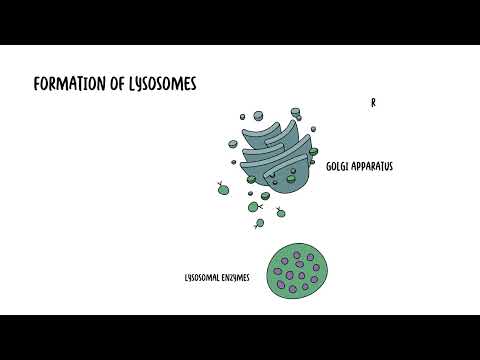
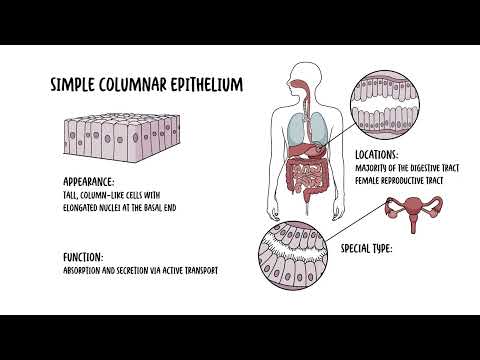
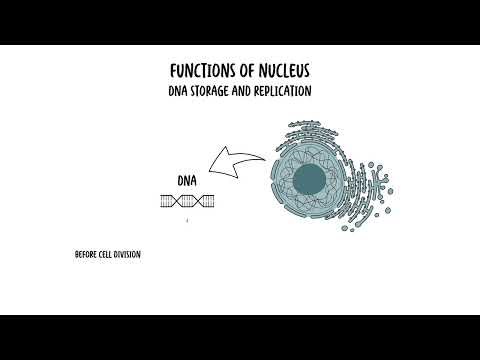
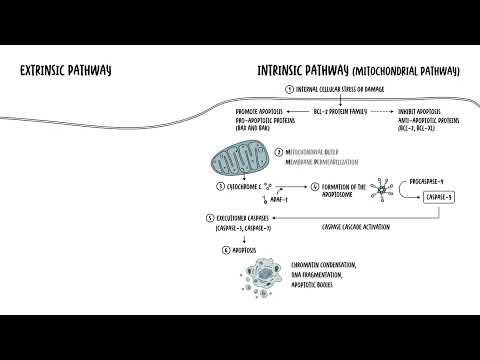
0:00 Hello, in this video we're going to talk about the cytoplasm and the cell organ 0:11 elles. 0:15 The cytoplasm is an essential component of the cell, playing a role in 0:19 maintaining cellular 0:20 function and integrity. 0:21 It is a complex dynamics medium that hosts numerous biochemical processes 0:25 crucial for 0:26 cell survival. 0:28 The cytoplasm is the part of the cell enclosed by the cell membrane, excluding 0:33 the nucleus. 0:34 It consists of the cytosol, organelles, and various inclusions. 0:44 The cytosol is a viscous, aqueous solution that constitutes the bulk of the cy 0:47 toplasm. 0:48 It contains water, dissolved ions, small molecules, and large water-soluble 0:52 molecules, such 0:52 as proteins. 0:54 It serves as the medium for intracellular processes, providing a platform for 0:59 metabolic 0:59 reactions and enabling the diffusion of molecules throughout the cell. 1:06 Cytoplasm inclusions are non-membranous structures that includes lipid droplets 1:12 , glycogen granules, 1:13 and pigments. 1:15 Some of this stuff serve as storage sites for nutrients, such as the glycogen 1:19 and the 1:19 lipids, the fat, as well as other substances. 1:26 Now, what are the functions of the cytoplasm? 1:31 Well, the cytoplasm is integral to various cellular functions, including 1:36 metabolic pathways. 1:38 For example, glycolysis. 1:40 The cytoplasm is the cypherglycolysis, the process of breaking down glucose to 1:45 pyruvate, 1:46 generating ATP and NADH in the absence of oxygen. 1:50 It also hosts portions of other metabolic pathways, including gluconeogenesis, 1:54 making 1:54 glucose, particularly in the liver, and the pentose phosphate pathway, which 1:59 plays an 2:00 important role for structures in the genome. 2:08 The cytoplasm is also important for signal transduction. 2:12 It's involved in cellular signaling, where signaling molecules relay messages 2:17 from the 2:17 cell membrane to the nucleus or other parts of the cell. 2:22 Essentially, what happens is various signaling proteins and second messages in 2:28 the cytoplasm 2:29 facilitates these processes, ensuring that the cell responds appropriately to 2:34 external 2:34 or internal stimuli. 2:41 The cytoplasm is also an area for intracellular transport. 2:46 So transportation within the cell. 2:50 And this is aided by the cytoskeleton, which facilitates the transport of organ 2:55 elles, vesicles, 2:56 and other molecules within the cell. 2:58 The cytoskeleton involved in particular are the microtubules and actin fil 3:03 aments. 3:04 These guys act as tracks for the movement of motor proteins, kinesin and dinin, 3:12 which 3:12 carry cargo to their destination, and really around the cell. 3:19 Finally, the cytoplasm is important for cellular growth and division. 3:27 It provides the necessary environment for biosynthetic processes, as well as 3:33 preparation for mitosis 3:35 and cytokinesis. 3:37 Here the cytoplasm undergoes reorganization to facilitate the division and 3:41 distribution 3:42 of cytoplasmic content to the door cells, the identical cells that single cell 3:48 is divided 3:48 into. 3:55 As mentioned, the cytoplasm contains a lot of organelles, a lot of the cells' 4:00 organelles. 4:01 Let's look at each of these in a bit more detail, beginning with the nucleus. 4:06 The nucleus is a large membrane-bound organelle surrounded by a double-layered 4:11 nuclear envelope 4:12 that contains nuclear pores. 4:14 Now, these pores regulate the passage of molecules between the nucleus and the 4:19 cytoplasm. 4:20 Inside the nucleus contains chromatin, essentially your DNA with protein. 4:26 And also, it contains what's called the nucleoli, where ribosomal RNA synthesis 4:34 occurs. 4:35 The nucleus itself acts as a control center of the cell, storing the cell's 4:39 genetic material, 4:41 which is our DNA. 4:43 It regulates gene expression. 4:45 It's important in DNA replication and cell division. 4:48 The nucleolus within the nucleus is responsible for producing and assembling 4:53 ribosome components, 4:55 which we'll talk about later. 4:59 Now, the second most important structure is the mitochondria, or maybe even the 5:06 most. 5:06 The mitochondria have a double membrane. 5:09 The outer membrane is smooth, while the inner membrane is highly folded into 5:14 structures known 5:15 as CRISTA, which increases the surface area for ATP production. 5:22 The matrix, the innermost component, or compartment, contains enzymes, 5:26 mitochondrial DNA and ribosomes. 5:29 The mitochondria are the powerhouses of the cell. 5:33 They generate ATP through the process of oxidative phosphorylation. 5:37 They're very important, because that's how we get our energy. 5:41 They also play roles in regulating the cell cycle, cell growth, and apoptosis, 5:45 which is 5:45 programmed cell death. 5:52 Now the endoplasmic reticulum, which is somewhat continuous with the nuclear 5:57 envelope. 5:58 The endoplasmic reticulum is divided into the rough and the smooth endoplasmic 6:03 reticulum. 6:04 Let's talk about the rough first. 6:06 The rough endoplasmic reticulum is studied with ribosomes on its cytoplasmic 6:11 surface, 6:12 giving it this rough appearance. 6:15 It is involved in synthesis of proteins that are either excreted from the cell, 6:19 incorporated 6:20 into the cell's plasma membrane, or shipped to an organelle. 6:24 It also plays a role in the initial stages of protein modification and folding. 6:30 The smooth endoplasmic reticulum, on the other hand, lacks ribosomes, and so 6:35 that's 6:36 why they appear smooth. 6:39 It is involved in lipid synthesis, metabolism, of carbohydrates, detoxification 6:44 of drugs 6:44 and poisons, and storage of calcium ions. 6:47 The smooth endoplasmic reticulum also helps in the production of steroid 6:56 hormones. 6:57 So let's talk about the ribosomes now. 7:00 The ribosomes are made up of RNA and proteins, forming two subunits, the large 7:05 and the small. 7:06 They can be found floating freely in the cytoplasm, or, as we have learned, 7:10 they can be found 7:11 attached to the rough endoplasmic reticulum, giving it its rough shape. 7:18 Ribosomes are the site of protein synthesis. 7:22 They essentially translate what's called messenger RNA, or mRNA, into polypept 7:28 ide proteins. 7:30 Free ribosomes, which are in the cytoplasm, generally synthesized proteins used 7:34 within 7:34 the cell, while those bound in the rough endoplasmic reticulum make proteins 7:39 for membranes, 7:40 or they export these proteins outside the cell. 7:50 Which takes us to the Golgi apparatus, or the Golgi apparatus. 7:54 The Golgi apparatus is an organelle that consists of a series of flattened 7:58 membrane 7:59 bound sacs called cystinase. 8:03 It has a distinct polarity, with a cisface, which is the receiving side, and a 8:08 transface, 8:09 the shipping side. 8:11 The Golgi apparatus modifies its sorts and packages, proteins and lipids, 8:17 received from 8:18 the endoplasmic reticulum. 8:21 Within the Golgi apparatus, it then adds carbohydrates to proteins, glycosyl 8:26 ation, as 8:27 well as carbohydrates to lipids, glyco lipids, and then sorts them for 8:31 transport to their 8:32 final destination, and this can be the lysosome, the plasma membrane, or 8:37 transportation to be 8:39 secreted outside the cell. 8:41 This would be the case if a cell was to release hormones, or some sort of 8:49 molecule or cytokine. 8:52 And so talking about lysosomes, lysosomes are spherical vesicles, containing 8:57 hydrolytic 8:58 enzymes, capable of breaking down all types of biomolecules. 9:03 They are bounded by a single membrane. 9:07 In this diagram you can see that the Golgi apparatus is giving this sort of end 9:11 osome some 9:12 hydrolytic enzymes to form the lysosome. 9:16 The lysosome functions as a cell's waste disposal system, digesting unwanted 9:21 materials, damaged 9:22 organelles and pathogens. 9:25 Lysosomes are also involved in various cellular processes, including apoptosis, 9:29 plasma membrane 9:30 repair, and cell signaling. 9:38 Then you have these things called peroxosomes. 9:41 Peroxosomes are small, membrane-bound organelles containing oxidative enzymes. 9:47 They're very similar to lysosomes. 9:49 These guys are found in eukaryotic organisms. 9:55 Peroxosomes, unlike lysosomes, they carry out oxidative reactions, leading to 9:58 the production 9:59 and breakdown of hydrogen peroxide. 10:02 They are involved in lipid metabolism, including the breakdown of very long 10:06 chain fatty acids 10:07 and the detoxification of harmful substances. 10:16 Now another very important organell or structure within the cell is a cytos 10:21 keleton. 10:22 The cytoskeleton, as the name suggests, is the skeleton of the cell. 10:27 The cytoskeleton is composed of three main types of protein filaments - the 10:31 microfilament, 10:32 intermediate filament and microtubule. 10:36 The microfilaments are thin filaments, made up of actin, involved in cell 10:40 movement and 10:41 shape maintenance. 10:43 The intermediate filaments provide mechanical support and maintain cell 10:48 integrity. 10:49 The microtubules are hollow tubes made up of tubulin, involved in maintaining 10:53 cell shape, 10:55 cellular transport, very important, and in cell division. 11:01 So the cytoskeleton in general provides the structural support. 11:07 It enables cells' motility, facilitates intracellular transport, all 11:12 transportation within the cell, 11:14 and it organizes the cell's interior. 11:17 It is also crucial in cell division by forming mitotic spindles. 11:26 Now, talking about microtubules, which again are important transportation of 11:30 things as 11:31 well as in cell division, I want to introduce you to centrosomes, or the centri 11:36 oles. 11:37 The centrosomes are composed of two centrioles, and each made up of a ring of 11:42 nine microtubule 11:44 triplets. 11:46 It is located near the nucleus. 11:50 Vaccules organize the microtubules, the cytoskeleton, and play a pivotal role 11:55 in cell division by 11:56 forming the mitotic spindle, which separates chromosomes during mitosis during 12:08 cell division. 12:10 The final organelle, mostly important plants, I guess, are the vacules. 12:15 Vacules are membrane-bound sacs within the cytoplasm. 12:18 In animal cells, vacules are generally small and more numerous, whereas plant 12:22 cells typically 12:23 have a large central vacule. 12:28 Vacules are involved in storage of nutrients and waste products, maintenance of 12:33 turgopressure 12:34 in plant cells, and intracellular digestion. 12:39 They also play a role in isolating harmful material. 12:47 So in summary, we talked about the cytoplasm and different cell organelles. 12:53 The nucleus houses the DNA, the mitochondria is the powerhouse, the ribosomes 12:59 make proteins, 13:00 and the Golgi apparatus packages everything to be transported around the cell 13:04 or even 13:04 outside. 13:06 Hope this was helpful, thank you for watching. 13:17 [end]