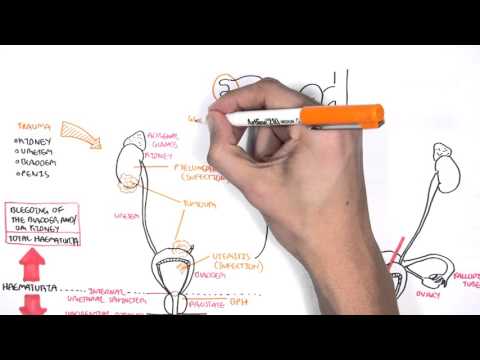
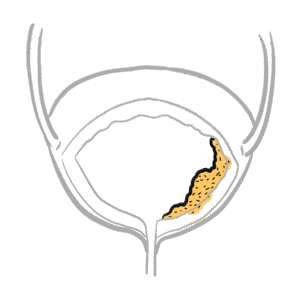
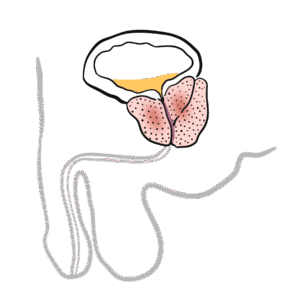
0:00 In this video, we are going to talk about the physiology of micturition. 0:15 In order to understand the physiology of micturition, we have to know about the 0:20 organs and the 0:21 structures involved in the micturition process. 0:25 The kidneys are the sites where urine is produced. 0:29 The urine will travel down these muscular tubes called ureters and then into 0:35 the bladder. 0:36 The bladder stores the urine. 0:38 When needed, the bladder will contract and release the urine. 0:44 The urine will travel down through the urethra and then outside. 0:49 This particular urethra I am drawing is a male urethra. 0:54 And so part of the urethra is surrounded by the penis, spongy tissue. 1:01 Going back to the bladder, the bladder is made up of a muscle called the detre 1:05 usor muscle. 1:07 And because it is a muscle, it can contract and it can relax. 1:12 There are also two important sphincters which play an important role in holding 1:16 or retaining 1:17 urine in the bladder. 1:18 Now these are the internal sphincters and the external sphincters. 1:24 Between these two sphincters is the prostate gland. 1:28 The prostate is only found in males and has an important role in activating 1:37 sperm. 1:38 When there is a prostate hyperplasia, this can cause obstruction in the urethra 1:43 and thus 1:44 problems with urinating. 1:48 The external sphincter is within an area known as the urogenital diaphragm. 1:56 This urogenital tract I am drawing was the male's tract which is very different 2:03 to the 2:03 females. 2:05 It's important to look at the female one as well. 2:09 So females also have the kidneys which connect to the bladder via the urethra. 2:15 The bladder is composed of the detreusor muscle. 2:19 Now the female doesn't actually have an internal sphincter but females do have 2:25 an external 2:26 sphincter. 2:27 Also, the urethra of the female is a lot shorter than the males. 2:31 So again, the major difference is that the females urinary tract are shorter, 2:36 they have 2:37 a shorter urethra and they have no internal sphincter or prostate. 2:44 And because the females urethra is shorter, this would mean that there is a 2:51 more likely 2:52 chance that they will get a urinary tract infection. 2:58 Now in this video, we will mainly focus on the male urinary tract because it's 3:03 better 3:03 to understand the mictuation process this way, not being biased. 3:09 Let us review the receptors found within the urinary tract that play a role in 3:16 micturition 3:18 and holding in urine. 3:22 Receptors found on the bladder include the muscarinic receptor M3 and the beta 3:28 adrenergic 3:29 receptor or B3. 3:32 We can find the alpha adrenergic receptor on the internal sphincter muscle and 3:38 on the 3:39 external sphincter, we can find the nicotinic receptor. 3:43 Okay, so now we know the structures and the receptors involved in micturition. 3:49 But what controls these things? 3:52 Well, the nervous system controls these. 3:55 So here I am drawing the central nervous system, which includes the brain, the 3:59 brainstem, which 4:00 is made up of the midbrain, the pons and the medulla. 4:03 The most important structure is the pons because the pons is where the mictur 4:08 ition center 4:08 is located. 4:12 And then we have the spinal cord, the cervical region, thoracic, lumba and sac 4:20 ral. 4:21 Signals from the central nervous system will be sent to the urinary tract via 4:26 the nerves. 4:26 We will look at three important efferent nerve fibers. 4:32 The first nerve comes from the sacral region of the spinal cord. 4:39 This nerve is the pelvic nerve, which is a parasympathetic nerve. 4:44 It is not under our control. 4:47 The pelvic nerve releases acylcholine, which binds onto the M3 receptor. 4:54 When acylcholine binds to the M3 receptor on the detreuser muscle, it will 5:00 cause contraction 5:01 of the detreuser muscle. 5:03 So that is why I am drawing a positive sign here for contraction. 5:08 The second nerve coming out of the sacral region is the pudendal nerve, which 5:13 is a somatic 5:14 nerve and it is under our control. 5:18 The pudendal nerve also releases acylcholine and acts on the nicotinic receptor 5:24 found on 5:25 the external sphincter. 5:28 When acylcholine from the pudendal nerve binds onto the nicotinic receptor, it 5:34 will cause 5:35 the external sphincter to contract. 5:40 We are firing our pudendal nerve when we are trying to hold in our urine. 5:47 The third nerve is part of the sympathetic nervous system. 5:52 The pre-sympathetic nerve fibers that target the urinary tract comes from 6:00 actually the thoracic 6:02 lumbar area. 6:04 And synapses at a ganglion here secrete neurotransmitters and will pass on the 6:09 information to post-sympathetic 6:12 fiber known as the hypogastric nerve. 6:16 The hypogastric nerve targets two things and because it is a post-sympathetic 6:22 nerve, it 6:23 releases the neurotransmitter nor adrenaline. 6:29 When nor adrenaline binds to the beta-3 receptor on the detruser muscle, it 6:34 causes relaxation 6:36 of the detruser muscle, so it is a negative sign here for relaxation. 6:42 When nor adrenaline binds to the alpha-1 receptor on the internal sphincter, it 6:47 will cause contraction 6:49 of the internal sphincter, so positive effect. 6:54 So we can safely say that the hypogastric nerve or the sympathetic nervous 6:59 system altogether 7:00 is responsible for urine retention, holding in urine, whereas the parasymp 7:06 athetic nervous 7:07 system is responsible for voiding, for peeing. 7:11 Also, there is actually a fourth neuron which I have not drawn, which is an aff 7:16 erent nerve. 7:18 It's a sensory nerve fiber. 7:21 It comes actually from the detruser muscle. 7:24 It is called also the pelvic nerve, but it's an afferent pelvic nerve. 7:30 And it responds or it is stimulated when the bladder is stretched. 7:35 Okay, now that we know the nerves, the receptors, and the structures involved 7:42 in micturition, 7:43 let us see how it all works by putting it all together. 7:47 Let us see what happens when we have an empty bladder, and what happens when we 7:52 have a full 7:53 bladder. 7:56 So going over the structures again, we have the detruser muscle here, of the 8:00 bladder, 8:00 the internal sphincter, the external sphincter, the prostate, the urethra, then 8:05 we have the 8:06 receptors on the detruser muscle, the M3 and beta 3, the alpha 1 receptor on 8:10 the internal 8:11 sphincter and the nichotenic receptor on the external sphincter. 8:16 And here we have the central nervous system that controls the peeing. 8:21 So the higher brain center, the pons, which is important because it contains 8:25 the micturition 8:26 center, then we have the thoracic lumba level of the spinal cord, and then we 8:32 have this 8:32 sacral level of the spinal cord. 8:35 Okay, so now we have a sort of empty bladder, so we don't have much urine in 8:41 the bladder 8:43 here. 8:44 Now this means that we don't have that much stretching of the bladder. 8:49 When we don't have much stretching of the bladder, the sensory pelvic nerve 8:55 will only 8:56 send slow impulses towards the spinal cord sacral region. 9:05 The slow impulses from the sensory pelvic nerve will send signals to a neuron 9:11 at the 9:11 sacral level, and this neuron will actually stimulate the hypogastric nerve 9:20 from the thoracic 9:22 and lumba area. 9:25 So it will stimulate the sympathetic hypogastric nerve. 9:31 When the hypogastric nerve is stimulated, it will stimulate the alpha 1 9:37 receptor and 9:38 the internal sphincter causing the internal sphincter to contract. 9:44 Also, the stimulated hypogastric nerve will act on the beta 3 receptor, so 9:51 positive effect, 9:53 and when the beta 3 receptor is activated, this will cause relaxation of the 9:58 detruser 9:59 muscle, so negative effect here. 10:05 In the sacral level of the spinal cord, there's also some inhibitory activity 10:08 here, which 10:09 I'll talk about later. 10:10 Anyway, the brain and the pons know when we have an empty bladder, and they 10:15 will actually 10:16 then send out signals in the thoracic level to stimulate the hypogastric nerve 10:22 so that 10:22 we can retain urine. 10:24 Also, there are some signals being sent to the sacral level, so there is a 10:28 signal being 10:29 sent to the pelvic efferent nerve. 10:34 The signal being sent to the pelvic efferent nerve is actually being inhibited 10:40 by at this 10:40 level. 10:42 However, there are signals that will stimulate the pudendal nerve, which is 10:47 under our voluntary 10:48 control. 10:49 When the pudendal nerve is stimulated, this will stimulate the nicotinic 10:53 receptors on 10:54 the external sphincter causing contraction, and so we are able to basically 10:59 hold our urine 11:00 in voluntarily. 11:06 So the take-home message from this diagram is that the sympathetic nerve is 11:12 stimulated, 11:13 allowing us to hold our urine in the bladder. 11:16 The parasympathetic nerve motor fiber is inhibited, so we don't contract the 11:22 detruser 11:23 muscle. 11:24 And the pudendal nerve is stimulated so we can hold our urine in voluntarily. 11:32 So what happens when we have a full bladder? 11:34 Well, let's just see, I'm going to enjoy the exact same diagram as I did. 11:39 So here we have the bladder, the urethra, the external sphincter, and the 11:42 internal sphincter. 11:44 And here we have the receptors on the detruser muscle, the M3, the beta3, and 11:48 on the internal 11:49 sphincter, the alpha1, and then we have the nicotinic receptor on the external 11:54 sphincter. 11:55 And here I'm drawing the structures that control all that, which are the 12:00 nervous system. 12:02 We have the sacral region of the spinal cord, the thoracic lumbar region, and 12:05 we have the 12:06 palms, which contains our micturition center. 12:11 So when we have a full bladder, we have a lot of urine in the bladder, and this 12:15 will 12:16 cause a lot of stretching in the bladder. 12:18 This will stretch our detruser muscle. 12:21 We have sensory nerves in our detruser muscle called the pelvic nerve, remember 12:27 ? 12:27 And when there's a lot of stretching in the pelvic nerve, the pelvic nerve 12:32 increases firing, 12:34 and it will send out a lot fast signals, not slow signals, it will send fast 12:39 signals 12:39 to the sacral region of the spinal cord. 12:44 And when the pelvic nerve sends fast signals, a lot of impulses to the sacral 12:50 region of 12:50 the spinal cord, this will cause a new neuron to basically bypass the thoracic 12:58 lumbar area 12:59 and go straight to the pontine micturition center. 13:04 And this will stimulate actually the nerve, some nerve, some neurons there. 13:10 When the neurons in the pontine micturition center are stimulated, they will 13:14 cause a 13:14 few things, one of which is inhibiting the hypogastric sympathetic nerve. 13:27 Now when the hypogastric sympathetic nerve is inhibited, we have no relaxation 13:33 of the 13:34 detruser muscle. 13:36 And we have relaxation, or we have no function of the alpha 1 receptors, and so 13:43 we have relaxation 13:45 of the internal sphincter. 13:48 Also, the neurons coming from the pontine micturition center will stimulate the 13:56 pelvic 13:57 efferent nerves. 13:59 When the pelvic efferent nerves are stimulated, it will cause contraction of 14:04 the detruser 14:05 muscle by working on the M3 receptor. 14:11 Also the neurons coming from the pontine micturition center will inhibit the p 14:18 udendal nerve. 14:20 And so this is under our control also. 14:24 And when the pudendal nerve are inhibited, there is no contraction in the 14:30 external sphincter 14:32 and thus it's relaxed. 14:35 And so altogether what we have is we have no relaxation of the detruser muscle. 14:42 We have contraction of the detruser muscle, and we have relaxation of the 14:46 internal and 14:47 external sphincter. 14:49 And therefore urine is able to go out through the urethra and basically we pee 14:55 out, voiding, 14:57 the process is called voiding. 15:00 And here and when we begin to void, the voiding reflex begins. 15:06 So when we start peeing, we sort of continue to pee, right? 15:10 So this is our voiding reflex and let's just see how this works. 15:13 Well, in the voiding reflex, here I'm doing the exact same structure, the 15:19 pelvic efferent 15:20 nerve fibers are sensory fibers coming out of the detruser muscle. 15:26 So keep sending impulses to the sacral region of the spinal cord. 15:32 It then works on an intranuron in this level as well, which will connect with 15:38 the parasympathetic 15:40 efferent nerve fibers. 15:43 And when the pelvic efferent nerve fibers are stimulated, it will just cause 15:47 contraction 15:48 of the detruser muscle. 15:50 So it's like a loop, sensory sends signals to the pelvic efferent nerve, which 15:56 will cause 15:56 contraction of the detruser muscle, and this is why we continue to pee. 16:01 I hope that all made sense, and I hope you enjoyed this video on micturition. 16:07 Thank you for watching. 16:20 [BLANK_AUDIO]