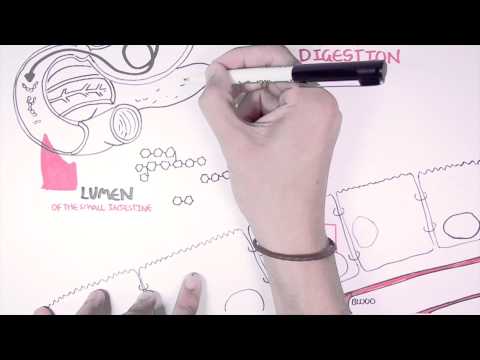
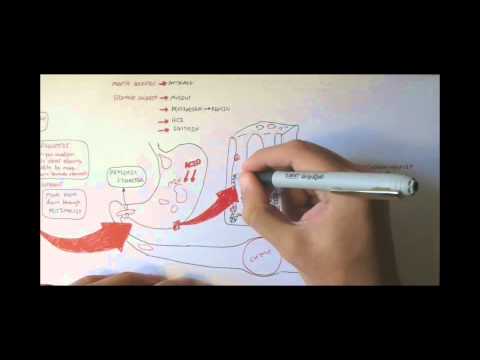
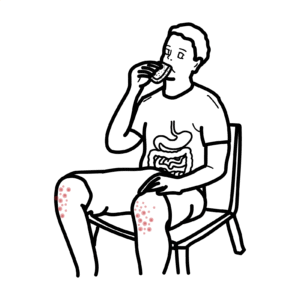
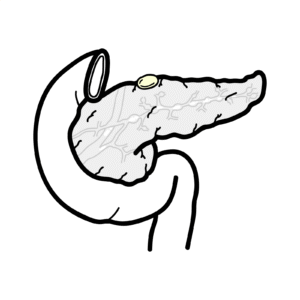
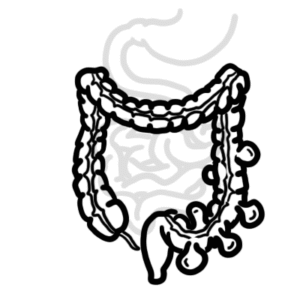
0:00 Arman Doha Surigand, Biology and Medicine videos, please make sure to subscribe 0:04 , join 0:05 the forum and group for the latest videos, please visit Facebook Arman Doha Sur 0:09 igand. 0:09 In this video we will talk about protein digestion and absorption. 0:15 So here we have a person and his digestive tract. 0:19 You have the esophagus, stomach, small and large intestine. 0:24 A good source of protein can be found in foods such as meat. 0:29 If we zoom into this meat, part of the meat is made up of proteins. 0:36 Proteins are made up of amino acids. 0:39 Proteins are basically chains of amino acids. 0:44 Proteins have amino terminal where the amine group is and then they have a car 0:50 boxyl terminal 0:51 where the carboxyl group is. 0:56 If we were to look at the biochemical structure of a protein, here for example 1:00 we have four 1:00 amino acids linked together. 1:04 Each amino acid has an amine and carboxyl group on them and it's with these am 1:11 ine and carboxyl 1:12 groups that allow amino acids to link together. 1:16 Therefore there will always be a carboxyl group on one end of a protein and an 1:21 amine 1:22 group on the other end of the protein. 1:25 Anyways, I hope this makes sense. 1:28 It's not a biochemistry lesson. 1:31 So if this human were to digest the meat which contains high amounts of protein 1:38 , the 1:38 mouth will first help to digest it through mastication, breaking it down. 1:45 The protein will then make its way from the mouth through the esophagus into 1:49 the stomach 1:50 here. 1:52 So here are all the proteins that have not been digested by any enzymes yet. 1:58 It has only been physically digested with the mouth. 2:03 Anyways, the chemical digestion of protein actually begins in the stomach 2:08 because a stomach 2:09 secretes pepsinogen which once secreted will convert to pepsin. 2:17 And hydrolyzes peptide bonds so it breaks the protein bonds, the amino acid 2:25 bonds. 2:26 Let's look at how pepsin becomes activated a little further. 2:30 Well, if here's your stomach cells, we have mucus on top of these cells. 2:36 And here is the protein in the lumen. 2:40 The stomach cells will begin secreting pepsinogen in the presence of food. 2:45 At the same time hydrochloric acid will be secreted to assist in breaking down 2:50 the food. 2:52 It's actually the hydrochloric acid that triggers the conversion of pepsinogen 2:57 to pepsin. 2:58 And so now pepsin is able to hydrolyze the peptide bonds, breaking down the 3:03 protein to 3:03 large polypeptides. 3:07 From the stomach, the large polypeptides or polypeptides will enter the small 3:12 intestine. 3:13 Now the first part of the small intestine which is called the duodenum is the 3:18 main site where 3:20 protein digestion and absorption takes place. 3:25 So what happens with these proteins, these polypeptides, once they're in the du 3:30 odenum? 3:30 Well, the pancreas will actually begin to secrete some enzymes that will help 3:36 digest the proteins. 3:38 These are trypsinogen, chymotrypsin and pro-carboxypeptidase. 3:44 So let's take a closer look at these enzymes. 3:47 So zooming into the duodenum here, the first part of the small intestine, we 3:51 are in the 3:51 lumen of the small intestine. 3:54 And here are the intestinal cells called interosides. 3:59 And here are the large polypeptides that came from the stomach just before. 4:08 While the interosides, the intestinal cells, we have blood vessels that 4:11 supplies the interosides 4:13 with blood and that will carry the nutrients to the liver once they are 4:18 absorbed. 4:19 So now let's go back and focus on the enzymes secreted by the pancreas. 4:26 Again the pancreas will secrete chymotrypsinogen, trypsinogen and pro-carboxype 4:31 ptidase. 4:32 All these are actually zymogens which are precursors to the active enzyme form. 4:40 Here I am just drawing the shapes to represent each of these enzyme precursors. 4:46 These enzyme precursors need to be activated. 4:50 These enzyme precursors are activated by special enzymes found on the surface 4:57 of the intestinal 4:59 cells. 5:00 These enzymes are called interokinase. 5:03 So interokinase will actually convert trypsinogen to trypsin. 5:09 Trypsin is the active form and is an enzyme that will hydrolyze peptide bonds. 5:15 So it will break down amino acids that are linked together. 5:20 So here trypsin is attacking these peptide bonds. 5:24 Now trypsin is a big deal and there are three reasons why. 5:30 The first is the presence of trypsin will automatically stimulate the 5:35 conversion of 5:37 more trypsinogen to make more trypsin during protein digestion. 5:41 Second reason why trypsin is a big deal is that trypsin will actually help 5:46 convert chymotrypsinogen 5:48 to the active form chymotrypsin. 5:52 Trypsin just like trypsin hydrolyzes peptide bonds. 5:57 So here they are breaking down these bonds. 6:02 The third reason trypsin is a big deal is that it also stimulates the 6:06 conversion of pro-carboxy 6:08 peptidase to carboxy peptidase, which is the active form. 6:14 So trypsin really buffs up or stimulates protein digestion in a small intestine 6:23 . 6:23 Now carboxy peptidase is an enzyme that hydrolyzes peptide bonds from the car 6:28 boxyl end of the 6:29 protein. 6:30 So from this end of the protein you can remember this because the name of the 6:34 enzyme carboxy 6:35 peptidase is like carboxyl group, carboxyl end. 6:41 So anyway after the large polypeptide encounters all these enzymes, the trypsin 6:45 , the chymotrypsin, 6:46 the carboxy peptidase, these large polypeptides will be further digested to 6:51 small polypeptides 6:53 as well as die or trypeptides. 7:00 The body needs to break down the small polypeptides further in order for the 7:05 body to absorb them. 7:06 The last part of protein digestion occurs on top of the intestinal cells 7:13 because on top 7:14 of the intestinal cells there are these special enzymes called brush border 7:21 enzymes. 7:22 And there are many types of brush border enzymes but we will focus on the brush 7:27 border enzymes 7:28 that specifically hydrolyze peptide bonds. 7:33 These enzymes are the dipeptidases which hydrolyze dipeptides which are, and di 7:41 peptides are 7:42 just two amino acids linked together. 7:44 So these and the other main brush border enzymes for protein digestion are 7:51 amino peptidases 7:52 which hydrolyze peptide bonds from the amino terminal of the protein. 7:58 So here where the amino group is. 8:02 And so these small polypeptides will be digested further into tripeptides, dipe 8:07 ptides, and amino 8:08 acids. 8:10 Now the body can then begin to absorb these amino acids. 8:15 The small peptides such as tripeptides can be absorbed through co-transporter 8:20 with hydrogen. 8:23 Once inside the cell the tripeptide can be hydrolyzed by cell-owned peptidases 8:29 which 8:30 will break it down to amino acids. 8:33 Once in the amino acid form the amino acid can diffuse into the bloodstream 8:38 where it will 8:39 be carried to the liver. 8:43 The dipeptides can also follow the same absorption method. 8:49 It enters the cell through the hydrogen co-transporter channel. 8:53 The hydrogen can actually be pumped back out into the lumen in exchange for 8:58 sodium. 8:59 So when hydrogen goes back out into the lumen, sodium gets pumped inside. 9:07 The dipeptide which is inside the cell now can also be broken down into amino 9:13 acids by 9:14 intracellular peptidases. 9:17 The amino acid can then be reabsorbed into the blood. 9:21 Finally, the amino acids which are just in the lumen are absorbed through a 9:28 different 9:29 method, through a different mechanism. 9:31 The amino acids are absorbed with sodium in a channel. 9:35 So as one amino acid is absorbed, so is one sodium ion. 9:43 The amino acid can then be reabsorbed into the blood. 9:49 Now you can see from this diagram that when amino acids and also dipeptides are 9:56 absorbed 9:57 into the cell, there will also be a net absorption of sodium. 10:02 And because of this, water is also absorbed. 10:06 Sodium is reabsorbed into the extracellular matrix. 10:10 This should be in exchange with potassium via the sodium-potassium pump. 10:16 Those amino acids as I mentioned earlier will travel to the liver where they 10:20 will be used 10:21 to synthesize new proteins or stored somewhere else. 10:25 Hope you enjoyed this video on protein digestion and absorption and hopefully 10:28 it makes sense. 10:29 Thank you for watching. 10:30 Bye.