

Dysphagia
Overview
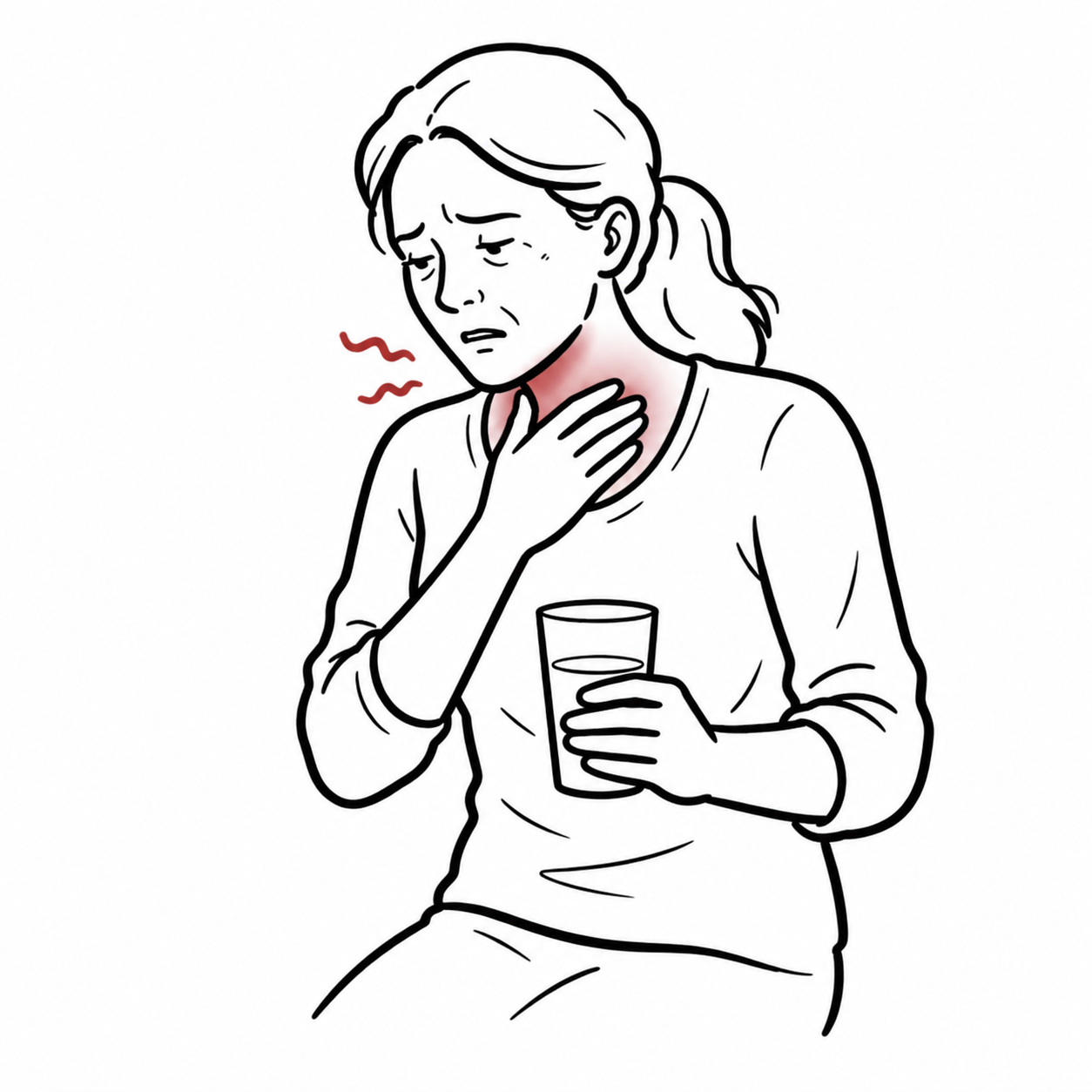
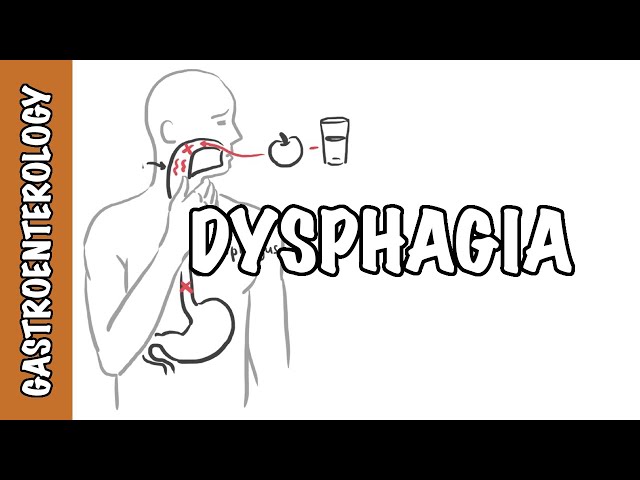
Dysphagia, from the Greek dys (difficulty, disordered) and phagia (to eat), refers to the sensation that food is hindered in its passage from the mouth to the stomach. Dysphagia always indicates malfunction of some type in the oropharynx or esophagus, although associated psychiatric disorders can amplify this symptom. Dysphagia affects up to 15% of persons age 65 or older.
Dysphagia can be divided into oropharyngeal and esophageal dysphagia, although considerable overlap may occur in certain groups of patients.
- Oropharyngeal Dysphagia problem with transferring food from the oral cavity into the oesophagus. There is a problem in starting swallowing.
- Oesophageal Dysphagia problem in transporting food along the oesophagus. Sensation of food getting stuck in the throat after swallowing.
If a person can swallowing but has a sensation of food getting stuck and has difficulty moving the food down this is oesophageal dysphagia. Next, an attempt should be made to determine whether the patient has difficulty only with solid boluses or with both liquids and solids.
| Oropharyngeal Dysphagia | Esophageal dysphagia |
| Coughing or choking with swallowing | Sensation of food sticking in the chest or throat |
| Difficulty initiating swallowing | Oral or pharyngeal regurgitation |
| Food sticking in the throat | Food sticking in the throat |
| Drooling/dribbling | Drooling |
| Unexplained weight loss | Unexplained weight loss |
| Changes in dietary habits | Change in dietary habits |
| Recurrent pneumonia | Recurrent pneumonia |
| Change in voice or speech | |
| Nasal Regurgitation or regress of fluid through the nose during swallowing | |
| Need to swallow repetitively to achieve satisfactory clearance |
recent onset of progressive dysphagia in the elderly is due to carcinoma of the oesophagus until proved otherwise.
Approach
Step 1: Emergency Triage & Red Flag Screening
- Complete Inability to Swallow / Hypersalivation & Drooling: -> Suspect Acute Esophageal Food Bolus Impactotion or Foreign Body Obstruction. Emergency upper GI endoscopy within 24 hours (or emergent if airway compromised).
- Dysphagia + Unexplained Weight Loss + Anemia + Age >= 55: -> Suspect Esophageal Adenocarcinoma / Squamous Cell Carcinoma. Urgent gastroscopy required.
- Rapidly Progressive Dysphagia + Fever + Neck Swelling / Stridor: -> Suspect Deep Neck Space Infection (Retropharyngeal or Ludwig’s Angina). Emergency airway management + CT Neck + ENT consult.
Step 2: Differentiate Oropharyngeal vs. Esophageal Dysphagia
- Oropharyngeal Clues: Coughing, choking, nasal regurgitation, wet voice, or repetitive swallowing attempts immediately upon attempting to swallow.
- Esophageal Clues: Sensation of food sticking in the throat or retrosternal region several seconds after initiating a swallow.
Step 3: Clinical Decision Branching for Esophageal Dysphagia
- Solids ONLY initially, progressing to Liquids: -> Mechanical Obstruction (Esophageal Carcinoma, Peptic Stricture, Esophageal Ring/Web).
- Solids AND Liquids SIMULTANEOUSLY from onset: -> Motility / Neuromuscular Disorder (Achalasia, Diffuse Esophageal Spasm, Systemic Sclerosis).
Patients frequently localize the site of esophageal obstruction to the cervical or retrosternal area. While localization to the upper neck can be misleading (referred from lower down), obstruction localized to the lower chest is almost always accurate.
Differential Diagnosis
Esophageal Mechanical Obstructions (Solids -> Liquids):
- Esophageal Malignancy (Adenocarcinoma / Squamous Cell Carcinoma):
- Distinguishing features: Rapidly progressive dysphagia (solids to liquids over weeks/months), profound constitutional weight loss, anorexia, iron deficiency anemia. Adenocarcinoma (distal third/GE junction, secondary to Barrett’s/GERD); Squamous Cell (proximal/middle third, secondary to smoking/alcohol).
- Peptic Stricture (Benign):
- Distinguishing features: Longstanding history of severe heartburn/GERD; gradual progression of solid food dysphagia, weight loss is usually absent.
- Eosinophilic Esophagitis (EoE):
- Distinguishing features: Young atopic individuals (asthma, eczema, food allergies); recurrent episodic solid food impactions, chest pain, “trachealized / ringed” esophagus on endoscopy.
- Esophageal Web (Schatzki Ring / Plummer-Vinson Syndrome):
- Distinguishing features: Episodic non-progressive solid food dysphagia (“steakhouse syndrome”). Plummer-Vinson triad: Dysphagia + Iron deficiency anemia + Cervical esophageal web.
Esophageal Neuromuscular / Motility Disorders (Solids + Liquids):
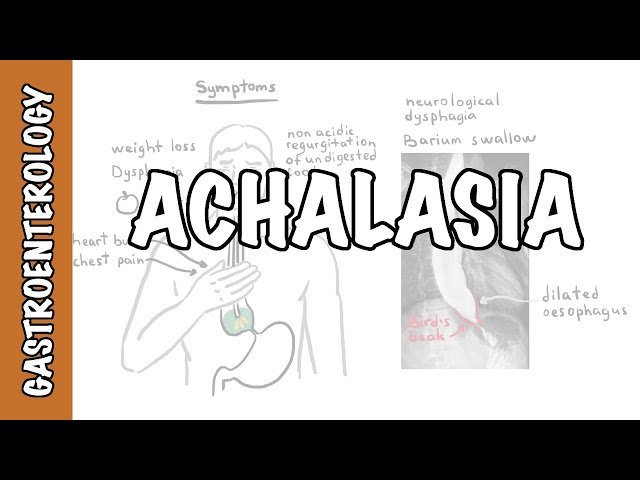
- Achalasia:
- Distinguishing features: Degeneration of myenteric plexus (loss of NO neurons) -> Failure of LES relaxation + aperistalsis. Regurgitation of undigested food, nocturnal cough, chest pain, “bird-beak” sign on barium swallow, elevated integrated relaxation pressure (IRP) on high-resolution manometry.
- Diffuse Esophageal Spasm (DES):
- Distinguishing features: Episodic severe retrosternal chest pain (mimicking angina) triggered by hot or cold liquids; “corkscrew esophagus” on barium swallow.
- Systemic Sclerosis (Scleroderma):
- Distinguishing features: Smooth muscle atrophy and fibrosis -> Absent peristalsis with hypotensive/incompetent LES leading to severe refractory acid reflux and stricture formation; Raynaud’s phenomenon, sclerodactyly.
Oropharyngeal Dysphagia Etiologies:
- Neurological / Neuromuscular: Acute Ischemic Stroke (most common acute cause), Parkinson’s Disease, Amyotrophic Lateral Sclerosis (ALS), Myasthenia Gravis (fatiguable ptosis/dysphagia), Bulbar Palsy.
- Structural / Local: Zenker’s Diverticulum (posterior pharyngeal pouch -> halitosis, regurgitation of undigested food, neck mass), Head/Neck Malignancy, Radiation Therapy strictures.
In a young adult presenting with recurrent food bolus impactions and a history of asthma or eczema, suspect Eosinophilic Esophagitis (EoE). Endoscopy typically shows stacked concentric mucosal rings (“feline” or “trachealized” esophagus) and mucosal eosinophilia (>= 15 eosinophilic/HPF) on biopsy.
Investigations
First-Line / Primary Investigation for Esophageal Dysphagia:
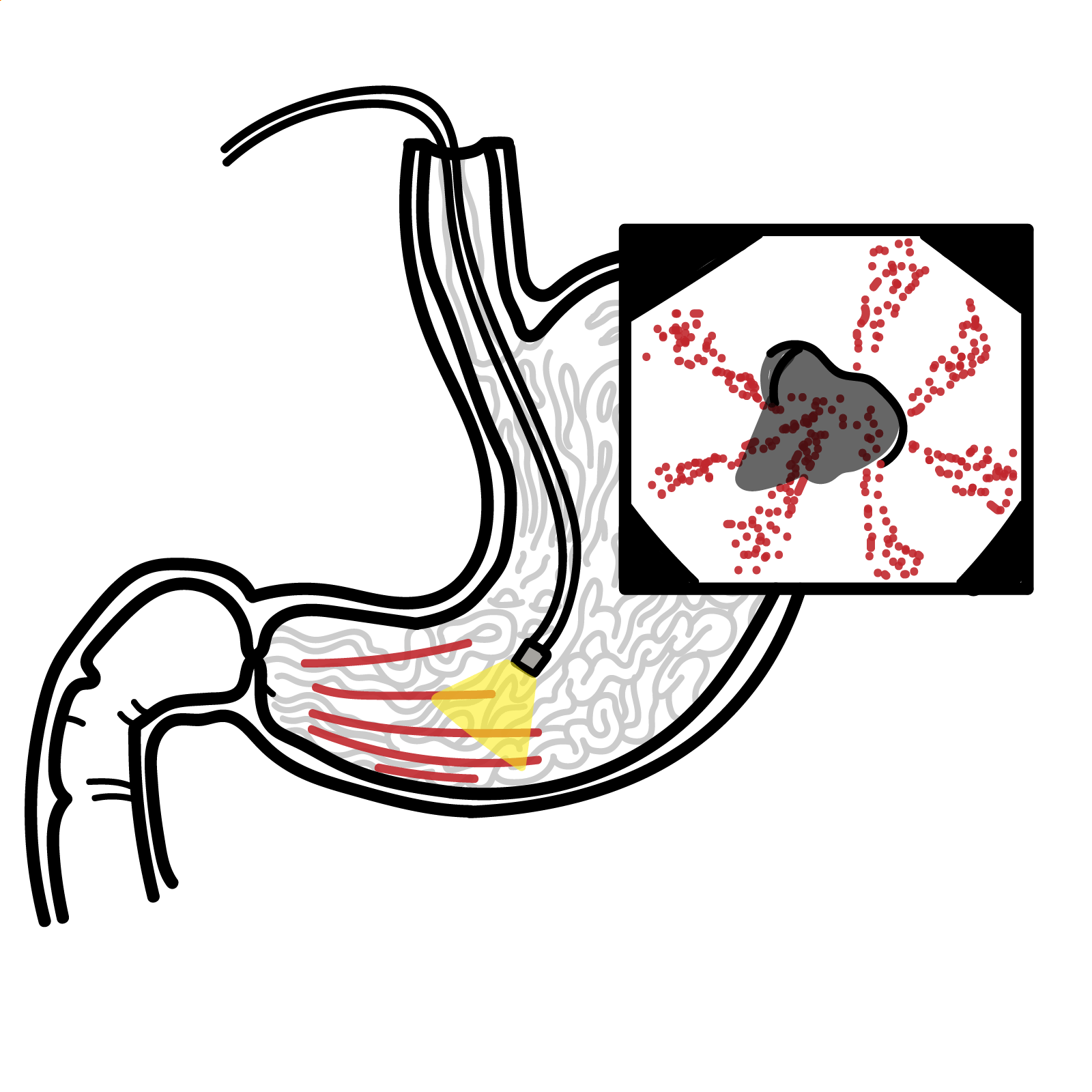
- Upper Gastrointestinal Endoscopy (Gastroscopy / OGD): Absolute first-line test for all esophageal dysphagia. Allows direct visualization of mucosal lesions, strictures, rings, or masses, and permits biopsy (to exclude dysplasia, malignancy, or EoE) and therapeutic intervention (dilation, food bolus removal).
Secondary / Specialized Diagnostics:
- Barium Swallow / Video Fluoroscopy:
- Oropharyngeal Dysphagia: Videofluoroscopic Swallowing Study (VFSS) / Fiberoptic Endoscopic Evaluation of Swallowing (FEES) is the gold standard to assess aspiration risk and swallow mechanics.
- Esophageal Motility: Useful if endoscopy is normal or unrevealing. Classic signs: “Bird-beak” (Achalasia), “Corkscrew” (Diffuse Esophageal Spasm), or Zenker’s diverticulum.
- High-Resolution Esophageal Manometry (HREM): Gold standard diagnostic tool for defining motility disorders (Achalasia, Distal Esophageal Spasm, Hypercontractile Esophagus) after gastroscopy has ruled out structural mechanical obstruction.
Gastroscopy must ALWAYS precede esophageal manometry or barium studies in esophageal dysphagia to exclude a structural or malignant lesion (Pseudoachalasia secondary to a gastric cardia tumor infiltrating the myenteric plexus can perfectly mimic true achalasia).
Critical Management
Acute Esophageal Food Bolus Impaction:
- Emergency Endoscopic Removal: Perform flexible gastroscopy to retrieve or gently push the bolus into the stomach.
- Avoid Unproven Medical Therapies: Proteolytic enzymes (e.g., papain) are contraindicated due to risk of esophageal perforation; IV Glucagon or Gas-forming agents have low efficacy and delay definitive endoscopic therapy.
Achalasia Definitive Interventions:
- Pneumatic Balloon Dilation: Endoscopic disruption of lower esophageal sphincter fibers.
- Per-Oral Endoscopic Myotomy (POEM) / Laparoscopic Heller Myotomy: Surgical/endoscopic cutting of the LES circular muscle layer (often combined with a partial fundoplication to prevent severe post-procedure GERD).
Oropharyngeal Dysphagia & Aspiration Prevention:
- Speech Pathology & Swallowing Assessment: Modify food texture (pureed diet, thickened fluids), postural maneuvers (chin-tuck swallow).
- Enteral Nutrition Support: Consider Nasogastric Tube (NGT) for acute stroke, or Percutaneous Endoscopic Gastrostomy (PEG) for chronic progressive neurodegenerative causes (ALS, advanced stroke) if oral intake is unsafe.
Never perform pneumatic dilation or myotomy for achalasia without prior cross-sectional imaging or endoscopic evaluation to exclude Pseudoachalasia caused by a underlying malignant neoplasm at the gastroesophageal junction.
References
- American Society for Gastrointestinal Endoscopy. The role of endoscopy in the evaluation and management of dysphagia [Internet]. 2014 [cited 2026 Aug 20]. Available from: https://www.asge.org/home/resources/publications/guidelines/2014_the-role-of-endoscopy-in-the-evaluation-and-management
- Canadian Association of Gastroenterology. Clinical practice guidelines for the assessment of uninvestigated esophageal dysphagia [Internet]. 2018 [cited 2026 Aug 20]. Available from: https://pmc.ncbi.nlm.nih.gov/articles/PMC6487990/



Members only discussions coming soon…