

Constipation
Overview
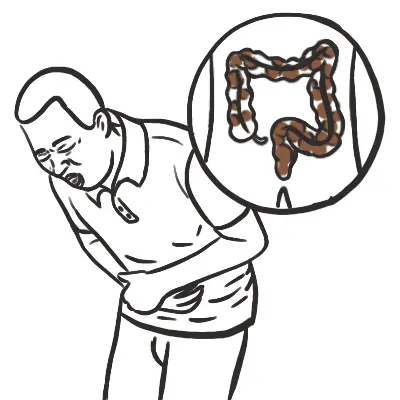
Constipation is a common clinical disorder characterized by infrequent bowel movements, hard/lumpy stools, excessive straining, a sensation of incomplete evacuation, or the need for manual maneuvers to facilitate defecation.
Diagnostic Threshold (Rome IV Criteria): Symptoms present for >= 3 months (with onset >= 6 months prior) including < 3 spontaneous bowel movements per week, along with straining, hard stools (Bristol Stool Form Scale Types 1–2), or incomplete evacuation in >= 25% of defecations.
Pathophysiologic Subtypes
- Primary (Functional): Normal-transit constipation (most common), Slow-transit constipation, or Pelvic Floor Dysfunction (Dyssynergic Defecation / Anismus).
- Secondary: Organic, metabolic, endocrine, neurogenic, structural, or medication-induced.
Constipation is a clinical diagnosis based on symptoms and stool form (Bristol Types 1–2), NOT merely bowel frequency alone. A patient passing hard, painful stools daily with severe straining still meets the definition of constipation.
Approach
Step 1: Red Flag Screening (Rule Out Colorectal Malignancy & Organic Disease)
- Screen for “ALARM” Red Flags:
- Age >= 50 years with new-onset or persistent constipation.
- Loss of weight (unintentional/unexplained) or appetite.
- Authentic hematochezia (rectal bleeding) or melena.
- Recent change in bowel habit to constipation (especially if alternating with diarrhea).
- Marked family history of Colorectal Cancer (CRC) or Inflammatory Bowel Disease (IBD).
- Other Red Flags: Unexplained Iron Deficiency Anemia, severe refractory abdominal pain, palpable abdominal/rectal mass, fever, nocturnal symptoms.
Step 2: Perform Mandatory Digital Rectal Examination (DRE)
- Assess for fecal impaction, anal fissure, stricture, hemorrhoids, rectocele, rectal prolapse, or pelvic floor dyssynergia (failure of levator ani/anal sphincter relaxation during simulated evacuation).
Step 3: Diagnostic Branching Logic
- Red Flags Present / Age >= 50 with New Onset: -> Urgent Colonoscopy (Rule out obstructing colorectal carcinoma).
- Fecal Impaction Present on DRE: -> Immediate disimpaction protocol (High-dose Osmotic Laxatives + Suppositories / Enemas).
- No Red Flags: -> Empirical trial of conservative lifestyle modifications + Osmotic / Stimulant Laxatives for 4–8 weeks.
- Refractory to Medical Laxative Therapy: -> Refer for Anorectal Manometry & Balloon Expulsion Test (evaluates dyssynergic defecation) or Colon Transit Study.
Every patient presenting with acute, new-onset constipation or red flag features requires a thorough Digital Rectal Examination (DRE) before starting laxatives to exclude rectal masses, strictures, or severe fecal impaction.
Differential Diagnosis
Primary / Functional Constipation:
- Normal-Transit Constipation (NTC – Most Common):
- Distinguishing features: Normal colonic transit time; hard stools, abdominal bloating/discomfort, good response to dietary fiber and standard laxatives.
- Slow-Transit Constipation (STC / Colonic Inertia):
- Distinguishing features: Predominantly young women; markedly delayed colonic transit; infrequent urge to defecate (e.g., once every 1–2 weeks), severe bloating, poor response to fiber.
- Pelvic Floor Dysfunction (Dyssynergic Defecation / Anismus):
- Distinguishing features: Paradoxical contraction or failure of relaxation of the puborectalis muscle and external anal sphincter during defecation; prolonged straining, feeling of anal blockage, requirement for manual/digital evacuation maneuvers.
Secondary Causes (Reversible & Organic):
- Medication-Induced (Most Common Secondary Cause):
- Offending Agents: Opioids (Codeine, Morphine, Oxycodone), Anticholinergics, Calcium Channel Blockers (Verapamil), Iron supplements, Aluminium antacids, TCAs, 5-HT3 antagonists (Ondansetron).
- Endocrine / Metabolic:
- Distinguishing features:
- Hypothyroidism (weight gain, fatigue, cold intolerance, dry skin)
- Hypercalcaemia (polyuria, confusion, “groans”), Diabetes Mellitus (autonomic neuropathy), Uremia.
- Distinguishing features:
- Structural / Mechanical Obstruction:
- Distinguishing features: Colorectal Carcinoma, Diverticular Stricture, Volvulus, Rectocele, Enterocele, Anal Fissure (severe tearing pain during defecation causing voluntary stool retention).
- Neurological / Systemic:
- Distinguishing features: Parkinson’s Disease (early autonomic sign), Spinal Cord Injury, Multiple Sclerosis, Systemic Sclerosis.
Opioid-Induced Constipation (OIC) occurs via mu-opioid receptor activation in the enteric nervous system, leading to decreased intestinal motility and fluid secretion. Unlike opioid-induced sedation or nausea, tolerance to opioid-induced constipation NEVER develops.
Investigations
First-Line / Bedside & Initial Laboratory Workup:
- Digital Rectal Examination (DRE): Evaluates resting sphincter tone, paradoxical contraction during push, rectal masses, and stool consistency/impaction.
- Basic Blood Panel (To exclude secondary metabolic/endocrine causes):
- Serum Corrected Calcium: Rule out hypercalcaemia.
- Thyroid Function Tests (TSH, Free T4): Rule out hypothyroidism.
- Full Blood Count (FBC): Screen for microcytic anemia (occult GI blood loss).
- Electrolytes & Creatinine: Rule out hypokalemia or renal impairment.
Targeted / Diagnostic Imaging & Functional Strategy:
- Colonoscopy: Mandatory in patients with red flags, new-onset constipation >= 50 years, or suspicion of structural/neoplastic obstruction.
- Anorectal Manometry & Balloon Expulsion Test: Gold standard diagnostic combination for Pelvic Floor Dysfunction / Dyssynergic Defecation. (Inability to expel a 50 mL water-filled balloon within 1–2 minutes confirms evacuation disorder).
- Radiopaque Marker Colon Transit Study (Sitz Marks Study): Evaluates for Slow-Transit Constipation. (Abdominal X-ray taken on Day 5 after ingesting capsule containing radiopaque markers; retention of > 20% markers indicates delayed colonic transit).
- Dynamic Defecography (MRI or Fluoroscopic): Evaluates structural outlet obstruction (Rectocele, Intussusception, Enterocele).
Anorectal manometry and balloon expulsion testing should always be performed prior to diagnosing “refractory slow-transit constipation,” as treating dyssynergic defecation requires specialized biofeedback therapy rather than aggressive colonic surgery.
Critical Management
Acute Fecal Impaction Management:
- First-Line Oral / Rectal Regimen: High-dose Polyethylene Glycol (Macrogol) (e.g., 8 sachets in 1 L water over 6 hours) OR Glycerol / Phosphate Enemas +/- manual softening if impaction is in the distal rectum.
First-Line Pharmacological Stepped Approach for Chronic Constipation:
- Step 1: Dietary & Lifestyle Modifications:
- Increase dietary fiber intake progressively to 25–30 g/day + fluid intake (1.5–2.0 L/day) + regular exercise.
- Step 2: Bulk-Forming Laxatives:
- Psyllium / Ispaghula Husk or Sterculia. (Must drink adequate water; avoid in fecal impaction or opioid constipation).
- Step 3: Osmotic Laxatives (First-Line Medical Therapy):
- Polyethylene Glycol (Macrogol) OR Lactulose OR Magnesium Hydroxide. Keeps water within the bowel lumen.
- Step 4: Stimulant Laxatives (Add-on / Rescue):
- Senna, Bisacodyl, or Sodium Picosulfate. Stimulates enteric nerves to increase peristalsis.
- Step 5: Targeted Prescription Agents for Refractory Cases:
- Prucalopride: Selective 5-HT4 receptor agonist (stimulates colonic mass movements).
- Lubiprostone / Linaclotide: Secretagogues (increase intestinal chloride and water secretion).
- Peripherally Acting Mu-Opioid Receptor Antagonists (PAMORAs): Naldemedine or Naloxegol specifically for Opioid-Induced Constipation (OIC).
Dyssynergic Defecation Specialised Treatment:
- Anorectal Biofeedback Therapy: First-line gold standard treatment (retrains pelvic floor muscle relaxation during defecation; high long-term success rate > 70–80%).
Bulk-forming laxatives (e.g., Psyllium) should be AVOIDED in patients with severe opioid-induced constipation or fecal impaction, as they expand in volume and can precipitate acute mechanical bowel obstruction.
References
- American Gastroenterological Association; American College of Gastroenterology. Clinical practice guideline: pharmacological management of chronic idiopathic constipation [Internet]. 2023 [cited 2026 Aug 20]. Available from: https://www.gastrojournal.org/article/S0016-5085(23)00513-9/fulltext
- American College of Gastroenterology. Joint AGA-ACG clinical practice guideline on chronic idiopathic constipation treatments [Internet]. 2023 [cited 2026 Aug 20]. Available from: https://gi.org/journals-publications/ebgi/schoenfeld2_june2023/




Members only discussions coming soon…