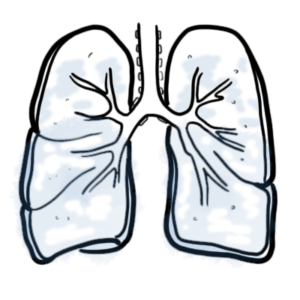
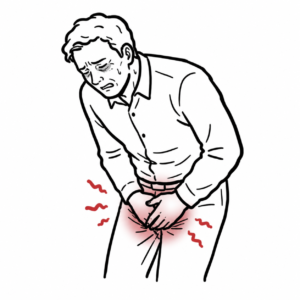
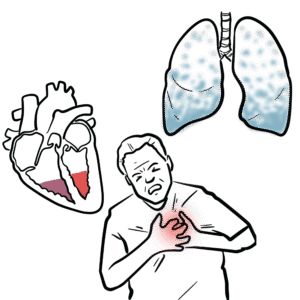
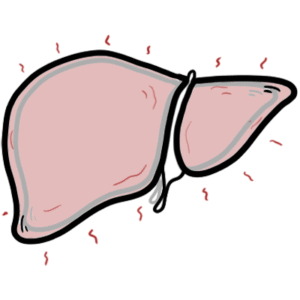
0:00 In this video, we're going to talk about the management of sepsis. 0:09 Sepsis is a big health issue. 0:12 It causes death and also morbidity. 0:17 Sepsis can be hard to identify people, be it children or the elderly, 0:22 especially children 0:23 and the elderly. 0:24 This video will again focus on the septic pathway in adults specifically. 0:29 This is a general overview and an introduction to the septic pathway. 0:33 It is advised that you learn your hospital's algorithm or pathway first. 0:39 It is important to detect when a person is becoming septic by firstly looking 0:43 at their 0:43 risk factors, but also some signs and symptoms which can be very general. 0:48 These signs and symptoms include more than one of the following. 0:52 believers, rigors, confusion, altered loss of consciousness, immunocompromised, 0:59 having 0:59 a chronic illness, abdominal pain and distension, have a line associated 1:06 infection, urine frequency 1:08 as well as having an odorous urine, being of age greater than 65, having a 1:15 cough and 1:16 also having a lot of sputum. 1:18 Finally, as a patient is in hospital, it is important, it is important to 1:24 always check 1:25 their vitals and to see of any trend in the observation chart. 1:30 By charting the patient's vital signs regularly, we can predict possible 1:36 dangers to come and 1:37 intervene before the bad becomes really bad. 1:41 So vital signs include low blood pressure, hypotension, body temperature that 1:47 is unusually 1:47 high, respiratory rate greater than 20 as well as tachycardia. 1:54 Finally bloods can show neutrophilia or neutropenia and these are also 1:59 important findings. 2:01 Anyone with suspicion of sepsis should have investigations which on the one of 2:06 the most 2:07 important one is measuring serum lactate. 2:10 A serum lactate over 4 million moles of lita indicates acidosis and highly 2:17 likely sepsis. 2:19 If sepsis is suspected, basic doctors A, B, C, D is performed. 2:25 So A, A looks at the patient's airways, check for patency, B is for breathing, 2:33 give oxygen 2:34 and aim for an oxygen saturation of 95% or greater. 2:41 C is for circulation and circulation involves three things. 2:47 Number one, get IV axis, collect bloods and also check the bloods. 2:55 If IV axis cannot be obtained, call expert assistance, usually after two failed 3:02 attempts. 3:03 Questions to collect include bloods for culture, blood for culture should be 3:10 done twice and 3:11 collected from at least two different sites. 3:14 Other blood tests include full blood count, EUC, CRP, LFT, glucose and procalc 3:24 itonin. 3:25 The second part of circulation is to give IV fluids for resuscitation in case 3:31 of septic 3:32 shock. 3:34 This is between 250 to 500 milliliters of 0.9 sodium chloride bolus and if 3:42 there is no response 3:44 after that first dose, give another 250 to 500 milliliters of 0.9% sodium 3:52 chloride again. 3:55 Keep note that these values may change and that different hospitals may have 3:58 different 3:59 dosages. 4:02 And again, this dose is for adults specifically. 4:05 Finally, the third part of circulation is the administration of empirical 4:10 antibiotics 4:10 and this is done intravenously. 4:13 A, B, C, D. D is for disability. 4:18 This is to quickly assess consciousness. 4:20 A quick way to do so is by doing AFPU, which looks at alertness, verbal 4:27 response, pain 4:28 and unresponsiveness. 4:31 E is examine or exposure. 4:37 Examine the patient for source of infection. 4:40 This may depend on what they presented with in the first place, for example, a 4:45 lung infection 4:46 or a UTI. 4:48 Take a swab, culture the swab, perform a chest x-ray if pneumonia or lung 4:53 infection is suspected, 4:54 ECG for possible heart involvement. 4:57 Expect the skin for signs of rash or wound infections. 5:03 F is for fluid balance. 5:05 Patients with suspected sepsis should be monitored for fluid input and output. 5:10 A urinary catheter is usually done to assess fluid output. 5:15 Aim for a urine output of 0.5 milliliters per kilogram per hour for adults. 5:22 G is for glucose levels, as hypo and hyperglycemic states can cause ill 5:29 patients. 5:31 Finally, it is important to monitor and reassess for any signs of deterioration 5:38 . 5:38 These signs can include the patient's level of consciousness going down. 5:44 The patient is becoming more tachypneic and tachycardic. 5:48 This systolic blood pressure is less than 100, very hypertensive, or a urine 5:54 output less 5:55 than 0.5 milliliters per kilogram per hour, despite fluid intervention. 6:02 Or elevating serum lactate above 4 millimoles per liter. 6:07 It is important to keep chart and look at the trends in the observations chart. 6:12 Finally, it is important to remember that sepsis is a leading cause of 6:16 mortality and 6:17 morbidity worldwide. 6:19 It is important to identify patients who are susceptible or who may have sepsis 6:24 and to 6:24 intervene before it gets worse. 6:27 Thank you for watching, I hope you enjoyed this video.