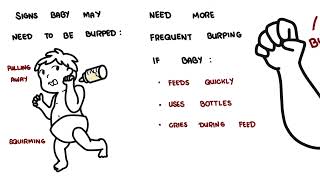
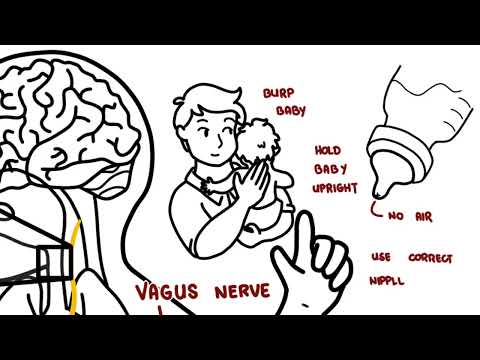
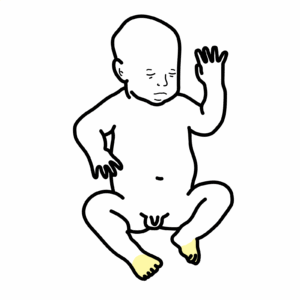
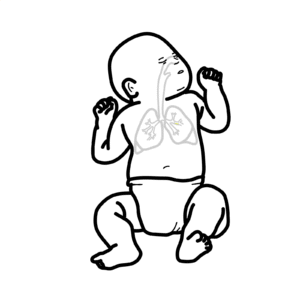
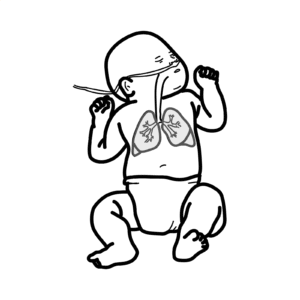
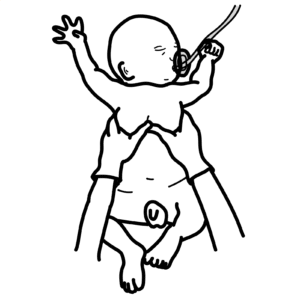
0:00 In this video we're going to talk about burping in babies. 0:08 Now burping is an important part of feeding for newborns and young infants. 0:14 When babies feed, whether by breast or bottle, they tend to swallow small 0:17 amounts of air along 0:18 with the milk. 0:20 This trapped air can build up in the stomach and cause discomfort, fussiness, 0:25 or even lead 0:26 to spitting up. 0:28 Burping helps release the air, easing pressure in the baby's tummy and making 0:32 feeding more 0:32 comfortable. 0:34 The mechanism behind burping is simple but important. 0:38 When air gets trapped in the upper part of the stomach during feeding, it 0:41 creates internal 0:42 pressure. 0:43 Burping allows this air to escape up through the esophagus and out of the mouth 0:54 . 0:54 The upward release is usually triggered by a gentle, external stimulus, such as 0:58 padding 0:59 or rubbing the baby's back, which helps relax the lower esophageal sphincter, 1:05 the small 1:06 ring of muscle between the esophagus and stomach, and encourages the air to 1:12 come up. 1:13 Because a baby's digestive and muscular system are still developing, they often 1:17 need help 1:17 from a parent or caregiver to release this trapped air effectively. 1:24 While every baby needs to burp during every feed, but many benefit from it, 1:27 especially 1:28 newborns whose digestive systems are still developing as mentioned, some babies 1:32 may need 1:33 to burp more often than others depending on how they are fed. 1:37 For example, babies who feed quickly use bottles or cry during feeds may 1:42 swallow small 1:43 air and need to burp more frequently. 1:46 Signs that a baby may need to be burped include squirming, pulling away from 1:51 the nipple, 1:52 arching their backs, or showing general signs of discomfort. 2:01 There are several gentle techniques to burp a baby and parents can choose 2:04 whichever position 2:05 feels more comfortable and effective. 2:07 A common method is to hold the baby upright against your chest with their chin 2:11 resting 2:12 on your shoulder while gently patting or rubbing their back. 2:16 Another approach is to sit the baby upright on your lap, supporting their chest 2:22 and head 2:22 with one hand while patting their back with the other. 2:27 Alternatively, laying the baby across your lap on their tummy, with their head 2:32 supported 2:32 slightly above their chest. 2:35 This can also help release trapped air. 2:39 It's helpful to try burping your baby part way through a feed, especially if 2:43 bottle feeding 2:44 and again at the end. 2:46 Some babies will burp almost instantly, while others may take a few minutes or 2:50 not burp 2:51 at all. 2:53 If no burp comes after a few minutes and the baby seems comfortable, it's fine 2:56 to continue 2:57 the feed or settle them to sleep. 3:00 Burping tends to become less necessary as babies grow older and their digestive 3:04 system 3:05 matures, usually around 4 to 6 months of age. 3:09 Ultimately, burping is a simple but effective way to make feeding more 3:14 comfortable for your 3:16 baby. 3:17 It can reduce spit ups, ease gassiness, and help prevent feeding related fuss 3:23 iness. 3:24 While it might not seem essential every time, regular burping especially in the 3:28 early weeks 3:28 can go a long way in keeping your baby content and well fed. 3:39 You