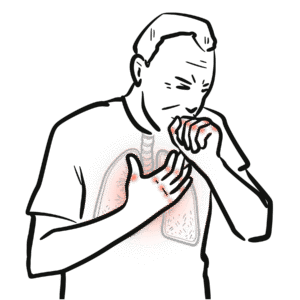
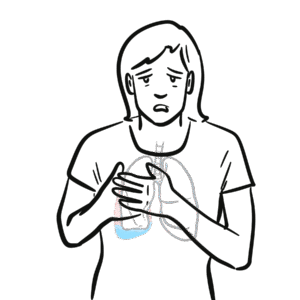
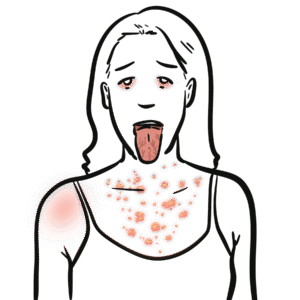
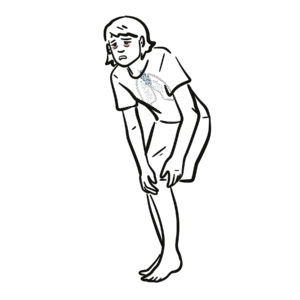
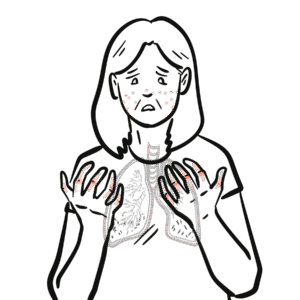
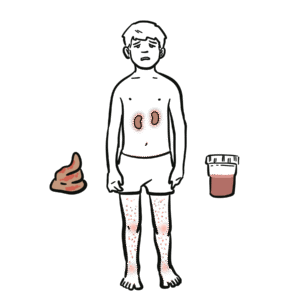
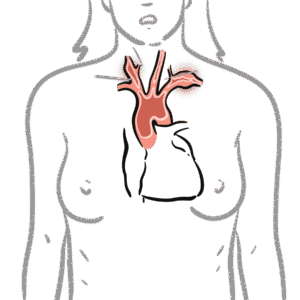
0:00 In this video, we are going to talk about relapsing polykondritis. 0:09 Relapsing means coming and going, poly means many or multiple, and chondritis 0:14 means inflammation 0:15 of the cartilage. 0:17 Relapsing polykondritis is an auto-immune condition that causes inflammation of 0:21 the cartilage 0:22 throughout the body. 0:24 It is characterized by recurrent inflammation and destruction of cartilaginous 0:29 structures 0:30 such as those found in the ears, nose, joints, and trachobronkyl tree. 0:36 The exact cause of relapsing polykondritis remains unclear and is thought to 0:41 involve abnormal 0:42 immune response, targeting cartilage components. 0:47 It's thought to involve both cell-mediated and humoral immune responses, with 0:52 antibodies 0:52 being produced towards type 2, collagen, and matriline 1. 0:59 And these antibodies are found at sites of inflammation, such as here in the 1:05 ear, which 1:05 is predominantly made up of elastic cartilage. 1:10 Humans have three types of cartilage in the body. 1:14 And relapsing polykondritis attacks all of them. 1:16 These include highline cartilage, such as your nose, larynx, and those that 1:20 cover your 1:21 joints, fibro cartilage, the ones that are on your axial skeleton, your spine, 1:26 and elastic 1:27 cartilage, such as those found in the ears. 1:31 Recurrent inflammation of cartilage causes damage and even deformity. 1:35 But the inflammation can also affect non-cothlaginous tissue, such as those 1:41 rich in proteoglycans. 1:43 And these are things such as blood vessels. 1:47 So what clinical manifestations can people with relapsing polykondritis have? 1:52 Well, firstly, as the name suggests, relapsing polykondritis means relapsing, 1:57 coming and going, 1:59 and polykondritis, inflammation of multiple, cut-laginous structures in the 2:04 body. 2:05 The onset of inflammation is often abrupt, with the appearance of one or two 2:08 sites of 2:09 cut-laginous inflammation, such as the ears and the joints. 2:13 The pattern and severity varies amongst people. 2:17 Systemic inflammatory features, such as fevers, fatigue, and weight loss, is 2:22 common. 2:23 Ear involvement is the most frequent presenting manifestation of relapsing poly 2:27 kondritis. 2:28 Patients often experience auricular chondritis, inflammation of the outer ear, 2:32 leading to 2:33 red, swollen, and painful ears, usually sparing the lobule. 2:38 Recurrent episodes of auricular inflammation can lead to cauliflower ear deform 2:42 ities, such 2:43 as those seen in people who do UFC. 2:49 Nasal involvement include nasal congestion, rhinorrhea, and epistaxis. 2:55 Nasal chondritis, inflammation of the cut-laginous nose, can lead to nasal 2:59 bridge collapse and 3:01 saddle nose deformity. 3:04 Eye involvement is very common, and include conjunctivitis, scleritis, and ep 3:08 iscloritis. 3:12 Laryngo and arthritis affect 1/3 of people, and it can affect both small and 3:17 large joints. 3:18 Laryngo tracheal bronchial involvement occurs in 50% of people with relapsing 3:23 polykondritis 3:24 and is among the most serious manifestation of the condition. 3:29 The larynx, the trachea, and the bronchus are also made up of elastic and high 3:35 line cartilage. 3:36 For example, in this cross section of the trachea, you can see it's made up of 3:41 highline cartilage. 3:43 Inflammation of the larynx and the trachea causes symptoms, including hoars 3:47 eness and shortness 3:48 of breath. 3:50 The inflammation of the structures, for example the trachea, can lead to muc 3:54 osal edema, destruction 3:55 and collapse of the tracheal cartilage, and it can lead to tracheal stenosis or 4:01 stricture, 4:02 which may lead to life-threatening airway obstruction, necessitating tracheost 4:08 omy. 4:09 Another important manifestation is cardiovascular involvement, which includes 4:15 vasculitis, and 4:16 relapsing polykondritis, as mentioned, can also target non-cut glandular 4:21 structures such 4:22 as blood vessel. 4:24 Information here can affect small, medium, and large blood vessels. 4:30 Compilation of the aortic ring can lead to dilation of the aortic root and aort 4:36 ic regurgitation, 4:38 which can then also lead to arrhythmias. 4:42 Skid involvement is not very specific and include many things, including perper 4:47 a, erythemonodosum, 4:49 or urticaria. 4:54 Relapsing polykondritis can occur by itself as a primary issue, or typically 4:59 associated 4:59 with other diseases. 5:01 A lot of people with relapsing polykondritis will have another rheumatological 5:06 disorder, 5:06 such as rheumatoid arthritis, systemic lupus erythmatosis, vasculitis, and 5:12 another important 5:13 association is Vexus syndrome. 5:16 This is a rare syndrome, predominantly in males because it's excellent, and it 5:20 should 5:21 be considered a very important differential with someone who has chondritis, 5:25 especially 5:26 in the presence of abnormal blood work. 5:29 Diagnosis of relapsing polykondritis is based on recognition of typical 5:33 clinical features. 5:35 There are many criteria out there, but macadam and associates have created one 5:41 that is useful, 5:42 and it requires three or more of the following clinical features. 5:47 Bilateral orricular chondritis, non-erosive seronegative inflammatory polyarth 5:52 ritis, nasal 5:53 chondritis, eye involvement, laryngotrykyl bronchitis. 5:59 Laryngotrykyl bronchial involvement, inner ear involvement, and cartilage bi 6:03 opsy, which 6:04 confirms a compatible inflammatory picture. 6:12 For treatment of relapsing polykondritis, it depends if it's mild or severe. 6:16 In mild cases of chondritis, the use of non-steroidal anti-inflammatory drugs 6:20 and oral corticosteroids 6:22 are used. 6:24 In more aggressive disease, or those that are recurrent, the use of higher 6:29 doses of prednisone 6:31 and also immunosuppression is important, with the addition of things such as 6:36 methotrexate, 6:37 as a fireprint, and cyclophosphamide. 6:42 Biological agents also have a role, TNF alpha being the main one. 6:46 Of course, remember to look out and manage complications of relapsing polykond 6:51 ritis, including 6:52 heart disease and laryngotrykyl bronchial involvement. 6:58 So in summary, relapsing polykondritis is an autoimmune disorder, characterized 7:03 by inflammation 7:04 of cartilage throughout the body, leading to things such as salamos deformity 7:10 and cauliflower 7:11 ear from auricular chondritis. 7:14 Thanks for watching.