

Cough
Overview
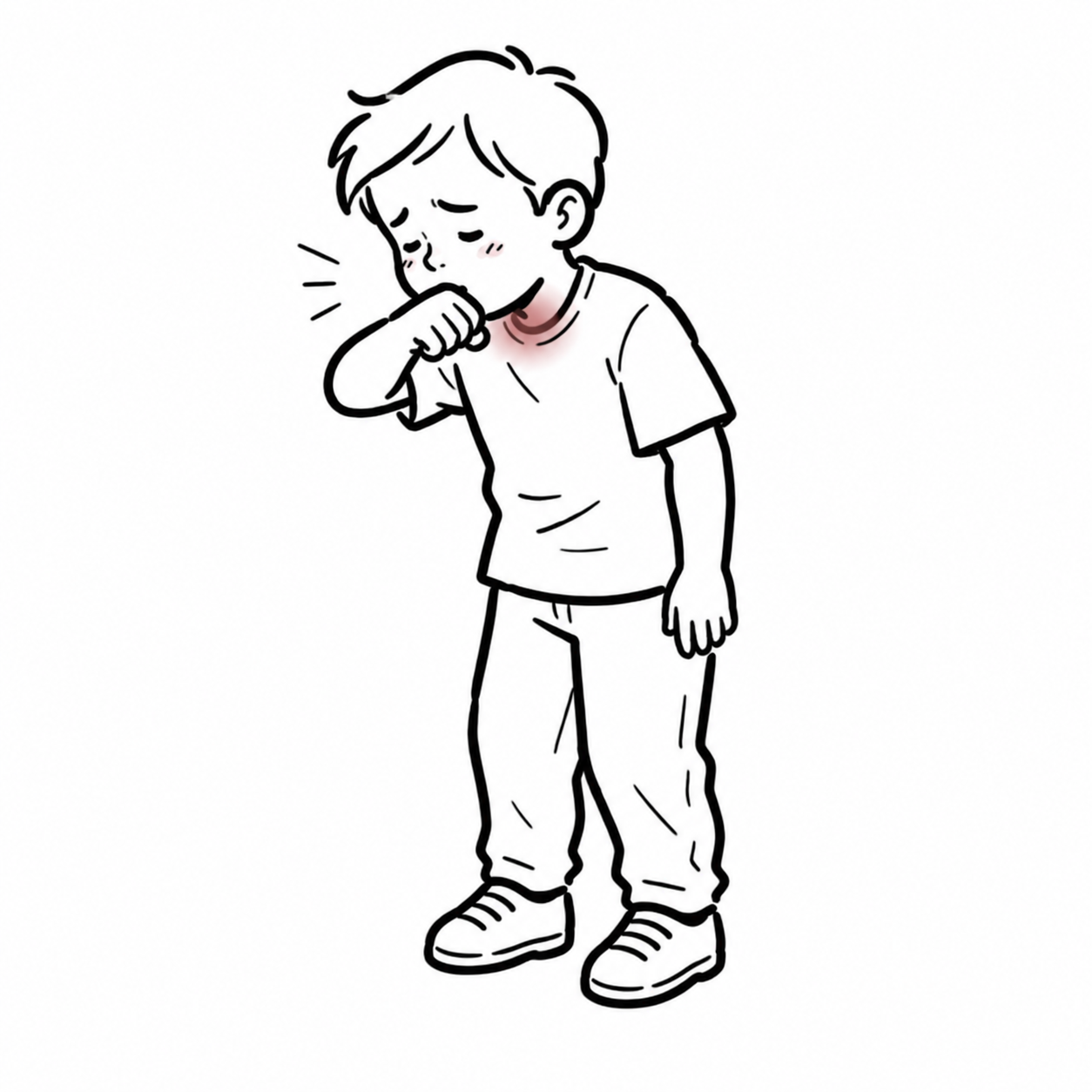
Coughing is a protective reflex, a component of normal respiratory function, it enables irritants and foreign bodies to be expelled from the vulnerable respiratory tract, however it can also be voluntarily generated and therefore has non-reflex elements to assist/enhance with mucocilliary clearance.
Definition
Acute cough: present up to 14 days/2 weeks
Prolonged acute cough: lasting 2 – 3 weeks
Chronic cough: present > 3 weeks
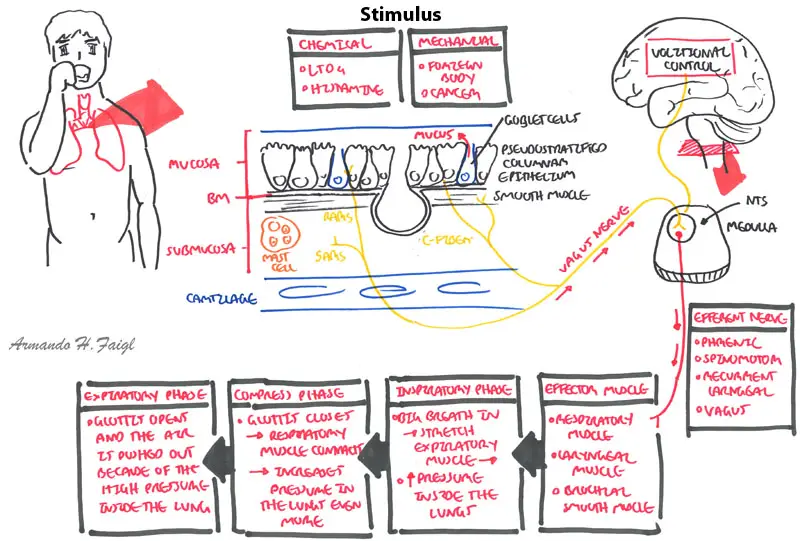
The anatomical structures of the respiratory tract are very sensitive structures.
- Larynx and Carina – especially sensitive (gateway to trachea and L + R main bronchus)
- Trachea and Bronchi – very sensitive to light touch, a small amount of irritation can initiate the reflex
- Terminal bronchioles and Alveoli – chemically sensitive to corrosive chemicals such as sulphur dioxide and chlorine gas
Approach
- History
- Examination
- +/-Investigations
| Alarm symptoms |
| Prominent dyspnoea, esp. at night or rest |
| Recurrent episodes of chronic wet or productive cough |
| Systemic Sx: fever, anorexia, wt. loss, failure to thrive |
| Feeding difficulties inc. choking or vomiting |
| Recurrent pneumonia |
| Additional breath sounds |
| Abnormal clinical respiratory examination |
| Abnormal CXR |
| COMMON CAUSES OF COUGH | ||||
| Conditions | History | Examination | Workup | Aetiology |
| Asthma | Expiratory wheeze | Oxygen, Fluids, bronchodilators +/-inhaled corticosteroids (depends on severity) | Infection | |
| Foreign body | Sudden onset, history of choking | Cough, Stridor | CT, bronchoscopy | Foriegn Body |
| Viral bronchiolitis | Coryzal symptoms (2-3 days) followed by respiratory distress | Fine inspiratory crackles, expiratory wheeze, fever | Usually non required | RSV |
| Acute URTIs | Coryzal symptoms | |||
| Allergic rhinitis | ||||
| Croup (laryngotracheobronchitis) | Barking cough, coryza | Low-grade fever, nasal flaring, respiratory retractions, stridor | Generally not indicated | Generally not indicated |
Young children develop 6-12 respiratory tract infections per year, usually accompanied by cough. In most children the cough is self-limiting (1-3) weeks.
| CAUSES OF CHRONIC COUGH | ||||
| Condition | History | Examination | Workup | Aetiology |
| Smoking Exposure | Smoking exposure | Not significant | Generally not indicated | Smoking |
| GOR/GER | Heartburn present, or if cough is worse at night or after eating specific foods | |||
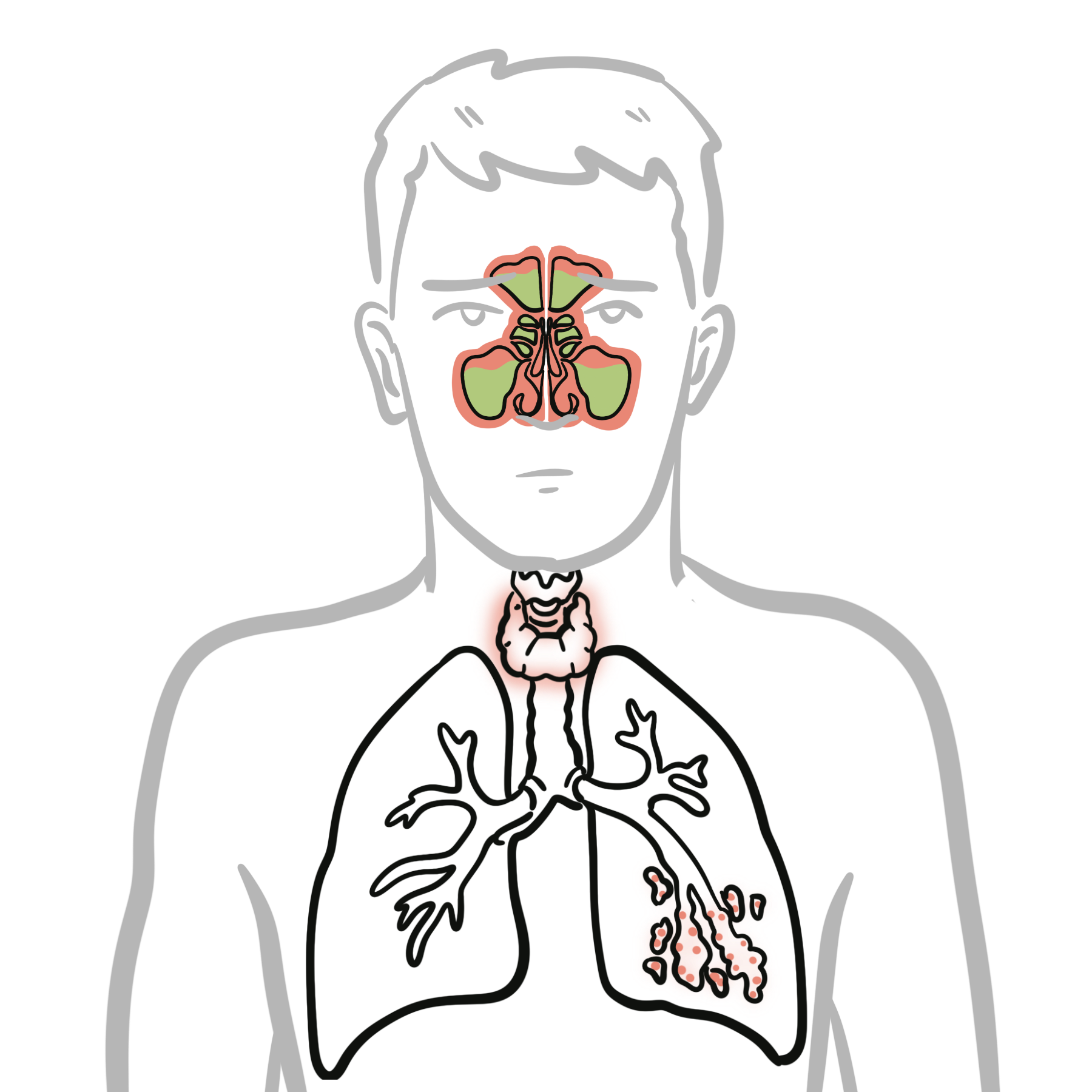
| Sinusitis | Nasal discharge, obstruction, toothache, unilateral facial pain, headache, fever “Sinusitis is not associated with cough” | Tender sinuses, fever, inflamed nasal mucosa, pus exudating from middle meatus, maxillary transillumination | ||
| Post-nasal drip | ||||
| Bronchiectasis | ||||
The most common causes of chronic cough in children are asthma, respiratory tract infections, and gastroesophageal reflux disease.
Management
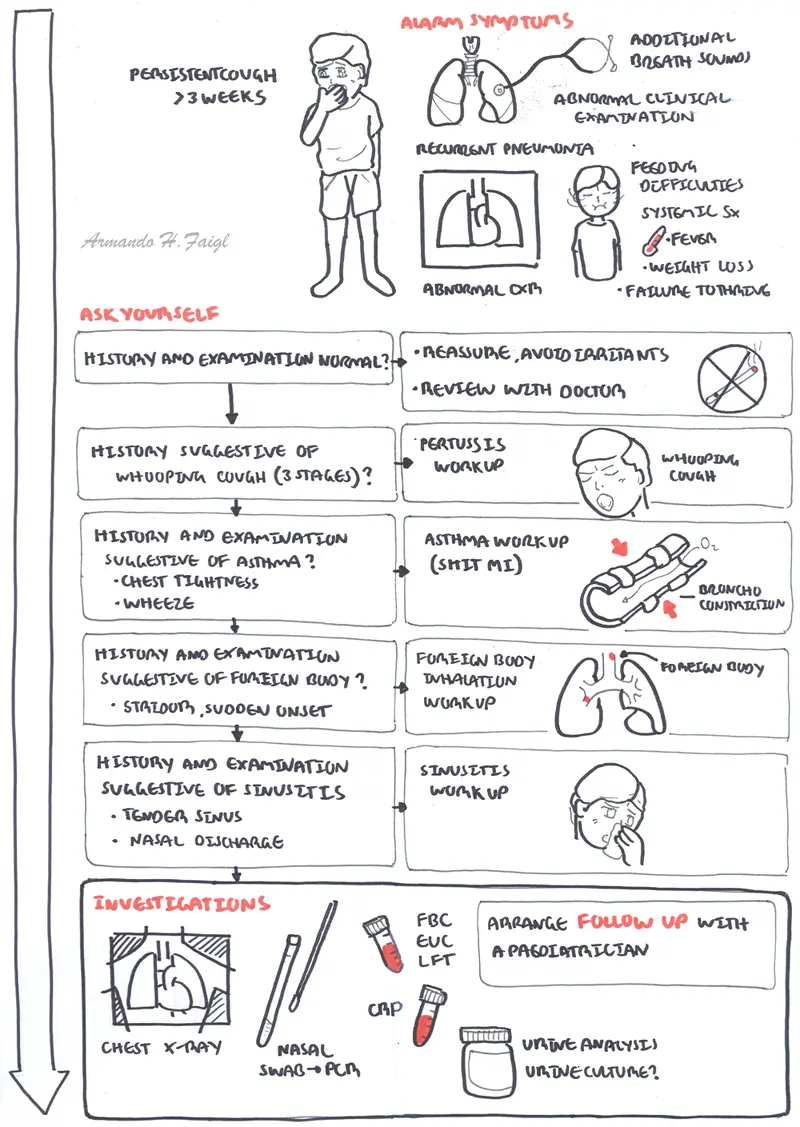
Well child, normal examination
- Watch and see
- Avoid exposure to irritants such as cigarette smoke
- Arrange follow up with paediatrician in 2-3 weeks.
Unwell child or abnormal examination
- These children will need further investigation and treatment and senior advice should be sought
Members only discussions coming soon…