

Visual explanationFree resource
Visual medical education by Armando Hasudungan
Medical science, drawn into focus.
Explore visual explanations that reveal how the facts, processes and clinical patterns fit together—then discover the coming AH study platform, built to guide what you study next and check what stuck.
Connected studyComing soon
Clear visual explanations used by medical and allied-health learners around the world.
Explore the free library
Start with the topic in front of you.
Browse by subject or jump straight into the explanation you need. No account required.
Severe Combined Immunodeficiency (SCID)
Overview Severe combined immunodeficiency (SCID) is the most severe form of primary immunodeficiency, characterised by profound defects in both humoral (B-cell) and cellular (T-cell) immunity. It presents in infancy with recurrent, severe, and opportunistic infections, chronic diarrhoea, and failure to thrive. Without curative therapy, most infants die within the first year of life. Incidence is…
View topic ↗Acute Lymphoblastic Leukaemia
Overview Acute Lymphoblastic Leukaemia (ALL) is a malignancy of lymphoid cells. The two main ALL is T-cells ALL and B-cells ALL. In ALL there is uncontrolled proliferation of immature lymphoblasts in the bone marrow leading to overcrowding affecting other cell lineage. It is the commonest cancer in childhood, rare in adults and has a strong associated with…
View topic ↗Pre-menstrual Syndrome (PMS)
Overview Premenstrual syndrome is defined as recurrent moderate psychological and physical symptoms that occur during the luteal phase of menses and resolve with menstruation. Most women of reproductive age experience one or more mild emotional or physical symptoms for one to two days before the onset of menses. These symptoms, such as breast soreness and bloating,…
View topic ↗Polyarteritis Nodosa
Overview Polyarteritis Nodosa (PAN) is a necrotising vasculitis that affects medium-sized muscular arteries, leading to transmural inflammation, fibrinoid necrosis, and subsequent aneurysm formation or ischemia. It does not involve arterioles, capillaries, or venules, and is not associated with ANCA. PAN can affect any organ except the lungs. It typically presents in middle-aged adults, more commonly…
View topic ↗Mitral Regurgitation (Incompetence)
Overview Mitral regurgitation (MR), which is also known as mitral insufficiency, is a common heart valve disorder. When MR is present, blood leaks backwards through the mitral valve when the heart contracts. This reduces the amount of blood that is pumped out to the body. Patients with acute mitral regurgitation (MR) are often gravely ill with…
View topic ↗Spondylarthropathy
Overview The spondyloarthropathies are a diverse group of inflammatory arthritides that share certain genetic predisposing factors and clinical features. Their most characteristic feature is inflammatory back pain. Enthesitis, another characteristic feature, involves inflammation at sites where tendons, ligaments, or joint capsules attach to bone. Features of Spondylarthropathy Sacroiliac and spinal (axial involvement) Enthesitis at long attachments…
View topic ↗DiGeorge Syndrome
Overview DiGeorge syndrome (22q11.2 deletion syndrome) is a congenital immunodeficiency and multisystem disorder caused by a microdeletion on chromosome 22. It leads to defective development of the third and fourth pharyngeal pouches, resulting in thymic hypoplasia/aplasia, hypocalcaemia due to parathyroid hypoplasia, and congenital heart defects. Prevalence is estimated at 1 in 4000 live births. Clinical…
View topic ↗Full resource library
Browse all topics ↗Choose how you learn
One idea. More than one way to see it.
Use the format that helps the topic click, then switch formats when you need to reinforce it.
01 / WATCH02 / READ03 / SEE04 / CHECK
Videos
Hand-drawn explanations that build the big picture as the concept unfolds.
Notes
Clear written explanations for review, reference and filling in the details.
Diagrams
Visual snapshots that help you easily review topics.
Questions
Test whether the explanation stayed with you—not just whether it looked familiar.
Good places to begin
Explanations learners return to.
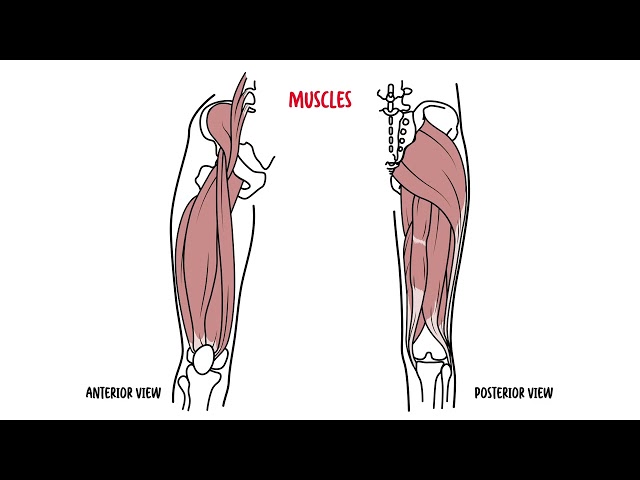
Anatomy of the Hip Joint | Capsule, Muscles & Clinical Relevance Explained
Learn the detailed anatomy of the hip joint in this concise medical video, covering the hip joint capsule, key muscles including iliopsoas, gluteals, and short external rotators, and relevant clinical conditions such as hip dislocations, vascular necrosis and examination techniques. This video is ideal for medical students, physiotherapists, orthopaedic trainees, and anyone studying musculoskeletal anatomy.…
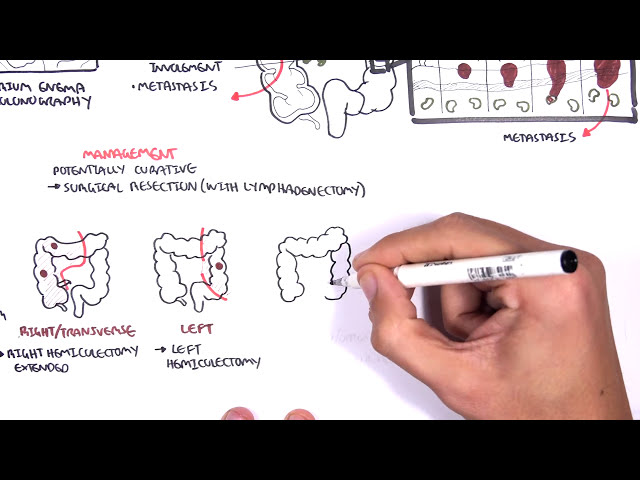
Colorectal Cancer – Overview
Explore the essential concepts of colorectal cancer, including risk factors, genetic pathways, signs and symptoms, and screening methods. This overview also covers the pathophysiology, diagnosis, staging, and treatment options for effective clinical understanding.
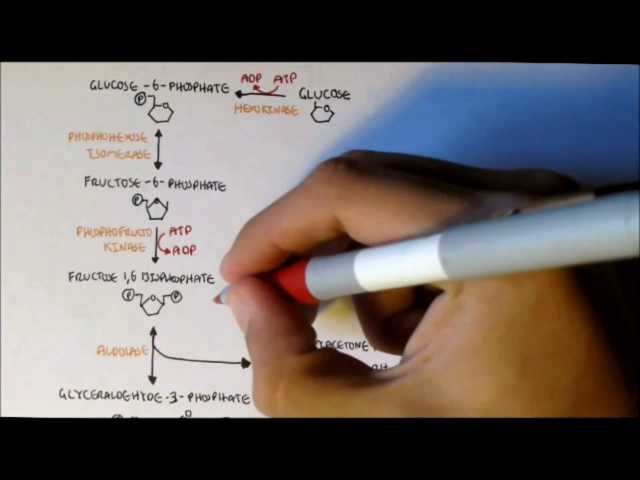
Human Metabolism Map II – Gluconeogenesis & Glycogenesis
Unlock the key steps of Gluconeogenesis and Glycogenesis in this video from the Human Metabolism Map series. Learn the enzymes, regulation, and physiological importance of glucose synthesis and storage—essential for biochemistry exams and clinical application.
Our mission
Medical science is complex. Understanding it should feel possible.
Armando Hasudungan turns difficult medical science into clear visual explanations and connected learning experiences—so learners can see the whole picture, remember what matters and find a clearer way forward.
See it clearly
Turn abstract processes and invisible relationships into something the learner can picture.
Connect the pieces
Build understanding around how concepts fit together—not a pile of isolated facts.
Make it useful
Help learners move from explanation to recall, revision and the next logical step.
What clarity feels like
When the topic stops being a blur.
Learners do not come back because the subject became easy. They come back because the explanation gave them a picture they could work with.
“Armando's teaching style gives me the foundational knowledge.
Jessica Payne-Burnett
Medical Student, Charles Sturt University
“The notes I make during his videos help me retain everything better.
Ayesha RaiStudent, Islamabad Medical and Dental College
“The drawings are amazing and super easy to remember.
Reem Mohamed Khair Abdalrazig
Student, Neelain University
Coming soon: the AH study platform
The explanation is only the start.
The free library helps you find a clear explanation. The AH platform is being built to help you connect the resources, follow a clearer path and check what actually stuck.
- Watch in a focused, ad-free study environment.
- Move between connected videos, notes, diagrams and questions.
- Know what belongs next instead of rebuilding the study path yourself.
- Test your understanding while the topic is still fresh.
New and worth a look
Keep building the picture.
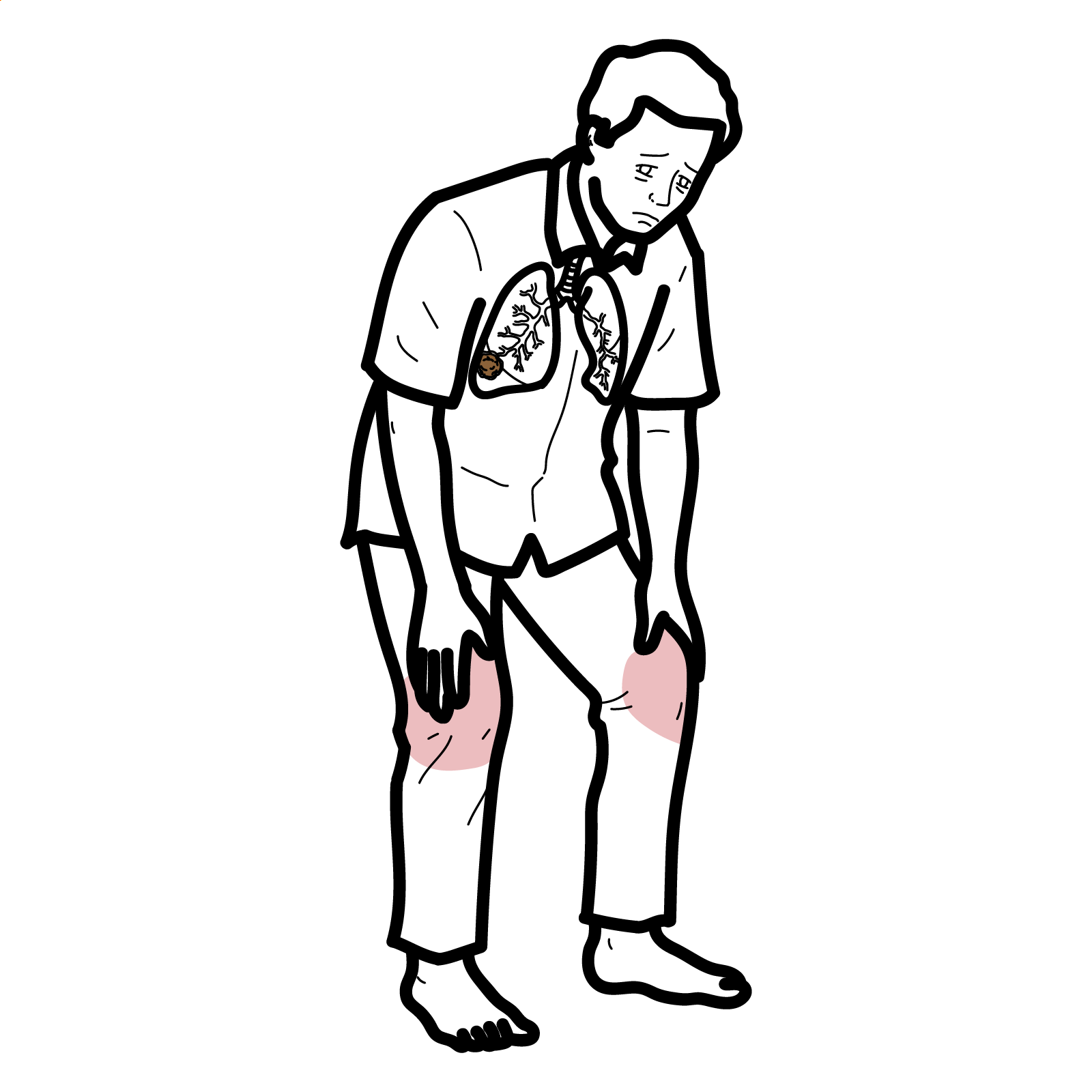
Lambert-Eaton Myasthenic Syndrome
Overview Lambert–Eaton myasthenic syndrome (LEMS) is a rare autoimmune disorder of the presynaptic neuromuscular junction. It causes impaired acetylcholine release, producing the characteristic triad of proximal muscle weakness, reduced reflexes and autonomic dysfunction. LEMS may occur as a paraneoplastic syndrome—most commonly associated with small-cell lung cancer (SCLC)—or as a non-tumour-associated autoimmune disorder. Neuromuscular junction: connection…
View this topic ↗About Visualising Medicine
Good education does not remove complexity. It makes complexity feel simple.
Visualising Medicine is the team behind Armando Hasudungan. We bring together medicine, illustration, writing and technology to make difficult ideas clearer—and build better ways for learners to use them.