

Visual explanationFree resource
Visual medical education by Armando Hasudungan
Medical science, drawn into focus.
Explore visual explanations that reveal how the facts, processes and clinical patterns fit together—then discover the coming AH study platform, built to guide what you study next and check what stuck.
Connected studyComing soon
Clear visual explanations used by medical and allied-health learners around the world.
Explore the free library
Start with the topic in front of you.
Browse by subject or jump straight into the explanation you need. No account required.
Reactive Arthritis
Overview Reactive arthritis is a seronegative spondyloarthropathy that occurs after a genitourinary or gastrointestinal infection, typically presenting as an asymmetric oligoarthritis, often with associated conjunctivitis and urethritis (formerly Reiter’s syndrome). It most commonly affects young adults aged 20–40 and shows a strong association with HLA-B27. Incidence is estimated at 30–40 per 100,000, with higher rates…
View topic ↗Anorexia Nervosa
“ To lose confidence in one’s body is to lose confidence in oneself .” ― Simone de Beauvoir " Every woman knows that, regardless of all her other achievements, she is a failure if she is not beautiful ." – Germaine Greer Overview Eating disorders have traditionally been classified into two well-established categories. They are…
View topic ↗Acute Compartment Syndrome
Overview The muscle groups of the human limbs are divided into section or compartments. Acute compartment syndrome (ACS) occurs when increased pressure within a compartment compromises circulation and function of tissues within that area. common sites of ACS is the leg and forearm. Acute compartment syndrome: A critical pressure increase within a confined compartmental space causing…
View topic ↗Chronic Spontaneous Urticaria +/- angioedema
Overview Chronic spontaneous urticaria (CSU) is a mast-cell–driven skin disorder defined by recurrent wheals (hives), angioedema, or both for >6 weeks without a specific external trigger , with a point prevalence around 0.5–1% and a female predominance; median disease duration is ~2–5 years, but a subset persists longer and markedly impairs quality of life and…
View topic ↗Ruptured Abdominal Aortic Aneurysm
Overview Abdominal Aortic Aneurysm, also known as AAA, is a permanent dilation of the abdominal aorta with a diameter of >1.5 times of the expected diameter. The adopted diameter that indicates AAA is 3cm or more. AAA is strongly associated with smoking and increasing age. Most of these aneurysms are fusiform and originate below the…
View topic ↗Hydroxyapatite Deposition Disease
Overview Hydroxyapatite Deposition Disease (HADD) is a crystal-induced tendinopathy caused by the deposition of hydroxyapatite (HA) crystals, typically in periarticular soft tissues, especially tendons and bursae. The shoulder (supraspinatus tendon) is most commonly affected. It often presents between ages 30–60, more frequently in women. While often asymptomatic, it can cause acute pain and functional limitation…
View topic ↗Diverticular Disease
Overview Diverticula of the colon consist of outpouchings of mucous membrane through the muscle wall of the bowel. In the colon, diverticula are found most commonly in the sigmoid and descending colon, and become increasingly rare in passing from the left to the right side of the colon. They are unusual before the age of 40…
View topic ↗Full resource library
Browse all topics ↗Choose how you learn
One idea. More than one way to see it.
Use the format that helps the topic click, then switch formats when you need to reinforce it.
01 / WATCH02 / READ03 / SEE04 / CHECK
Videos
Hand-drawn explanations that build the big picture as the concept unfolds.
Notes
Clear written explanations for review, reference and filling in the details.
Diagrams
Visual snapshots that help you easily review topics.
Questions
Test whether the explanation stayed with you—not just whether it looked familiar.
Good places to begin
Explanations learners return to.
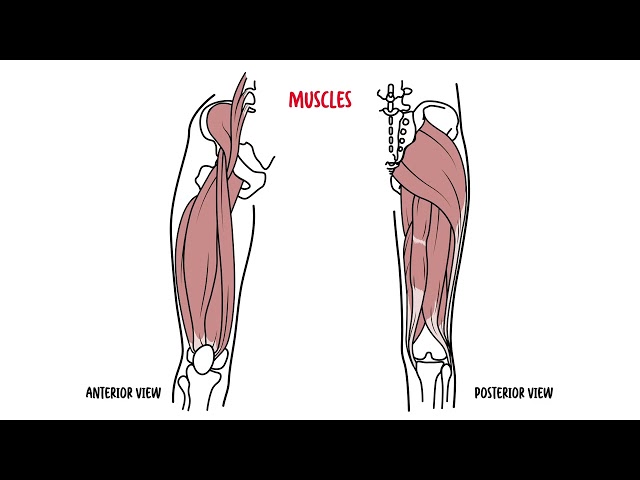
Anatomy of the Hip Joint | Capsule, Muscles & Clinical Relevance Explained
Learn the detailed anatomy of the hip joint in this concise medical video, covering the hip joint capsule, key muscles including iliopsoas, gluteals, and short external rotators, and relevant clinical conditions such as hip dislocations, vascular necrosis and examination techniques. This video is ideal for medical students, physiotherapists, orthopaedic trainees, and anyone studying musculoskeletal anatomy.…

Part I – Aracidonic Acid Metabolites
Learn about arachidonic acid metabolites and their role in inflammation, focusing on how they are derived from membrane phospholipids. This video introduces key pathways like the cyclooxygenase (COX) and lipoxygenase (LOX) systems, and the bioactive lipids they produce.

Osteoporosis (Part II)
PART II Explore the current understanding of osteoporosis, including its prevalence, major risk factors, and underlying pathophysiology. This video also covers available treatment options and strategies for prevention and management of this common bone disease. I am only a Student (this is from my essay), Please comment and provide feedback.
Our mission
Medical science is complex. Understanding it should feel possible.
Armando Hasudungan turns difficult medical science into clear visual explanations and connected learning experiences—so learners can see the whole picture, remember what matters and find a clearer way forward.
See it clearly
Turn abstract processes and invisible relationships into something the learner can picture.
Connect the pieces
Build understanding around how concepts fit together—not a pile of isolated facts.
Make it useful
Help learners move from explanation to recall, revision and the next logical step.
What clarity feels like
When the topic stops being a blur.
Learners do not come back because the subject became easy. They come back because the explanation gave them a picture they could work with.
“Armando's teaching style gives me the foundational knowledge.
Jessica Payne-Burnett
Medical Student, Charles Sturt University
“The notes I make during his videos help me retain everything better.
Ayesha RaiStudent, Islamabad Medical and Dental College
“The drawings are amazing and super easy to remember.
Reem Mohamed Khair Abdalrazig
Student, Neelain University
Coming soon: the AH study platform
The explanation is only the start.
The free library helps you find a clear explanation. The AH platform is being built to help you connect the resources, follow a clearer path and check what actually stuck.
- Watch in a focused, ad-free study environment.
- Move between connected videos, notes, diagrams and questions.
- Know what belongs next instead of rebuilding the study path yourself.
- Test your understanding while the topic is still fresh.
New and worth a look
Keep building the picture.
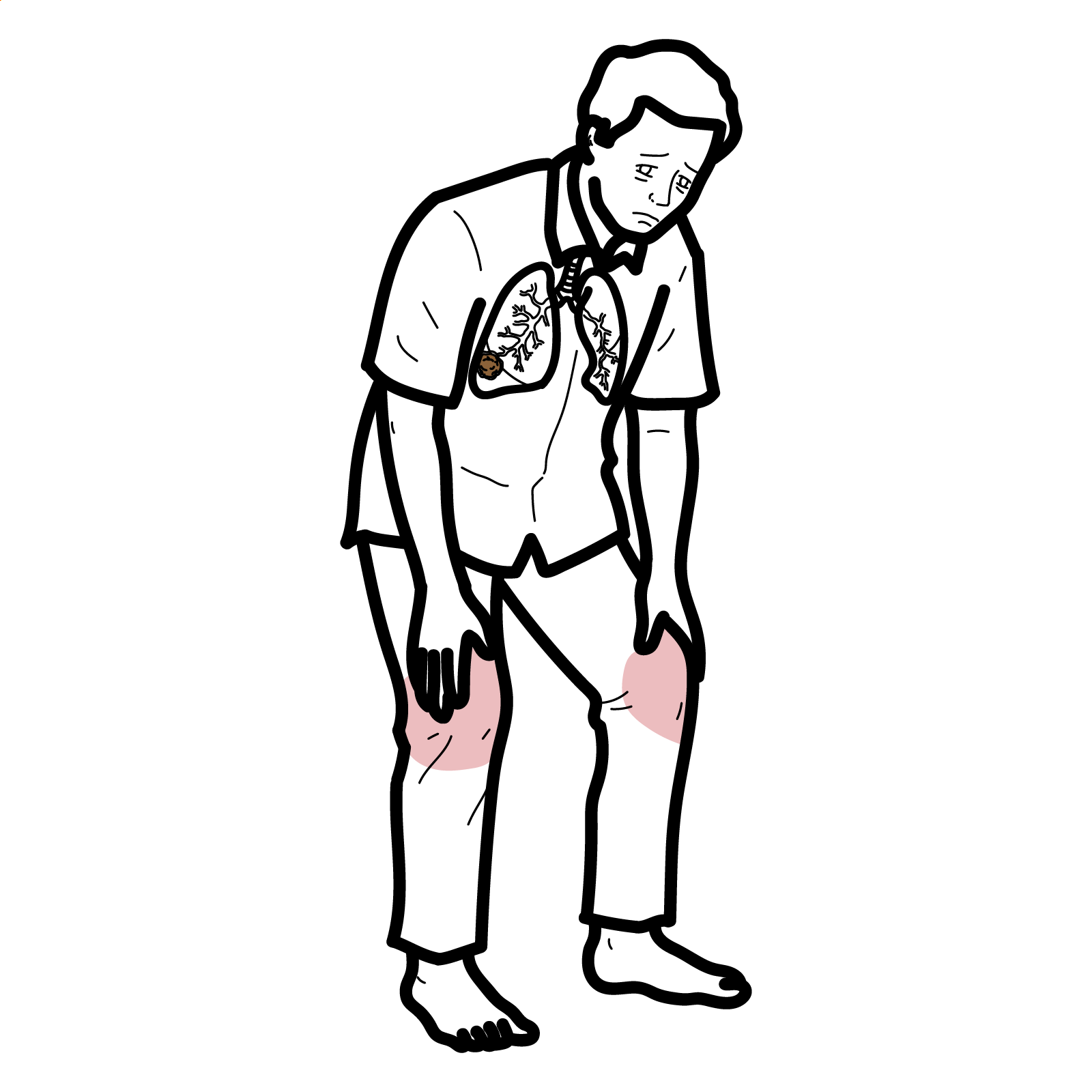
Lambert-Eaton Myasthenic Syndrome
Overview Lambert–Eaton myasthenic syndrome (LEMS) is a rare autoimmune disorder of the presynaptic neuromuscular junction. It causes impaired acetylcholine release, producing the characteristic triad of proximal muscle weakness, reduced reflexes and autonomic dysfunction. LEMS may occur as a paraneoplastic syndrome—most commonly associated with small-cell lung cancer (SCLC)—or as a non-tumour-associated autoimmune disorder. Neuromuscular junction: connection…
View this topic ↗About Visualising Medicine
Good education does not remove complexity. It makes complexity feel simple.
Visualising Medicine is the team behind Armando Hasudungan. We bring together medicine, illustration, writing and technology to make difficult ideas clearer—and build better ways for learners to use them.