

Biceps Tendon Rupture
Overview
A biceps tendon rupture is a partial or complete tear of the tendon attaching the biceps muscle to the shoulder or elbow.
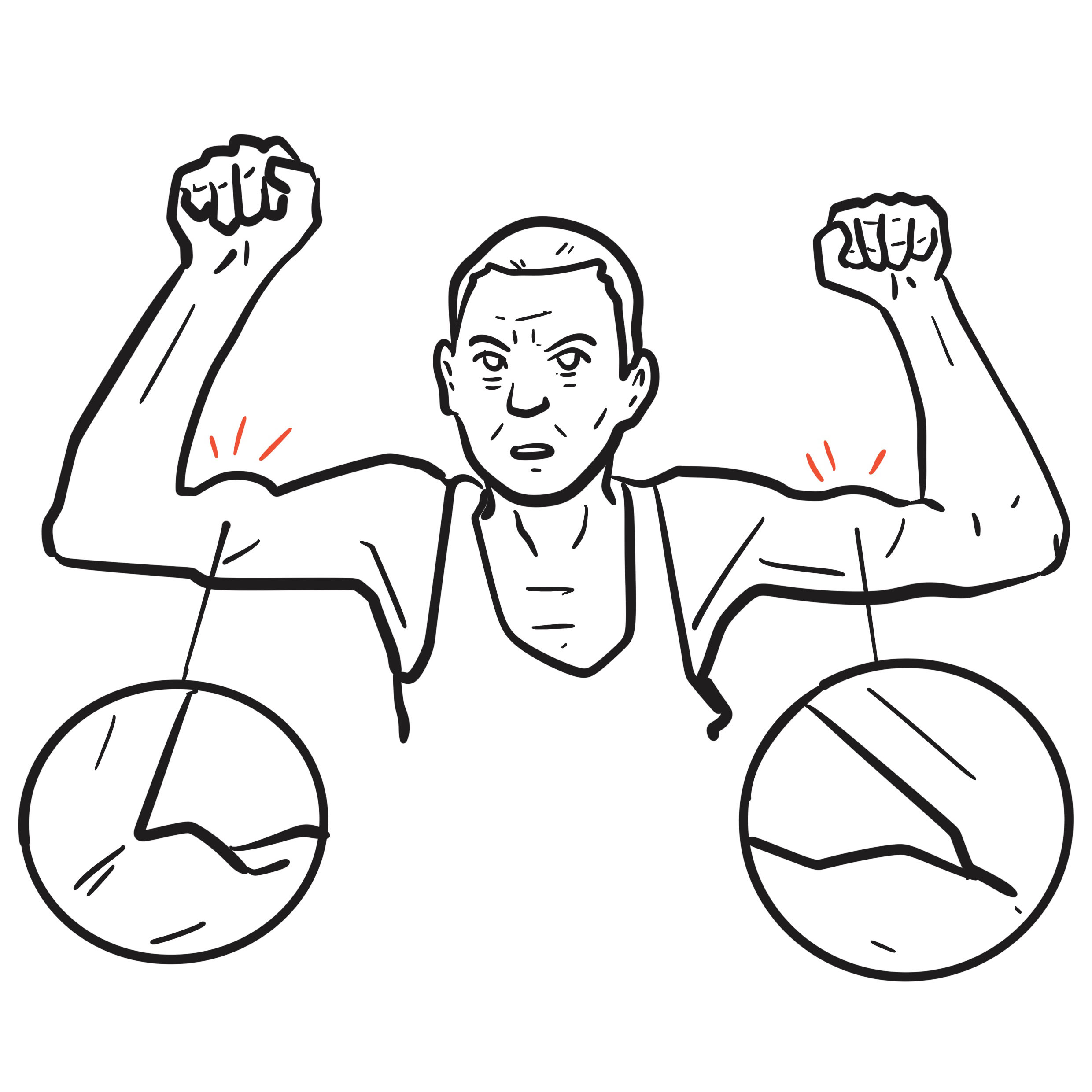
Proximal ruptures, usually involving the long head of the biceps at the shoulder, are more common and often result from age-related degeneration or associated rotator-cuff disease. They typically cause upper-arm pain, bruising and a visible “Popeye” deformity but usually produce only mild functional weakness.
Distal ruptures occur at the elbow, commonly after sudden eccentric loading such as attempting to catch or lift a heavy object. They cause antecubital pain, bruising and significant loss of forearm supination strength, often requiring early orthopaedic assessment and surgical repair in active patients.
Definition
Proximal biceps tendon rupture: tear of the tendon near the shoulder, usually involving the long head of the biceps.
Distal biceps tendon rupture: avulsion of the tendon from the radial tuberosity near the elbow.
Popeye deformity: visible bulging of the retracted biceps muscle following tendon rupture.
Supination: rotation of the forearm so the palm faces upward; an important function of the biceps.
Hook test: examination used to assess the distal biceps tendon; inability to hook a finger beneath the tendon suggests complete rupture.
Aetiology and Risk Factors
- Sudden eccentric load, such as attempting to hold or lift a heavy object as the elbow is forcibly extended.
- Chronic tendon degeneration or repetitive overhead activity.
- Increasing age.
- Smoking.
- Corticosteroid or anabolic-steroid exposure.
- Associated shoulder disease, including rotator-cuff pathology, with proximal tears.
Clinical Manifestations
- Sudden pain with an audible or palpable “pop.” at bicep region
- Bruising and swelling.
- Biceps cramping.
- Visible “Popeye” deformity due to retraction of the muscle.
Proximal rupture of biceps tendon
- Pain and tenderness around the anterior shoulder or upper arm.
- Bruising extending towards the elbow.
- Mild weakness of elbow flexion or forearm supination.
- Frequently associated with rotator-cuff disease.
Distal rupture of biceps tendon
- Pain, bruising and swelling in the antecubital fossa.
- Palpable gap where the distal tendon should be.
- Proximal retraction of the biceps muscle.
- Marked weakness of forearm supination, particularly with resisted twisting, and lesser weakness of elbow flexion.
- Positive Hook test: the examiner cannot hook a finger beneath the distal biceps tendon.
Diagnosis
- Usually based on history and physical examination.
- X-ray: does not show the tendon but excludes fracture or other bony pathology.
- Ultrasound: can demonstrate tendon discontinuity and retraction.
- MRI: useful for partial tears, uncertain diagnosis, chronic injury or operative planning.
Treatment
Proximal long-head rupture
- Usually managed non-operatively:
- Relative rest and temporary activity modification.
- Ice and simple analgesia or NSAIDs where appropriate.
- Physiotherapy to restore shoulder movement and strength.
- Surgery
Complete distal rupture
- Arrange early orthopaedic referral, particularly in active patients.
- Surgical reattachment is generally preferred for active patients who require supination and flexion strength.
- Non-operative treatment may be appropriate for older or low-demand patients, a non-dominant-arm injury, substantial comorbidity or those willing to accept residual weakness.
Proximal rupture is usually treated conservatively; complete distal rupture commonly requires early surgical assessment because untreated injuries cause substantial supination weakness.
Partial distal rupture
- Initially consider rest, analgesia and physiotherapy.
- Surgery may be considered for a large partial tear, persistent pain or functional weakness despite conservative management.
Complications & Prognosis
- Persistent cosmetic deformity.
- Cramping or fatigue with repetitive activity.
- Chronic weakness.
- Untreated complete distal rupture may produce approximately 30–40% loss of strength, particularly during supination.
- Surgical complications
- Nerve injury or temporary sensory disturbance.
- Heterotopic ossification or radioulnar synostosis, restricting forearm rotation.
- Repair failure or recurrent rupture
- Proximal ruptures: generally have a good functional prognosis without surgery, although Popeye deformity or mild cramping may persist.
- Distal repairs: most patients regain near-full movement and substantial strength following surgery and rehabilitation.
- Tendon healing takes several months; heavy lifting is restricted during recovery.
- Delayed distal repair may still be possible but can require more complex reconstruction.
References
- American Academy of Orthopaedic Surgeons. Biceps tendon tear at the shoulder [Internet]. Rosemont: AAOS; 2026.
- American Academy of Orthopaedic Surgeons. Biceps tendon tear at the elbow [Internet]. Rosemont: AAOS; 2026.
- Cuzzolin M, Secco D, Guerra E, Altamura SA, Filardo G, Candrian C. Operative versus nonoperative management for distal biceps brachii tendon lesions: a systematic review and meta-analysis. Orthop J Sports Med. 2021;9(10):23259671211037311.
- Hopper HM, Nelson CT, Sandoval LA, Cyrus JW, Satalich GJ, O’Neill CN, et al. Decreased strength, complication rate and higher satisfaction in conservative treatment of partial distal biceps tendon rupture compared to surgical treatment: a systematic review. Orthop Rev (Pavia). 2024;16:116367.
- Caekebeke P, Duerinckx J, van Riet R. Distal biceps tendon ruptures: diagnostic strategy through physical examination. Clin Orthop Surg. 2022;14(4):601–609.

Members only discussions coming soon…