

Poisoning
Overview
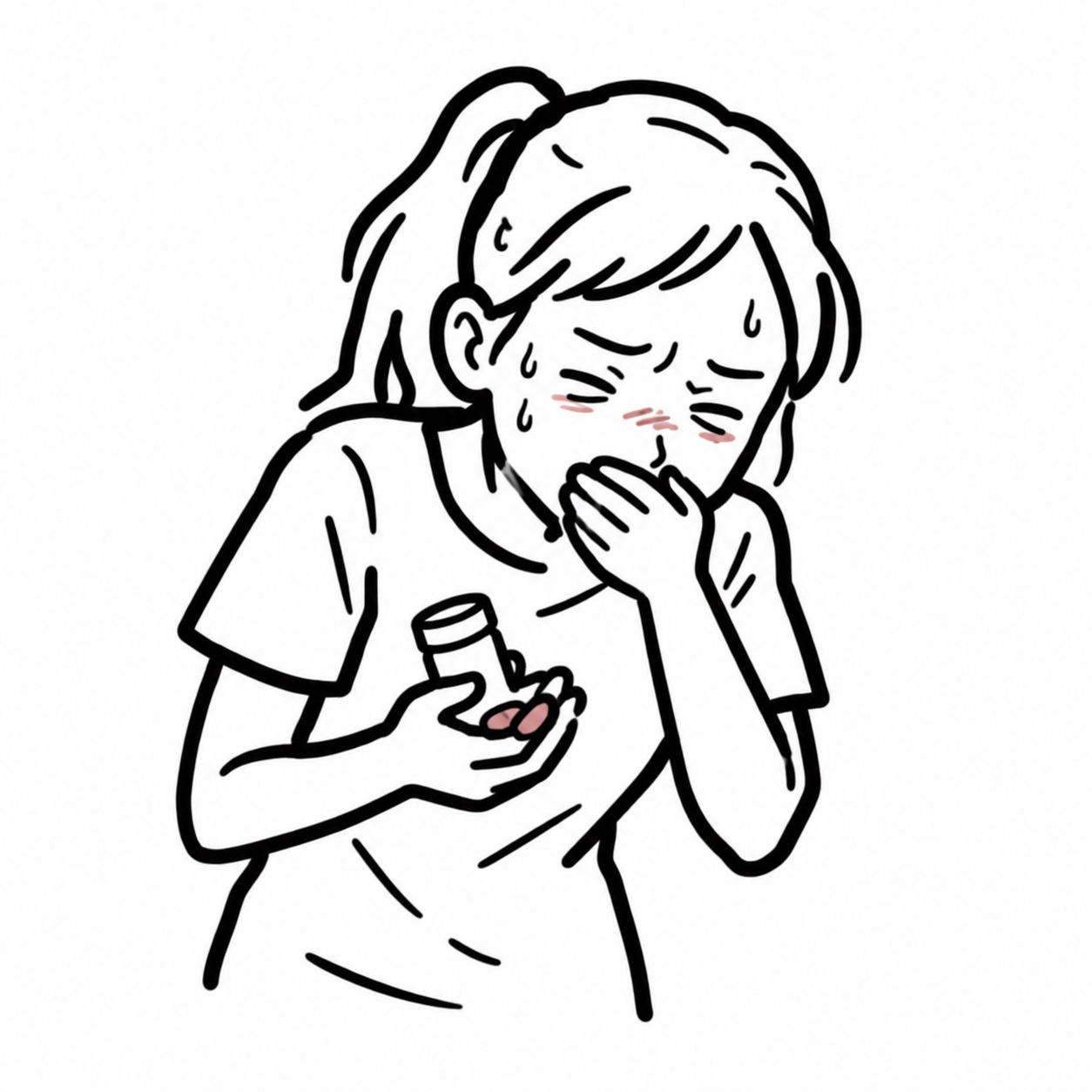
Poisoning is illness caused by exposure to a harmful substance. Exposure may occur by ingestion, inhalation, injection, or contact with the skin or eyes.
Severity depends on:
- The substance, dose, concentration, and formulation
- The route and time of exposure
- Patient age, weight, comorbidities, pregnancy, and usual medicines
- Co-ingestants and any delay to treatment
Most poisoned patients recover with prompt resuscitation, supportive care, focused investigation, and selective use of antidotes or enhanced elimination. A toxidrome can guide treatment when the agent is uncertain.1
In Australia, call 000 for collapse, breathing difficulty, seizure, or other life-threatening features. For poisoning advice call the Poisons Information Centre on 13 11 26. Do not wait for symptoms before seeking advice.2
Treat the patient, not just the poison. Adequate resuscitation and supportive care save more lives than antidotes.
Approach
Step 1: Protect staff and prevent further exposure
Identify hazards including fumes, contaminated clothing, powders, needles, and chemical spills. Use appropriate personal protective equipment and avoid unprotected mouth-to-mouth ventilation.
- Move the patient away from ongoing inhalational exposure if safe
- Remove contaminated clothing and jewellery
- Brush off dry chemicals before irrigation
- Irrigate exposed skin or eyes promptly with copious water unless substance-specific advice directs otherwise2
Step 2: ABCDE resuscitation
Airway
Assess airway patency and protective reflexes. Position, suction, and intubate early when airway protection or ventilation is inadequate.
Breathing
Give oxygen when indicated and support ventilation. Consider bronchorrhoea, aspiration, pulmonary oedema, bronchospasm, and cellular hypoxia.
Circulation
Obtain intravenous access, monitor continuously, and treat shock with appropriate fluids and vasopressors. Sodium-channel or potassium-channel blockade may require targeted therapy.1
Disability
Check glucose immediately. Assess consciousness, pupils, tone, reflexes, clonus, and seizures. Treat toxicological seizures first-line with benzodiazepines; phenytoin is generally ineffective and may worsen sodium-channel blockade.1
Exposure and Temperature
Perform a complete examination for patches, needle marks, odours, trauma, burns, sweating or dryness, bowel sounds, bladder retention, and rigidity. Core temperature above 38.5°C in poisoning requires urgent active cooling and control of agitation or muscle activity.1
Step 3: Perform a rapid risk assessment
- What substance or product was involved?
- What is the maximum possible dose or concentration?
- When and by which route did exposure occur?
- Was it immediate-release or modified-release?
- Are there co-ingestants, alcohol, or recreational drugs?
- What symptoms, vital-sign abnormalities, and ECG changes are present?
- What is the patient’s weight, medical history, regular medication, and pregnancy status?
Estimate the maximum possible dose from the worst credible history, packet counts, formulation, and patient weight. A reliable risk assessment determines investigations, observation time, decontamination, disposition, and need for antidote or enhanced elimination.1
Step 4: Identify the toxidrome
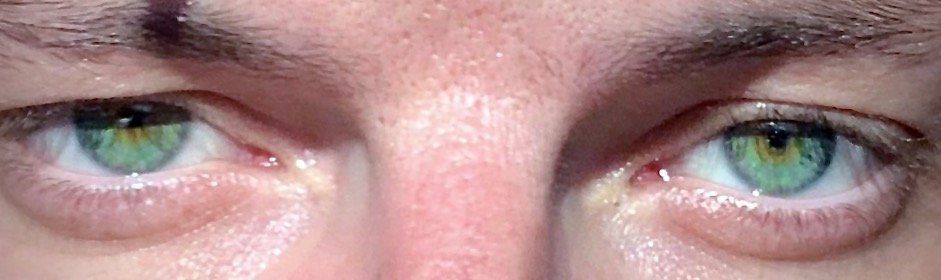
Bilateral miosis and ptosis following opioid exposure. Image: Thomas Bonini; Wikimedia Commons; CC0.
What to notice
Detailed image description
Source: https://commons.wikimedia.org/wiki/File:Miosis_caused_by_opium_consumption.jpg — CC0 1.0 public-domain dedication.
| Toxidrome | Conscious state | Pupils | Skin | Cardiovascular | Other distinguishing features |
|---|---|---|---|---|---|
| Opioid | Sedation or coma | Pinpoint | Usually normal or cool | Bradycardia or hypotension | Respiratory depression; reduced bowel sounds |
| Sedative-hypnotic | Sedation, ataxia, or coma | Usually normal | Usually normal | Normal or hypotensive | Respiratory depression; deep coma suggests co-ingestion |
| Sympathomimetic | Agitation or psychosis | Dilated | Sweaty | Tachycardia or hypertension | Hyperthermia, seizures, increased bowel sounds |
| Anticholinergic | Agitated delirium | Dilated | Hot and dry | Tachycardia | Urinary retention, absent bowel sounds, flushed skin |
| Cholinergic | Confusion or weakness | Pinpoint | Sweaty | Bradycardia or tachycardia | Salivation, lacrimation, urination, diarrhoea, bronchorrhoea, fasciculations |
| Serotonergic | Agitation | Often dilated | Sweaty | Tachycardia or hypertension | Hyperreflexia, inducible or spontaneous clonus, hyperthermia |
| Sodium-channel blockade | Confusion, seizures, or coma | Variable | Variable | Hypotension, ventricular dysrhythmia | Broad QRS, terminal R wave in aVR |
| Malignant hyperthermic syndromes | Agitation or reduced consciousness | Variable | Diaphoretic | Tachycardia | Rigidity, severe hyperthermia, metabolic acidosis |
Sympathomimetic and anticholinergic toxicity both cause agitation, tachycardia and dilated pupils. Sweating suggests sympathomimetic toxicity; dry, flushed skin with urinary retention and absent bowel sounds suggests anticholinergic toxicity.
Differential Diagnosis
Pharmaceutical poisoning
- Paracetamol
- Opioids
- Tricyclic antidepressants
- SSRIs and SNRIs
- Benzodiazepines
- Antipsychotics
- Beta-blockers
- Calcium-channel blockers
- Sulfonylureas
- Digoxin
- Lithium
- Salicylates
- Iron
Chemical and environmental poisoning
- Carbon monoxide
- Cyanide
- Toxic alcohols: methanol, ethylene glycol, and isopropanol
- Organophosphates and carbamates
- Hydrocarbons
- Corrosives
- Methaemoglobin-forming agents
- Local anaesthetics
Non-toxicological mimics
- Hypoglycaemia
- Sepsis or meningoencephalitis
- Intracranial haemorrhage or stroke
- Postictal state
- Head injury
- Hypoxia or hypercapnia
- Electrolyte disorders
- Hepatic or uraemic encephalopathy
- Thyroid storm
- Phaeochromocytoma
- Acute psychosis
- Heat stroke
- Alcohol or drug withdrawal
Investigations
First-line tests
- Bedside glucose
- 12-lead ECG on presentation and repeated when clinically indicated
- Venous or arterial blood gas, electrolytes, urea, creatinine, and bicarbonate
- Liver function tests and full blood count
- Paracetamol concentration in deliberate or uncertain ingestion
- Pregnancy test when relevant
Calculate the anion gap: Na+ − (Cl− + HCO3−). An elevated gap may indicate toxic alcohols, salicylates, cyanide, iron, or other causes of lactic or ketoacidosis.
Assess the corrected QT interval and calculate an osmolal gap when toxic alcohol exposure is plausible. Interpret both in clinical context.
ECG patterns to recognise
- Broad QRS or terminal R wave in aVR: sodium-channel blockade
- QT prolongation: risk of torsades de pointes
- Bradycardia or atrioventricular block: consider beta-blocker, calcium-channel blocker, digoxin, or cholinergic toxicity
- Ischaemia or ventricular dysrhythmia: consider sympathomimetics, carbon monoxide, or cardiotoxic drugs
Targeted drug concentrations
- Paracetamol
- Salicylate
- Lithium
- Digoxin
- Iron
- Valproate
- Theophylline
- Carbamazepine
- Alcohols where available
Broad urine drug screens have limited sensitivity and specificity, rarely quantify severity, and often do not alter immediate management.1
Paracetamol assessment
- Obtain a timed paracetamol concentration at least 4 hours after a single acute ingestion
- Record the exact ingestion time and formulation
- Measure ALT/AST, INR, creatinine, glucose, and acid–base status when presentation is delayed or toxicity is suspected
- Start acetylcysteine promptly when indicated; do not delay treatment while awaiting results in high-risk delayed presentations
Use the appropriate Australian and New Zealand paracetamol poisoning guideline and nomogram for a known-time, single acute ingestion. Seek toxicology advice for complex cases.3,4
The nomogram is not valid for:
- Unknown-time ingestion
- Repeated supratherapeutic ingestion
- Staggered ingestion
- Presentation more than 24 hours after ingestion
- Modified-release ingestion without the recommended serial sampling strategy
Imaging and procedures
- Chest radiograph for aspiration, pulmonary oedema, or significant inhalational injury
- CT brain when intracranial pathology or trauma remains possible
- Abdominal imaging for radiopaque substances or suspected body packing, guided by toxicology advice
- Endoscopy after significant corrosive ingestion, following specialist assessment
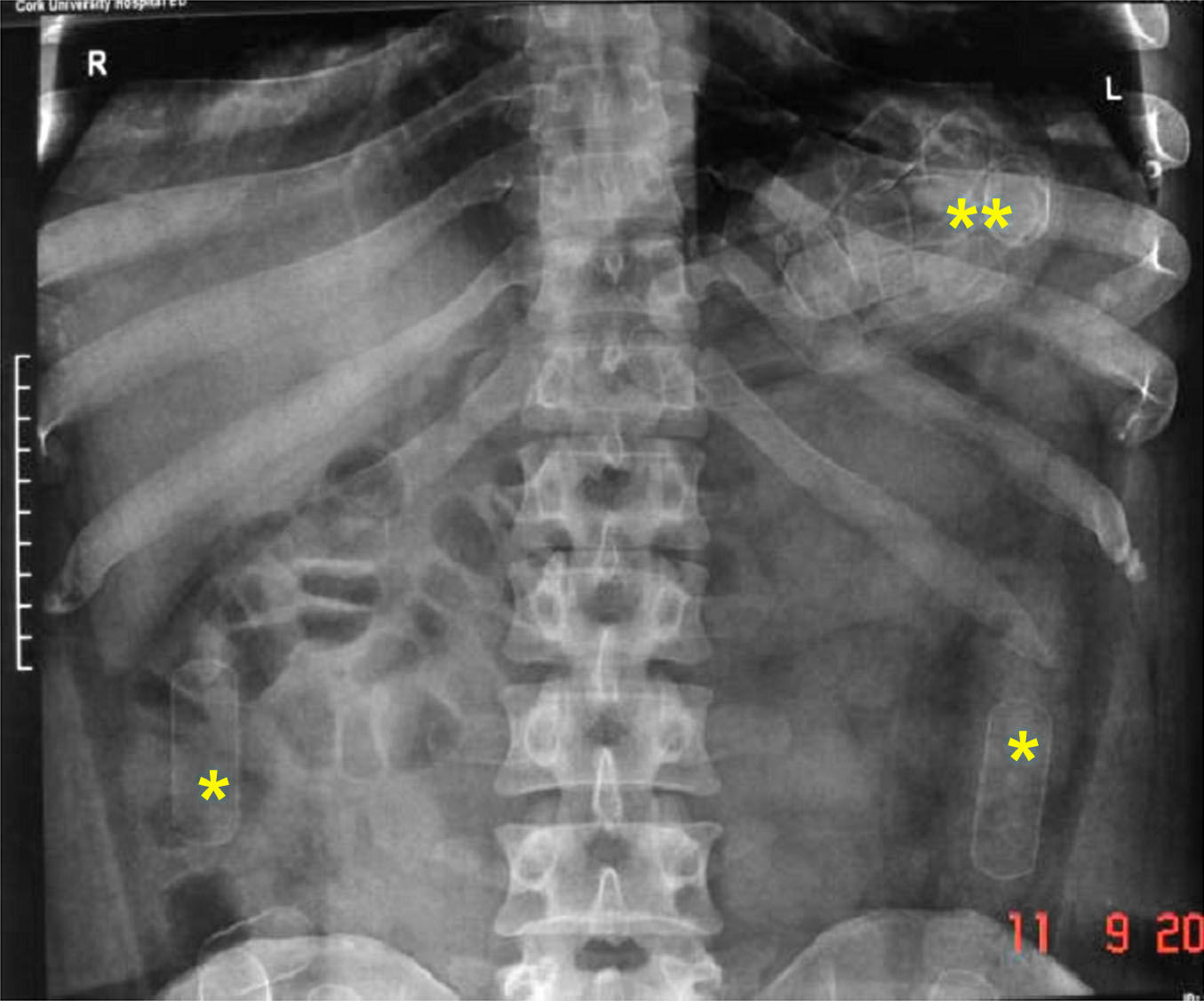
Abdominal radiograph showing multiple ingested cocaine packets in the stomach and intestines. Image: Kelly J, Corrigan M, Cahill RA, Redmond HP; Wikimedia Commons; CC BY 2.0.
What to notice
Detailed image description
Source: https://commons.wikimedia.org/wiki/File:Drug-Packer_X-Ray.jpg — Creative Commons Attribution 2.0.
A “toxicology screen” is not a substitute for clinical assessment. The ECG, glucose, acid–base status and a small number of targeted drug concentrations are usually more useful than broad urine drug screening.
Critical Management
Contact a clinical toxicologist or Poisons Information Centre early for severe, unusual, paediatric, delayed, modified-release, mixed, or uncertain poisoning. In Australia call 13 11 26.
- Continue ABCDE reassessment and continuous monitoring
- Correct hypoxia, hypoglycaemia, seizures, hyperthermia, electrolyte abnormalities, and shock
- Anticipate delayed toxicity based on the agent and formulation
- Arrange retrieval, intensive care, dialysis, or specialist intervention early when indicated
Decontamination
Gastrointestinal
Do not induce vomiting. Gastric lavage has a very limited role and requires specialist advice. Activated charcoal should be given only after toxicology consultation when a potentially toxic adsorbable substance has been ingested, benefit is expected—usually within 1–2 hours—and the airway is protected.3
Activated charcoal is contraindicated or ineffective when:
- The airway is unprotected or aspiration risk is high
- There is gastrointestinal obstruction, perforation, or significant corrosive injury
- The substance is poorly adsorbed, including alcohols, lithium, iron, and other metals
- Hydrocarbon aspiration risk outweighs benefit
Whole-bowel irrigation may be considered with specialist advice for selected modified-release preparations, iron or lithium, and body packers.
Skin, eye, and inhalational exposure
- Remove contaminated clothing and jewellery
- Brush off dry chemicals before irrigation
- Irrigate skin or eyes immediately and copiously; check ocular pH where appropriate
- Move from inhalational exposure to fresh air if safe and administer oxygen when indicated
- Seek substance-specific advice from the Poisons Information Centre2
Time-critical syndrome management
- Opioid respiratory depression: ventilatory support and titrated naloxone
- Sodium-channel blockade: intravenous sodium bicarbonate
- Severe agitation or seizures: benzodiazepines
- Hyperthermia: rapid active cooling and control of muscle activity
- Torsades de pointes: magnesium and correction of electrolytes
- Refractory cardiogenic shock: early toxicology and intensive care input
Important Antidotes
| Poison or syndrome | Antidote or specific therapy |
|---|---|
| Paracetamol | N-acetylcysteine |
| Opioids | Naloxone |
| Tricyclic antidepressants or sodium-channel blockade | Sodium bicarbonate |
| Organophosphates | Atropine ± pralidoxime |
| Sulfonylureas | Octreotide plus glucose |
| Digoxin | Digoxin-specific antibody fragments |
| Methanol or ethylene glycol | Fomepizole or ethanol; haemodialysis when indicated |
| Cyanide | Hydroxocobalamin |
| Methaemoglobinaemia | Methylene blue |
| Iron | Desferrioxamine |
| Isoniazid | Pyridoxine |
| Warfarin or anticoagulant rodenticide | Vitamin K |
| Local anaesthetic systemic toxicity | Intravenous lipid emulsion |
| Beta-blockers | High-dose insulin; glucagon may be considered |
| Calcium-channel blockers | Calcium plus high-dose insulin |
Flumazenil is not routine treatment for benzodiazepine poisoning because it can precipitate seizures, particularly with dependence, mixed overdose, pro-convulsant co-ingestion, or uncertain history. Use only after expert advice.
Enhanced elimination
- Urinary alkalinisation for selected salicylate poisoning
- Multiple-dose activated charcoal for selected agents after specialist advice
- Haemodialysis for severe poisoning with dialysable substances such as lithium, salicylate, methanol, ethylene glycol, or valproate
The decision is based on clinical severity, drug concentration, organ function, acid–base status, and expected toxicokinetics.1
Mental health and safeguarding
- Provide continuous safety observation where self-harm risk persists
- Complete psychosocial and suicide-risk assessment after medical stabilisation
- Assess capacity, coercion, abuse, neglect, and child-safety concerns
- Document the history, collateral information, intent, and discharge safety plan
All deliberate self-poisoning requires appropriate mental health assessment and safe disposition.1
Never discharge a poisoned patient based only on early absence of symptoms. The agent, formulation, maximum possible dose and expected delay to toxicity determine the required observation period.
References
- Royal Children’s Hospital Melbourne. Clinical practice guidelines: poisoning—acute guidelines for initial management [Internet]. Melbourne (AU): Royal Children’s Hospital Melbourne; [cited 2026 Aug 14]. Available from: https://www.rch.org.au/clinicalguide/guideline_index/Poisoning_-_Acute_Guidelines_For_Initial_Management/
- NSW Poisons Information Centre. Poisons first aid [Internet]. Sydney (AU): Sydney Children’s Hospitals Network; [cited 2026 Aug 14]. Available from: https://www.poisonsinfo.nsw.gov.au/first-aid
- Royal Children’s Hospital Melbourne. Clinical practice guidelines: use of activated charcoal in poisonings [Internet]. Melbourne (AU): Royal Children’s Hospital Melbourne; [cited 2026 Aug 14]. Available from: https://www.rch.org.au/clinicalguide/guideline_index/Use_of_Activated_Charcoal_in_Poisonings/
- Chiew AL, Reith D, Pomerleau A, Wong A, Isoardi KZ, Soderstrom J, et al. Updated guidelines for the management of paracetamol poisoning in Australia and New Zealand. Med J Aust. 2020;212(4):175–183. doi:10.5694/mja2.50428

Members only discussions coming soon…