

Visual explanationFree resource
Visual medical education by Armando Hasudungan
Medical science, drawn into focus.
Explore visual explanations that reveal how the facts, processes and clinical patterns fit together—then discover the coming AH study platform, built to guide what you study next and check what stuck.
Connected studyComing soon
Clear visual explanations used by medical and allied-health learners around the world.
Explore the free library
Start with the topic in front of you.
Browse by subject or jump straight into the explanation you need. No account required.
Pertussis
Author Megan Miner Armando Faigl Overview Pertussis, also known as “whooping cough”, is a contagious, acute respiratory infection caused by the bacterium Bordetella pertussis. In babies, the infection can sometimes lead to pneumonia and occasionally brain damage and can even be life threatening. Older children and adults can get whooping cough and can spread it…
View topic ↗Breast Cancer
"A 35 Year old women presents with a 1cm hard lump in the upper quadrant of her right breast. She first noticed this when she was in the shower three months ago. She is worried that the lump might be malignant" Overview Breast cancer is the most common cancer in women worldwide. It accounts for…
View topic ↗Spondylarthropathy
Overview The spondyloarthropathies are a diverse group of inflammatory arthritides that share certain genetic predisposing factors and clinical features. Their most characteristic feature is inflammatory back pain. Enthesitis, another characteristic feature, involves inflammation at sites where tendons, ligaments, or joint capsules attach to bone. Features of Spondylarthropathy Sacroiliac and spinal (axial involvement) Enthesitis at long attachments…
View topic ↗Ruptured Abdominal Aortic Aneurysm
Overview Abdominal Aortic Aneurysm, also known as AAA, is a permanent dilation of the abdominal aorta with a diameter of >1.5 times of the expected diameter. The adopted diameter that indicates AAA is 3cm or more. AAA is strongly associated with smoking and increasing age. Most of these aneurysms are fusiform and originate below the…
View topic ↗Sickle Cell Anaemia
Overview Sickle cell anaemia is an autosomal recessive disorder causing production of abnormal ß-globin chains. A single amino acid is substituted in the ß-globin chain (Glu to Val at position 6). This results in the production of HbS (haemoglobin Sickle) rather than HbA. The common variants of sickle cell disease are: Sickle cell anaemia (SS…
View topic ↗Carotid Artery Disease
Overview Carotid artery disease refers to atherosclerotic narrowing of the carotid artery lumen. It is associated with approximately 10-15% of all ischaemic strokes. Stroke is the third leading cause of death and a principal cause of long-term disability in much of the industrialised world. The degree of internal carotid artery stenosis is the most important…
View topic ↗DiGeorge Syndrome
Overview DiGeorge syndrome (22q11.2 deletion syndrome) is a congenital immunodeficiency and multisystem disorder caused by a microdeletion on chromosome 22. It leads to defective development of the third and fourth pharyngeal pouches, resulting in thymic hypoplasia/aplasia, hypocalcaemia due to parathyroid hypoplasia, and congenital heart defects. Prevalence is estimated at 1 in 4000 live births. Clinical…
View topic ↗Full resource library
Browse all topics ↗Choose how you learn
One idea. More than one way to see it.
Use the format that helps the topic click, then switch formats when you need to reinforce it.
01 / WATCH02 / READ03 / SEE04 / CHECK
Videos
Hand-drawn explanations that build the big picture as the concept unfolds.
Notes
Clear written explanations for review, reference and filling in the details.
Diagrams
Visual snapshots that help you easily review topics.
Questions
Test whether the explanation stayed with you—not just whether it looked familiar.
Good places to begin
Explanations learners return to.
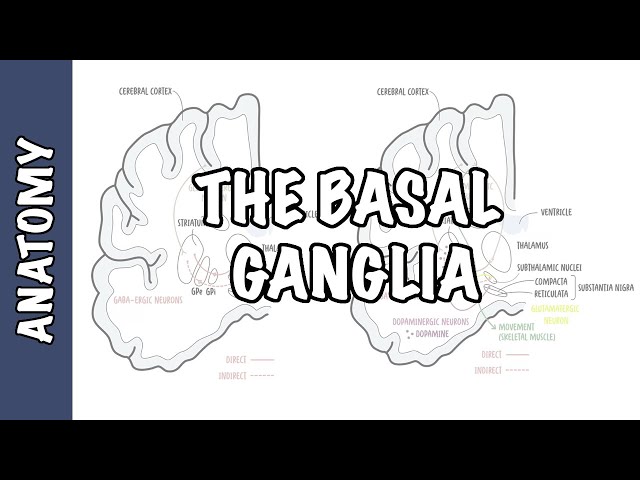
Basal ganglia overview
Basal ganglia explained: learn how these deep brain nuclei regulate movement, posture, and reward processing—key for understanding Parkinson’s and Huntington’s. In this clear, engaging video you’ll explore the anatomy and function of the basal ganglia, including the striatum (caudate nucleus and putamen), globus pallidus (GPe/GPi), subthalamic nucleus, and substantia nigra (pars compacta and reticulata). Discover…
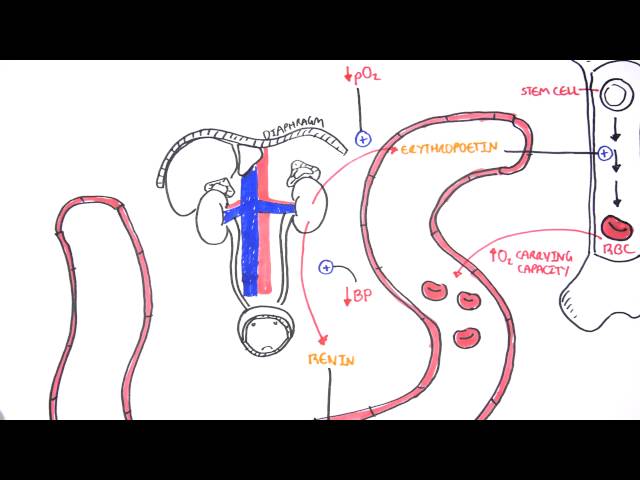
Endocrinology – Renal Hormones
Explore the key renal hormones—renin, erythropoietin, and calcitriol—and their roles in blood pressure regulation, red blood cell production, and calcium balance. This video offers a clear overview of how the kidneys function as vital endocrine organs.
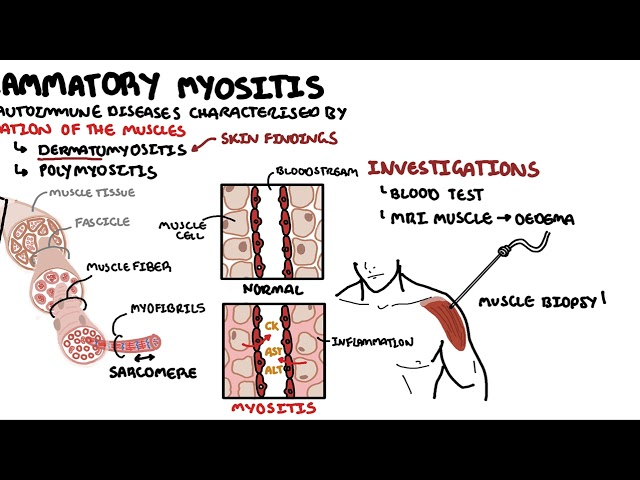
Understanding Inflammatory Myopathies – Dermatomyositis, Polymyositis, Antisynthetase syndrome
Inflammatory myopathies are a group of autoimmune diseases characterized by inflammation of the muscles, leading to muscle weakness and atrophy. The two most commonly recognized types are dermatomyositis and polymyositis. Typically presenting with proximal muscle weakness. Difference is that dermatomyositis has skin changes.
Our mission
Medical science is complex. Understanding it should feel possible.
Armando Hasudungan turns difficult medical science into clear visual explanations and connected learning experiences—so learners can see the whole picture, remember what matters and find a clearer way forward.
See it clearly
Turn abstract processes and invisible relationships into something the learner can picture.
Connect the pieces
Build understanding around how concepts fit together—not a pile of isolated facts.
Make it useful
Help learners move from explanation to recall, revision and the next logical step.
What clarity feels like
When the topic stops being a blur.
Learners do not come back because the subject became easy. They come back because the explanation gave them a picture they could work with.
“Armando's teaching style gives me the foundational knowledge.
Jessica Payne-Burnett
Medical Student, Charles Sturt University
“The notes I make during his videos help me retain everything better.
Ayesha RaiStudent, Islamabad Medical and Dental College
“The drawings are amazing and super easy to remember.
Reem Mohamed Khair Abdalrazig
Student, Neelain University
Coming soon: the AH study platform
The explanation is only the start.
The free library helps you find a clear explanation. The AH platform is being built to help you connect the resources, follow a clearer path and check what actually stuck.
- Watch in a focused, ad-free study environment.
- Move between connected videos, notes, diagrams and questions.
- Know what belongs next instead of rebuilding the study path yourself.
- Test your understanding while the topic is still fresh.
New and worth a look
Keep building the picture.
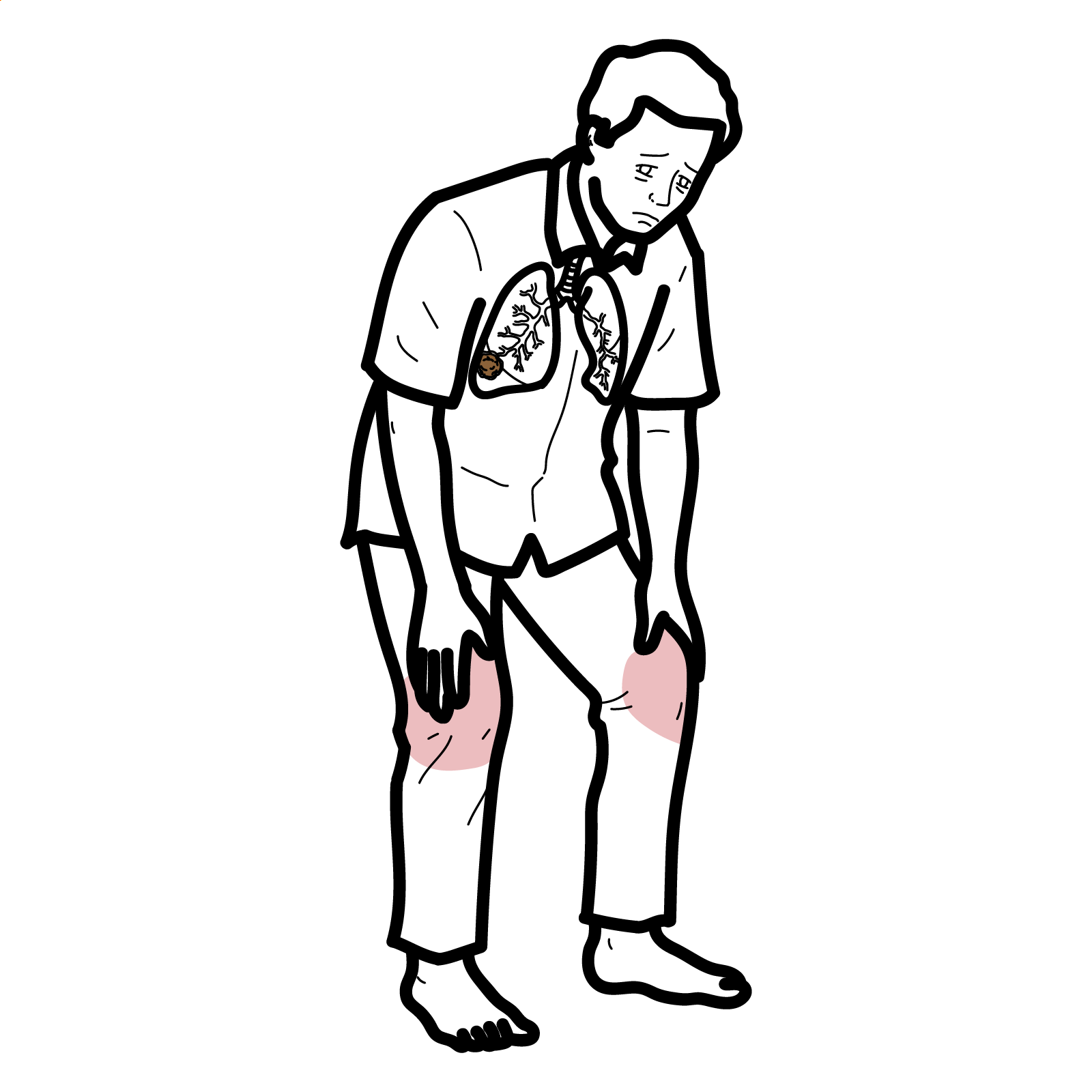
Lambert-Eaton Myasthenic Syndrome
Overview Lambert–Eaton myasthenic syndrome (LEMS) is a rare autoimmune disorder of the presynaptic neuromuscular junction. It causes impaired acetylcholine release, producing the characteristic triad of proximal muscle weakness, reduced reflexes and autonomic dysfunction. LEMS may occur as a paraneoplastic syndrome—most commonly associated with small-cell lung cancer (SCLC)—or as a non-tumour-associated autoimmune disorder. Neuromuscular junction: connection…
View this topic ↗About Visualising Medicine
Good education does not remove complexity. It makes complexity feel simple.
Visualising Medicine is the team behind Armando Hasudungan. We bring together medicine, illustration, writing and technology to make difficult ideas clearer—and build better ways for learners to use them.