

Visual explanationFree resource
Visual medical education by Armando Hasudungan
Medical science, drawn into focus.
Explore visual explanations that reveal how the facts, processes and clinical patterns fit together—then discover the coming AH study platform, built to guide what you study next and check what stuck.
Connected studyComing soon
Clear visual explanations used by medical and allied-health learners around the world.
Explore the free library
Start with the topic in front of you.
Browse by subject or jump straight into the explanation you need. No account required.
Urinary Tract Infection (Children)
Overview Urinary Tract infections (UTIs) in children are common and usually carry low risk. UTIs are often non-specific and can not be diagnosed on symptoms alone. A clean specimen (urine) is required for the diagnosis of UTI. Any child who is unwell, and most children under 6 months, should be admitted for IV antibiotics. The…
View topic ↗Basic Calcium Phosphate Disease / Milwaukee Shoulder Syndrome
Overview Basic Calcium Phosphate (BCP) disease is a crystal-associated arthropathy characterized by deposition of BCP crystals in periarticular and intra-articular tissues. A severe clinical presentation of BCP disease is Milwaukee Shoulder Syndrome, which typically affects elderly women, leading to rapid joint destruction, massive rotator cuff tears, and non-inflammatory joint effusion. It often involves the shoulder,…
View topic ↗Pulmonary Embolism
Overview Pulmonary embolism occurs most often from a dislodged thrombus from the lower limb (DVT). The embolus travels towards the lung and becomes lodged in the pulmonary artery resulting in infarction of the lung tissue. Pulmonary Embolism: Deep Vein Thrombosis (DVT): Blood clot in the deep venous system that usually affects the lower extremities or…
View topic ↗Spermatocele
Overview A spermatocele, or spermatic cyst, is a benign fluid-filled cyst arising from the epididymis, usually near the upper pole of the testis. It commonly contains clear or milky fluid with spermatozoa. Most spermatoceles are painless, discovered incidentally and do not require treatment. Epididymis: coiled structure behind the testis that stores and transports sperm. Spermatocele:…
View topic ↗Croup
Overview Croup, also known as largnotracheobronchitis, is a usually self limiting upper airway viral infection causing upper airway obstruction. Croup is more common in boys than in girls, usually occurs between six and 36 months of age, and peaks during the second year of life. Croup is usually caused by viruses, which are detected in up to…
View topic ↗Aortic Stenosis
Overview Aortic valve stenosis is characterised by obstruction of left ventricular outflow, resulting in inadequate cardiac output, decreased exercise capacity, heart failure, and death from cardiovascular causes. Mild to moderate aortic stenosis is usually a symptomatic, but occasionally can be found on routine examination Locations of stenosis – Valvular (common), supravalvular and subvalvular Aortic Stenosis…
View topic ↗Spondylarthropathy
Overview The spondyloarthropathies are a diverse group of inflammatory arthritides that share certain genetic predisposing factors and clinical features. Their most characteristic feature is inflammatory back pain. Enthesitis, another characteristic feature, involves inflammation at sites where tendons, ligaments, or joint capsules attach to bone. Features of Spondylarthropathy Sacroiliac and spinal (axial involvement) Enthesitis at long attachments…
View topic ↗Full resource library
Browse all topics ↗Choose how you learn
One idea. More than one way to see it.
Use the format that helps the topic click, then switch formats when you need to reinforce it.
01 / WATCH02 / READ03 / SEE04 / CHECK
Videos
Hand-drawn explanations that build the big picture as the concept unfolds.
Notes
Clear written explanations for review, reference and filling in the details.
Diagrams
Visual snapshots that help you easily review topics.
Questions
Test whether the explanation stayed with you—not just whether it looked familiar.
Good places to begin
Explanations learners return to.

Renin-Angiotensin-Aldosterone System Overview
Understand the renin-angiotensin-aldosterone system (RAAS) and how angiotensin II is formed and functions to regulate blood pressure and fluid balance. This video explains the key steps in the pathway and the organs involved, including the kidneys, liver, lungs, and adrenal glands.
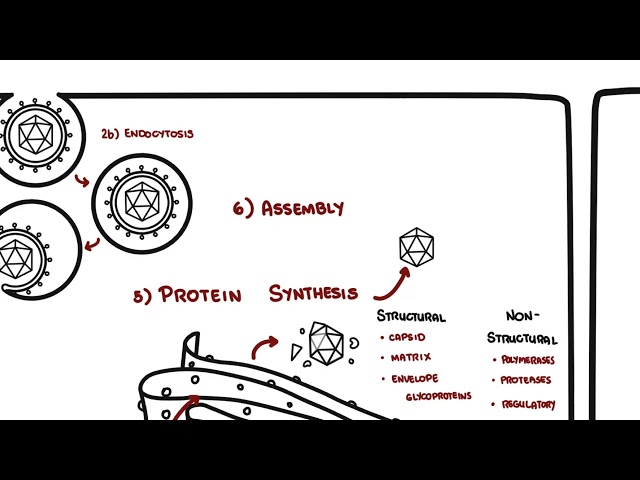
Viral Replication Enveloped vs Non-Enveloped Viruses
Enveloped vs non-enveloped viruses: learn how the lipid envelope changes viral entry, release, stability, tropism, and replication strategies. This video breaks down the seven stages of viral replication—attachment, entry, uncoating, gene expression, genome replication, assembly, and release—highlighting key differences between enveloped viruses (influenza, HIV, herpes, coronaviruses) and non-enveloped viruses (adenovirus, HPV, rotavirus). You’ll learn how…
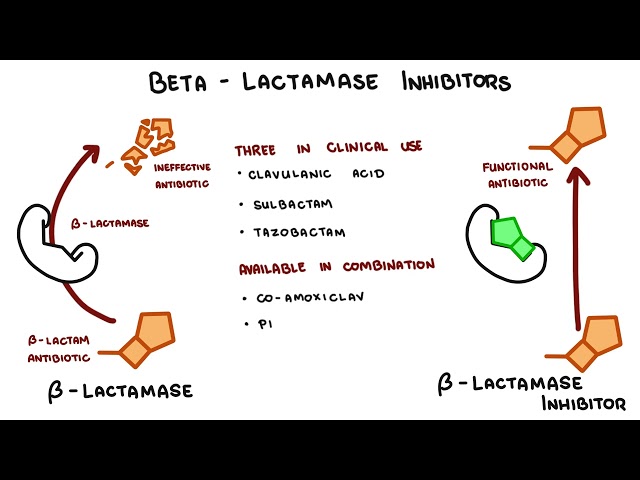
Penicillin antibiotics – Mechanism of action, side effects and resistance
Penicillin was discovered by Alexander Fleming in 1928 but did not become widely available until the 1940s. The penicillins are closely related compounds comprising a β-lactam ring, a five-membered thiozolidine ring, and a side chain. The ring structures are essential for antibacterial activity, and the side chain determines the spectrum and pharmacological properties. Most penicillins…
Our mission
Medical science is complex. Understanding it should feel possible.
Armando Hasudungan turns difficult medical science into clear visual explanations and connected learning experiences—so learners can see the whole picture, remember what matters and find a clearer way forward.
See it clearly
Turn abstract processes and invisible relationships into something the learner can picture.
Connect the pieces
Build understanding around how concepts fit together—not a pile of isolated facts.
Make it useful
Help learners move from explanation to recall, revision and the next logical step.
What clarity feels like
When the topic stops being a blur.
Learners do not come back because the subject became easy. They come back because the explanation gave them a picture they could work with.
“Armando's teaching style gives me the foundational knowledge.
Jessica Payne-Burnett
Medical Student, Charles Sturt University
“The notes I make during his videos help me retain everything better.
Ayesha RaiStudent, Islamabad Medical and Dental College
“The drawings are amazing and super easy to remember.
Reem Mohamed Khair Abdalrazig
Student, Neelain University
Coming soon: the AH study platform
The explanation is only the start.
The free library helps you find a clear explanation. The AH platform is being built to help you connect the resources, follow a clearer path and check what actually stuck.
- Watch in a focused, ad-free study environment.
- Move between connected videos, notes, diagrams and questions.
- Know what belongs next instead of rebuilding the study path yourself.
- Test your understanding while the topic is still fresh.
New and worth a look
Keep building the picture.
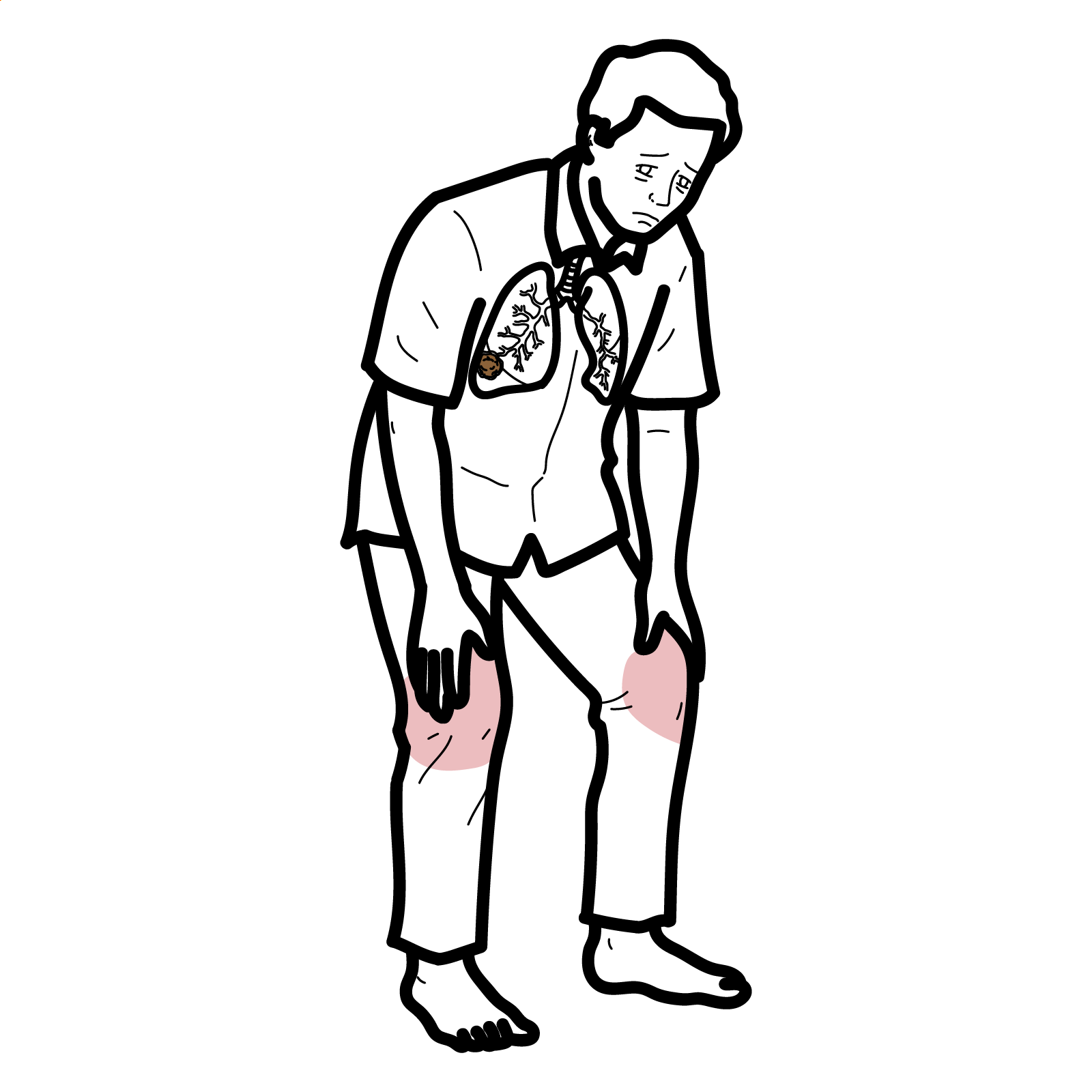
Lambert-Eaton Myasthenic Syndrome
Overview Lambert–Eaton myasthenic syndrome (LEMS) is a rare autoimmune disorder of the presynaptic neuromuscular junction. It causes impaired acetylcholine release, producing the characteristic triad of proximal muscle weakness, reduced reflexes and autonomic dysfunction. LEMS may occur as a paraneoplastic syndrome—most commonly associated with small-cell lung cancer (SCLC)—or as a non-tumour-associated autoimmune disorder. Neuromuscular junction: connection…
View this topic ↗About Visualising Medicine
Good education does not remove complexity. It makes complexity feel simple.
Visualising Medicine is the team behind Armando Hasudungan. We bring together medicine, illustration, writing and technology to make difficult ideas clearer—and build better ways for learners to use them.