

Spermatocele
Overview
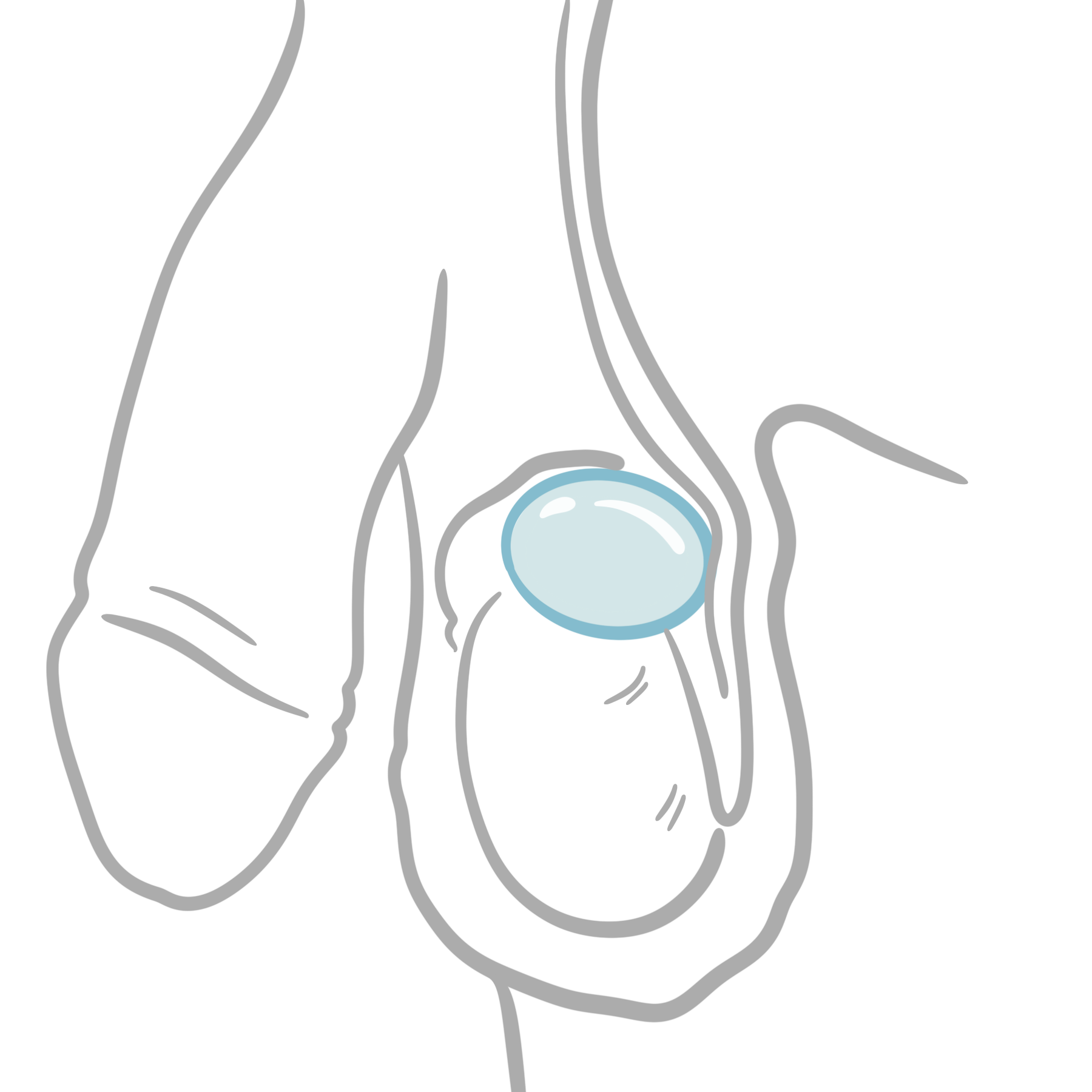
A spermatocele, or spermatic cyst, is a benign fluid-filled cyst arising from the epididymis, usually near the upper pole of the testis. It commonly contains clear or milky fluid with spermatozoa. Most spermatoceles are painless, discovered incidentally and do not require treatment.
Definition
Epididymis: coiled structure behind the testis that stores and transports sperm.
Spermatocele: epididymal cyst containing fluid and spermatozoa.
Transillumination: light passes through a fluid-filled scrotal mass.
Spermatocelectomy: surgical excision of a spermatocele.
Extr testicular mass: mass arising outside the testis; spermatoceles are usually extratesticular and benign.
A spermatocele is usually a painless cyst above or behind the testis.
Pathophysiology
- Obstruction of an epididymal or efferent duct causes accumulation of sperm-containing fluid.
- The affected duct gradually dilates, forming a cyst.
- Spermatoceles commonly arise from the head of the epididymis, above or behind the testis.
Clinical Manifestations
- Usually asymptomatic and painless.
- Smooth, soft or fluctuant scrotal lump.
- Located above or behind the testis.
- Usually separate from the testis.
- Larger lesions may cause:
- Dull scrotal discomfort
- Heaviness
- Fullness or swelling
- Discomfort during physical activity or intercourse
- The mass may transilluminate
The testis should be palpable separately from the mass.
Diagnosis
- Transillumination: supports a fluid-filled lesion but does not provide a definitive diagnosis.
- Scrotal ultrasound: performed when the diagnosis is uncertain or to exclude:
- Ultrasound usually demonstrates a well-defined cystic lesion arising from the epididymis.
- Any new or unexplained scrotal mass should be medically assessed to exclude testicular malignancy
Ultrasound is used when the diagnosis is uncertain or malignancy must be excluded.
- Testicular tumour
- Hydrocele
- Varicocele
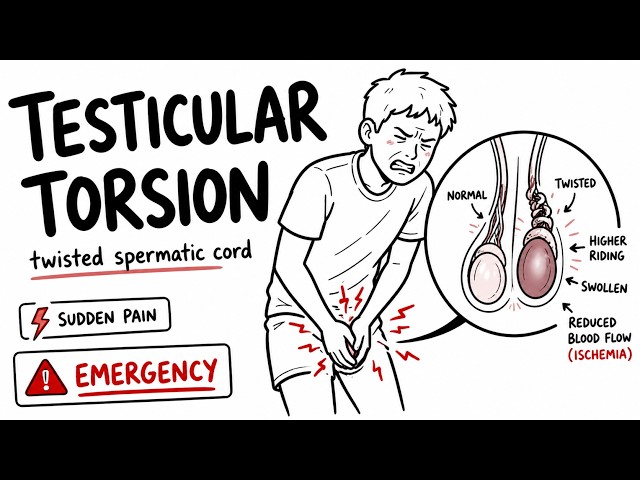
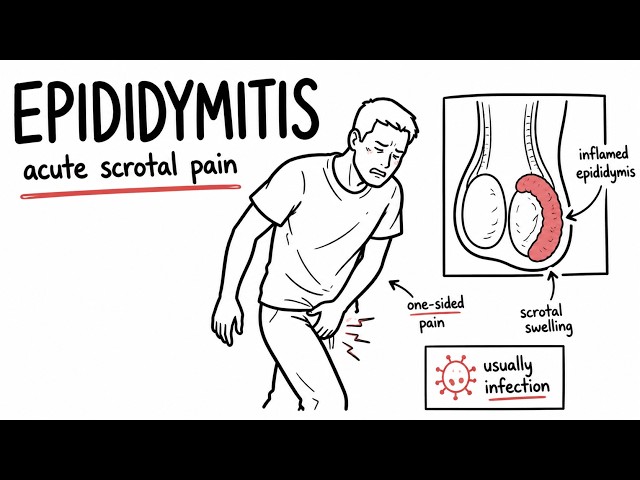
- Epididymitis
- Inguinal hernia
Treatment
Asymptomatic spermatocele
- Reassurance and observation.
- No treatment or routine intervention is required.
- Review if the mass enlarges, becomes painful or changes clinically.
Symptomatic spermatocele
- Simple analgesia, such as paracetamol.
- NSAIDs may be used if appropriate.
- Supportive underwear may reduce discomfort.
- Surgical treatment:
- Spermatocelectomy may be considered for:
- Persistent pain
- Significant discomfort or heaviness
- Large or progressively enlarging lesion
- Interference with daily activities
- The cyst is surgically separated from the epididymis, usually as a day procedure.
- Fertility implications should be discussed before surgery, particularly in younger patients.
- Spermatocelectomy may be considered for:
- Aspiration and sclerotherapy
- Rarely used because fluid may reaccumulate.
- Sclerotherapy involves aspiration followed by injection of an agent that scars the cyst lining.
- May damage the epididymis and potentially affect fertility.
Complications & Prognosis
- Most spermatoceles cause no complications.
- Large lesions may cause persistent pain, heaviness or cosmetic concern.
- A spermatocele itself usually does not impair fertility.
Surgery may affect fertility through epididymal or vas deferens injury.
- Prognosis is excellent.
- Spermatoceles are benign and do not become cancerous.
- Many remain stable and asymptomatic for years.
- Treatment is generally effective when symptoms justify intervention, although recurrence can occur.
- Patients should seek prompt reassessment for sudden severe pain, rapid enlargement or a new hard intratesticular mass, as these findings may indicate another condition.
References
- Mayo Clinic. Spermatocele: symptoms and causes [Internet]. Rochester: Mayo Foundation for Medical Education and Research; 2022.
- Mayo Clinic. Spermatocele: diagnosis and treatment [Internet]. Rochester: Mayo Foundation for Medical Education and Research; 2022.
- Merck Manual Professional Edition. Some causes of a painless scrotal mass [Internet]. Rahway: Merck & Co.; 2026.
- Lundström KJ, Söderström L, Jernow H, Stattin P, Nordin P. Epidemiology of hydrocele and spermatocele: incidence, treatment and complications. Scand J Urol. 2019;53(2-3):134–138.







Members only discussions coming soon…