

Alzheimer's Disease
Overview
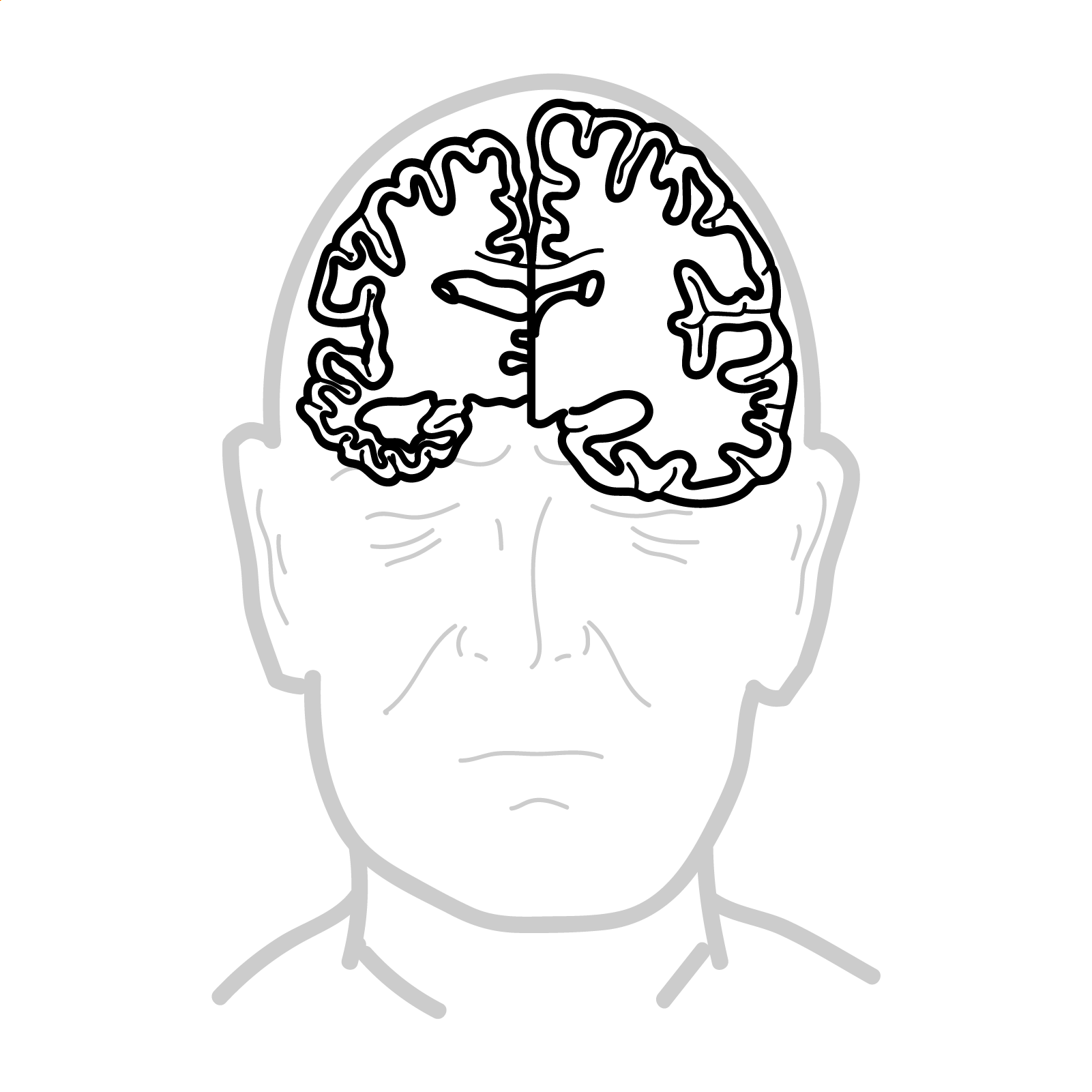
Alzheimer disease is characterised by an insidious onset of symptoms with initial forgetfulness progressing over time to profound memory impairment with accompanying dysphasia, dyspraxia and personality change.
Definition
Dementia: Clinical syndrome that is characterised by a progressive deterioration in cognition with resulting decline in function.
Alzheimer disease: Characterised by an insidious onset of symptoms with initial forgetfulness progressing over time to profound memory impairment with accompanying dysphasia, dyspraxia and personality change.
Vascular dementia: Usually starts suddenly and will be accompanied by focal neurological signs with imaging evidence of cerebrovascular disease. Many patients with vascular dementia have evidence of atherosclerotic disease elsewhere.
Frontotemporal lobe dementia (pick’s disease): Selective brain atrophy involving the frontal and temporal lobes, requiring brain magnetic resonance imaging for accurate diagnosis. Clinically, these diseases present chiefly as progressive aphasia or as disintegration of personality and behaviour that may be misdiagnosed as a psychiatric disorder
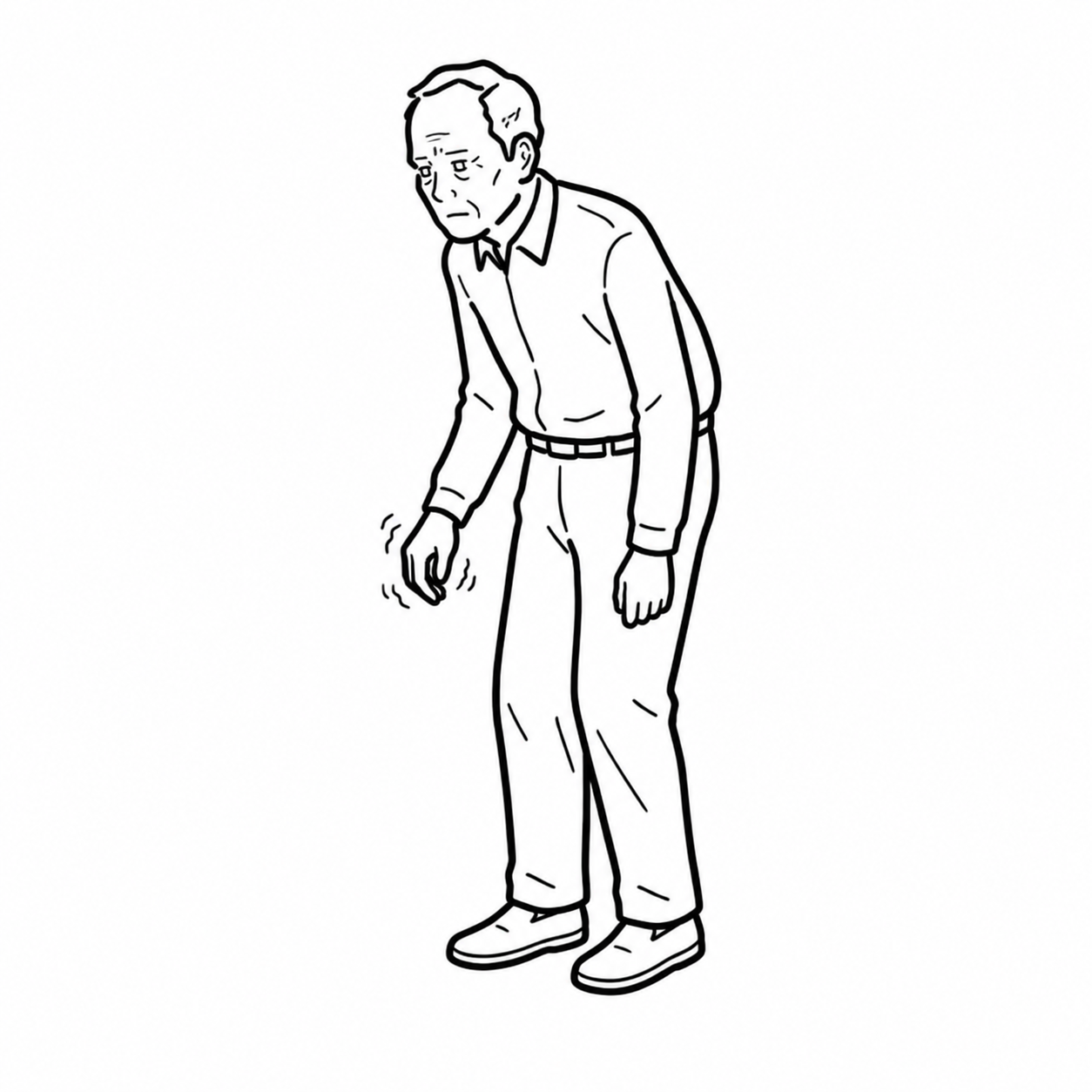
Lewy body Dementia: Considered the second most common cause of dementia in the elderly after Alzheimer’s disease. DLB is a progressive neurological disorder characterized by core features of cognitive impairment, psychosis and Parkinsonism.
What to notice
Detailed image description
Classification
Major dementia syndromes
- Alzheimer’s Disease (50-70%) – 15% are familiar in origin including early-onset dementia
- Vascular Disease (10-20%) – Accumulation of small (lacunar) or large infarctions
- Lewy-Body Dementia (10%) – Clinically characterised by dementia and signs of Parkinson’s disease. Often inherited – mutations in alpha-synuclein and beta-synuclein
- Frontaltemporal Lobe Dementia
Anatomy & Physiology
Neuron Anatomy
Risk Factors
- Age
- Family history
- Patients with a first-degree relative with dementia have a 10 to 30 percent increased risk of developing the disorder.
- Rare, dominantly-inherited mutations in genes that impact amyloid in the brain
- Apolipoprotein E (APOE) epsilon 4 (e4) allele
- Hypertension
- Hypercholesterolaemia
- Cerebrovascular disease
- Type II Diabetes Mellitus
- Obesity
- Lifestyle and activity
- Smoking
- Brain trauma
- Medications (Benzodiazepam, Anticholinergics and PPIs?)
It has been estimated that up to one third of AD cases worldwide might be attributable to modifiable risk factors such as diabetes, midlife hypertension, and physical inactivity.
Clinical Manifestation
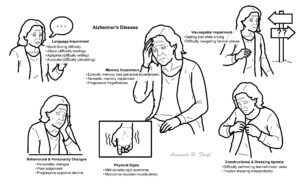
Memory impairment:
- Episodic (personal experiences)
- Semantic (store of conceptual and factual knowledge)
- Visuospatial impairment, e.g getting lost when driving.
- Constructional and dressing apraxia.
- Language impairment, e.g. word-finding difficulties. Alexia, agraphia, acalculia.
Mini-mental state examination (MMSE)
Physical signs:
- Mild akinetic rigid syndrome
- Myoclonus
Consider other medical causes of memory impairment including hypothyroidism, B group vitamin deficiencies, sleep apnoea, neurosyphilis, cerebral space occupying lesions and normal pressure hydrocephalus.
- Vascular dementia
- Thyroid Disease
- Dementia with Lewy bodies
- Parkinson’s Disease and Parkinson’s Plus Diseases
- Prion Disease
- Cerebral Syphilis
- Post-cerebral radiotherapy
- Wernicke-Korsakoff psychosis
| Difference between Dementia and Delirium | ||
| Dementia | Delirium | |
| Onset | Sub-acute | Acute |
| Conscious level | Normal | Fluctuates |
| Hallucinations | Late event | Common |
| Agitation/agression | Uncommon until late | Common |
| Thought form | Poverty of thought late | Flight of ideas |
| Memory | Slow decline | Poor |
| DIFFERENTIAL DIAGNOSIS OF ALZHEIMERS | |||
| Alzeihmers Disease | Wernicke-Korsakoff | Picks Disease (FTD) | |
| Early Symptoms | Memory loss | Confusion most common, followed by staggering gait and ocular problems | Apathy, poor judgement/insight, aphasia |
| Onset | Gradual | Days-weeks | Gradual |
| Aetiology | Neurodegeneration | B1 deficiency relatedto alcohol and malnutrition | Neurodegeneration |
| Mental status | Episodic memory loss | Disorientation, minimal spontaneous speech, inattention | Frontal/executive function, language |
| Neuropsychiatry | Initially normal | Apathetic, lack of motivation and insight | Apathy, disinhibition, hyperorality, euphoria, depression. |
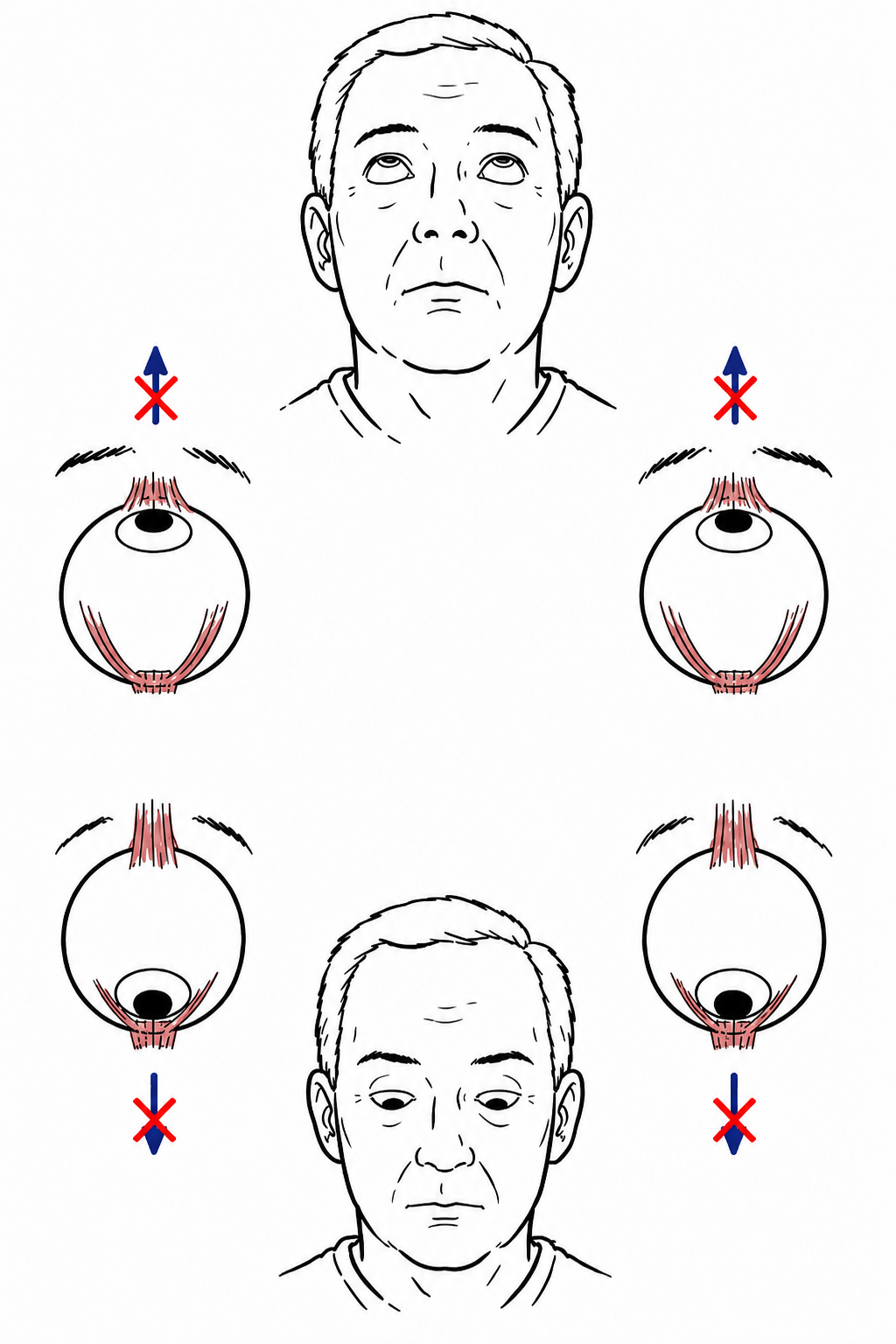
| Neurology | Initially normal | Confusion, ataxia, nystagmus | Progressive supranuclear palsy/cortical basal degeneration, vertical gaze palsy, dystonia |
| Imaging | Hippocampal and entorhinal cortex atrophy | Periventricular punctate haemorrhages affecting gray matter | Frontal and/or temporal atrophy |
Investigation
Cognitive Testing Cognitive tests are vital in the diagnosis of dementia and are often used to differentiate between types of dementia. They can also be used to assess mood and may help diagnose depression.
- Modified Mini-Mental Status Examination (MMSE)
- Alzheimer’s Disease Assessment Scale-Cognitive (ADAS-Cog)
- General Practitioner Assessment of Cognition (GPCOG)
- Rowland Universal Dementia Assessment Scale (RUDAS)
- Adenbrooks Cognitive Examination
- Neuropsychological Testing
Imaging
- CT and/or MRI
- Chest X-ray
- ECG
- FBC
- ESR
- EUC
- Blood glucose
- Calcium
- LFTs
- TFTs (hypothyroidism not causative but sometimes coexistent)
- Vitamin B12
- Venereal Diseases Research Laboratory (VDRL) test (screening for neurosyphilis is not recommended unless high suspicion)
Pathology
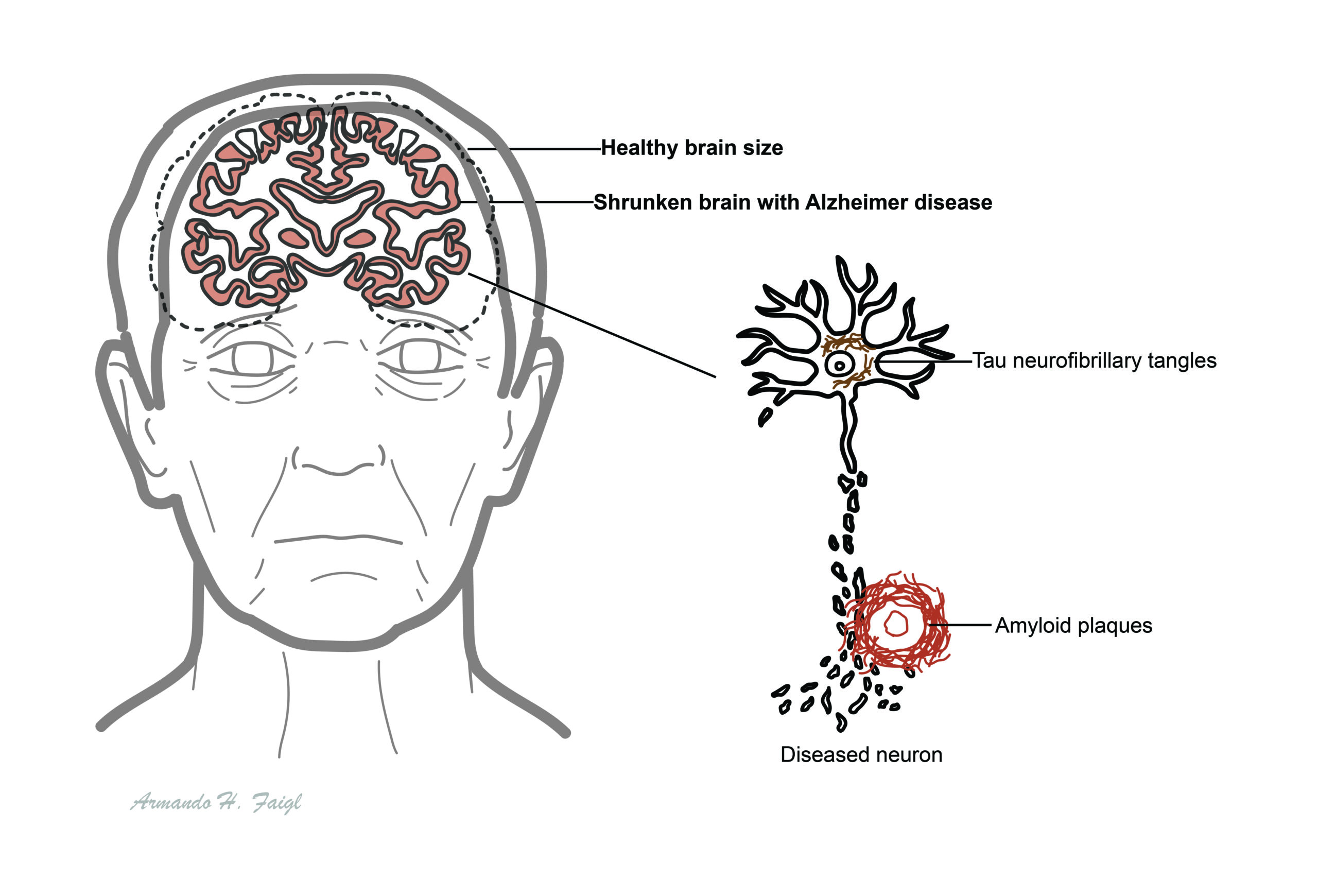
- Generalized cortical atrophy – especially temporal lobes
- Deposits of amyloid A4 protein in cortex with neuritic plaques
- Amyloid angiopathy (Amyloid within vessel walls)
- Neurofibrillary tangles – tau and ubiquitin proteins
Treatment
General
- Education
- Family education
- Support groups
- Speech therapy
- Physiotherapy/occupational therapy
- Psychologist
- Medication review
- Diet
- Vitamin supplements + iron
Memory is not the only complication of alzheimers. As the disease progresses behavioural and psychological symptoms of dementia, including sleep inversion, incontinence, excessive inappropriate motor activity (eg pacing), shouting and agitation manifests and all need individual treatment.
Medical treatment
- Cholinesterase inhibitors
- +/- Memantine (NMDA receptor blocker →↓Glutamatenergic activity
- Review
Cholinesterase inhibitors improve alertness and function and can maintain cognitive scores at or above the baseline for up to 12 months. However, they do not modify the underlying progression of pathology.
Pharmacology
Cholinesterase inhibitors (Donepezil) inhibit the enzyme that normally breaks down Ach →↑Ach activity. In Alzheimer’s there is ↓Ach. Side effects: particularly anorexia, nausea and vomiting. Other adverse effects include diarrhoea, insomnia, vivid dreams, cramps, dizziness, depression, lethargy, fatigue, drowsiness, tremor, weight loss, urinary incontinence and sweating.
Complications & Prognosis
- Inhaling food or liquid into the lungs (aspiration)
- Pneumonia and other infections
- Falls (fractures)
- Fractures
- Bedsores
- Malnutrition or dehydration
- Alzheimer disease is a chronic illness with progressive course.
- As symptoms progress more care is needed

Members only discussions coming soon…