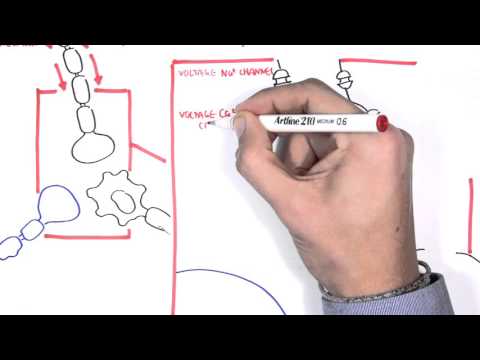
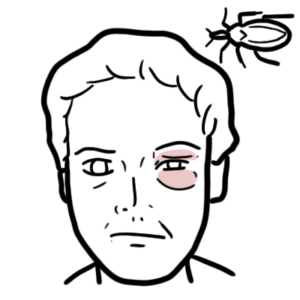
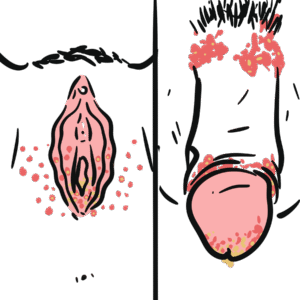
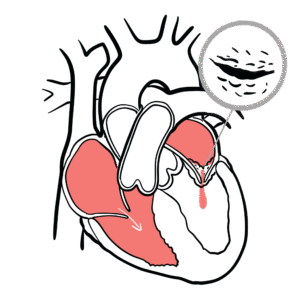
0:00 In this video we're going to talk about keflasporins. 0:08 Giuseppe Brutsu, an Italian man, first demonstrated the anti-microbial activity 0:13 of culture filtrates 0:14 of the mold keflasporium acrimonium in 1945. 0:20 Keflasporins consist of a beta lactam ring and a six-membered dihydrothyryzide 0:25 ring modified 0:26 at certain positions to produce different compounds. 0:30 This keflasporin is used as an antibiotic and is classed as a beta lactam. 0:41 So keflasporins are a type of beta lactam antibiotic because of the beta lactam 0:47 ring. 0:47 Other antibiotic groups that have a beta lactam ring in their molecular 0:51 structure include 0:52 penicillins, monobactams, and carbapenins. 0:57 There's a separate video on penicillins if you're interested. 1:00 Now, keflasporins are typically classified into generations, each successive 1:05 generation 1:06 acquiring better gram negative activity, usually at the expense of some gram 1:12 positive. 1:13 Generation 4 and 5 have broad spectrum activity. 1:17 Not every country agrees on which agent belongs in which generation. 1:22 So first generation primarily is active against gram positive bacteria, and 1:26 these antibiotics 1:26 include kephazolin and kephilexin. 1:29 Second generation enhances the activity against gram negative bacteria with 1:33 varying degrees 1:34 of activity against gram positive. 1:37 These include kephuroxy, kephazitin, and kephotetan. 1:44 Third generation have markedly increased activity against gram negative 1:49 bacteria, as we know, 1:50 with successive generation. 1:52 And these really include kephotaxin, keftriaxone, which has poor activity 1:58 against pseudomonas, 2:00 but then you have keftazodym in this group, which is very good against pseud 2:05 omonas aeruginosa. 2:06 Now, the fourth generation kephosporin has broad spectrum of activity against 2:12 gram positive 2:13 cockai and gram negative bacteria, including pseudomonas species, and these 2:19 include kephopame 2:21 and kephpyrum. 2:24 Now the fifth generation is a bit different, as it doesn't have amazing gram 2:29 negative 2:29 cover, but it's really good against MRSA. 2:33 And this antibiotic is keftaraline, as well as keftobiprol, which is also 2:40 useful against 2:41 pseudomonas and enterococci species. 2:50 So how do these different kephosporins work? 2:52 Well, in summary, they work by inhibiting cell wall synthesis, just like penic 2:56 illins. 2:57 They bind to these things called penicillin-binding proteins, or PVPs, and 3:02 inhibit transpeptidation 3:04 of peptidoglycans. 3:06 They essentially cause bacterias to die, so they're bactericidal and exhibit 3:12 significant 3:13 post antibiotic effect against gram positive, but not gram negative bacteria. 3:19 So what I mean by that is that even after stopping the antibiotics, there is 3:26 still an 3:27 effect of the antibiotic against gram positive bacteria, but not so much gram 3:33 negative bacteria, 3:34 so you need to use it more often. 3:41 Now unfortunately, like all antibiotics, bacteria can develop resistance to 3:47 antibiotics through 3:47 several mechanisms. 3:49 Firstly, through destruction of antibiotic by beta lactamases. 3:54 So beta lactamases are enzymes that can break down beta lactam antibiotics, 3:58 including kephosporins. 4:00 They can promote reduced penetration of the antibiotics through the outer 4:06 membrane of 4:07 specifically gram negative bacteria. 4:10 They can have enhanced efflux, so pumping out the antibiotic, or alterations in 4:15 the penicillin-binding 4:15 protein target, resulting in reduced affinity binding, so reduced affinity of 4:21 the antibiotic 4:22 to the actual target. 4:30 So what are the clinical uses of kephosporins? 4:33 Well, there are so many generations that each generation is used for really 4:37 specific type 4:38 of infections. 4:39 First generations are typically used for gram positive, so these include staph 4:43 ylococcal, 4:43 or streptococcal skin infections, or soft tissue infections, and even UTIs. 4:48 Second generation, use is include severe community acquired pneumonia, or Titus 4:53 media, streptococcal 4:55 pharyngeitis. 5:01 Third generation, use includes meningitis, upper respiratory tract infections, 5:06 as well 5:06 as pneumonia, sinusitis, or Titus media, some nosocomial infections, nessir gon 5:15 orrhea, typhoid, 5:16 and also shigella. 5:19 Health generation, as mentioned, is quite strong against gram negative 5:24 infections, and so it's 5:25 useful against pseudomonas aeruginosa, entericobacter species, citrobacter 5:31 species, and seratia species, 5:33 so really the resistant guys. 5:41 So in terms of pharmacology, kephosporins can be given either oral intravenous 5:47 or intramuscular. 5:48 First generation drugs are all parenteral. 5:52 Oral preparations have 80 to 95% bioavailability, and protein binding is 5:58 variable, up to between 5:59 10 to 98%. 6:02 Kefosporins typically have poor cerebrospinal fluid penetration, unless there's 6:06 meningial 6:07 inflammation. 6:08 It crosses the placenta. 6:10 Most drugs are not metabolized, except kephotaxine, which is metabolized in the 6:16 liver. 6:17 Most drugs are excreted by the kidneys, except kephotraaxone and kephoparazone, 6:22 which are 6:22 excreted by the biliary system, and so you can get biliary derangement from sl 6:26 udge formation 6:27 when using these antibiotics. 6:31 Speaking of this, let's talk about the toxicities and side effects. 6:35 Hypersensitivity is quite common, and up to 3%. 6:40 Other hypersensitivity reactions include serum sickness, and anaphylaxis is 6:45 rare. 6:45 GI symptoms are common, diarrhea, nausea, vomiting, transit, hepatitis occurs 6:50 in 7%, 6:51 and biliary sludge, especially with kephotraaxone. 6:56 Hematological complications, people can develop isynophilia, cytopenias, and 7:00 hemolytic anemia. 7:02 Renal toxicities include interstitial nephritis. 7:05 Central nervous system complications, seizures are rare. 7:09 Also there can be false positive laboratory testing, with Coom's test being 7:12 positive. 7:13 Also note that with really most antibiotics, but specifically, beta lactam 7:19 antibiotics, 7:20 they can cause a drug fever, which might not be detrimental, but may cause 7:27 someone to 7:28 change the antibiotics they use. 7:35 But in summary, kephosporin is a antibiotic with multiple uses. 7:42 It is divided based on the generation, so one to four, with increased activity 7:49 towards 7:50 gram negative, with the expense of gram positive. 7:54 And of course, toxicities really are similar to penicillins, including rash, GI 8:02 manifestations, 8:04 diarrhea, nausea, vomiting, as well as some hematological complications. 8:07 Thank you for watching.