

Osgood Schlatter
Overview
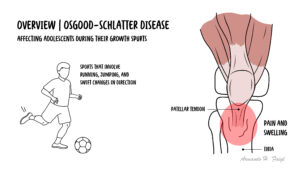
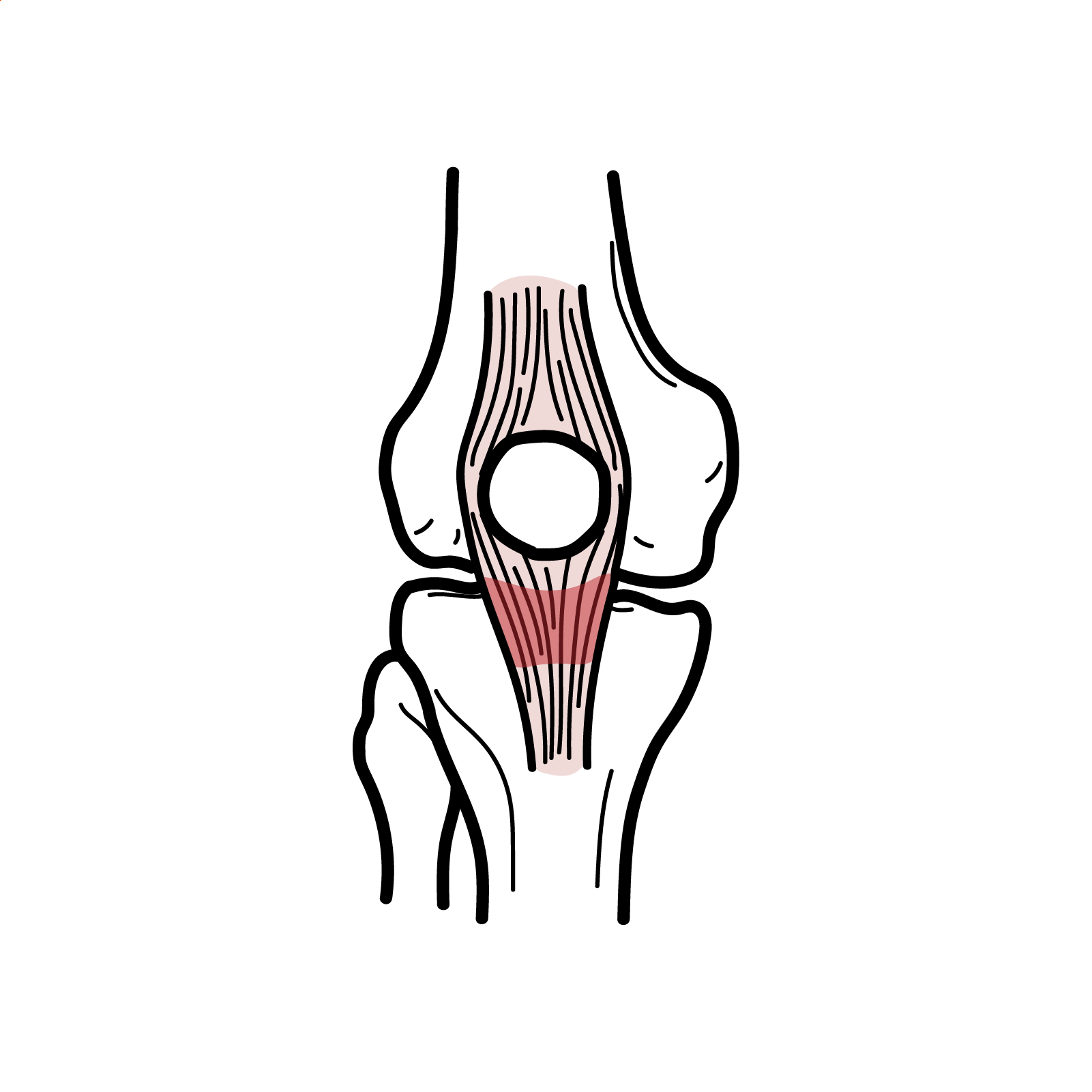
In this common disorder of adolescence the tibial tubercle becomes painful and ‘swollen’. Although often called osteochondritis and apophysitis, it is nothing more than a traction injury of the apophysis into which part of the patellar tendon is attached. Osgood-Schaltter disease typically occurs during the early adolescent growth spurt between 10-15 years of age, particularly in children who participate in sports that involve running and jumping.
Anatomy
Risk Factors
- Young age
- Activities placing stress on the tibial tubercle through repetitive contraction of the quadriceps muscle – running, cutting, and jumping
Clinical Manifestation
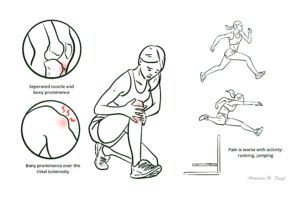
There is no history of injury and sometimes the condition is bilateral. A young adolescent complaints of pain after activity, and of a lump. The lump is tender and its situation over the tibial tuberosity is diagnostic. Sometimes, active extension of the knee against resistance is painful and X rays may reveal fragmentation of the apophysis.
- Patellar fracture
- Patellar tendonitis
- Quadriceps tendonitis
- Quadriceps tendon avulsion
- Stress fracture of the proximal tibia
- Avulsion fracture of the tibial tubercle
- Supra/infra patellar bursitis
- Pes anserine bursitis
Pathophysiology
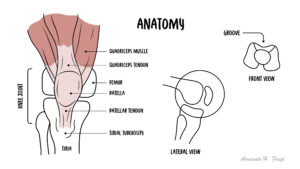
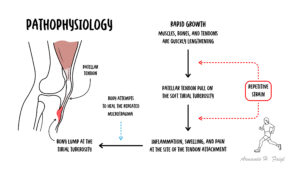
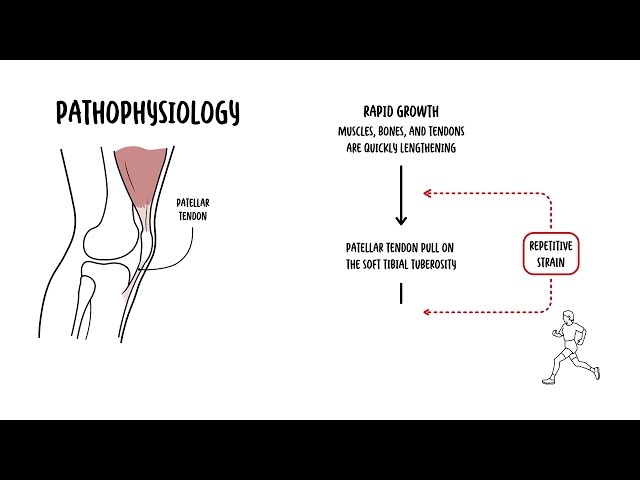
The tibial tubercle develops as a secondary ossification center that provides attachment for the patellar tendon. Sequence of tibial tubercle development.
- <11 years of age the tibial tubercle is entirely cartilaginous
- 11-14 years of age the apophysis form
- 14 -19 years of age the apophysis fuses with the proximal tibial epiphysis
- 18+ years of age the bony tibial tubercle formed
OSD occurs from repetitive quadriceps contraction such as jumping and running. Quadriceps contraction occurs through the patellar tendon at its insertion upon the skeletally immature tibial tubercle during its apophysis transformation and fusion between 11-18 years of age.
Treatment
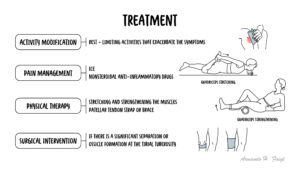
- Spontaneous recovery
- Restrict activities such as cycling, jumping, and soccer.
- Physiotherapy for strengthening
- Analgesia for pain control
- Occasionally is symptoms persist a separate ossicle in the tendon is usually responsible. Surgery may be indicated.
Complications & Prognosis
The prognosis in Osgood-Schlatter disease is excellent. It is usually self-limiting and resolves by the time the patient is aged 18 years, when the tibial tubercle apophysis ossifies.
Members only discussions coming soon…