

Visual explanationFree resource
Visual medical education by Armando Hasudungan
Medical science, drawn into focus.
Explore visual explanations that reveal how the facts, processes and clinical patterns fit together—then discover the coming AH study platform, built to guide what you study next and check what stuck.
Connected studyComing soon
Clear visual explanations used by medical and allied-health learners around the world.
Explore the free library
Start with the topic in front of you.
Browse by subject or jump straight into the explanation you need. No account required.
Sexual Transmitted Infection
Overview Sexually transmitted infections (STI) are a significant public health worldwide. STI can result in chronic disease, pregnancy complications, infertility, and even death. Globally, congenital syphilis is still a leading cause of stillbirth and neonatal death. Antibiotic-resistant Neisseria gonorrhoeae continues to be a significant public health concern. Chlamydia trachomatis infection is the most frequently reported…
View topic ↗Hypermobility Syndromes
Overview Hypermobility Spectrum Disorder (HSD) describes symptomatic joint hypermobility with musculoskeletal (and sometimes systemic) consequences in people who do not meet the 2017 diagnostic criteria for hypermobile Ehlers–Danlos syndrome (hEDS) or another heritable connective-tissue disorder (HCTD). Prevalence of generalised joint hypermobility varies (≈2–35% depending on age/sex/ethnicity and cut-offs), with symptomatic states more common in females…
View topic ↗Pulmonary Sarcoidosis
Overview Sarcoidosis is a multisystem granulomatous disease of unknown cause, characterised by the formation of non‑caseating granulomas in affected organs. Pulmonary involvement occurs in ~90% of patients, making it the most common manifestation. Global prevalence varies widely (e.g., 3.7/100,000 in Japan vs. 28.2/100,000 in Finland), with higher rates in Black Americans and Northern Europeans. Peak…
View topic ↗Endometrial Cancer
Overview Endometrial carcinoma is an epithelial malignancy of the uterine corpus mucosa, usually an adenocarcinoma. Endometrial carcinoma is the most common female genital tract malignancy. Postmenopausal bleeding always needs to be investigated because it can indicate malignant disorders and premalignant conditions, such as endometrial hyperplasia. The most common etiology of postmenopausal bleeding is atrophic endometritis or vaginitis. Menopause:…
View topic ↗Acute Respiratory Failure
Overview Acute Respiratory failure causes hypoxia and/or impaired ventilation with hypercapnia, leading to severe hypoxemia and rapid deterioration. Two main types of respiratory failure: Type I respiratory failure (non-hypercapniec respiratory failure) Primarily from failure of oxygenation (PaO2 <60mmHg) Normal or low CO2 pH 7.5 Usually responds to Oxygen therapy Type II respiratory failure (hypercapniec respiratory…
View topic ↗Multiple Sclerosis
"Each patient ought to feel somewhat the better after the physician's visit irrespective of the nature of the illness." -Warfield Theobald Longcope Overview Multiple sclerosis (MS) is defined as an inflammatory demyelinating disease characterised by the presence of episodic neurological dysfunction in at least 2 areas of the CNS (brain, spinal cord, and optic nerves)…
View topic ↗Prostatitis
Overview Prostatitis refers to a spectrum of conditions involving inflammation of the prostate gland, ranging from acute bacterial infection to chronic pelvic pain syndromes. It is a common urological condition affecting men of all ages, particularly those aged 30–50 years. The National Institutes of Health (NIH) classifies prostatitis into four categories: acute bacterial, chronic bacterial, chronic…
View topic ↗Full resource library
Browse all topics ↗Choose how you learn
One idea. More than one way to see it.
Use the format that helps the topic click, then switch formats when you need to reinforce it.
01 / WATCH02 / READ03 / SEE04 / CHECK
Videos
Hand-drawn explanations that build the big picture as the concept unfolds.
Notes
Clear written explanations for review, reference and filling in the details.
Diagrams
Visual snapshots that help you easily review topics.
Questions
Test whether the explanation stayed with you—not just whether it looked familiar.
Good places to begin
Explanations learners return to.

Epigenetics – An Introduction
This sketch video about epigenetics was created by Armando Hasudungan, in collaboration with Professor Susan Clark and Dr Kate Patterson at the Garvan Institute of Medical Research. It has been created for a broad, non-expert audience to highlight key messages about the role epigenetics plays in biological processes like development and diseases such as cancer.

Femur clinical anatomy – fractures, angle of inclination and declination and blood supply
Dive deep into the world of human anatomy with our latest video on the femur. What You'll Learn: The Femur Unveiled: Get up close and personal with the anatomy of the femur, exploring its structure, parts, and functions. Clinical Significance: Discover the crucial role the femur plays in overall body mechanics, mobility, and health. Common…
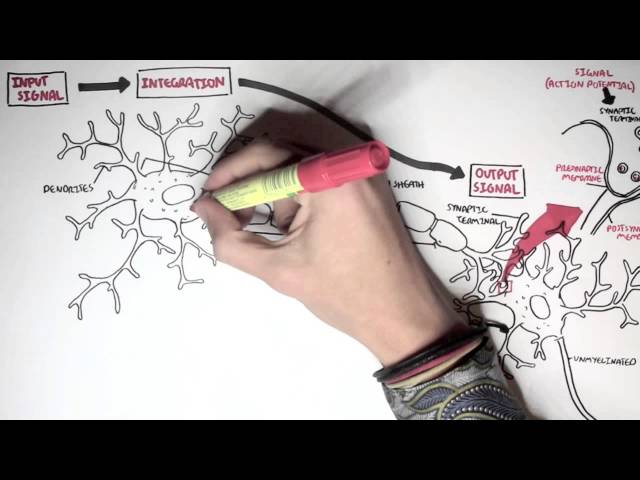
Neurology – Neuron
Explore the structure and function of neurons, the fundamental units of the nervous system responsible for transmitting electrical and chemical signals. This video explains key parts of the neuron—such as the dendrites, axon, and synapse—and how they work together to facilitate communication within the body.
Our mission
Medical science is complex. Understanding it should feel possible.
Armando Hasudungan turns difficult medical science into clear visual explanations and connected learning experiences—so learners can see the whole picture, remember what matters and find a clearer way forward.
See it clearly
Turn abstract processes and invisible relationships into something the learner can picture.
Connect the pieces
Build understanding around how concepts fit together—not a pile of isolated facts.
Make it useful
Help learners move from explanation to recall, revision and the next logical step.
What clarity feels like
When the topic stops being a blur.
Learners do not come back because the subject became easy. They come back because the explanation gave them a picture they could work with.
“Armando's teaching style gives me the foundational knowledge.
Jessica Payne-Burnett
Medical Student, Charles Sturt University
“The notes I make during his videos help me retain everything better.
Ayesha RaiStudent, Islamabad Medical and Dental College
“The drawings are amazing and super easy to remember.
Reem Mohamed Khair Abdalrazig
Student, Neelain University
Coming soon: the AH study platform
The explanation is only the start.
The free library helps you find a clear explanation. The AH platform is being built to help you connect the resources, follow a clearer path and check what actually stuck.
- Watch in a focused, ad-free study environment.
- Move between connected videos, notes, diagrams and questions.
- Know what belongs next instead of rebuilding the study path yourself.
- Test your understanding while the topic is still fresh.
New and worth a look
Keep building the picture.
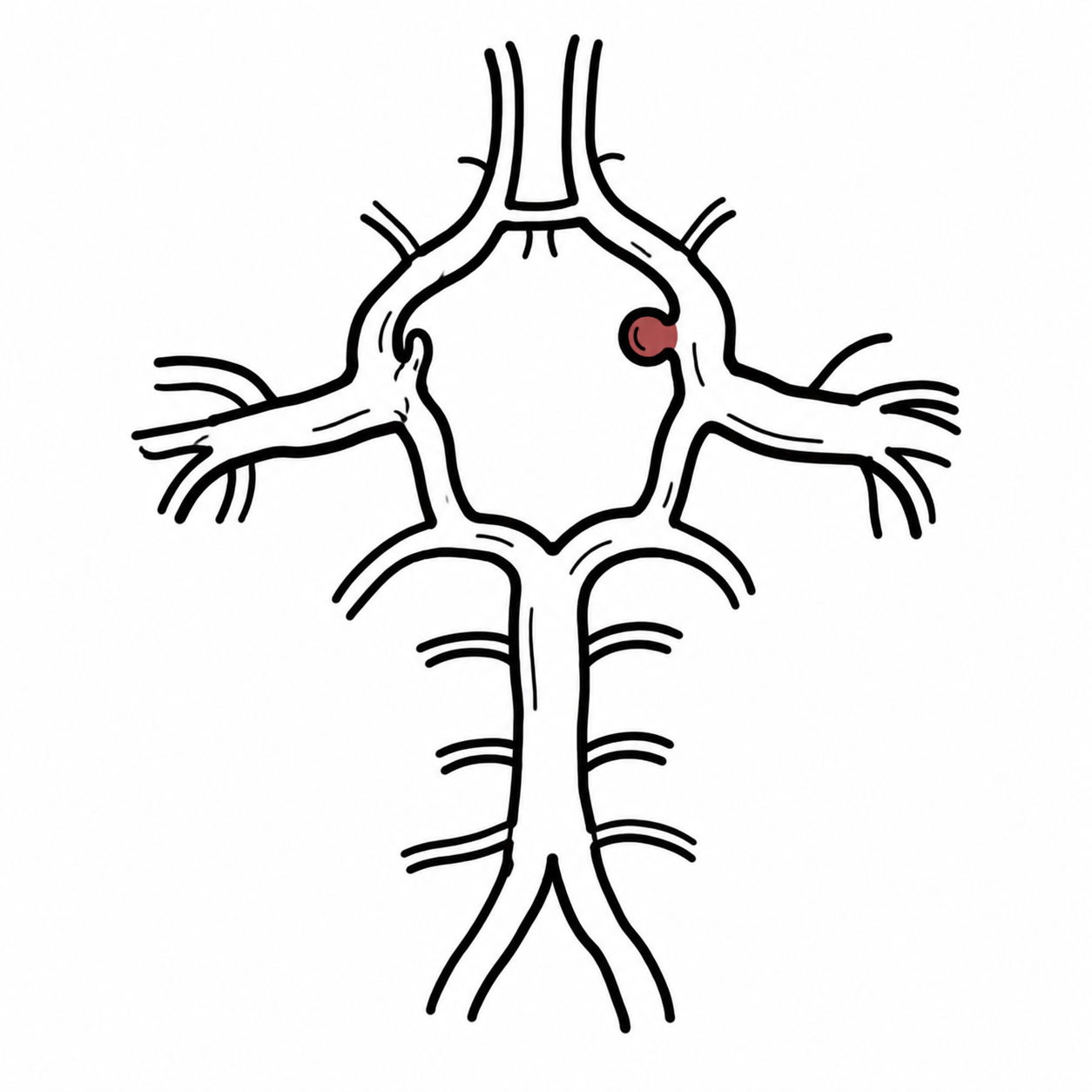
Cerebral Aneurysm
Overview Cerebral (Intracranial) aneurysm is a focal dilation of an intracranial artery due to weakness of the arterial wall. It occurs in roughly 1-5% of adults and can lead to permanent disability. The most common type is a saccular “berry” aneurysm. Most common location is anterior communicating artery. Cerebral aneurysms are typically asymptomatic until rupture,…
View this topic ↗About Visualising Medicine
Good education does not remove complexity. It makes complexity feel simple.
Visualising Medicine is the team behind Armando Hasudungan. We bring together medicine, illustration, writing and technology to make difficult ideas clearer—and build better ways for learners to use them.