

Visual explanationFree resource
Visual medical education by Armando Hasudungan
Medical science, drawn into focus.
Explore visual explanations that reveal how the facts, processes and clinical patterns fit together—then discover the coming AH study platform, built to guide what you study next and check what stuck.
Connected studyComing soon
Clear visual explanations used by medical and allied-health learners around the world.
Explore the free library
Start with the topic in front of you.
Browse by subject or jump straight into the explanation you need. No account required.
Neonatal Conditions
Vitals For more information: Parturition and Routine Care NORMAL EXPECTED PHYSIOLOGICAL VALUES AT DIFFERENT AGES Age (years) Respiratory Rate Heart rate Systolic Blood Pressure <1 30-40 110-160 70-90 1-2 25-35 100-150 80-95 2-5 25-30 95-140 80-100 5-12 20-25 80-120 90-110 >12 15-20 60-100 100-120 Oxygen saturation return to 100% after 10 minutes post partum.…
View topic ↗Breast Cancer
"A 35 Year old women presents with a 1cm hard lump in the upper quadrant of her right breast. She first noticed this when she was in the shower three months ago. She is worried that the lump might be malignant" Overview Breast cancer is the most common cancer in women worldwide. It accounts for…
View topic ↗Leukaemia
Overview Leukemia is a common malignancy in children and adults that occurs when alterations in normal cell regulatory processes cause uncontrolled proliferation of hematopoietic stem cells in the bone marrow. Leukaemia: Clonal proliferation of hematopoietic stem cells in the bone marrow Acute Leukaemia: Clonal proliferation of hematopoietic stem cells in the bone marrow that develops…
View topic ↗Sjögren’s-Associated Interstitial Lung Disease
Overview Sjögren’s-associated interstitial lung disease (Sjögren’s-ILD) is a significant extra-glandular manifestation of primary Sjögren’s disease (pSS), occurring in ~9–20% of patients clinically, with subclinical involvement detectable in up to 50% on HRCT. It may precede sicca symptoms or develop late in the disease course. The most common ILD pattern is nonspecific interstitial pneumonia (NSIP), followed…
View topic ↗Menopause
Overview The menopause means the final menstrual period – diagnosed retrospectively after one year of amenorrhoea. Cessation occurs due to loss of ovarian function. The “declining oocyte pool” theory states that a newborn girl is born with millions of eggs, most of which die by atresia. The average age of menopause is 50, however this can vary…
View topic ↗Carotid Artery Disease
Overview Carotid artery disease refers to atherosclerotic narrowing of the carotid artery lumen. It is associated with approximately 10-15% of all ischaemic strokes. Stroke is the third leading cause of death and a principal cause of long-term disability in much of the industrialised world. The degree of internal carotid artery stenosis is the most important…
View topic ↗Post Traumatic Stress Disorder
Traumatic and Stress Related Disorders Post traumatic stress disorder Acute stress Disrorder Adjustment Disorder This will mainly focus on PTSD Overview The identification of Post traumatic stress disorder (PTSD) in a patient involves understanding the traumatic event and the patient characteristics. PTSD may develop following exposure to 1 or more traumatic events such as deliberate acts of interpersonal…
View topic ↗Full resource library
Browse all topics ↗Choose how you learn
One idea. More than one way to see it.
Use the format that helps the topic click, then switch formats when you need to reinforce it.
01 / WATCH02 / READ03 / SEE04 / CHECK
Videos
Hand-drawn explanations that build the big picture as the concept unfolds.
Notes
Clear written explanations for review, reference and filling in the details.
Diagrams
Visual snapshots that help you easily review topics.
Questions
Test whether the explanation stayed with you—not just whether it looked familiar.
Good places to begin
Explanations learners return to.
Parasites Overview
Parasites are microorganisms that live on a living host and derive nutrition them without any benefit to the host. Parasites can also cause harm to the infected host. There are three classes of parasites that cause infections in humans: Protozoa, Helminths, Ectoparasites.
Chemistry Revision – Ions (Cation, Anion, Bonds)
Review the essential concepts of ions, including the differences between cations and anions, and how they form ionic and covalent bonds. This video offers a clear and simple explanation to strengthen your understanding of basic chemistry principles.
Antibody somatic (VDJ) recombination – Mechanism
Explore the process of somatic V(D)J recombination in antibody production, a key mechanism behind B cell diversity and adaptive immunity. This educational immunology video breaks down the roles of gene segments, recombinase enzymes, and checkpoints—crucial for understanding immune specificity and medical exam topics.
Our mission
Medical science is complex. Understanding it should feel possible.
Armando Hasudungan turns difficult medical science into clear visual explanations and connected learning experiences—so learners can see the whole picture, remember what matters and find a clearer way forward.
See it clearly
Turn abstract processes and invisible relationships into something the learner can picture.
Connect the pieces
Build understanding around how concepts fit together—not a pile of isolated facts.
Make it useful
Help learners move from explanation to recall, revision and the next logical step.
What clarity feels like
When the topic stops being a blur.
Learners do not come back because the subject became easy. They come back because the explanation gave them a picture they could work with.
“Armando's teaching style gives me the foundational knowledge.
Jessica Payne-Burnett
Medical Student, Charles Sturt University
“The notes I make during his videos help me retain everything better.
Ayesha RaiStudent, Islamabad Medical and Dental College
“The drawings are amazing and super easy to remember.
Reem Mohamed Khair Abdalrazig
Student, Neelain University
Coming soon: the AH study platform
The explanation is only the start.
The free library helps you find a clear explanation. The AH platform is being built to help you connect the resources, follow a clearer path and check what actually stuck.
- Watch in a focused, ad-free study environment.
- Move between connected videos, notes, diagrams and questions.
- Know what belongs next instead of rebuilding the study path yourself.
- Test your understanding while the topic is still fresh.
New and worth a look
Keep building the picture.
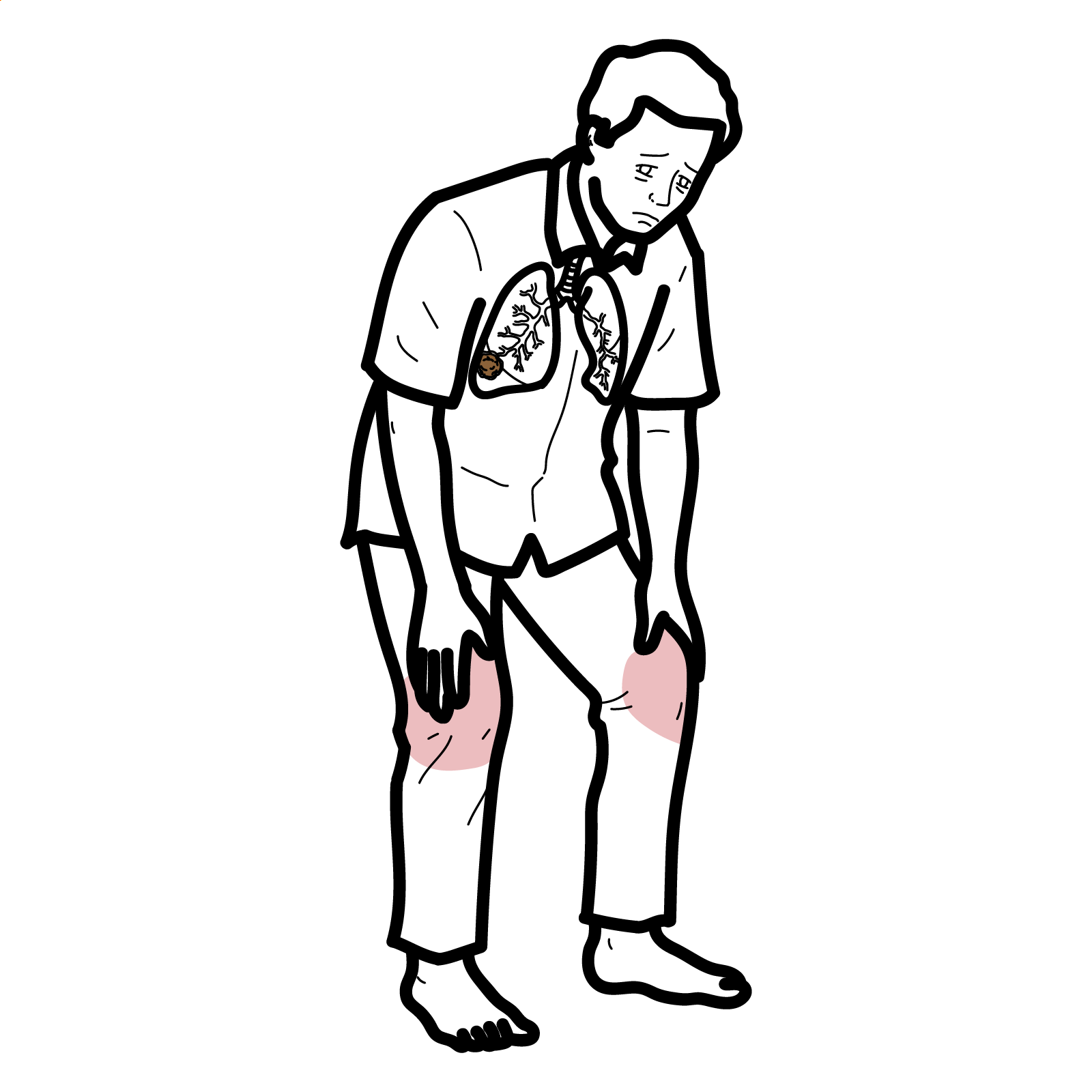
Lambert-Eaton Myasthenic Syndrome
Overview Lambert–Eaton myasthenic syndrome (LEMS) is a rare autoimmune disorder of the presynaptic neuromuscular junction. It causes impaired acetylcholine release, producing the characteristic triad of proximal muscle weakness, reduced reflexes and autonomic dysfunction. LEMS may occur as a paraneoplastic syndrome—most commonly associated with small-cell lung cancer (SCLC)—or as a non-tumour-associated autoimmune disorder. Neuromuscular junction: connection…
View this topic ↗About Visualising Medicine
Good education does not remove complexity. It makes complexity feel simple.
Visualising Medicine is the team behind Armando Hasudungan. We bring together medicine, illustration, writing and technology to make difficult ideas clearer—and build better ways for learners to use them.