

Febrile Seizure
Overview
Seizures are a common occurrence in children. 8% will have at least one seizure by 15 years of age. A seizure is the result of an abnormal paroxysmal discharge by cerebral neurons. Many underlying conditions and neurological challenges may provoke seizures, and in over 50% of children seizures are isolated events associated with either a fever (febrile seizures/convulsions) or minor head injury in early childhood.
Seizures can be classified as focal or generalised.
A febrile seizure refers to an event in infancy or childhood, usually occurring between three months and six years of age, associated with fever but without evidence of intracranial infection or defined cause. Affects 3% of children under 5 years with unknown aetiology
Generally accepted criteria for febrile seizures include:
- A convulsion associated with an elevated temperature greater than 38°C
- A child older than six months (some say 3months) and younger than six years of age
- Absence of central nervous system infection or inflammation
- Absence of acute systemic metabolic abnormality that may produce convulsions
- No history of previous afebrile seizures
Definition
Seizure: sudden attack of altered behaviour, consciousness, sensation or autonomic function produced by a transient disruption of brain function. The result of this altered brain function is most commonly a tonic (stiffening) or tonic-clonic (stiffening-jerking) seizure.
Epilepsy: common set of variable conditions with recurrent seizures. Presents when at least 2 unprovoked seizures occur >24 hours apart.
Convulsions: a seizure with motor accompaniments
Non Febrile convulsion (seizures): These are seizures occuring without presence of a fever. There are many causes one of which is epilepsy.
Febrile Convulsions: a seizure without other known cause occurring between 6 months and 6 years of age with fever.
Children with a fit and fever may have meningitis.
Aetiology and Risk Factors
| Risk Factors |
| Age |
| High Fever |
| Viral infection |
| Recent immunizations |
| Family history |
Clinical Manifestation
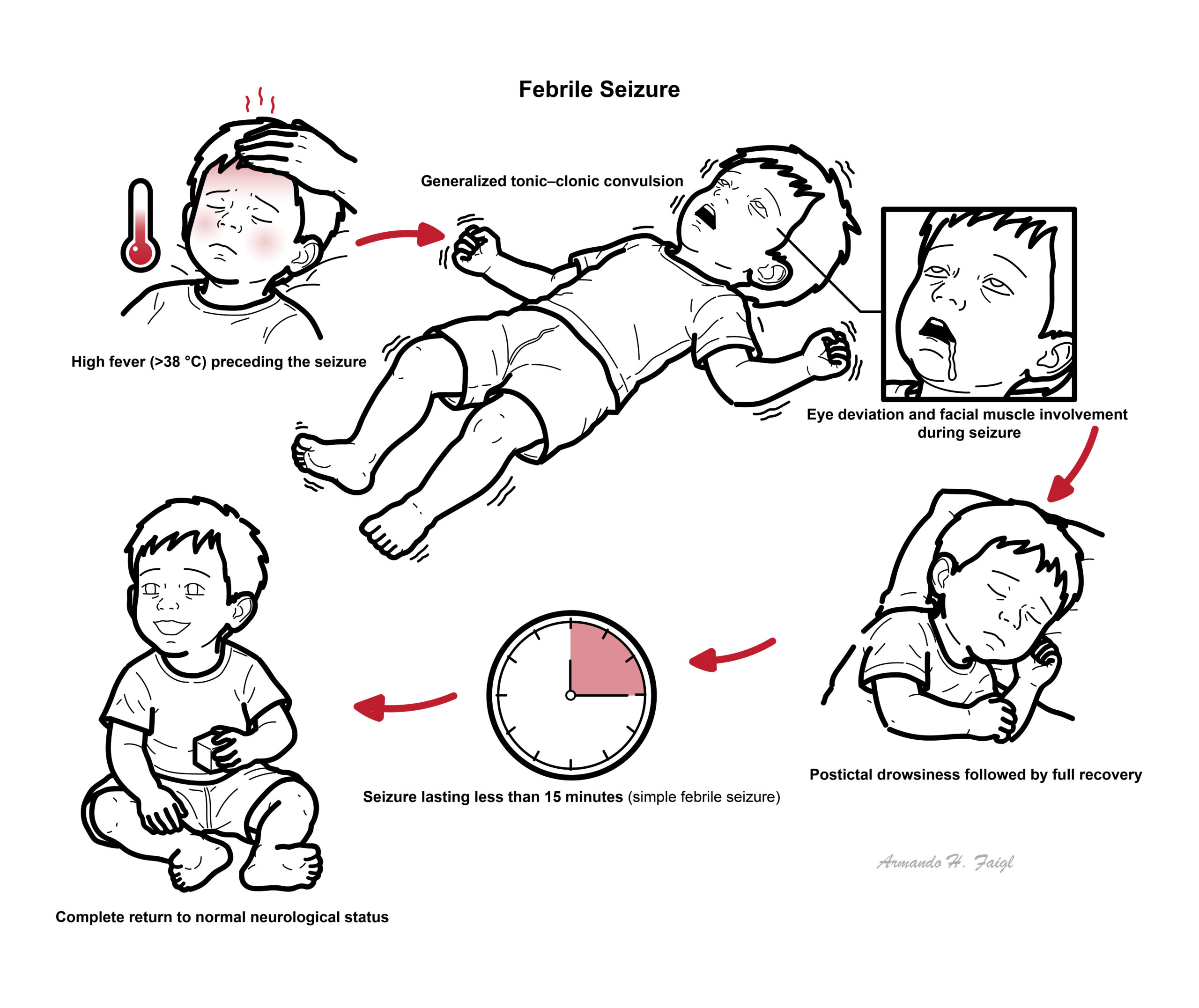
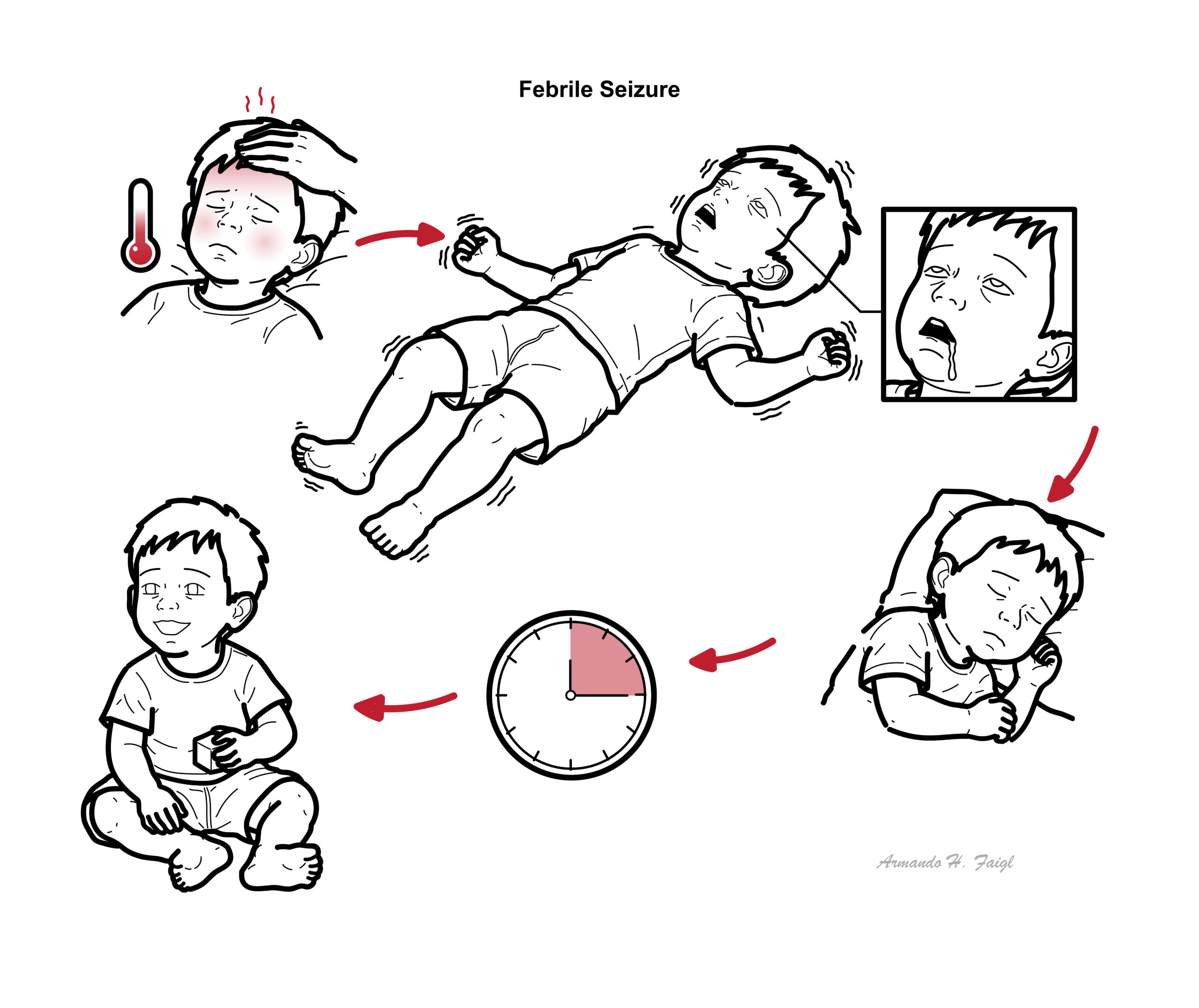
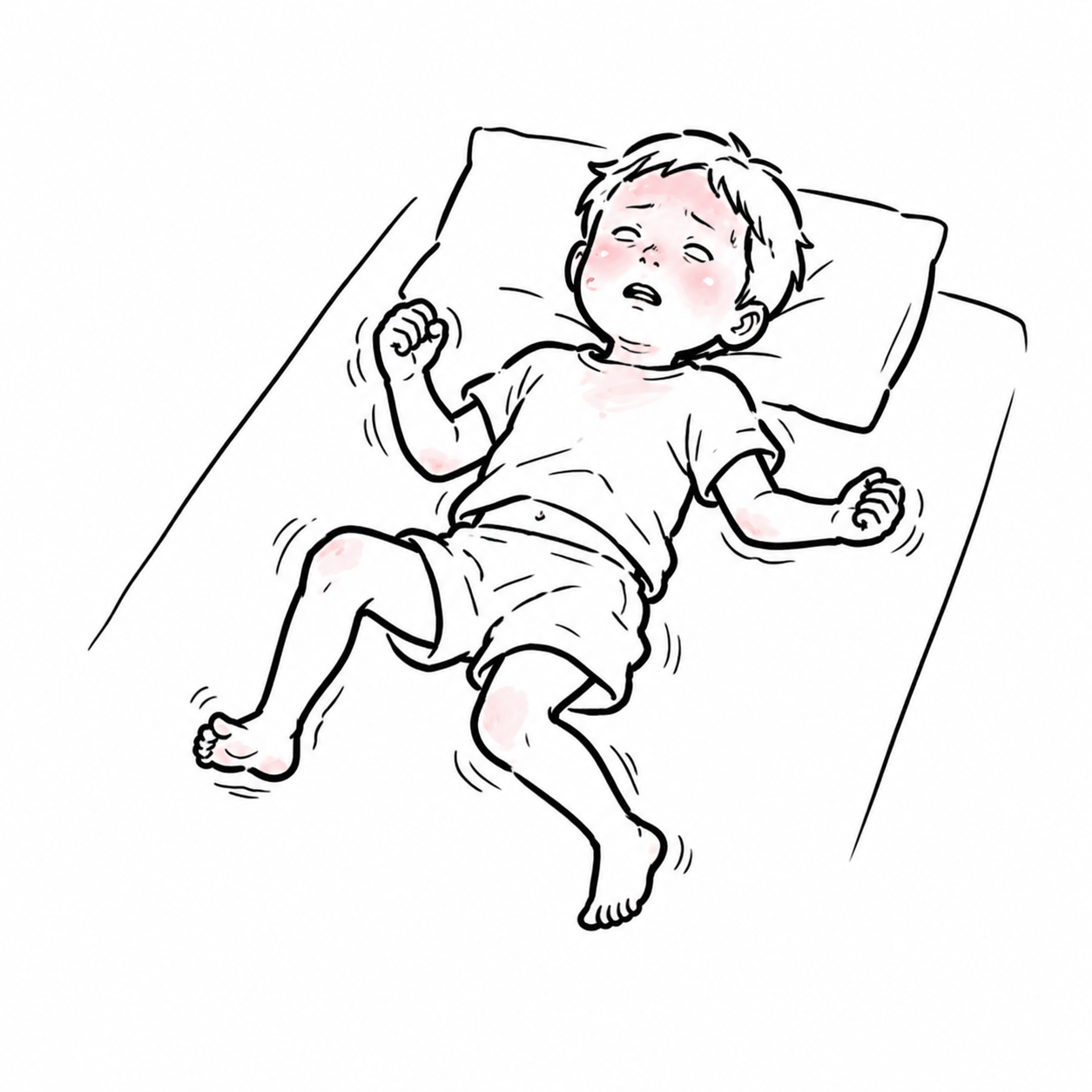
Child returns to normal after a postictal period.
While meningitis and encephalitis are the main concerns in a child presenting with fever and seizures, a thorough history and examination will almost always detect the child with meningitis.
Classification of Febrile seizures
- Simple febrile seizures — Simple febrile seizures are generalized, last less than 15 minutes, and do not recur in a 24-hour period. The most common seizure type is generalized clonic, but atonic and tonic spells are also seen.
- Complex febrile seizures— Complex febrile seizures (focal onset, prolonged, or recurrent within 24 hours) are less prevalent, making up approximately 20 percent of febrile seizures in most series.
- Febrile status epilepticus — Some patients present in febrile status epilepticus (FSE), ie, continuous seizures or intermittent seizures without neurologic recovery, lasting for a period of 30 minutes or longer.
Epilepsy and febrile seizures have different classifications.
Treatment
- Control fever – paracetamol
- If persists >5minutes – Benzodiazepines (Midazolam or Diazepam)
- Explanation and reassurance to parents
- Identify the cause of the febrile seizure
- Educate parents
In a simple febrile convulsion, where the focus of infection can be identified, blood tests and invasive investigations are often NOT indicated.
Complications and Prognosis
- Simple febrile seizures increases risk of future epilepsy
- Death is rare
- It is rare for febrile seizures to cause brain damage
- Recurrent febrile seizure overall 30%
Members only discussions coming soon…