
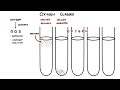
0:00 Microorganisms thrive in environments as different as deep oceans, the human 0:09 lungs and boiling 0:10 gases because of their remarkable flexibility in growth, metabolism and 0:18 survival strategies. 0:20 Like all living things, microbes depend on nutrients. 0:24 They require macronutrients such as carbon, nitrogen, phosphorus, sulfur, 0:29 oxygen and hydrogen 0:30 to build the proteins, nucleic acids and cell walls. 0:35 They also need trace elements like iron, zinc and magnesium as enzyme cofactors 0:40 . 0:41 So very much like us humans, we also need macronutrients and micronutrients as 0:48 well. 0:48 For microorganisms especially, iron for example is especially critical. 0:55 So much so that many pathogens secrete molecules called ciderophores to capture 1:01 iron from the 1:02 host. 1:03 In turn, the host counters by locking iron away inside proteins called transfer 1:08 in and lactiferin, 1:10 a tug-of-war known as nutritional immunity. 1:15 Now more importantly, microbes can be grouped based on how they obtain energy 1:23 and carbon. 1:24 Some are phototrophs, which use light as their energy source, while others are 1:31 chemotrophs, 1:32 which rely on chemicals such as glucose, sulfur or ammonia. 1:38 When it comes to carbon, which are essentially the building blocks of microbes, 1:43 autotrophs 1:44 use carbon dioxide to build their own food, like plants do, whereas heterotroph 1:51 s depend 1:52 on organic molecules such as sugars, proteins and fat made by other organisms. 2:00 Most disease-causing bacteria, including E. coli and salmonella, these guys are 2:05 called 2:05 chemo heterotrophs, since they use both chemicals for energy and organic 2:11 molecules for carbon. 2:14 Ototrophs and heterotrophs are tightly linked in a flow of energy and carbon. 2:21 Ototrophs convert carbon dioxide into sugars using light or chemical energy, 2:26 while the 2:27 heterotrophs consume those sugars for growth and survival. 2:32 Both release carbon dioxide back into the environment through respiration, 2:36 while the 2:37 autotrophs recycle into new food, creating this continuous cycle as shown by 2:47 this diagram. 2:49 Microbes also adapt their growth depending on nutrient supply. 2:54 When food is plentiful, they divide rapidly in a log phase. 3:00 As resources become limited, growth slows and the cells, the bacteria, for 3:05 example, enter 3:06 this stationary phase, shifting focus to survival. 3:11 Many pathogens actually switch on virulent genes at this stage, producing 3:16 toxins and 3:17 enzymes when competition is greatest. 3:21 And we will talk about some of these survival later towards the end of the 3:26 video. 3:27 Now if we look at oxygen, the picture connects back to the microbial energy 3:33 cycle, if you 3:34 remember. 3:36 Ototrophs, especially photo-ototrophs, generate oxygen, while chemo-heterotroph 3:41 s, including 3:42 many pathogens, consume oxygen for efficient energy production. 3:47 But not all microbes use oxygen in the same way. 3:50 Some require others avoid it and many fall in between. 3:54 This is because oxygen, while powerful for metabolism, also produces harmful by 3:59 products 3:59 called reactive oxygen species or ROS. 4:03 These include superoxide and hydrogen peroxide. 4:07 How microbes handle oxygen and this toxic byproduct determines their 4:12 classification into different 4:14 oxygen-use groups. 4:17 These groups include obligate aerobes, which are organisms that need oxygen and 4:24 use it 4:25 as the final electronic scepter. 4:27 These are things such as mycobacterium tuberculosis. 4:31 There are microbes called obligate anaerobes, which cannot survive on oxygen 4:37 exposure because 4:38 they lack enzymes to neutralize reactive oxygen species. 4:42 These include your clostridium species. 4:46 You've got facultative anaerobes, which can grow with or without oxygen. 4:53 They can switch between aerobic respiration and fermentation. 5:00 This, for example, is E. coli. 5:03 You have micro-aerofiles, which prefer low levels of oxygen, such as helicob 5:08 acter pylori, 5:09 the bacteria typically found in the stomach, and you have aero-tolerant anaerob 5:14 es, which 5:15 ignore oxygen altogether, and they survive only through fermentation. 5:21 To cope with reactive oxygen species, microbes produce enzymes such as catalase 5:27 , paroxidase, 5:28 and superperoxidase, dysmutase. 5:31 The presence or absence of these enzymes not only determines oxygen tolerance, 5:36 but also 5:36 forms the basis of diagnostic lab tests, such as the catalase test 5:41 distinguishing staphylococcus 5:43 from streptococcus. 5:48 Now let's talk about microbial metabolism. 5:51 Microbes, like all living things, need energy to survive. 5:56 They can get this energy from different sources, as we've already discussed. 6:01 Phototrophs capture energy from light, while chemotrophs extract it from 6:05 chemicals, such 6:06 as sugar, or even inorganic compounds like ammonia. 6:11 Most disease-causing microbes that affect humans are chemo-heterotrophs. 6:16 These organisms get both their energy and carbon from organic food sources, 6:21 such as glucose, 6:23 which they break down through chemical reactions. 6:27 To release energy from food, microbes, these microbes rely on different 6:32 metabolic pathways, 6:33 and the pathway used depends largely on the presence or absence of oxygen. 6:39 The three main processes are aerobic respiration, which uses oxygen, anaerobic 6:44 respiration without 6:45 oxygen, as well as fermentation. 6:48 Let's talk about these three reactions in a bit more detail. 6:53 Aerobic respiration requires oxygen. 6:56 It's the most efficient way of getting energy. 6:59 It uses oxygen at the end of this thing called the energy chain. 7:03 Essentially, the bacteria can make up to 38 ATPs per glucose. 7:11 ATP is the energy we use in our body. 7:15 So when you think of oxygen, you've got to think about maximum energy that can 7:20 be produced. 7:22 Then you have anaerobic respiration. 7:23 This is without oxygen, but it still uses this energy chain. 7:28 It is less efficient. 7:29 Instead of oxygen, it uses other molecules, like nitrates, sulfate, and fum 7:35 arate. 7:35 And so without oxygen, you can still produce some energy. 7:41 Fermentation is when you don't use oxygen and there's not this thing called 7:46 energy chain. 7:48 It's very basic survival mode and it makes minimal energy to ATPs per glucose. 7:55 But it produces special end products, including lactic acid and ethanol. 8:02 These end products help us identify bacteria in the lab. 8:05 For example, E. coli ferments lactose on macunkey egga and form pink colonies. 8:12 Salmonella doesn't, and so there's no color change. 8:15 Finally, some microbes don't even bother with any of these metabolic pathways. 8:21 Some, like chlamydia and rychizia, are so lazy they don't even make their own 8:25 ATP. 8:26 They actually steal it directly from the host cell. 8:29 So these are basically your ATP parasites, you can say. 8:35 Something that we touched on earlier is essentially the organism's stress 8:40 response in survival. 8:42 When you think about it, microbes constantly battle stress, heat, acidity, 8:45 toxins, osmotic 8:46 imbalances, and host immunity, and they have developed elegant solutions. 8:52 For example, they have this thing called heat shock proteins, which refold 8:57 damage proteins 8:58 when temperatures rise, a vital defense during fevers, for example. 9:04 And tolerant systems, which allow survival in extreme P.H.s. 9:10 So hilochobacter pylori produces urease, which breaks down urea into ammonia, 9:16 neutralizing 9:17 stomach acid around it. 9:22 Then you have osmotic stress responses involving pumping ions or producing 9:27 compatible solutes 9:27 like proline and glycine bitane to prevent water loss. 9:33 True stress defenses detoxify reacts in oxygen species, using catalays and 9:38 superoxide dismutase 9:40 essential for survival inside immune cells that produce bursts of toxic oxygen. 9:47 When nutrients are exhausted, bacteria shift into long-term survival mode. 9:52 Some produce persister cells, which are dormant variants that withstand 9:58 antibiotics. 9:59 They are not resistant mutants, but sleeping cells that wake up once the 10:03 antibiotic is 10:04 gone, explaining chronic and relapsing infections. 10:07 Endosporous, something we talked about in previous videos, are when bacteria 10:12 make a survival 10:13 capsule, allowing them to endure harsh environments. 10:16 They then germinate back into an active bacteria when conditions improve. 10:21 Think about persister cells as ordinary bacteria temporarily playing dead to 10:26 survive stress, 10:28 and endosporous are really these tough, armor-coated survival capsules made 10:34 only by some bacteria. 10:37 So in summary, microbes grow and survive by exploiting nutrients, adapting to 10:43 oxygen 10:43 and generating energy through flexible metabolism, and switching on stress 10:49 responses when needed. 10:50 There are strategies such as iron capturing with ciderophores, enzyme against 10:55 reactive 10:55 oxygen species, acid neutralization, persister formation, are not just clever 11:01 survival tricks, 11:02 but also major reasons why pathogens persist and resist treatment.