

Pernicious Anaemia
Overview
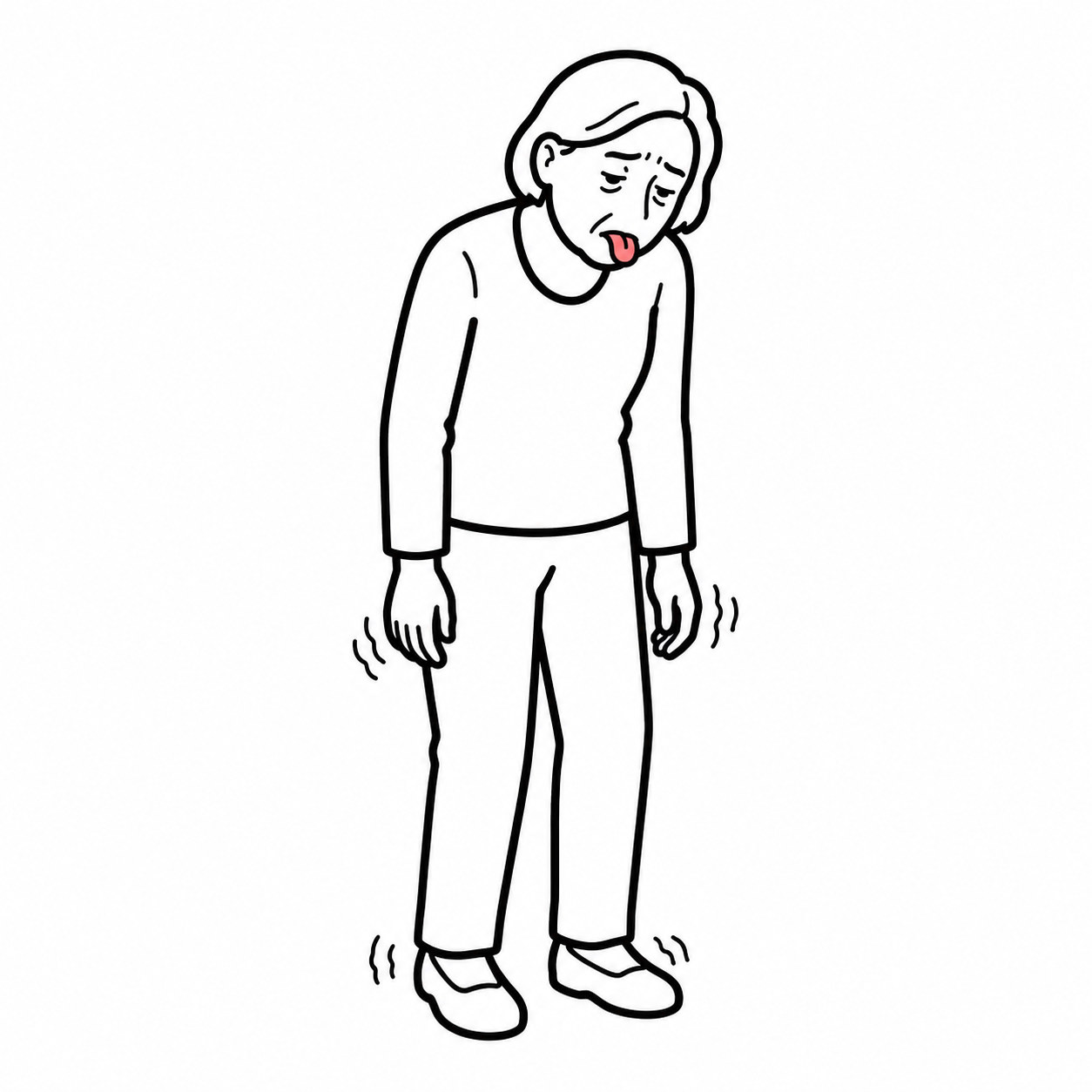
Pernicious Anaemia is a condition where there is lack of intrisinc factor, a glycoprotein responsible for the absorption of Vitamin B12. Vitamin B12 (Cobalamin) is an essential vitamin responsible for many physiological process in our body. Vitamin B12 deficiency causes megaloblastic anaemia and maybe accompanied by neurological abnormalities.
Aetiology
Pernicious Anaemia is associated with the following:
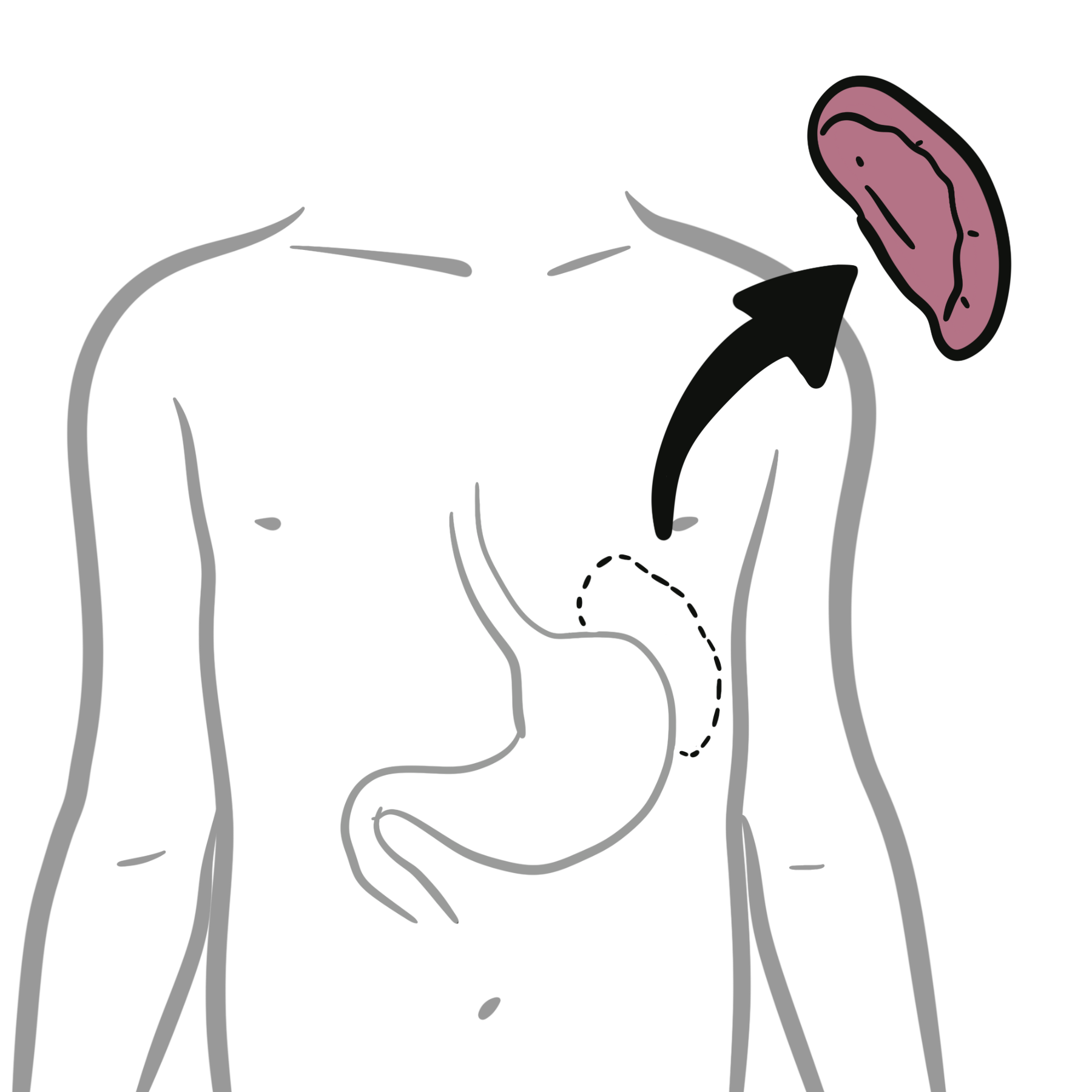
- Autoimmune metaplastic atrophic gastritis (AMAG): AMAG is an inherited autoimmune disease that attacks parietal cells. The immune system targets the Na+/K+ ATPase pump on parietal cells resulting in cell apoptosis. Parietal cells are responsible for secreting acid for digestion and intrinsic factor (IF) for Vitamin B12 absorption. AMAG leads to pernicious anaemia.
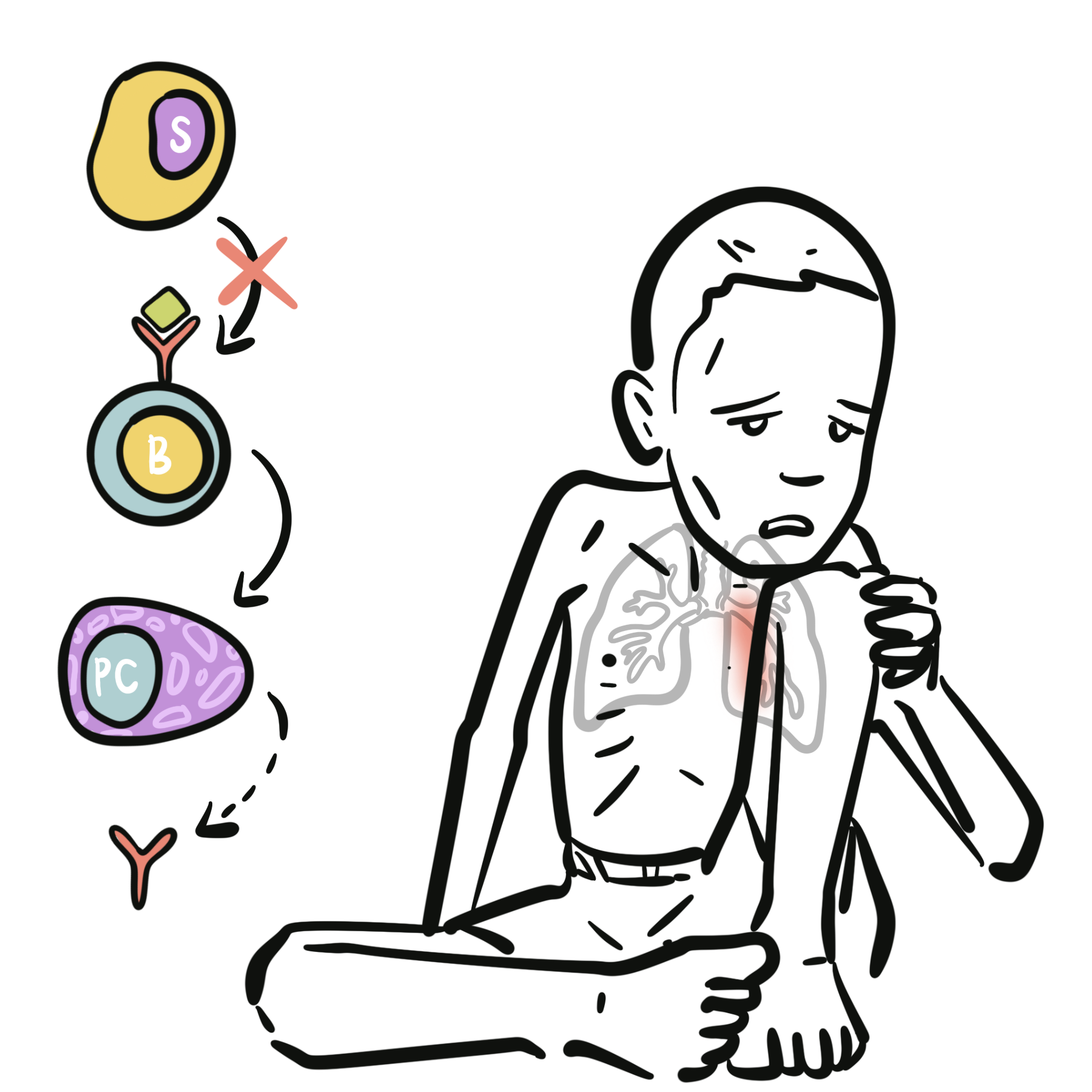
- Autoantibody formation against intrinsic factor: Autoantibodies can target IF preventing the binding of IF to Vitamin B12
- Autoantibody formation against intrinsic factor receptors: Autoantibodies can target IF receptors on Ileal cells preventing IF binding to IF receptors.
Pathophysiology
- Lack of IF leads to Vitamin B12 malabsorption
- Immune system attacks Parietal cells, IF or IF receptors resulting in IF deficiency
- DNA synthesis
- Healthy Red blood cell production
- Maintaing health nerve cells
- Vitamin B12 deficiency results in: Slow DNA synthesis → Delayed nuclear maturation → Megalobastic erythropoesis → Megalobastic red blood cells → Anaemia
Clinical Manifestations
Anaemia-related
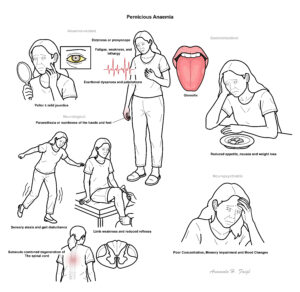
- Fatigue, weakness and lethargy
- Pallor ± mild jaundice
- Exertional dyspnoea
- Palpitations or tachycardia
- Dizziness or presyncope
- Painful, smooth red tongue—glossitis
- Reduced appetite and weight loss
- Nausea, diarrhoea or abdominal discomfort
Neurological
- Paraesthesia or numbness in hands and feet
- Reduced vibration and joint-position sensation
- Sensory ataxia and positive Romberg sign
- Gait disturbance and limb weakness
- Reduced or abnormal reflexes
- Subacute combined degeneration of the spinal cord
Neurological manifestations may occur without significant anaemia or macrocytosis.
Neuropsychiatric
- Poor concentration or memory impairment
- Irritability or depression
- Confusion
- Rarely psychosis or dementia-like symptoms
Investigations
- Full blood count: Elevated Mean Cell Volume (MCV) and low haematocrit
- Peripheral blood smear: Megalobastic maturation and hypersegmented neutrophils
- Serum Vitamin B12
- Serum Iron
- Intrinsic factor antibody
- Parietal cell antibody
Treatment
- Lifelong vitamin B12 replacement because intrinsic-factor deficiency is irreversible.
- Intramuscular hydroxocobalamin is commonly preferred:
- Loading doses given frequently initially.
- Followed by maintenance treatment, commonly 1 mg IM every 2–3 months.
- More intensive treatment may be required initially when neurological involvement is present.
- High-dose oral cyanocobalamin may be considered in selected reliable patients, but Australian guidance generally recommends lifelong IM replacement for pernicious anaemia because absorption is permanently impaired.
- Do not delay treatment when neurological symptoms or severe megaloblastic anaemia are present.
- Correct accompanying iron or folate deficiency when identified.
- Do not give folic acid alone before excluding or treating vitamin B12 deficiency, as the anaemia may improve while neurological damage progresses.
- Haematological improvement usually begins within days; neurological recovery is slower and may take weeks to months.
Complications & Prognosis
- Irreversible peripheral neuropathy or spinal-cord damage if treatment is delayed
- Persistent gait, balance or cognitive impairment
- Severe anaemia causing:
- Angina
- High-output cardiac failure
- Cardiovascular collapse, rarely
- Pancytopenia in severe deficiency
- Increased risk of gastric adenocarcinoma and gastric neuroendocrine tumours due to underlying autoimmune gastritis
- Associated autoimmune conditions:
- Recurrence of deficiency and neurological symptoms if lifelong replacement is stopped.
- Prognosis is generally excellent with early diagnosis and lifelong replacement.
- Anaemia usually resolves completely.
- Neurological recovery depends on the severity and duration of symptoms before treatment; longstanding deficits may be permanent.
References
- National Institute for Health and Care Excellence. Vitamin B12 deficiency in over 16s: diagnosis and management. NICE guideline NG239. London: NICE; 2024.
- Bedz D, Forsyth C. Vitamin B12 deficiency: testing and treatment. Aust Prescr. 2026;49:55–60. doi:10.18773/austprescr.2026.012.
- Devalia V, Hamilton MS, Molloy AM; British Committee for Standards in Haematology. Guidelines for the diagnosis and treatment of cobalamin and folate disorders. Br J Haematol. 2014;166(4):496–513. doi:10.1111/bjh.12959.
- Shah SC, Piazuelo MB, Kuipers EJ, Li D. AGA clinical practice update on the diagnosis and management of atrophic gastritis: expert review. Gastroenterology. 2021;161(4):1325–1332.e7. doi:10.1053/j.gastro.2021.06.078.
- Green R, Allen LH, Bjørke-Monsen AL, Brito A, Guéant JL, Miller JW, et al. Vitamin B12 deficiency. Nat Rev Dis Primers. 2017;3:17040. doi:10.1038/nrdp.2017.40.








Members only discussions coming soon…