

Visual explanationFree resource
Visual medical education by Armando Hasudungan
Medical science, drawn into focus.
Explore visual explanations that reveal how the facts, processes and clinical patterns fit together—then discover the coming AH study platform, built to guide what you study next and check what stuck.

Connected studyComing soon
Clear visual explanations used by medical and allied-health learners around the world.
Explore the free library
Start with the topic in front of you.
Browse by subject or jump straight into the explanation you need. No account required.
Pneumonia
Overview Pneumonia is infection in the lower respiratory tract and is characterised by fevers, purulent sputum, leucocytosis, low oxygen levels and new lung infiltrates (consolidation) on radiographic imaging. The infection is identified by the site of consolidation. Consolidation is where the lung tissue is filled with fluid (ie. water, blood, pus, microbes). Types of pneumonia…
View topic ↗Cerebral Aneurysm
Overview Cerebral (Intracranial) aneurysm is a focal dilation of an intracranial artery due to weakness of the arterial wall. It occurs in roughly 1-5% of adults and can lead to permanent disability. The most common type is a saccular “berry” aneurysm. Most common location is anterior communicating artery. Cerebral aneurysms are typically asymptomatic until rupture,…
View topic ↗Common Variable Immunodeficiency
Overview Common Variable Immunodeficiency (CVID) is the most frequent clinically significant primary antibody deficiency, characterised by hypogammaglobulinaemia and impaired antibody responses. It typically presents with recurrent bacterial infections, autoimmunity, granulomatous disease, and an increased risk of malignancy. CVID affects both sexes equally, with a prevalence of ~1 in 25,000–50,000 individuals. Diagnosis is often delayed, with…
View topic ↗Melanoma
Overview Melanoma accounts for 4 percent of all dermatological cancer. Melanoma has the highest mortality rate of all dermatological cancers, only 14 percent of patients with metastatic melanoma survive for five years. Melanoma is one of the most common cancers in young adults. Melanoma Overview Anatomy and Physiology The skin consist of three layers, from superficial…
View topic ↗Alzheimer's Disease
Overview Alzheimer disease is characterised by an insidious onset of symptoms with initial forgetfulness progressing over time to profound memory impairment with accompanying dysphasia, dyspraxia and personality change. Dementia: Clinical syndrome that is characterised by a progressive deterioration in cognition with resulting decline in function. Alzheimer disease: Characterised by an insidious onset of symptoms with initial…
View topic ↗Inguinal Hernia
Overview Higher incidence among men 40 to 59 years of age. Although there are many different types of hernias, they are usually related to the abdomen, with approximately 75% of all hernias occurring in the inguinal region. Hernia contains omentum (90% of cases) or intestine (10% of cases). Inguinal hernias are at risk of irreducibility or incarceration, which…
View topic ↗Multiple Sclerosis
"Each patient ought to feel somewhat the better after the physician's visit irrespective of the nature of the illness." -Warfield Theobald Longcope Overview Multiple sclerosis (MS) is defined as an inflammatory demyelinating disease characterised by the presence of episodic neurological dysfunction in at least 2 areas of the CNS (brain, spinal cord, and optic nerves)…
View topic ↗Full resource library
Browse all topics ↗Choose how you learn
One idea. More than one way to see it.
Use the format that helps the topic click, then switch formats when you need to reinforce it.
01 / WATCH02 / READ03 / SEE04 / CHECK
Videos
Hand-drawn explanations that build the big picture as the concept unfolds.
Notes
Clear written explanations for review, reference and filling in the details.
Diagrams
Visual snapshots that help you easily review topics.
Questions
Test whether the explanation stayed with you—not just whether it looked familiar.
Good places to begin
Explanations learners return to.
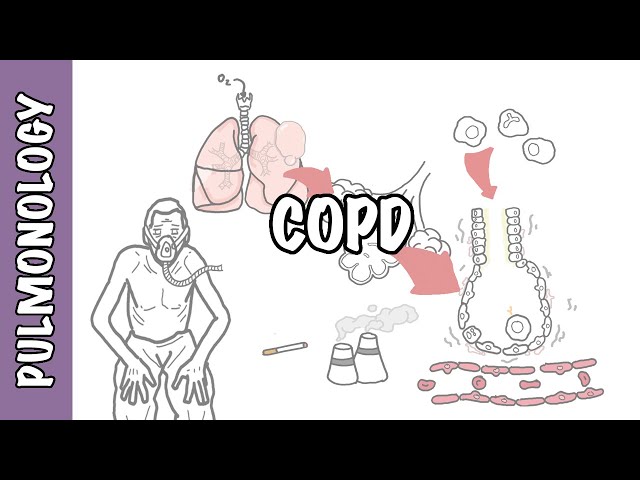
Understanding COPD – Chronic obstructive pulmonary disease cause, pathophysiology and treatment
COPD explained: learn clear, practical strategies to recognize, diagnose, and manage chronic obstructive pulmonary disease, including COPD symptoms, causes, and treatment options. This video breaks down COPD pathophysiology, primary causes like smoking and environmental exposure, and the two main forms—chronic bronchitis and emphysema—so you understand how airflow limitation and damaged alveoli lead to breathlessness. Watch…

Basal ganglia overview
Basal ganglia explained: learn how these deep brain nuclei regulate movement, posture, and reward processing—key for understanding Parkinson’s and Huntington’s. In this clear, engaging video you’ll explore the anatomy and function of the basal ganglia, including the striatum (caudate nucleus and putamen), globus pallidus (GPe/GPi), subthalamic nucleus, and substantia nigra (pars compacta and reticulata). Discover…
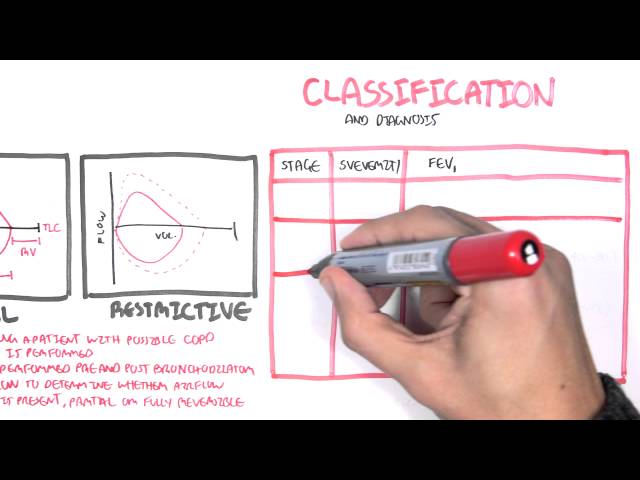
COPD – Investigations and Treatment (PART II)
Learn about the key investigations used to diagnose Chronic Obstructive Pulmonary Disease (COPD), including spirometry and imaging techniques. This video also explores evidence-based treatment options such as bronchodilators, corticosteroids, oxygen therapy, and lifestyle modifications.
Our mission
Medical science is complex. Understanding it should feel possible.
Armando Hasudungan turns difficult medical science into clear visual explanations and connected learning experiences—so learners can see the whole picture, remember what matters and find a clearer way forward.
See it clearly
Turn abstract processes and invisible relationships into something the learner can picture.
Connect the pieces
Build understanding around how concepts fit together—not a pile of isolated facts.
Make it useful
Help learners move from explanation to recall, revision and the next logical step.
What clarity feels like
When the topic stops being a blur.
Learners do not come back because the subject became easy. They come back because the explanation gave them a picture they could work with.
“Armando's teaching style gives me the foundational knowledge.
Jessica Payne-Burnett
Medical Student, Charles Sturt University
“The notes I make during his videos help me retain everything better.
Ayesha RaiStudent, Islamabad Medical and Dental College
“The drawings are amazing and super easy to remember.
Reem Mohamed Khair Abdalrazig
Student, Neelain University
Coming soon: the AH study platform
The explanation is only the start.
The free library helps you find a clear explanation. The AH platform is being built to help you connect the resources, follow a clearer path and check what actually stuck.
- Watch in a focused, ad-free study environment.
- Move between connected videos, notes, diagrams and questions.
- Know what belongs next instead of rebuilding the study path yourself.
- Test your understanding while the topic is still fresh.
New and worth a look
Keep building the picture.
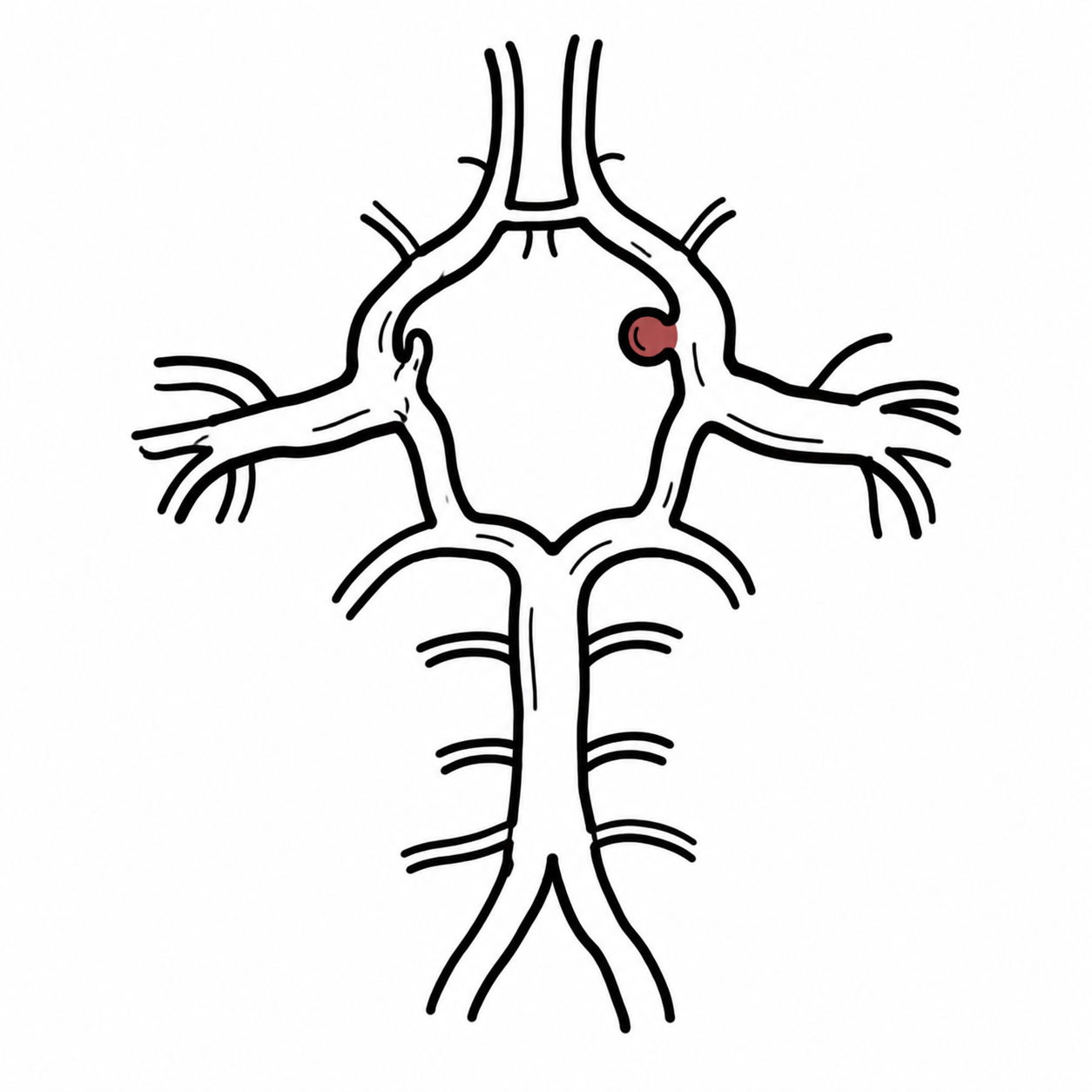
Cerebral Aneurysm
Overview Cerebral (Intracranial) aneurysm is a focal dilation of an intracranial artery due to weakness of the arterial wall. It occurs in roughly 1-5% of adults and can lead to permanent disability. The most common type is a saccular “berry” aneurysm. Most common location is anterior communicating artery. Cerebral aneurysms are typically asymptomatic until rupture,…
View this topic ↗About Visualising Medicine
Good education does not remove complexity. It makes complexity feel simple.
Visualising Medicine is the team behind Armando Hasudungan. We bring together medicine, illustration, writing and technology to make difficult ideas clearer—and build better ways for learners to use them.