

Maternal infections
Overview
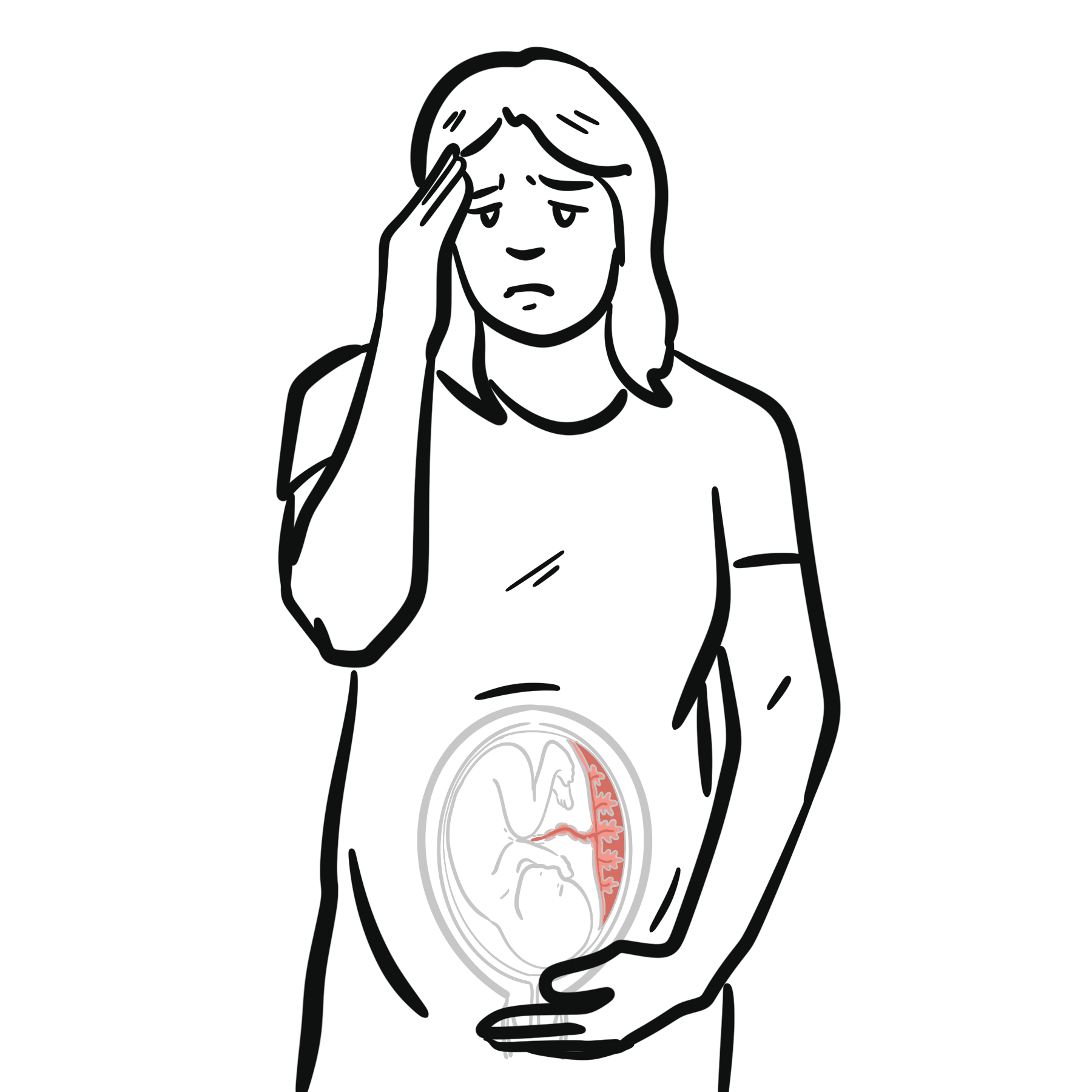
Maternal infections is a broad term for any infection that is acquired by a pregnant woman antepartum, intrapartum or postpartum. These infections may have detrimental impacts on the mother and the foetus/newborn.1 Maternal infections covered in this page include TORCH infections as well as Group B Streptococcal infection and chorioamnionitis.
TORCH infections are a group of congenital infections that can be passed on from the mother to the foetus or newborn. TORCH stands for:
- T: toxoplasmosis
- O: Other
- Syphilis, HIV, Hepatitis B, VZV, Parvovirus B19
- R: rubella
- C: cytomegalovirus
- H: herpes simplex virus
What to notice
Detailed image description
Highest risk to fetus if infection occurs in the first trimester.
Toxoplasmosis2
- Organism: Toxoplasma gondii – protozoan parasite
- Causes
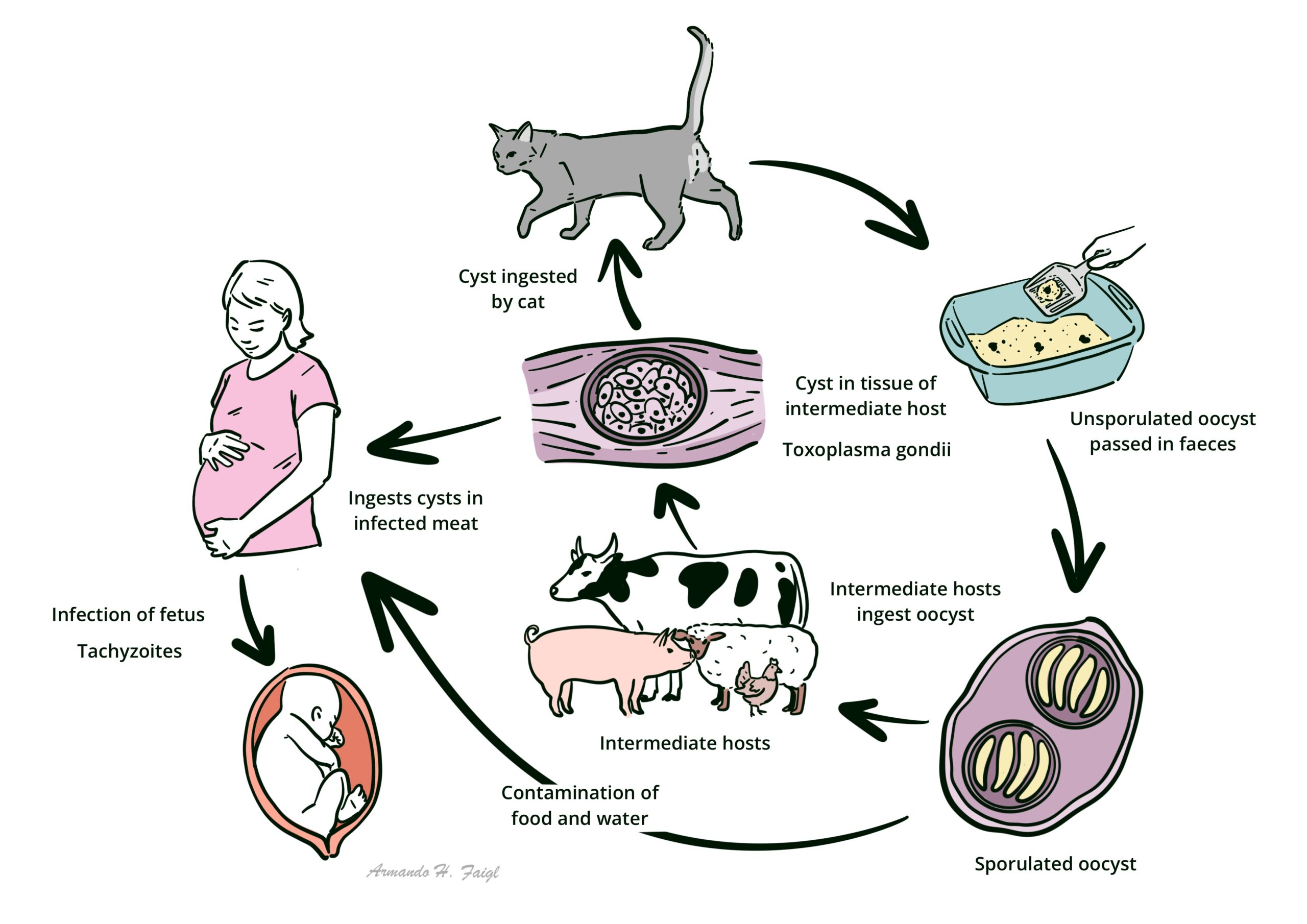
- Consumption of raw/inadequately cooked meat infected with cysts
- Consumption of food/water contaminated by cat faeces
- Transmission/life cycle3
- Incubation period: 5-23 days
- Main host: domestic cats
- Cats acquire T.gondii through consuming small infected rodents and birds, or cat faeces consumption
- The parasite infects the intestinal tract allowing for the sexual stage of the life cycle. Oocytes are then excreted in faeces for 10-20 days
- Maternal clinical manifestations
- Usually asymptomatic
- Rarely: lymphadenopathy, chorioretinitis
- Foetal/neonatal clinical manifestations
- Prematurity
- Neurological triad: hydrocephalus, chorioretinitis, periventricular calcifications
- Mental retardation
- “blueberry” rash
- Jaundice
- Hepatosplenomegaly
- Myocarditis
- pneumonitis
- Investigations
- Ix for maternal infection: Serum IgG measurement – serial measurements
- Ix for foetal infection: PCR on amniotic fluid
- If positive
- Ultrasound: to detect any foetal abnormalities
- Amniocentesis for PCR at 18-20 weeks gestation, or if >3 weeks after maternal infection identified
- Management4
- Spiramycin (brand name – rovamycine)
- If <12 weeks gestation: if amniocentesis PCR positive, consider counselling regarding termination of pregnancy
- If 28-42 weeks: if spiramycin unavailable → atovaquone or azithromycin
- Prevention
- Avoid raw/undercooked meat
- Wash hands thoroughly after gardening or handling raw meat handling cat litter OR delegate task to others in family,
- Wash fresh produce thoroughly before consuming
Syphilis5
- Overview: syphilis is a common STI, though if left untreated in a pregnant woman, she can transmit this infection to the unborn infant.
- Organism
- Treponema pallidum
- Transmission6
- Unprotected oral, vaginal or anal sex with a person who has become infected
- Skin-to-skin contact with syphilis rash
- Risk factors
- Maternal drug abuse
- Homelessness
- Low SES
- Sex with multiple partners
- Failure to receive prenatal care, STI testing
- Maternal clinical manifestations
- Primary syphilis: painless chancre
- Secondary syphilis: fever, generalised lymphadenopathy, maculopapular rash
- Late latent syphilis: asymptomatic
- tertiary syphilis: gumma, neurosyphilis and cardiovascular syphilis
- Foetal/neonatal clinical manifestations
- most asymptomatic at birth
- early stages: rhinitis, maculopapular rash, lymphadenopathy
- later:
- facial changes: frontal bossing, saddle nose, short maxilla
- anaemia and thrombocytopaenia
- Miscarriage
- Stillbirth
- Prematurity
- Low birth weight
- Neonatal death
- Hepatomegaly
- Investigations5
- Syphilis serology: all pregnant women
- Routine antenatal screening “booking bloods”: <10 weeks gestation
- Repeat at 26-28 and 36 weeks gestation
- If lesions/chancre present → dry swab syphilis PCS and serology
- Syphilis serology: all pregnant women
- Management5
- Dependent on the stage of syphilis
- Infectious syphilis: benzathine benzylpenicillin 1.8g IM once only
- Late latent or unknown duration: benzathine benzylpenicillin IM 1.8g weekly for 3 weeks
- Prevention
- Using barrier contraception (condoms)
HIV7, 8
- Overview
- Transmission of HIV from mother to child can occur antepartum, intrapartum, or postpartum (breastfeeding). Majority of cases occur intrapartum
- Organism: Human immunodeficiency virus
- Transmission: exchange of bodily fluids: blood, semen, vaginal fluids, breast milk
- Maternal clinical manifestations9
- Oral thrush
- Recurrent fever
- Night sweats
- Weight loss
- infant clinical manifestations8
- Oral thrush
- Failure to thrive
- Lymphadenopathy
- Hepatosplenomegaly
- Ear and sinus infections
- URTI
- Diarrhoea
- Recurrent infections
- Investigations7
- Booking bloods: HIV
- Baseline bloods: eLFTs, anylase, HLA, FBC,
- CD4 cell count, HIV viral load, HIV resistance testing
- Consider low vaginal swab for other STIs
- Management7
- Strongly discourage breastfeeding
- Consider cabergoline (lactation suppressor)
- prescribe anti-retroviral therapy: with consultation with infectious disease
- for baby: zidovudine prophylaxis within 6-12 hours of birth, continue for 4 weeks
- Strongly discourage breastfeeding
Hepatitis B
- Overview: infection which causes both acute and chronic liver disease. Infants may be infected with this maternal infection primarily during the intrapartum period.
- Organism: hepatitis B virus
- Transmission10:
- broken or penetrated skin, mucosal contact with bodily fluids: blood, saliva, vaginal fluids and breastmilk. Unprotected sex, use of contaminated syringes for illicit drug use, tattooing, body piercing, needle stick injuries
- Risk of perinatal transmission is dependent on the level of hep B e antigen in the maternal serum.
- Maternal clinical manifestations11
- May be asymptomatic
- Nausea, anorexia, abdominal pain or discomfort, fatigue, myalgia, dark urine, jaundice
- Chronic hepatitis infection may lead to: ascites, coagulopathy, thrombocytopaenia, oesophageal varices,
- Foetal/neonatal clinical manifestations12
- Usually asymptomatic
- Jaundice, lethargy, failure to thrive, clay-coloured stools
- Complications: chronic hepatitis, cirrhosis, hepatocellular carcinoma risk
- Investigations
- Management10
- Dependent on HBV DNA viral load
- If <200,000 IU/ml → hepatitis B vaccine and hepatitis B immunoglobulin to infant within 12 hours of birth
- If > 200,000 IU/ml → tenofovir disproxil fumarate for mother, hepatitis vaccine and hepatitis B immunoglobulin to infant within 12 hours of birth
- Dependent on HBV DNA viral load
- Prevention10
- Vaccination
- Safe sex practices
Varicella Zoster Virus
- Overview13:
- Varicella zoster virus (chickenpox) is part of the herpes family. It is highly contagious.
- Organism:
- Varicella zoster virus
- Transmission13
- Respiratory droplets
- Direct contact with fluid from vesicles or indirectly via fomites (clothes, hair, skin cells, bedding)
- Maternal clinical manifestations13
- Fever
- Malaise
- Pruritic rash: maculopapular → vesicular that crust over
- Severe chickenpox
- Respiratory symptoms
- Haemorrhagic rash or bleeding
- New pocks developing after 6 days of infection
- Persistent fever >6 days
- Neurological symptoms
- Congenital varicella syndrome clinical manifestations14
- Skin scarring lesions (cicatrix)
- Limb hypoplasia, atrophy
- Malformed digits
- Ocular defects: chorioretinitis, cataracts, nystagmus
- CNS abnormalities: microcephaly, cortical atrophy, seizures, mental retardation
- Autonomic nervous system dysfunction: neurogenic bladder, hydronephrosis, reflux, oesophageal dilaiton
- Investigations
- Serology of antibody status (VZV-IgG)
- Management15
- If significant exposure to VZV (>15 minutes in the same space as someone infected with VZV) → varicella zoster immunoglobulin
- If mother positive in gestation
- If they present within 24 hours of onset of the rash and >19 weeks gestation → give acyclovir PO 800mg 5x 7 days
- If > 24 hours: monitor and no aciclovir
- Severe chickenpox → IV acyclovir 10mg/kg 8 hourly 7-10 days
- For infant
- If mother had chickenpox 7 days before – 2 days after birth
- Give high titre varicella zoster immunoglobulin (ZIG) 200 IU IM ideally within 24 hours of birth or within 72 hours or birth
- If positive in infant
- <37 weeks at birth: give IV acyclovir
- 37 weeks or greater: monitor for respiratory symptoms at home or paediatric unit
- If mother had chickenpox 7 days before – 2 days after birth
- Prevention
- Vaccination pre-pregnancy
Parvovirus B1916
- Overview: also known as slapped cheek syndrome
- Organism: Parvovirus B19
- Transmission
- Contact with respiratory secretions
- Hand mouth contact
- Mother → foetus
- Transfusion of blood and blood products
- Maternal clinical manifestations
- Erythematous rash “slapped cheek” appearance
- Rubella like rash: maculopapular rash
- Arthralgia or arthritis
- Chronic anaemia in pregnant women who are immunocompromised
- Foetal clinical manifestations
- Spontaneous miscarriage, stillbirth
- Hydrops fetalis: Abnormal build-up of fluid in foetal tissues and organs causing oedema. 2-17 weeks after maternal infection
- Investigations
- Parvovirus serology
- Management
- If both IgG and IgM positive (indicates recent infection):
- Monitor with serial fetal ultrasound and middle cerebral artery Doppler
- If both IgG and IgM positive (indicates recent infection):
Rubella
- Overview: congenital rubella syndrome is a condition which affects a foetus whilst in utero in a mother infected by rubella virus. It is the most dangerous if infection occurs in the first 12 weeks of pregnancy.17
- Organism: Rubella virus
- Transmission19
- Droplet spread or direct contact with nasopharyngeal secretions
- Vertical transmission from mother to foetus
- Communicable period: 1 week before to 4 days after the onset of the rash. Most infectious when rash is erupting
- Maternal clinical manifestations19
- Initially, a low grade fever
- Then, maculopapular rash of cephalocaudal spread (head → downwards)
- Post-auricular lymphadenopathy
- Poly-arthritis
- conjunctivitis
- miscarriage
- Foetal/neonatal clinical manifestations20
- TRIAD: deafness, cataracts, congenital heart disease
- Congenital heart disease includes: PDA, pulmonary artery stenosis, ventricular septal defect, atrial septal defect
- Intellectual disability
- Hepatosplenomegaly
- Low birth weight
- “blueberry muffin” rash
- stillbirth
- TRIAD: deafness, cataracts, congenital heart disease
- Investigations17
- Rubella virus IgG and IgM: done at first appointment for all pregnant mothers “booking bloods”
- If requiring prenatal foetal diagnosis: NAAT on amniotic fluid, foetal blood or chorionic villus biopsies
- If requiring post-natal foetal diagnosis: IgG antibodies ELISA for rubella virus
- Management17
- If <18 weeks, may consider counselling on termination of pregnancy
- May try normal human immunoglobulin (NHIG) as post-exposure prophylaxis within 5 days of infection → does not eliminate, but reduces risk of rubella
- Prevention
- MMR vaccine at least 4 weeks before pregnancy if never had before
Cytomegalovirus21
- Overview: CMV is part of the herpes virus family
- Organism: cyotmegalovirus
- Transmission22: contact with the saliva, nasal mucous, urine, breast milk, semen and vaginal secretions of those who are infected
- Maternal clinical manifestations
- Mostly asymptomatic
- May have fever, lymphadenopathy, sore throat
- Foetal/neonatal clinical manifestations
- Petechiae
- Deafness
- Intellectual impairment
- Pneumonitis
- Blindness, chorioretinitis
- Microcephaly
- seizures
- Investigations21
- Serology: IgG and IgM
- PCR testing on blood, urine, saliva → not first line investigation
- If mother positive, in utero:
- Foetal ultrasound: foetal ascites, hepatomegaly, IGR, pleural or pericardial effusion, abdominal calcifications, microcephaly, oligo or polyhydramnios, hydrocephalus, intracranial calcifications
- May need amniocentesis for PCR
- After born:
- Serology: CMV igM
- CMV PCR: urine, saliva or blood
- Ophthalmology review
- Head ultrasound or MRI: periventricular calcification, ventriculomegaly, cerebral atrophy, white matter abnormalities
- Management21
- Management may include the following
- Consult obstetrics/gyane and paeditrician
- Anti-virals
- CMV hyperimmune globulin
- Counselling and consideration of termination of pregnancy
- Management may include the following
- Prevention22:
- Wash hands thoroughly after contact with young children, changing nappies
- Avoid contact with bodily fluids of young children: e.g., sharing food, drinks, kissing
CMV is the most common congenital viral infection and may be asymptomatic in the mother.
Herpes simplex virus23
- Overview: Neonatal herpes simplex virus infections are rare but can cause significant morbidity and mortality.
- Organism: HSV 1 or 2. Primarily HSV2
- Transmission
- HSV1: Contact with infected sores, saliva or skin surfaces in or around the mouth
- HSV2: sex through contact with genital or anal surfaces, skin, sores or fluids that are infected
- Maternal clinical manifestations
- Usually asymptomatic
- May have vesicular sores in the genital region
- Foetal/Neonatal clinical manifestations: occur anywhere between birth and 6 weeks of age
- Fever
- Vesicular rash
- Hypo or hyperpigmentation of skin
- Eye: retinal dysplasia, optic atrophy, chorioretinitis
- Neurological: microcephaly, encephalomalacia, intracranial calcifications
- seizures
- Disseminated infection: features of sepsis, negative cultures, severe liver dysfunction, consumptive coagulopathy within 30 days of life
- Investigations
- HSV PCR typing from genital tract of mother
- Post-partum if asymptomatic and high risk of HSV infection
- Swab of neonates eye, throat, umbilicus and rectum for PCR
- Urine for PCR
- FBC
- LFTs
- Coagulation profile
- Postpartum if clinical signs of HSV are present
- Lumbar puncture
- Management24
- First and second trimester acquisition of HSV
- Suppression with anti-virals at 36 weeks:
- acyclovir 400mg 3x daily until birth, OR
- valaciclovir 500mg 2x daily until birth
- vaginal birth should be anticipated
- Suppression with anti-virals at 36 weeks:
- third trimester acquisition
- acyclovir 400mg 3x daily until birth, OR
- valaciclovir 500mg 2x daily until birth
- Caesarean section should be anticipated. If rupture of membranes occur, delivery should be within 4 hours preferably.
- For the neonate:
- if asymptomatic and high risk of infection: HSV infection close to birth or baby born through birth canal with active maternal HSV infection, and no previous history of genital HSV
- Intravenous acyclovir 10 days
- If symptomatic: intravenous acyclovir
- If confined to skin, eye and mouth: 14 days
- For encephalitis or disseminated disease: 21 days
- if asymptomatic and high risk of infection: HSV infection close to birth or baby born through birth canal with active maternal HSV infection, and no previous history of genital HSV
- First and second trimester acquisition of HSV
- Prevention
- Advising abstinence or use of barrier contraception during pregnancy if one partner has a history of genital herpes
Group B Streptococcus (GBS) infection in pregnancy25
- Overview: GBS is a bacteria found in the vagina and bowel in 10-30% of all women. Pregnant women who carry GBS can pass it onto the neonate in the intrapartum period which can cause significant complications in the newborn.
- Organism: Group B Streptococcus
- Transmission: intrapartum
- Risk factors for GBS infection in mother
- Preterm labour
- Rupture of membranes >18 hours prior to birth
- GBS colonisation in current pregnancy
- Previous baby with GBS disease
- Maternal clinical manifestations
- Chorioamnionitis
- Urinary tract infection
- endometritis
- Foetal clinical manifestations
- Difficulty breathing, tachypnoea, noisy breathing, fever, difficulty feeding, cyanosis, irritability
- Complications: pneumonia, sepsis, meningitis
- Investigations
- High vaginal swab for GBS for all women at 25-27 weeks
- Management25
- if term premature rupture of membranes (PROM) and:
- positive: recommend induction of labour (IOL) and intrapartum antibiotic prophylaxis (IAP) (as per below)
- negative: offer IOL
- if risk factors for GBS infection: give IAP
- if preterm PROM
- recommend IAP regardless of GBS status
- intrapartum antibiotic prophylaxis:
- benzylpenicillin 3g IV as a loading dose at onset of labour
- benzylpenicillin 1.8g IV every 4 hours until birth
- for neonate
- if signs of neonatal infection, clinical chorioamnionitis consider IAP
- benzylpenicillin OR ampicillin/amoxicillin AND gentamicin
- if signs of neonatal infection, clinical chorioamnionitis consider IAP
- if term premature rupture of membranes (PROM) and:
Chorioamnionitis26
- Overview:
- chorioamnionitis refers to an infection of the placental tissues and amniotic fluid. It can occur antepartum, intrapartum or postpartum.
- Organisms: polymicrobial
- Caused by ascending cervicovaginal organisms
- E.g., GBS, enterobacteria, mycoplasmas
- Caused by ascending cervicovaginal organisms
- Transmission: ascending infection from the lower genital tract
- Maternal clinical manifestations
- Fever (38 or more) and ruptured membranes
- Fever during labour
- Uterine tenderness
- Purulent amniotic fluid
- Complications: PPH due to atony
- Foetal clinical manifestations
- Chronic lung disease
- Retinopathy of prematurity
- Very low birth weight
- Impaired brain development: cerebral palsy
- Investigations
- Blood cultures if ≥ 38°C
- Low vaginal swab culture
- Mid stream urine culture
- Placenta culture
- Management26
- Amoxicillin 2g IV 6 hourly OR Cefazolin 2g IV 8 hourly
- AND gentamicin AND Metronidazole 500mg IV 12 hourly
References
- Boucoiran I, Kakkar F, Renaud C. Maternal infections. Handb Clin Neurol. 2020;173:401-422. doi: 10.1016/B978-0-444-64150-2.00029-0.
- Maurice A, Tesini BL. Congenital Toxoplasmosis. MSD Manuals: Professional Version. Merck and Co; 2025. Accessed June 23, 2025. https://www.msdmanuals.com/professional/pediatrics/infections-in-neonates/congenital-toxoplasmosis
- Department of Health. Toxoplasmosis. Infectious Diseases: Guidelines and Advice. Victorian Government; 2015. Accessed June 23, 2025. https://www.health.vic.gov.au/infectious-diseases/toxoplasmosis
- SA Maternal & Neonatal Clinical Network. Toxoplasmosis in Pregnancy. South Australian Perinatal Practice Guidelines, Government of South Australia; 2018. Accessed June 14, 2025. https://www.sahealth.sa.gov.au/wps/wcm/connect/b82392004eedfb8fb7c2b76a7ac0d6e4/Toxoplasmosis+in+pregnancy_July2015.pdf?MOD=AJPERES&CACHEID=b82392004eedfb8fb7c2b76a7ac0d6e4
- Queensland Clinical Guidelines. Syphilis and Pregnancy, Queensland Government; 2024. Accessed June 14, 2025. https://www.health.qld.gov.au/__data/assets/pdf_file/0035/736883/g-sip.pdf
- Department of Health. Congenital Syphilis. Infectious Diseases: Guidelines and Advice. Victorian Government; 2022. Accessed June 15, 2025.
- SA Maternal & Neonatal Clinical Network. HIV in Pregnancy. South Australian Perinatal Practice Guidelines, Government of South Australia; 2018. Accessed June 14, 2025. https://www.sahealth.sa.gov.au/wps/wcm/connect/72e4fb004ee48cd282518fd150ce4f37/HIV+in+Pregnancy_July2015.pdf?MOD=AJPERES&CACHEID=72e4fb004ee48cd282518fd150ce4f37#:~:text=%3E%20Cervical%20cytology%20(unless%20a%20recorded,within%20the%20last%2012%20months).&text=%3E%20HIV%20screening%20is%20offered%20to,with%20the%20option%20to%20decline.
- Irshad U, Mahdy H, Tonismae T. HIV in Pregnancy. Treasure Island (FL): StatPearls Publishing; 2023.
- Arikan Y, Burdge DR. Human immunodeficiency virus infection in pregnancy. Can J Infect Dis. 1998 Sep;9(5):301-9. doi: 10.1155/1998/274694.
- SA Maternal & Neonatal Clinical Network. Hepatitis B in Pregnancy. South Australian Perinatal Practice Guidelines, Government of South Australia; 2025. Accessed June 14, 2025. https://www.sahealth.sa.gov.au/wps/wcm/connect/b8cae3804ee484c881678dd150ce4f37/Hepatitis+B+in+Pregnancy_v6_0.pdf
- Asafo-Agyei KO, Samant H. Pregnancy and Viral Hepatitis. Treasure Island (FL): StatPearls Publishing; 2025.
- Maurice A. Hepatitis B Virus (HBV) Infection in Newborns. MSD Manuals: Professional Version. Merck and Co; 2025. Accessed June 18, 2025. https://www.msdmanuals.com/home/children-s-health-issues/infections-in-newborns/hepatitis-b-virus-hbv-infection-in-newborns
- Royal College of Obstetricians and Gynaecologists. Chickenpox in Pregnancy. RCOG;2018. Accessed June 15, 2025. https://ranzcog.edu.au/wp-content/uploads/RCOG-Chickenpox-in-Pregnancy.pdf
- Bhavsar SM, Mangat C. Congenital Varicella Syndrome. Treasure Island (FL): StatPearls Publishing; 2023.
- SA Maternal & Neonatal Clinical Network. Varicella Zoster (chicken pox) in Pregnnacy Clinical Guideline. South Australian Perinatal Practice Guidelines, Government of South Australia; 2018. Accessed June 14, 2025. https://www.sahealth.sa.gov.au/wps/wcm/connect/a69e3d004eee7fab80d3a36a7ac0d6e4/Varicella+Zoster+Chicken+Pox+in+Pregnancy_Sept2015.pdf?MOD=AJPERES
- SA Maternal & Neonatal Clinical Network. Parvovirus in Pregnnacy Clinical Guideline. South Australian Perinatal Practice Guidelines, Government of South Australia; 2021. Accessed June 14, 2025. https://www.sahealth.sa.gov.au/wps/wcm/connect/04ab65004ee541dda794afd150ce4f37/Parvovirus+in+Pregnancy_PPG_v5_1.pdf?MOD=AJPERES&CACHEID=ROOTWORKSPACE-04ab65004ee541dda794afd150ce4f37-p4cj6no
- Centers for Disease Control and Prevention. Pregnancy and rubella [Internet}. United States of America: US Department of Health and Human Services; 2024 [cited 2025 June 16]. Available from: https://www.cdc.gov/rubella/pregnancy/index.html
- Queensland Health. Rubella [Internet]. Queensland, Australia: Queensland Government; 2023 [cited 2025 June 16]. Available from: https://www.health.qld.gov.au/cdcg/index/rubella
- Medu O, Mahajan P, Hennink M, Stang L, Anderson M, Tan B, Oyenubi A, Plamondon M, Salvadori MI, Franklin K, Primeau C, Hiebert J, Minion J, Diener T. Congenital rubella syndrome, a case series. Can Commun Dis Rep. 2024;50(7-8):274-281. doi: 10.14745/ccdr.v50i78a05
- Shukla S, Maraqa NF. Congenital Rubella. Treasure Island (FL): StatPearls Publishing; 2023.
- Department for Health and Wellbeing, South Australia. Cytomegalovirus. Clinical Guideline. South Australian Perinatal Practice Guidelines, Government of South Australia; 2022. Accessed June 14, 2025
- NSW Health. Cytomegalovirus (CMV) and Pregnancy Fact Sheet [Internet]. Australia: NSW Government; 2017 [cited 2025 June 15]. Available from: https://www.health.nsw.gov.au/Infectious/factsheets/Pages/cmv-and-pregnancy.aspx
- Fernandes ND, Arya K, Syed HA, et al. Congenital Herpes Simplex. Treasure Island (FL): StatPearls Publishing; 2024.
- Department for Health and Wellbeing, Government of South Australia. Genital Herpes Simplex (HSV) Infection in Pregnancy. South Australian Perinatal Practice Guidelines, Government of South Australia; 2022. Accessed June 14, 2025. https://www.sahealth.sa.gov.au/wps/wcm/connect/04ab65004ee541dda794afd150ce4f37/Parvovirus+in+Pregnancy_PPG_v5_1.pdf?MOD=AJPERES&CACHEID=ROOTWORKSPACE-04ab65004ee541dda794afd150ce4f37-p4cj6no
- Queensland Clinical Guidelines. Early Onset Group B Streptococcal Disease (EOGBSD), Queensland Government; 2025. Accessed June 14, 2025.
- Government of Western Australia North Metropolitan Health Service. Infections in Obstretrics (Intra-amniotic Chorioamnionitis And Postpartum Infection): Diagnosis and Management, Government of Western Australia; 2024. Accessed Jun 20, 2025.







Members only discussions coming soon…