

Supraventricular Tachycardia
Overview
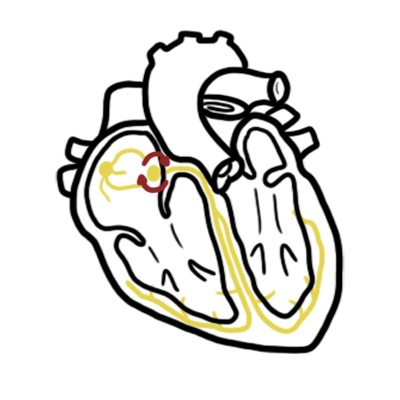
The term supraventricular tachycardia (SVT), whilst often used synonymously with AV nodal re-entry tachycardia (AVNRT), can be used to refer to any tachydysrhythmia arising from above the level of the Bundle of His. Different types of SVT arise from or are propagated by the atria or AV node, typically producing a narrow-complex tachycardia (unless aberrant conduction is present). Classification of SVT is based on site of origin & regularity.
There are many causes of SVT (see classification) but this page will focus on 3 main types:
- Atrial fibrillation
- Paroxysmal SVT
- Atrioventricular re-entry tachyvardia (AVRT) – Wolff-Parkinson-White syndrome
- AV nodal re-entry tachycardia (AVNRT)
- Atrial Flutter
Classification
| Regular | Irregular | |
| Atrial | Physiological sinus tachycardia | Atrial fibrillation |
| Atrial tachycardia | Multifocal atrial tachycardia | |
| Atrial flutter | ||
| Inappropriate sinus tachycardia | ||
| Atrioventricular | Atrioventricular re-entry tachycardia (AVRT) | |
| AV nodal re-entry tachycardia (AVNRT) | ||
| Automatic junctional tachycardia |
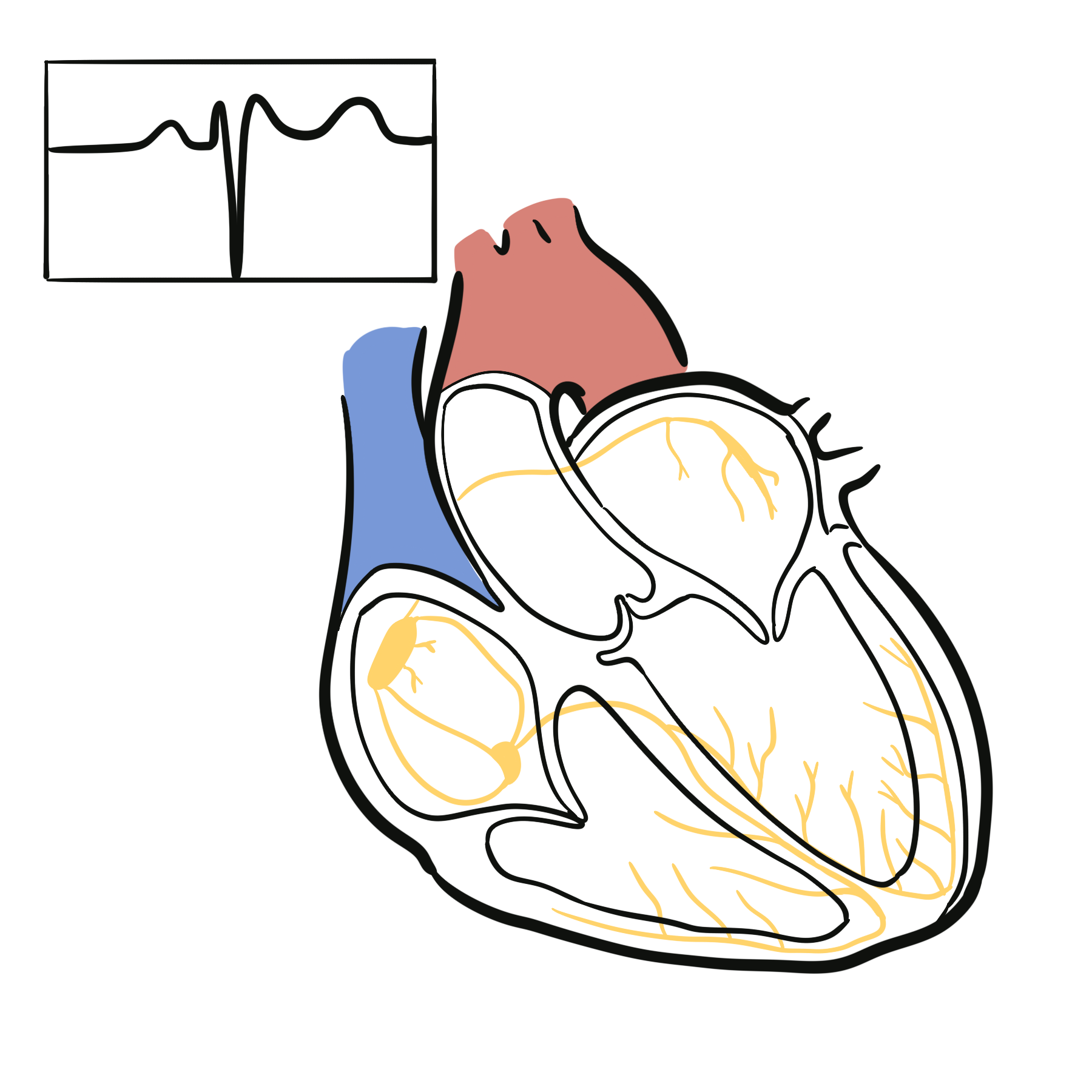
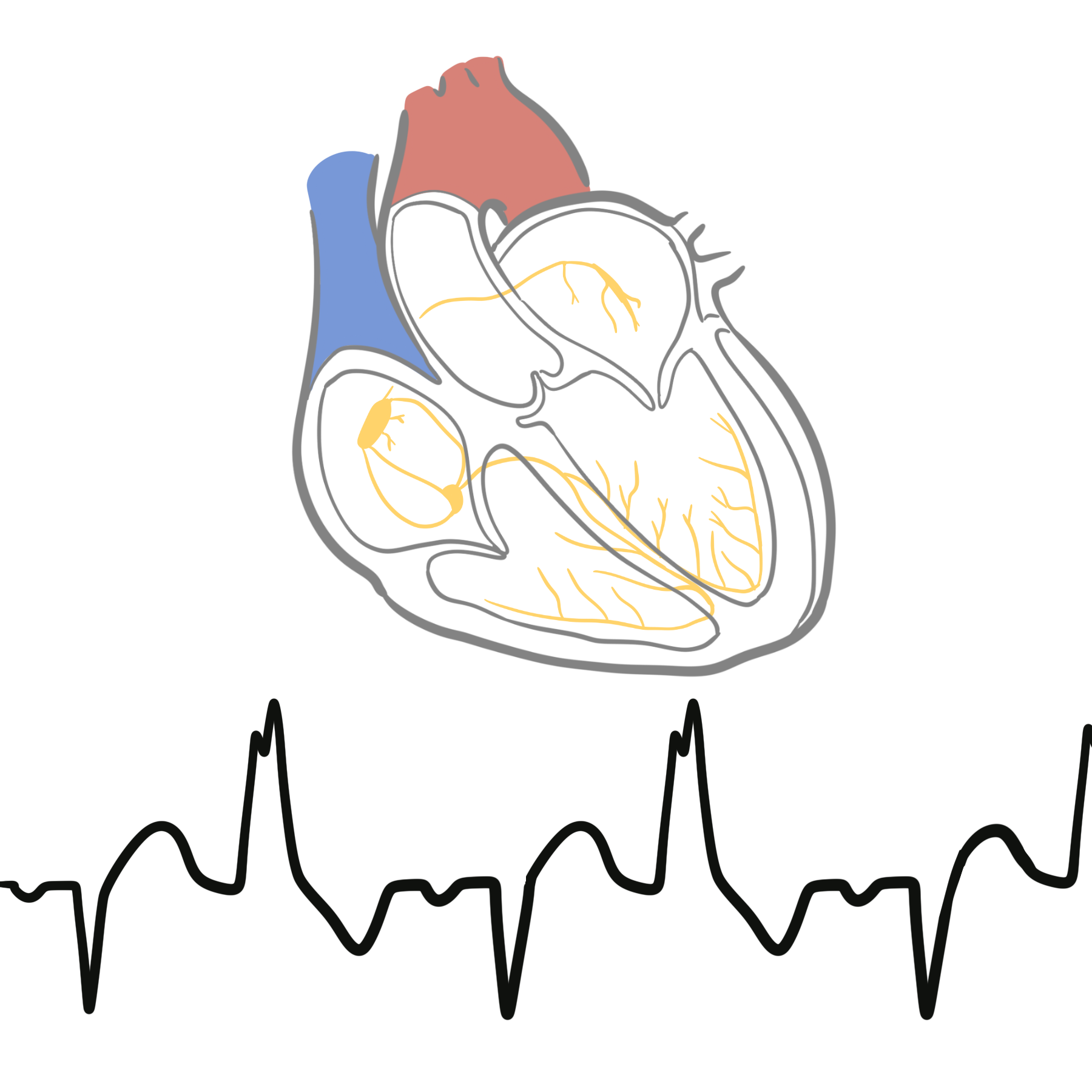
Physiology of Conduction System
ECG
- P waves should be upright, inverted in aVR
- < 120 ms duration
- < 2.5 mm amplitude in the limb leads
QRS complex (Narrow/Wide):
- < 120 ms duration
- Narrow complex or Broad complex
- Amplitude <10mm (precordial) or <5mm limb leads (minor increase)
T wave:
- Upright in all leads except aVR and V1
- Amplitude < 5mm in limb leads, < 15mm in precordial leads
T wave peaked in AMI or LVH & Hyperacute (Hyperkalemia or Ischaemia).
PR interval:
- Reflects conduction through the AV node.
- Normal PR interval is between 120 – 200 ms duration
- Utilise for heart block
In WPW PR is shorter and there is a delta wave which signifies a accessory pathway bypassing the AV node.
QT interval:
- <400 ms
ST segment:
- ST elevation >1mm in 2 contiguous limb leads
- ST elevation >2mm in 2 contiguous precordial leads
- ST depression
Members only discussions coming soon…