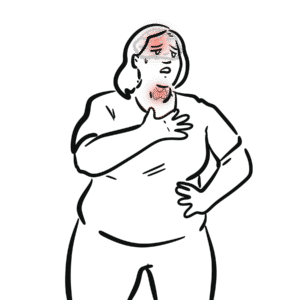
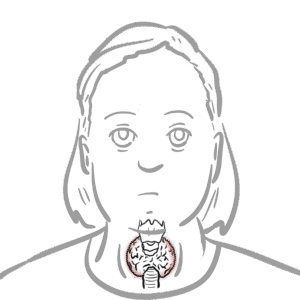
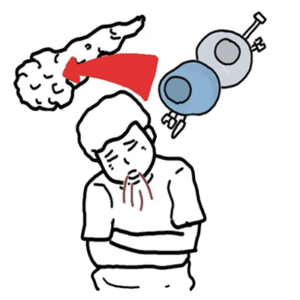
0:00 Armana singer and biology are medicine videos, please make sure to subscribe, 0:04 join the forum 0:04 and group for the latest videos, please do the Facebook and Instagram and 0:06 please like 0:07 here. 0:08 In this video, we're going to talk about the endocrine system. 0:11 Now, the endocrine system, main purpose is to maintain a homeostatic 0:15 environment through 0:17 the use of hormones. 0:19 So when we think of the endocrine system, we should think of hormones. 0:25 Nervous hormones are essentially signaling molecules. 0:30 Now the endocrine system works in close proximity with the nervous system, in 0:34 that both the 0:35 endocrine system and the nervous system tries to maintain a homeostatic 0:39 environment by sending 0:41 out signals. 0:43 The main difference between the two is that the nervous system is a quick 0:47 response. 0:48 So when a stimulus arrives at a neuron, the neuron can pass on these signals, 0:54 these commands 0:55 as neurotransmitters, that will then target a particular cell. 1:01 The neurotransmitter will bind onto a specific receptor that will cause the 1:06 target cell to 1:07 initiate a short-term, quick response. 1:13 Now the endocrine system, on the other hand, will send signals, not if your 1:18 neurotransmitters, 1:18 but through hormones. 1:21 And these hormones will travel via the bloodstream where it will then target a 1:25 cell and its specific 1:27 receptors. 1:29 So what happens is with an endocrine cell is that when a stimulus or command 1:35 comes, this 1:36 will stimulate the endocrine cell to secrete hormones into the bloodstream, 1:42 like so. 1:42 These hormones will then target and bind onto a specific receptor on a target 1:49 cell. 1:50 This will cause a target cell to initiate a long-term, slow response. 1:57 So that is a major difference in that the nervous system is a short-term, quick 2:01 response, 2:02 whereas the endocrine system is a long-term, slow response. 2:07 The endocrine cell typically secrete hormones into the bloodstream, this is 2:12 normal. 2:13 This type of signaling is called endocrine signaling, hence the name endocrine 2:17 system. 2:18 However, hormones does not always have to be secreated into the bloodstream to 2:22 target 2:23 a cell. 2:26 The endocrine cell can also secrete hormones that target cells directly close 2:31 to it, like 2:32 this cell, for example. And so when it does this, this type of secretion is 2:38 known as 2:38 paracrine signaling, para as in a cross. And this will initiate a long-term, 2:46 slow response. 2:50 When the endocrine cell is secreated, when the endocrine cell secrete hormones 2:56 into the 2:56 bloodstream, which is the basics for the endocrine system, we have hormones in 3:02 the bloodstream, 3:04 the hormones can travel in the bloodstream as a free form, which can be cleared 3:11 quickly 3:11 by the body, free form as in it's just a hormone traveling in the blood, or the 3:17 hormone 3:18 can actually travel bound to a protein. These hormones that are bound to a 3:23 protein and 3:24 travel to the blood are typically lipid hormones, because lipids hate water, 3:30 they need to travel 3:31 bound to proteins. We call these protein-bound hormones. 3:38 So now let's talk a little bit more about hormones. Hormones, as I mentioned, 3:42 are signaling 3:42 molecules. Hormones can be grouped into three types. Amino acid derivatives, 3:49 peptide hormones 3:51 or lipid derivatives. Lipid derivatives, for example, are steroid hormones or 3:56 thyroid 3:57 hormones, if you know a little bit about your hormones. And so these hormones, 4:02 they will 4:02 bind onto a target cell, onto the specific receptor, that will initiate a 4:07 desired response, 4:08 a long-term response. Here, I'm drawing these hormones binding onto target 4:14 receptors on 4:14 the plasma membrane of the target cell, to initiate a response. Well, peptide 4:21 hormones 4:21 and most hormones derived from amino acid, they bind to receptors on the plasma 4:28 membrane. 4:29 Whereas the lipid-derived hormones, they cross the cell membrane and bind to 4:33 receptors in 4:34 the cytoplasm, as shown. Thyroid hormones and steroid hormones, they cross the 4:41 plasma 4:41 membrane, and bind to receptors in the cytoplasm to initiate a response. And 4:47 this is because 4:48 the thyroid and steroid hormones are lipid-derived. 4:52 Okay, now that we know a bit more about hormones, these signaling molecules, 4:57 let's look at an 4:59 example of an endocrine response. A good example is to look at blood glucose. 5:08 So here in the 5:09 bloodstream, we have low glucose levels. And this is not very good, because we 5:17 need glucose. 5:18 Glucose is a source of energy for tissues in our body. So low blood glucose is 5:27 a stimulus. 5:28 And the body will have to try to fix this to maintain homeostasis, so it will 5:33 try to 5:34 increase blood glucose levels. And this is when the endocrine system kicks in. 5:41 The stimulus, which is low blood glucose levels, will stimulate an endocrine 5:47 cell, known as 5:48 the pancreas cell. Actually it's called the alpha cell, but let's call it panc 5:51 reas cells 5:52 for simplicity. The pancreas cell will then secrete a hormone called glucagon 5:58 into the 5:59 bloodstream. Glucagon will travel through the bloodstream to the liver, which 6:07 is the target 6:08 cell. Glucagon is not a lipid hormone, because one, it is not bound to a 6:14 protein when it travels 6:16 through the blood, and two, it binds to receptors on the cell membrane. 6:23 When glucagon binds to the receptors on the liver cell, glucagon will stimulate 6:27 the liver 6:28 to break down glycogen to secrete glucose in the blood. 6:35 And so the response by this liver cell is that it will secrete more glucose in 6:39 the blood, 6:40 which will increase blood glucose levels, like so. All these glucose is being 6:45 secreted out. 6:48 When blood glucose level is increasing, this will send a feedback back, it will 6:55 send a 6:55 feedback, it will send a negative feedback signal to stop stimulating the panc 7:02 reas cell. 7:03 Because when you have normal to high blood glucose levels, you don't need any, 7:09 you don't 7:10 have low blood glucose stimulation, and you don't need any more glucose to be 7:14 secreated. 7:15 I hope you understand this concept of negative feedback. 7:21 So in the example we just saw, we looked at the hormone called glucagon, which 7:26 is secreted 7:27 by the alpha cells of the pancreas. Now let's look at some other major hormones 7:34 , such as 7:35 glucagon, and where they come from. We will not look at what they do, well I'll 7:40 try to 7:41 mention them, but we'll just look at what they are. 7:48 Before we continue, we should know that we have many hormones in the body that 7:52 perform 7:52 different functions, or have different responses. Another terminology to learn 7:59 is what's called 8:00 endocrine glands. Endocrine glands are essentially groups of endocrine cells 8:06 that are dedicated 8:08 to perform a specific function. So let's look at the first two or three most 8:14 important 8:15 endocrine glands, I think. The first is situated in the brain here. This is 8:23 known, the first 8:24 one is known as the hypothalamus, and this is an endocrine tissue. And the 8:31 hypothalamus 8:31 is responsible for the production of antidiuretic hormone and oxytocin. It is 8:37 also responsible 8:38 for the production of the regulatory hormones. And we will look at what these 8:44 do. Probably 8:45 the most important endocrine glands are the pituitary glands, which are located 8:49 right 8:50 below the hypothalamus here. And there are two lobes of the pituitary glands. 8:55 There 8:55 is the anterior lobe and the posterior lobe. The posterior lobe secretes oxytoc 9:02 in and 9:03 antidiuretic hormones. That's what produced by the hypothalamus. So the 9:08 hypothalamus 9:09 produces these hormones and sends them to the posterior lobe, which then the 9:15 posterior 9:15 lobe will secrete into the blood. The anterior lobe of the pituitary glands 9:21 actually secrete 9:22 many hormones, including ACTH, which stands for adrenocorticotropin hormone, T 9:29 SH thyroid 9:30 stimulating hormone, obviously stimulates a thyroid, GH growth hormone for 9:35 growth, PRL 9:38 prolactin for milk production in the breast, and then FSH, which is follicle 9:42 stimulating 9:43 hormone and LH luthenizing hormone, which are responsible for the reproductive 9:50 system. 9:51 So these hormones that are secreted by the anterior lobe, they are regulated by 9:56 the hormones 9:57 from the hypothalamus. So if you remember, the hypothalamus secrete regulatory 10:03 hormones 10:04 that regulates the secretion of the anterior hormones, if that makes any sense. 10:13 There's 10:13 another endocrine gland in the brain known as a pineal gland, which is around 10:17 this area. 10:18 And it secrete melatonin. Melatonin is actually responsible for the body clock. 10:24 Now let's 10:26 make our way down. In the trachea, our throat area, we have wrapping around the 10:32 trachea, 10:32 we have the thyroid gland. Now the thyroid gland secrete few hormones, thyrox 10:39 ide, which 10:40 is abbreviated T4, and triodothyronine, which is T3. That's responsible for 10:47 metabolism essentially. 10:49 Then you have calcitonin. Now the thyroid gland, it also has another endocrine 11:00 gland on it. 11:02 So if we zoom into this area here, we're looking at this person from a 11:06 posterior point 11:07 of view from the back. So we have the thyroid gland, and then we have these 11:13 four sort of 11:14 lobes on the thyroid gland. These are known as the parathyroid gland. Parasyne, 11:21 of course, 11:21 but it's just on it. So there are four parathyroid glands, and these are behind 11:27 the thyroid gland, 11:28 and they secrete the hormone, parathyroid hormone, simple enough. Parathyroid 11:34 hormone 11:35 is important in the regulation of calcium and phosphate in our blood in our 11:46 body. 11:47 Now right below the thyroid gland, we have another endocrine gland, you can say 11:52 , known 11:53 as the thymus. Now the thymus is not really a big deal in the endocrine world, 12:00 but it 12:00 is a big deal in the immune system world. But in the endocrine world, the thym 12:05 us actually 12:05 undergoes atrophy during adulthood, and it begins secreting thymusin. Of course 12:13 , this 12:13 person we have in this person, we have the lungs connecting the trachea and the 12:18 heart 12:19 between the lungs. Now if you didn't know, the heart is also classified as an 12:23 endocrine 12:23 gland because it secreates hormones. The heart secreates the hormone, naturitic 12:27 peptide, 12:28 which is responsible in blood pressure regulation. It actually decreases blood 12:33 pressure when 12:34 there is an increase in blood pressure. Then we have the digestive tract. Now 12:40 the digestive 12:40 tract, they secrete a lot of variety of hormones. And what I mean by the 12:45 digestive tract, I 12:46 mean the stomach, the duodenum, the small intestines, etc. And they produce 12:51 many hormones such 12:52 as gastrin, somatostatin, cholicytopinins, etc. Another important, well another 13:03 very important 13:04 endocrine gland or tissue is the pancreas. And it secreates two main hormones, 13:12 insulin 13:12 and glucagon. Now we talked about glucagon in that it increases blood glucose 13:19 levels. 13:20 Well insulin works opposite, it decreases blood glucose levels. And you might 13:26 know diabetes 13:27 diabetes people, they have very low insulin levels, well type 2 diabetes, they 13:34 have low 13:35 insulin levels or type 1, they have depleted insulin levels. And so you have a 13:40 lot, you 13:41 have very high blood glucose levels. And you can't decrease this because you 13:49 have no insulin. 13:50 And if you wait until the end of the video, I will provide links to some of 13:54 these hormones 13:56 so you can watch them in more detail and see what they do. The kidneys also sec 14:04 rete hormones. 14:04 They secrete erythropoietin, which stimulates red blood cell production in the 14:10 bone marrow. 14:10 And also secrete cholsetrial, which I don't know what it does. Above the 14:16 kidneys we also 14:16 have the very important adrenal glands. If we take a cross section of the adren 14:22 al glands, 14:23 we have two adrenal glands of course because we have two kidneys. If we cut a 14:26 cross section 14:27 of the adrenal glands, we have the adrenal cortex, the outer part of the adren 14:32 al glands. 14:33 And then we have the adrenal medulla, the middle of the adrenal glands. And the 14:37 slime 14:37 I'm drawing for the adrenal medulla, it's meant to be in the middle of the 14:41 adrenal 14:42 glands, not on the outside, it's a mistake. Anyway, the adrenal cortex secrete 14:48 cortisol 14:49 and aldosterone. Cortisol is essentially for stress. And aldosterone is to 14:56 promote sodium 14:58 reabsorption as well as potassium secretion in the kidneys. And then we have 15:04 the adrenal 15:05 medulla, which secretes adrenalin and noradrenalin, also known as epinephrine 15:11 or nor epinephrine 15:12 in America. These hormones are important in the fight or flight response as 15:18 well as the 15:18 rest and digest response. Atopost tissue, which is essentially fat, also sec 15:25 rete hormones. 15:26 It's secrete leptin, which is important in fat metabolism. The final endocrine 15:34 tissue 15:34 or endocrine glands I want to talk about are the gonads. Now, because we have a 15:39 male and 15:39 female version of humans, we have two types of gonads. We have the testes for 15:45 the male 15:46 and the ovaries for females. So the testes, in the testes, we have cells that 15:51 secrete 15:52 androgens such as testosterone, which is important for promoting male 15:59 characteristics as well 16:01 as sperm production. And then we have for the gonads, the ovaries for the 16:08 female, we have 16:09 important hormones being secreted, such as estrogen and progesterone, which is 16:13 important 16:14 in female characteristics and egg production. Okay, so those were the main 16:22 hormones that 16:24 were secreted by the main endocrine tissue or endocrine glands. But I'd like to 16:30 concentrate 16:31 and look into more detail on the pituitary glands, which is a very important 16:36 endocrine 16:37 gland, because it for one, secretes a lot of hormones, and two, it secretes 16:43 hormones 16:43 that regulate or stimulate the secretion of other hormones from other endocrine 16:49 tissue, 16:49 if that makes any sense. So let's have a closer look at the pituitary glands. 16:54 The pituitary 16:55 glands is located within the brain, and an easy way to remember this is it's 16:59 located 16:59 sort of below the hypothalamus. The pituitary glands consist of two lobes. One 17:07 is called 17:08 the posterior pituitary, which is at the back. It's also known as a neurohypof 17:12 eceses, 17:13 and then we have the anterior pituitary, also known as adenohypofeces. I hope I 17:18 'm pronouncing 17:18 that. Facies, right? Anyway, let's first look at the posterior pituitary and 17:24 what it 17:24 secretes. Well, actually the hypothalamus, it produces, it synthesizes anti-di 17:32 arratic 17:33 hormone and oxytocin. These hormones that are synthesized in the hypothalamus, 17:40 they 17:40 are synthesized in these neurons, and these neurons will then pass on these 17:45 hormones 17:45 to the posterior pituitary. And so from here, when a stimulus arrives 17:54 stimulating the secretion 17:56 of these hormones, the posterior pituitary can then secrete it. So the 18:01 posterior pituitary 18:02 can secrete the anti-diarratic hormone. The anti-diarratic hormone's main 18:08 function is 18:10 for water retention. So it targets the kidneys, particularly the kidney tubules 18:17 . The posterior 18:17 pituitary can also secrete the hormone oxytocin. Oxytocin essentially targets 18:25 the breast, 18:26 and it's important for lactation, and also is important for the contraction of 18:33 the uterus 18:34 during childbirth. So remember, for the posterior pituitary, the hormones 18:39 itself are actually 18:40 synthesized or made within the hypothalamus. The posterior pituitary only secre 18:46 tes them. 18:47 Now let's look at the anterior pituitary. Now the anterior pituitary is 18:51 different than 18:52 the posterior pituitary in that the anterior pituitary makes its own hormones. 19:00 However, 19:02 these hormones, most of them can only be secreted when there is some form of 19:10 conformation from 19:12 the hypothalamus. So the hypothalamus actually will secrete hormones that will 19:18 regulate the 19:19 secretion of the anterior pituitary hormones. The hormones secreted by the 19:26 hypothalamus are 19:26 known as regulatory hormones. Once they are secreted, they will cause either 19:35 stimulation 19:36 or inhibition of the anterior pituitary hormones being secreted. Anyway, 19:43 whatever the case, 19:44 if it's all okay, the anterior pituitary can secrete prolactin, abbreviated PRL 19:52 , which 19:52 will target the breast essentially for milk production. Anterior pituitary can 19:58 also secrete 19:59 growth hormones, which targets many tissues, such as the bone, for growth. The 20:06 anterior 20:06 pituitary can secrete gonadotropic hormones, such as follicle stimulating 20:11 hormone and 20:11 luteinizing hormone, which will target the testes or ovaries, depending if it's 20:17 male 20:17 or female. Anterior pituitary can also secrete thyroid stimulating hormone, 20:24 which will stimulate 20:26 the thyroid gland to secrete its own hormones. And finally, the anterior pituit 20:31 ary can also 20:31 secrete adenocorticotropic hormone, which will target the adrenal glands, and 20:38 it will 20:39 stimulate the release of cortisol, etc., for example. So as you can see, the 20:46 pituitary 20:47 glands secrete a variety of hormones, and they're controlled in a very 20:52 confusing manner. 20:53 And I'll provide actually a video that will look more into detail in the pituit 20:57 ary glands. 20:58 Actually, I'll provide links, hopefully, to many of these hormones, so you can 21:02 click 21:03 on the link on the screen, and they'll take you to this video, so you can watch 21:06 it in 21:07 in a bit more detail. 21:08 Thank you.