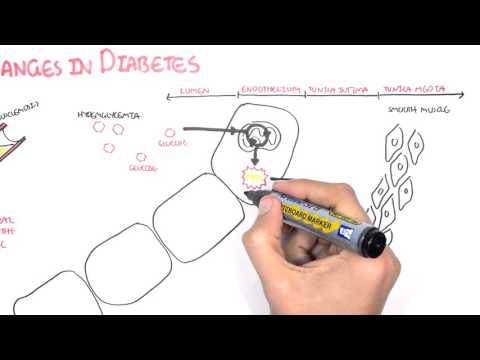
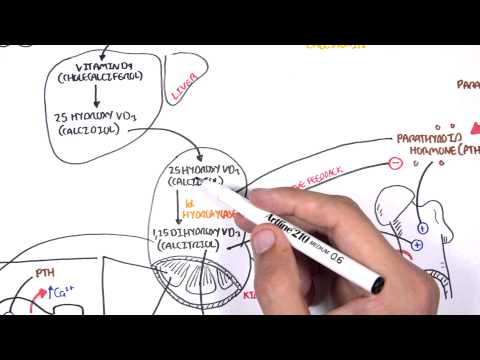
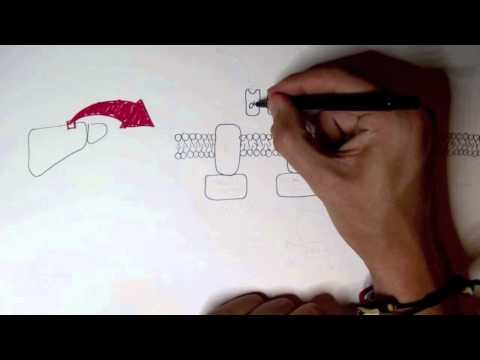
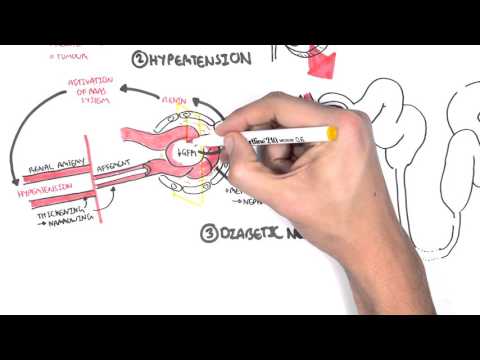
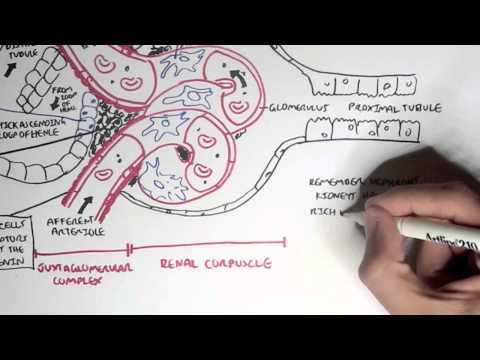
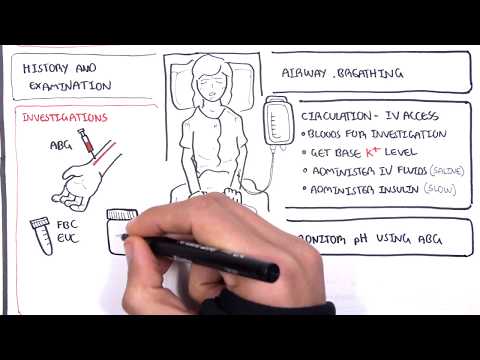
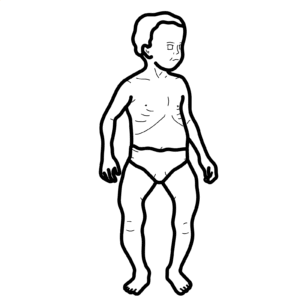
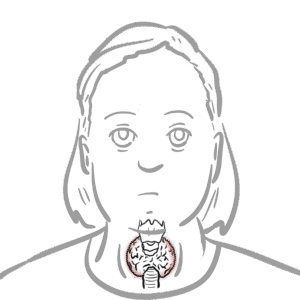
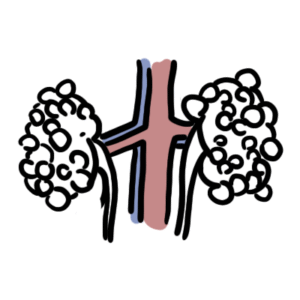
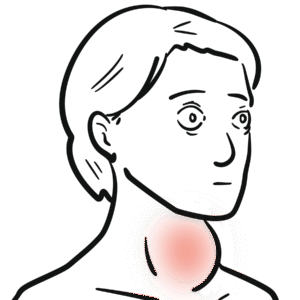
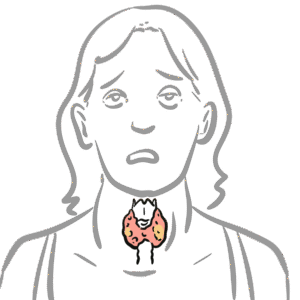
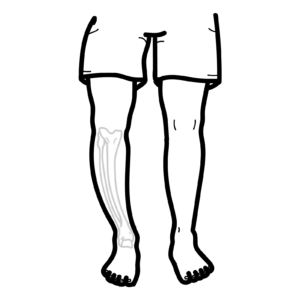
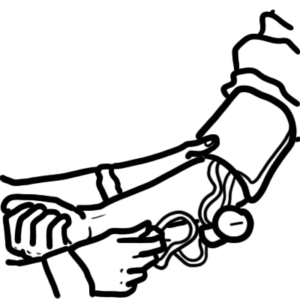
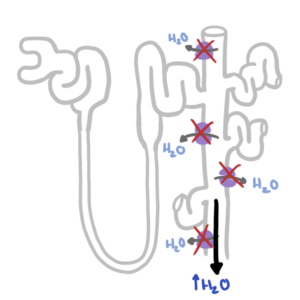
0:00 Hyponaturemia is commonly defined as a serum sodium concentration below 130 0:14 million moles 0:15 per liter. 0:16 It affects anywhere from 1 to 15% of hospital patients. 0:20 Most cases require no treatment, however, with acute causes of hyponaturemia, 0:26 the effect 0:26 can be life-threatening. 0:28 The sodium plays a critical role in the body. 0:32 Sodium is distributed unequally within the body compartments. 0:36 There are three main compartments in our body. 0:38 The intracellular compartment, the interstitial compartment, and the intrav 0:43 ascular compartment. 0:45 The intravascular and interstitial space make up the extra cellular fluid, and 0:51 is where 0:52 we find most of the sodium. 0:56 Approximately 145 millimoles per liter of sodium occupies the interstitial and 1:01 intravascular 1:02 compartments. 1:03 In the intracellular compartment, there is about 12 millimoles per liter. 1:08 Sodium is a positively charged ion, the main cation in the extracellular space. 1:15 The sodium potassium pump is the transporter which makes sure to maintain 1:20 higher concentrations 1:22 of sodium in the extracellular space, by swapping it or exchanging it with 1:28 potassium 1:28 ions. 1:29 Hence, the main cation in the intracellular space is potassium, about 155 mill 1:37 imoles 1:38 per liter. 1:42 Water is a molecule which can easily diffuse through the extracellular and intr 1:47 acellular 1:48 spaces, or can travel via channels such as aquaporin channels. 1:59 Hyponaturimia is easily classified according to volume status, hypervolemia, 2:07 normal volemia 2:09 also known as uvolemia, and hypovolemia. 2:15 So a hypervolemic hyponaturimia is where someone will have low serum sodium 2:24 with fluid overload. 2:26 They can have peripheral edema or fluid in their lungs. 2:30 Uvolemic hyponaturimia is someone with low serum sodium, but whose fluid status 2:36 is normal. 2:38 Hypovolemic hyponaturim is someone with low serum sodium who is dehydrated and 2:43 so would 2:44 have a fast heart rate and low blood pressure, for example. 2:49 Before delving into the causes of hyponaturimia, by dividing them into their 2:53 fluid statuses 2:54 which we learned, we must firstly question whether the hyponaturimia is a false 3:00 reading, 3:01 for example. 3:02 It's very important to remember that many factors can create a falsely low 3:08 sodium reading. 3:09 This is called pseudo-hyponaturimia, an example is hyperglycemia. 3:15 Now normally after eating, blood sugar rises and insulin gets secreted by the 3:20 pancreas. 3:21 Insulin binds onto receptors on cell surface to allow expression of glut trans 3:28 porters which 3:29 facilitates glucose moving inside the cells. 3:33 With patients who have poorly controlled diabetes, glucose stays in the blood. 3:38 As a result, glucose becomes an effective osmol and draws water from the cells, 3:45 diluting 3:46 the intravascular space, resulting in pseudo-hyponaturimia. 3:52 As a result, if you take blood and measure serum osmolality, this would be 3:57 increased 3:58 because you're having more osmol, more solutes in the intravascular space. 4:06 Similarly, manatol can also cause shift of water into the intravascular space. 4:14 Manatol is used, for example, in cases of increased intracranial pressure. 4:19 Manatol is a molecule that cannot move through cells. 4:22 It functions to reduce the amount of fluid in the interstitium and in the intr 4:27 acellular 4:28 compartment by drawing the fluid into the intravascular compartment. 4:37 This will cause pseudo-hyponaturimia as well. 4:41 Manatol and glucose, if you take blood and measure serum osmolality, this would 4:49 be increased. 4:50 Osmolality, again, is a measure of the number of dissolved particles in a fluid 4:56 . 4:56 When you have high plasma osmolality, it means you have high numbers of solutes 5:01 , such as 5:01 glucose and manatol, for example. 5:08 Hyperlipidemia and hyperprotonemia also causes pseudo-hyponaturimia. 5:16 But when serum osmolality is tested, it will be normal. 5:21 Now the reason is that when blood is taken out for analysis, lipids and 5:26 proteins interfere 5:28 with the laboratory analysis of electrolytes, creating a falsely low sodium 5:37 level. 5:38 Turp also known as transurethral resection of the prostate can cause pseudo-hyp 5:43 onaturimia. 5:44 And this is because large volumes of manatol, for example, or glycine, is used 5:51 for bladder 5:52 irrigation and can be absorbed by the body. 5:57 And so, as manatol and glycine is in the intravascular space, it will absorb 6:02 water from 6:02 the other compartments, resulting in dilutional hyponaturimia. 6:09 The serum osmolality is also normal in this case, and this is perhaps due to 6:13 the manatol 6:14 and glycine leaving the intravascular space quickly. 6:23 So those were four examples of pseudo-hyponaturimia. 6:27 Note that the serum osmolality is high or normal in these cases. 6:33 Most true causes of hyponaturimia are associated with a low plasma osmolality, 6:39 which means 6:40 low number of solutes in plasma. 6:43 Let's first begin by looking at hyper-volemic hyponaturimia. 6:49 Causes of hyper-volemic hyponaturimia is due to redistribution of water into 6:53 the extra 6:54 cellular space, particularly the interstitial compartment. 7:00 The main causes of this are congestive cardiac failure, liver cirrhosis, and ne 7:05 phrotic syndrome. 7:11 In congestive cardiac failure, the heart is unable to pump blood out 7:15 effectively. 7:16 There is low arterial blood flow, resulting in increased thirst and release of 7:23 anti-diuretic 7:25 hormone from the brain. 7:30 So there is plenty of sodium, but more water, resulting in hyper-volemic hypon 7:36 aturimia. 7:38 The anti-diuretic hormone, also known as ADH, stimulates water retention in the 7:44 kidneys 7:44 in the body, further causing hyper-volemic hyponaturimia. 7:53 Someone with hyper-volemia will have elevated JVP, will have crackles in the 7:59 lungs, dyspnea, 8:02 wet cough, and swelling of peripheral legs. 8:08 In congestive cardiac failure, the serum osmolality is low, because there is no 8:14 increase in solutes. 8:16 There is only increase in water in the extra cellular space. 8:22 Other causes of hyper-volemic hyponaturimia is liver cirrhosis. 8:29 In liver cirrhosis, there is reduced albumin synthesis. 8:39 Normally albumin, which is a protein, retains water in the intravascular space. 8:46 With low albumin, water does not stay in the intravascular space, and rather 8:50 moves into 8:51 the interstitial space, resulting in edema. 8:56 It also shifts to the interstitial space, resulting in hyponaturimia. 9:05 On top of this, in liver cirrhosis, there is portal hypertension, which, 9:11 together with 9:13 low albumin, will decrease circulating arterial volume, leading to reflex, 9:22 whereby the body 9:23 will have increased thirst, and also a release of anti-diuretic hormone again. 9:31 And this, as we know, will cause hyper-volemic hyponaturimia. 9:40 In nephrotic syndrome, there is damage of the glomerulus, allowing proteins 9:46 such as 9:46 albumin to leak out, resulting in hypo albuminemia. 9:52 With low albumin in plasma, water is not retained in the intravascular space, 9:57 causing a reduced 9:59 arterial volume, stimulating thirst, and anti-diuretic hormone release. 10:03 This will lead to hyper-volemic hyponaturimia. 10:09 In congestive cardiac failure, nephrotic syndrome, and liver cirrhosis, serum o 10:15 smolality is low, 10:17 because there are no extra solutes in the blood stream. 10:21 Also there are a reduced number of solutes, because we have reduced albumin, 10:26 for example. 10:27 In congestive cardiac failure, nephrotic syndrome, and liver cirrhosis, the 10:32 urine sodium will 10:33 be usually low. 10:35 This is because the kidney, the nephrons, still work, and can re-absorb sodium 10:41 to try 10:42 and maintain normal sodium levels. 10:47 Chronic renal failure and hypothyroidism is also a cause of hyper-volemic hypon 10:53 aturimia. 10:54 In chronic renal failure, the kidney is unable to filter blood effectively. 11:00 There is a decrease in the glomerular filtration rate, and so what happens when 11:06 you have reduced 11:07 perfusion to the kidneys, it will actually activate the renin angiotensin-out 11:12 osterone 11:13 system, also known as RAS, in order to increase the glomerular filtration rate. 11:19 The renin angiotensin-outosterone system results in the release of aldosterone 11:25 from the adrenal 11:26 cortex, and also the stimulation of antidiuretic hormone from the brain. 11:35 Alosterone will re-absorb sodium and water for that respect. 11:44 Antidiuretic hormone attempts to increase glomerular filtration rate by 11:49 increasing intravascular 11:51 volume with water. 11:54 This all will result in hyper-volemic hyponaturimia through dilution again. 12:04 The mechanisms by which hypothyroidism causes hyponaturimia can be interpreted 12:11 as low-thyroid 12:12 levels causing bradycardia and reduced glomerular filtration rate. 12:19 Bradycardia will cause a decrease in cardiac output, which means reduced arter 12:26 ial pressure 12:27 or volume, and the body will detect this change in volume pressure, and thus AD 12:34 H is released 12:35 as a response to try and retain water, and this of course will lead to hyper-v 12:42 olemic 12:42 hyponaturimia. 12:46 The low glomerular filtration rate, as we have learned, will stimulate the ren 12:50 in angiotensin-outosterone 12:52 system, which will attempt to retain water and sodium via multiple mechanisms. 13:05 In chronic renal failure and hypothyroidism, serum osmolality is reduced. 13:13 However, in both chronic renal failure and hypothyroidism, urine sodium levels 13:19 will be 13:20 high. 13:21 This is because the nephron are unable to retain sodium. 13:29 So those are examples of hyper-volemic hyponaturimia. 13:33 The most common cause of u-volemic hyponaturimia is syndrome of inappropriate 13:41 ADH secretion. 13:43 Syndrome of inappropriate ADH is a non-physiological release of anti-diuretic 13:50 hormone, ADH, from 13:52 the posterior pituitary or from an ectopic source. 13:56 ADH works by increasing the expression of aquaporins in the collecting ducts of 14:00 the kidneys, 14:02 and so if you have so much ADH, inappropriate secretion of ADH, there will be a 14:06 lot of aquaporins, 14:07 which means a lot of water retention. 14:14 Water retention leads to fluid overload, which stimulates the heart to release 14:20 ANP and also 14:21 BMP. 14:22 These are natural peptides. 14:27 Water retention increases also the glomerular filtration rate in the kidneys, 14:33 but also together 14:35 with ANP and BMP, which are hormones, they both will decrease the renin angiot 14:41 ensin-eldosterone 14:42 system. 14:43 They decrease the renin angiotensin-eldosterone system because they are trying 14:49 to tell the 14:50 body not to retain any more water. 14:54 Inhibition of the renin angiotensin-eldosterone system means reduced ald 15:00 osterone. 15:01 When you reduce aldosterone, this means that sodium is not reabsorbed through 15:07 the aldosterone-dependent 15:09 sodium channels in the kidneys. 15:13 Because sodium is not reabsorbed, it will be peed out, and this is called natur 15:22 esis. 15:23 With syndrome of inappropriate ADH, the urine sodium is high, and the reason is 15:29 again, aldosterone 15:31 is not reabsorbing sodium, and so you have sodium being peed out. 15:38 Important thing to remember about syndrome of inappropriate ADH is that over 15:43 time, long 15:44 term, there is renal adaptation in the kidneys that will reduce the number of 15:49 aquaporants 15:51 by itself to reduce water retention. 15:56 So as a result, you will pee more water, you have dioresis, together with the 16:02 existing 16:03 naturesis from the reduced aldosterone levels. 16:07 And so because of this mechanism, you get a uvelemic picture, you get a uvele 16:18 mic hyponaturemia. 16:22 The serum osmolality in syndrome of inappropriate ADH secretion is low, because 16:30 in SIDH, you 16:31 are retaining water diluting the existing solutes, and so technically you have 16:37 low amounts 16:38 of solutes. 16:42 The other rare cause of uvelemic hyponaturemia is beer potomania. 16:49 This is an oversimplification by the way, and the exact pathophysiology is 16:54 questionable. 16:55 Chronic alcohol drinkers who are not malnourished will consume large volumes of 17:00 alcohol, which 17:01 will cause hypervalemia, however, will have normal solute concentration because 17:07 they are 17:08 not malnourished. 17:09 And so they can excrete water and solutes together, and they are able to 17:14 balance sodium 17:15 and water levels in the body, because of this. 17:19 Patients who drink a lot of alcohol, such as beer, may not consume enough 17:23 nutrition. 17:24 Beer is a good example, as people who drink a lot of beer develop this 17:28 physiological effect, 17:30 whereby they reduce the number of carbohydrates and other foods they eat, 17:35 because of the sensation 17:37 of not being hungry. 17:39 Thus, chronic beer intake and malnutrition will result in low proteins, reduce 17:47 solutes, as 17:48 well as you have a lot of fluid in your body. 17:52 When you are fluid overloaded, ADH is suppressed, and you pee out all the water 17:58 , you have water 17:59 excretion, but at the same time the body will obviously try to retain the sol 18:06 utes, as well 18:07 as try to retain some water. 18:11 As a result of this mechanism, you get a uvelemic hyponatremia. 18:17 The mechanism, obviously, is a bit confusing, but hopefully it kind of makes 18:22 sense. 18:22 So next, let's talk about hypovolemic hyponatremia, the causes. 18:27 And hypovolemic hyponatremia reflects true volume depletion. 18:32 The main causes are diuretics, vomiting, diarrhea, sweating, burns, and 18:37 pancreatitis, as well 18:38 as adrenal gland insufficiency. 18:42 Let's begin by looking at diuretics. 18:45 Diuretics causes an increase in water and sodium excretion. 18:50 The main diuretic that causes hyponatremia are the thiazide diuretics, as they 18:55 cause 18:56 depletion of sodium and chloride ions, and they do this by inhibiting a co- 19:01 transporter 19:02 in the distal convoluted tubule that essentially reabsorbs sodium and chloride 19:07 ions from the 19:08 kidneys. 19:11 Loss of sodium means naturisis in the kidneys. 19:16 Thiazides have no effect on aquaporins, and so sodium drags water with it, and 19:21 so you 19:21 also get diuresis, you lose water. 19:25 This causes hypovolemia because you are losing water, and also causes hyponat 19:30 remia because 19:30 you are losing sodium. 19:33 As a result of diuresis and naturisis, the body will trigger an anti-diuretic 19:38 hormone 19:38 response to try to retain some of that water. 19:42 However, as we know, anti-diuretic hormone increases aquaporins in the 19:48 collecting tubule, 19:50 but its role is only being able to re-absorb 10% of water. 19:56 So the outcome is that you still get hypovolemia and hyponatremia at the end. 20:07 Someone who is hypovolemic will be thirsty and dry, so they will have dry mucus 20:13 membranes 20:14 and have reduced skin turgor. 20:16 They are also tachycardic and hypotensive. 20:24 So another cause of someone who has hypovolemic hyponetremia is someone who is 20:30 vomiting. 20:31 When you vomit, you lose water and electrolytes. 20:39 Loss of water means hypovolemia, but with vomiting you can also vomit some acid 20:44 from 20:44 the stomach. 20:46 When you vomit acid, this increases serum pH because you are losing protons, 20:53 hydrogen. 20:54 Kidneys will try to compensate by excreting bicarbonate with sodium. 21:01 This increases sodium excretion. 21:07 Excretion of bicarbonate from the body reduces serum pH back to normal. 21:13 And remember, it is the excretion of sodium in the kidneys together with the b 21:19 icarbonate. 21:20 But also the vomiting up of the electrolytes is what leads to hypovolemic hypon 21:28 atremia. 21:29 Point to remember is that diuretics and vomiting will give you an increase in 21:39 urine sodium. 21:40 Electrolyte, you also are losing water and electrolytes. 21:44 Loss of water means hypovolemia. 21:47 Electrolyte loss is in the form of sodium bicarbonate. 21:51 Loss of bicarbonate will lead to acidemia, so a reduced pH in serum. 21:59 In an attempt to normalize this, the kidneys will secrete hydrogen ions, will 22:06 excrete hydrogen 22:07 ions from in urine. 22:10 Hydrogen is secreted from the kidneys through ammonium chloride, and this will 22:16 stabilize 22:17 serum pH. 22:21 The loss of sodium in diarrhea with bicarbonate is what contributes to hypovole 22:25 mic hyponatremia. 22:36 Aldosterone can cause hypovolemic hyponatremia. 22:40 Normally the adrenal cortex produces and releases aldosterone. 22:45 Aldosterone works on the kidneys to reabsorb sodium in the body in exchange for 22:53 potassium. 22:55 Causes of hypo-aldosterone-ism include Addison's disease and spironolactone, 23:03 which decreases 23:03 the effects aldosterone has on the distal tubule and collecting ducts. 23:09 Low aldosterone reduces expression of sodium and potassium ATPase pump, and 23:14 also aldosterone 23:15 dependent sodium channels. 23:17 As a result, aldosterone cannot retain sodium, increasing sodium and water exc 23:24 retion, so 23:25 increasing naturisis and diorisis. 23:28 As a result, you get hypovolemic hyponatremia. 23:33 Remember, water will follow sodium. 23:38 Diuretics, vomiting, and hypo-aldosterone-ism will give you an increase in 23:47 urine sodium. 23:49 Sweating burns pancreatitis causes water and sodium loss from the intravascular 23:56 space, 23:56 leading to hypovolemic hyponatremia. 23:59 When sweating, you obviously lose your sodium and water from your sweat glands, 24:04 so depleting 24:05 intravascular space. 24:07 If you have burns, you're losing water and electrolytes from the soft tissue 24:12 injury. 24:12 You're depleting, lowering the intravascular space. 24:17 With pancreatitis, it's actually third spacing, so all the water in the sodium 24:21 is going into 24:22 a third space outside the intravascular space, resulting in hypovolemic hyponat 24:28 remia. 24:29 The renal system attempts to retain water and sodium as much as they can. 24:35 That is why, with sweating burns and pancreatitis, you have low urine sodium 24:43 levels. 24:44 Those were the most important causes of pseudo-hyponatremia, hypervolemic hypon 24:51 atremia, 24:52 uvolemic hyponatremia and hypovolemic hyponatremia. 24:58 The clinical presentation of hyponatremia often don't come about until it's 25:05 less than 25:06 120 millimoles per liter, but again, by definition, it's less than 130 millim 25:11 oles per liter. 25:13 Symptoms generally include headaches, lethargy, malays, and nausea and vomiting 25:17 for people 25:18 who are developing hyponatremia slowly. 25:22 And again, the clinical presentation of hyponatremia also usually present with 25:28 changes in fluid 25:29 status, which we talked about, hypervolemic, uvolemic, or hypovolemic, which is 25:34 very important 25:35 to look at. 25:36 However, if the drop in sodium is rapid, fluid shift into the intracellular 25:46 compartment 25:46 can be rapid and can lead to brain swelling, cerebral edema, and also non-cardi 25:52 ogenic pulmonary 25:53 edema. 25:54 For example, in cerebral edema, usually there is equilibrium of electrolytes 26:00 between intracellular 26:01 and extracellular compartments in the brain. 26:06 And also with the water levels, which are appropriate in each compartment. 26:11 If there is a sudden drop in serum sodium, for example, this will mean that 26:15 water will 26:16 shift over to the brain tissue where more of the electrolytes are. 26:21 This will cause cerebral tissue to swell, which can lead to seizures. 26:26 Similarly, in non-cardiogenic pulmonary edema, there is no issue with the heart 26:31 whatsoever. 26:32 Rather, the sudden drop in serum sodium will cause fluid to shift into the 26:37 lungs, causing 26:38 pulmonary edema. 26:41 Remember, hyponetreatment is not a disease, rather a manifestation of all those 26:46 causes 26:47 of hyponetremia we talked about earlier. 26:52 Electrolyte urea creatinine help identify hyponetremia, which is defined by 26:56 less than 26:56 130 million moles per liter. 26:58 Then there are other investigations that can help differentiate between the 27:01 different 27:02 causes. 27:03 These include plasma osmolality, whether it is high, normal, or low. 27:08 Remember, in pseudo-hyponetremia, it's typically high. 27:13 And true hyponetremia, it's typically low. 27:16 Then you can check urine osmolality, as well as urine sodium concentration. 27:23 Remember that true causes of hyponetremia will have low serum osmolality. 27:34 Management of hyponetremia will depend on the causes, as well as the symptom 27:37 ontology. 27:39 In general, mild asymptomatic hyponetremia is of little clinical significance 27:44 and requires 27:44 no treatment. 27:47 For hyponetremia, which is pretty low, but the person is still asymptomatic, or 27:53 for ongoing 27:54 hyponetremia treatment should be initiated. 27:57 And this includes a strict fluid restriction between 750 mls to 1.2 liters. 28:07 And this will hopefully aim to increase serum osmolality. 28:12 Also the administration of slow, isotonic saline is recommended. 28:19 The isotonic saline will increase serum volume and hopefully suppress the 28:26 release of ADH. 28:27 However, in acute, severe hyponetremia, which tends to be symptomatic, 28:34 management should 28:36 be quick to prevent cerebral edema. 28:40 This includes resuscitation if necessary, strict fluid restriction, as well as 28:47 the administration 28:48 of slow, hypotonic saline. 28:55 Hypotonic saline will help increase serum sodium levels. 29:00 This will then draw water into the intravascular space. 29:04 Once the water is in the intravascular space, the body can excrete the sodium, 29:10 as well as 29:10 the water, and balance out the sodium levels. 29:14 Again, the management is slow correction of sodium levels. 29:19 Remember, the plasma sodium concentration should be slowly corrected, should be 29:25 slowly 29:25 increased, for example, a maximum of 12 mls per liter during the first 24 hours 29:32 . 29:32 And this is in order to prevent a serious complication of rapid sodium 29:37 correction called 29:38 central pontine melanolysis. 29:42 This condition is due to rapid shift of water from the intracellular space into 29:47 the extracellular 29:49 compartment, leading to shrinkage of brain cells. 29:52 For example, if you give someone too much hypertonic saline too quickly, this 29:56 means a lot of sodium 29:58 in serum. 29:59 This will draw up all the water from the intracellular compartment of the brain 30:05 cells. 30:05 This will move into the intravascular compartment very quickly, causing the 30:09 brain cells to shrivel 30:11 and shrink. 30:17 Central pontine melanolysis is characterized by flaccid paralysis, dysarthria 30:22 and dysphasia. 30:24 This disorder is associated with significant morbidity and mortality. 30:30 So that concludes the video on hyponatremia. 30:41 You