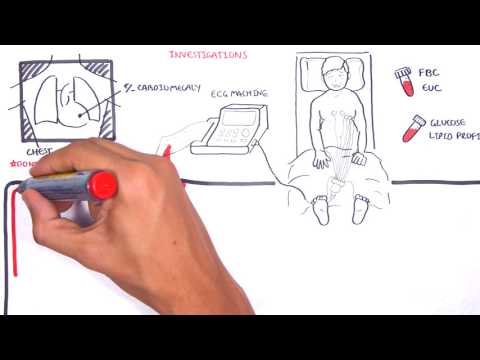
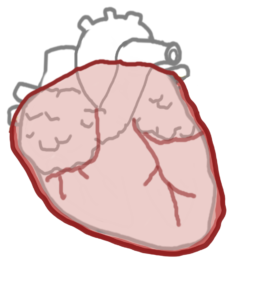
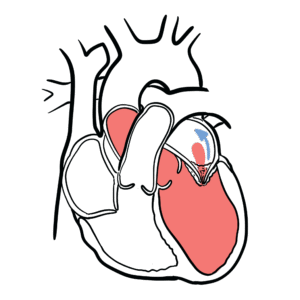
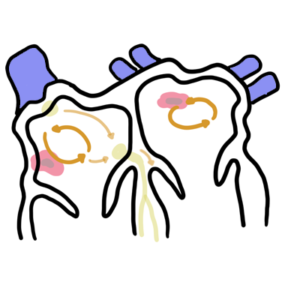
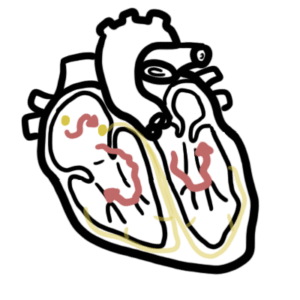
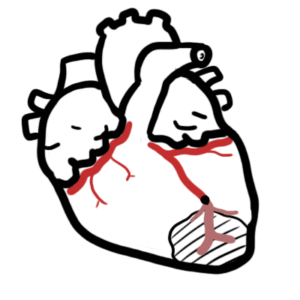
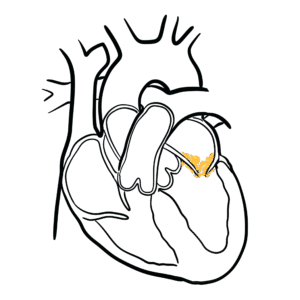
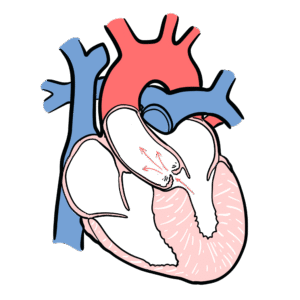
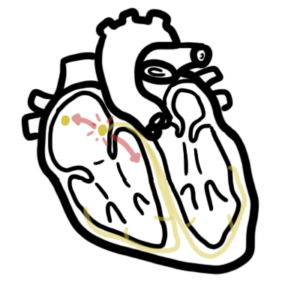
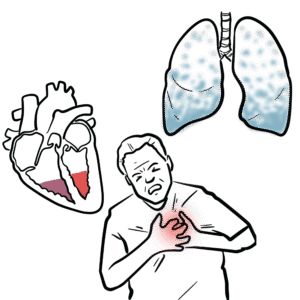
0:00 Myocarditis is inflammation of the cardiac muscles following an infection, 0:12 trauma, or 0:13 ischemic events to the heart. 0:15 It is also associated with rheumatological diseases such as systemic lupus ery 0:20 thmatosis. 0:22 Myocarditis can be acute or chronic. 0:25 For most cases, in routine clinical practice, a specific etiology is not found. 0:31 Viruses remain the most common cause, and often are presumed to be the caus 0:35 ative agent 0:36 in cases without a proven etiology. 0:39 The viruses identified include adenovirus, echovirus, cytomegalivirus, 0:47 influenza, or 0:48 cocksachy virus. 0:50 Other infectious causes include bacterial, fungal, and protozoan. 0:55 The heart is a muscular pump which pushes blood to the rest of the body. 1:01 Cardiac muscle fibers typically have a single nucleus, they are branched, and 1:06 joined to 1:06 one another by intercalated discs that contain gap junctions. 1:17 The intercalated discs and gap junctions form a syncytium of cardiac cells, 1:22 allowing the 1:23 heart to contract in a coordinated unified manner. 1:27 The desmosomes hold the fibers together when the heart contracts. 1:34 The contractile unit of cardiac muscles are the sacramies, which is made up of 1:40 myosin 1:40 and actin filaments. 1:42 The two protein filaments slide past one another to cause a muscle contraction. 1:56 Trapotin is attached to tropomyosin and is involved in muscle contraction. 2:03 Cardiomyocytes contain many mitochondria to produce large amounts of adenosine 2:08 triphosphate 2:09 ATP and myoglobin to store oxygen to meet the demands of muscle contraction. 2:18 The pathophysiology of viral myocarditis is based on studies of the interavirus 2:23 , specifically 2:24 the cocksachy virus. 2:29 The cocksachy binds to the cocksachy adenovirus receptor, abbreviated C-A-R on 2:35 the surface 2:35 of myocytes. 2:39 This binding allows for viral entry into the intracellular fluid. 2:47 The endosome releases the virus and its genetic material, which then integrates 2:55 into the host's 2:56 DNA. 3:00 Now, once integrated into the host's DNA, the DNA is transcribed and then is 3:09 translated 3:10 by the ribosomes into structural capsids, protein and proteases, which are 3:16 unique for 3:17 the virus. 3:20 The structural materials, components of the virus, allows for formation of the 3:26 new viruses, 3:27 which then gets released again, outside and then the cycle can continue, the 3:31 virus can 3:32 infect other cardiac muscle cells. 3:36 Some of these proteases, which are made inside the host's cardiomyocytes, can 3:43 injure some 3:44 stranding proteins. 3:45 They cleave the myocyte cytoskeleton, for example, as well as cleaving distro 3:51 fen. 3:52 A distrofen is an important component of the distrofen glycoprotein complex 3:57 that actually 3:58 links the cytoskeleton of the cell to the extracellular matrix outside, so 4:04 basically 4:05 acts as an anchor for the cardiomyocytes to the outside world. 4:14 Infection of the heart damages the heart. 4:17 A damaged heart will release its cellular components to the outside world, the 4:23 extracellular space, 4:26 and this will trigger the activation of the host's antiviral immune response, 4:30 which is 4:31 characterized by the infiltration of natural killer cells, macrophages, and 4:36 then this will 4:36 be followed by virus specific T lymphocytes, T cells. 4:43 The immune activation contributes to the progression of myocarditis. 4:49 The immune activation contributes to the progression of myocarditis, and this 4:55 can lead to something 4:56 called dilated cardiomyopathy, which is where the ventricles become dilated, 5:03 reducing, thus 5:04 impairing heart contractility and so impairing cardiac output. 5:14 Inflammation of the cardiac muscle cells, by any cause, will result in chest 5:19 pain and 5:19 leakage of troponin into the bloodstream from the damaged sacramereus. 5:27 The inflammation of the heart impairs heart contractility and filling leading 5:32 to reduced 5:33 cardiac output, and so leading to varying degrees of heart failure. 5:40 Some people may need support with iona chirps to increase heart contractility 5:45 or mechanical 5:46 circulatory support to assist the heart in contraction. 5:51 Prior to the pain and elevation of troponin, patients may be asymptomatic or 5:56 they may have 5:57 a viral prodrome, which is manifested as fevers, myalgias and muscle soreness, 6:03 bone soreness. 6:04 Remember that viruses again is the most common cause of myocarditis. 6:11 Bacterial causes of myocarditis is less frequent, however, invasion of the 6:16 bloodstream by any 6:17 bacterial pathogen can result in myocardial seeding and microabsis forming, 6:23 such as in 6:24 complications of staphylococcus aureus, nesesiria meningitis, salmonella and 6:30 other blood stream 6:31 infections. 6:35 Now you have some other special types of myocarditis, there's something called 6:38 giant cell myocarditis, 6:40 which is a rare, acute and frequently fatal form of myocarditis that typically 6:46 occurs 6:46 in young persons who do not respond to standard heart failure medical 6:52 management on presentation. 6:55 Giant cell myocarditis is often rapidly progressive and can cause both left and 7:00 right ventricular 7:01 dysfunction. 7:04 Giant cell myocarditis is also associated with an increased incidence of high- 7:08 grade atroventricular 7:10 block and ventricular arrhythmias, this disorder has been attributed to T-cell 7:15 mediated inflammation 7:17 and is associated with systemic autoimmune disorders in 20% of cases. 7:24 A biopsy of the heart shows prominent myocytinacrosis, so death associated with 7:31 a multifocal or diffuse 7:32 inflammatory cell infiltrate, composed of T-cells and there's also a 7:38 characteristic 7:39 feature which includes multi-nucleated giant cells, hence the name giant cell 7:47 myocarditis. 7:49 Then there's another type of myocarditis called e-synophilic myocarditis and 7:52 this is 7:53 inflammation of the cardiac muscle cells characterized by e-synophilic infiltr 8:02 ates 8:03 and may be associated with malignancy, parasitic infection or even hypers 8:09 ensitivity reactions. 8:11 E-synophilic myocarditis is fatal and presents with sudden death or rapidly 8:16 progressive 8:17 heart failure, usually with a rash, fevers and peripheral e-synophilia. 8:27 Biopsy of the heart muscles with patients who have e-synophilic myocarditis 8:31 show cardiac 8:32 muscles obviously with e-synophilic infiltrates. 8:42 Programs for myocarditis or suspected myocarditis include your standard blood 8:47 tests, troponin 8:49 and viral bacterial serological studies. 8:53 An echocardiogram is useful to assess degree of heart failure as well as to 9:01 assess for 9:01 other potential complications or causes of heart failure such as ischemia 9:06 causing heart 9:07 failure, amyloidosis as well. 9:10 An electrocardiogram may reveal conduction abnormalities. 9:14 As mentioned in giant cell myocarditis it can cause atroventricular blocks. 9:24 Definitive diagnosis of myocarditis may require cardiac magnetic resonance 9:28 imaging, MRI or 9:30 endomyocardial biopsy. 9:39 Treatment of myocarditis is supportive treatment. 9:42 Anti-inflammatory agents are not of benefit in the treatment of acute myocard 9:46 itis. 9:47 However, if pericarditis is suspected, it's recommended that non-steroidal anti 9:53 -inflammatory 9:54 drugs are used and even prednisolone steroids can be used. 10:00 Treatment therapy for myocarditis is heart failure management essentially which 10:04 includes 10:04 ACE inhibitors or angiotens and receptor blockers plus beta blockers and spiron 10:11 olactone. 10:11 For patients who do not respond to these basic medical therapy, sometimes we 10:17 need ionotropes 10:18 to help with cardiac output or even mechanical circulatory support which are 10:23 your ventricular 10:24 assist devices and obviously last line is cardiac transplants for those who 10:30 definitely need 10:32 it. 10:33 Thank you for watching. 10:34 In summary myocarditis is inflammation of the heart muscle cells usually caused 10:40 by a virus, 10:41 however in most cases an etiology is not found. 10:45 The management of myocarditis is essentially heart failure therapy medications. 10:52 Thank you for watching. 10:54 [BLANK_AUDIO]