

Somatoform Disorders

Overview
Somatoform disorders is a historical umbrella term for presentations in which physical symptoms and health concerns are associated with substantial distress or disruption.
Current DSM-5-TR terminology is somatic symptom and related disorders. The symptoms are real; a diagnosis does not depend on proving that symptoms are medically unexplained. A person may also have a coexisting medical condition.
Definition
Somatic symptom disorder (SSD): One or more distressing physical symptoms accompanied by disproportionate and persistent thoughts, feelings or behaviours relating to the symptoms or health; the symptomatic state is usually persistent (typically more than 6 months).
Illness anxiety disorder: Preoccupation with having or acquiring a serious illness despite absent or mild somatic symptoms.
Functional neurological symptom disorder (FND): Altered voluntary motor or sensory function with clinical findings demonstrating incompatibility with recognised neurological disease; formerly called conversion disorder.

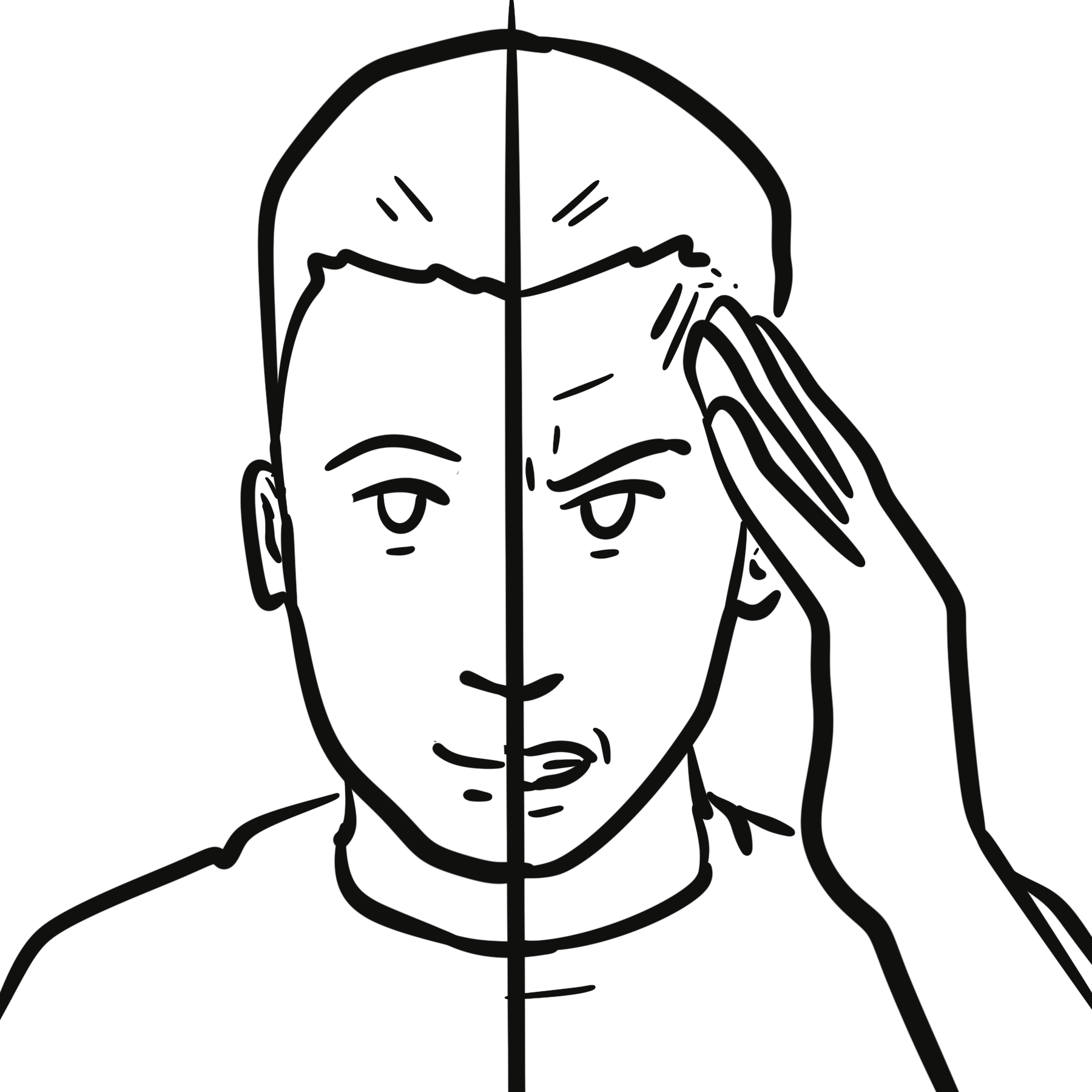
What to notice
Detailed image description
Classification & Terminology
| Current category | Distinguishing feature |
|---|---|
| Somatic symptom disorder | Distressing symptom(s) with excessive symptom-related thoughts, anxiety or time and energy. |
| Illness anxiety disorder | Marked fear of serious illness when physical symptoms are absent or mild. |
| Functional neurological symptom disorder | Motor or sensory symptoms diagnosed using positive signs of functional inconsistency or incongruence. |
| Psychological factors affecting other medical conditions | Psychological or behavioural factors adversely affect an established medical condition. |
| Factitious disorder | Falsification or induction of illness or injury with identified deception; this is a distinct diagnosis and must not be assumed from unexplained symptoms. |
Older terms such as somatisation disorder, undifferentiated somatoform disorder, pain disorder and hypochondriasis do not map one-to-one to the current categories. Body dysmorphic disorder is classified among obsessive-compulsive and related disorders in DSM-5-TR. ICD-11 uses its own category of bodily distress disorder; its criteria should not be treated as identical to DSM-5-TR SSD.
Aetiology & Risk Factors
Presentation is multifactorial.
Heightened attention to bodily sensations, threat appraisal, learned responses, previous illness experiences and social context can interact with biological symptoms and stress.
Anxiety and depression may coexist.
Trauma or a precipitating stressor can be relevant for an individual, but neither is required for diagnosis.
Pathophysiology
Normal and pathological bodily signals are interpreted within cognitive, emotional and social contexts. Attention to symptoms and fear of serious disease can amplify distress, checking and avoidance, which may reinforce functional impairment. This model does not imply that symptoms are fabricated or that medical disease has been excluded.
FND is diagnosed through characteristic positive neurological findings rather than through an assumed psychological cause.
Clinical Manifestations
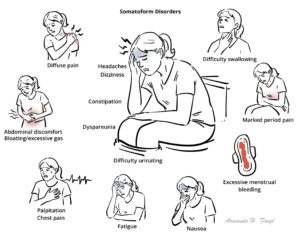
- Somatic symptoms may include pain, fatigue, gastrointestinal discomfort, dizziness, palpitations or other physical complaints; the pattern and severity vary.
- In SSD, disproportionate concern, persistent anxiety about health or substantial time and energy devoted to symptoms accompanies distress or impairment.
- In illness anxiety disorder, fear of disease predominates despite absent or mild physical symptoms; repeated checking or avoidance of care may occur.
- FND may present with weakness, altered sensation, tremor, gait disturbance or seizure-like episodes, assessed through positive clinical signs.
Diagnosis
Take a careful history of symptoms, their course, effect on daily function, previous assessment and the patient’s concerns. Examine the patient and investigate in a targeted way based on findings and red flags. Reassess new or changing symptoms; a psychiatric diagnosis must not prevent recognition of coexisting physical illness. Explore mood, anxiety, substance use, safety and functional goals without implying that symptoms are imagined.
| Condition | Key diagnostic distinction |
|---|---|
| Somatic symptom disorder | At least one distressing or disruptive symptom plus excessive symptom-related thoughts, high health anxiety or excessive time and energy; persistent symptomatic state, typically longer than 6 months. |
| Illness anxiety disorder | Preoccupation with serious illness; somatic symptoms absent or mild, with high anxiety and repeated checking or maladaptive avoidance. |
| Functional neurological symptom disorder | Neurological symptoms with positive signs of inconsistency or incongruence on examination; stress exposure is not required. |
Differential Diagnosis
- An underlying or newly developing medical or neurological disorder, including a condition that coexists with SSD or FND.
- Depressive, anxiety and panic disorders, which may present with physical symptoms or health concerns.
- Medication effects and substance-related symptoms.
- Other functional syndromes and, only where there is affirmative evidence of intentional deception or external incentive, factitious disorder or malingering.
Management
- Build a consistent therapeutic relationship. Acknowledge the symptoms and provide a clear, non-stigmatising explanation of the diagnosis and assessment findings.
- Agree on practical goals for function and quality of life, with planned follow-up and coordinated care.
- Offer psychological treatment such as cognitive behavioural therapy where appropriate, alongside graded return to activities and symptom-management strategies.
- Treat coexisting medical conditions, depression or anxiety on their own merits. Medication may target a coexisting condition; it is not a diagnostic test for SSD.
- For FND, explain the positive findings and consider specialist rehabilitation, physiotherapy and psychological treatment tailored to the symptom pattern.
- Use further tests when new findings warrant them while avoiding repeated investigations or procedures without a clear clinical indication.
Complications & Prognosis
Persistent symptoms can impair work, study, relationships and quality of life, and fragmented care may lead to repeated tests or treatments.
Course varies. Early recognition, a shared explanation and ongoing coordinated support can improve function; new clinical findings still require appropriate evaluation.
References
- American Psychiatric Association. Diagnostic and statistical manual of mental disorders. 5th ed, text rev. Washington (DC): American Psychiatric Association Publishing; 2022.
- Henningsen P. Management of somatic symptom disorder. Dialogues Clin Neurosci. 2018;20(1):23-31. doi:10.31887/DCNS.2018.20.1/phenningsen.
- World Health Organization. International classification of diseases for mortality and morbidity statistics. 11th revision. Geneva: World Health Organization; 2019. Category 6C20, bodily distress disorder.
- Burton C, Fink P, Henningsen P, Löwe B, Rief W. Functional somatic disorders: discussion paper for a new common classification for research and clinical use. BMC Med. 2020;18:34. doi:10.1186/s12916-020-1505-4.
- Stone J, Burton C, Carson A. Recognising and explaining functional neurological disorder. BMJ. 2020;371:m3745. doi:10.1136/bmj.m3745.








Members only discussions coming soon…