

Asthma (Adults)
Overview
What to notice
Detailed image description
Asthma is one of the most common respiratory diseases. It is generally accepted that asthma is associated with affluent Westernised lifestyle, with the prevalence being higher in more developed countries. The prevalence increasing significantly since 1960. Asthma is more common in children than adults and affects boys more than girls, with most patients being symptomatic by age 3 years. Between 30-80% of children become asymptomatic around the time of puberty.
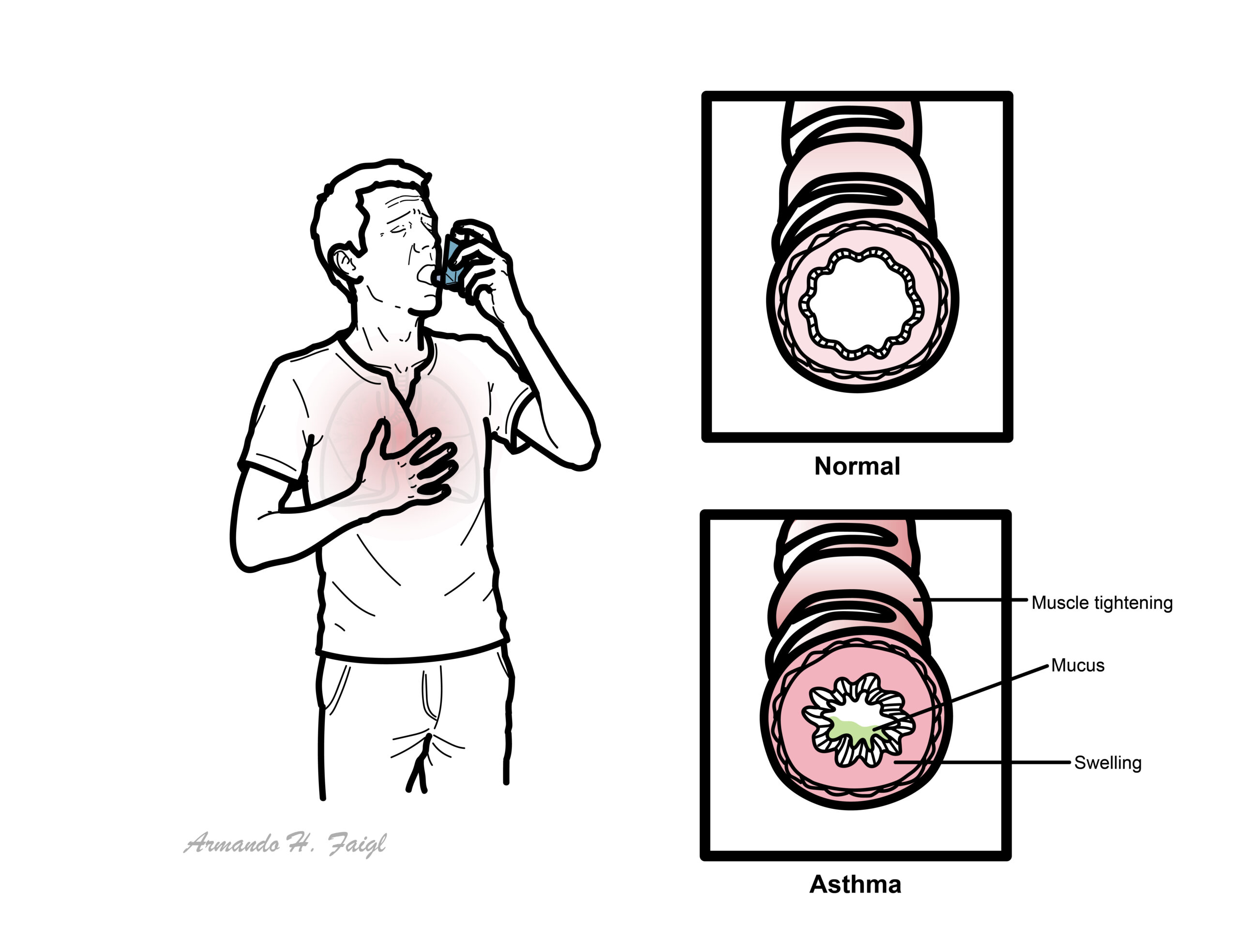
Asthma is one of the most common causes of presentation to the emergency department. It implies reversible airway constriction (peak flows vary by >20%) +/- wheeze, dyspnoea or cough. Airway obstruction occurs due to a combination of:
- Inflammatory cell infiltration
- Mucus hypersecretion with mucus plug formation
- Smooth muscle contraction
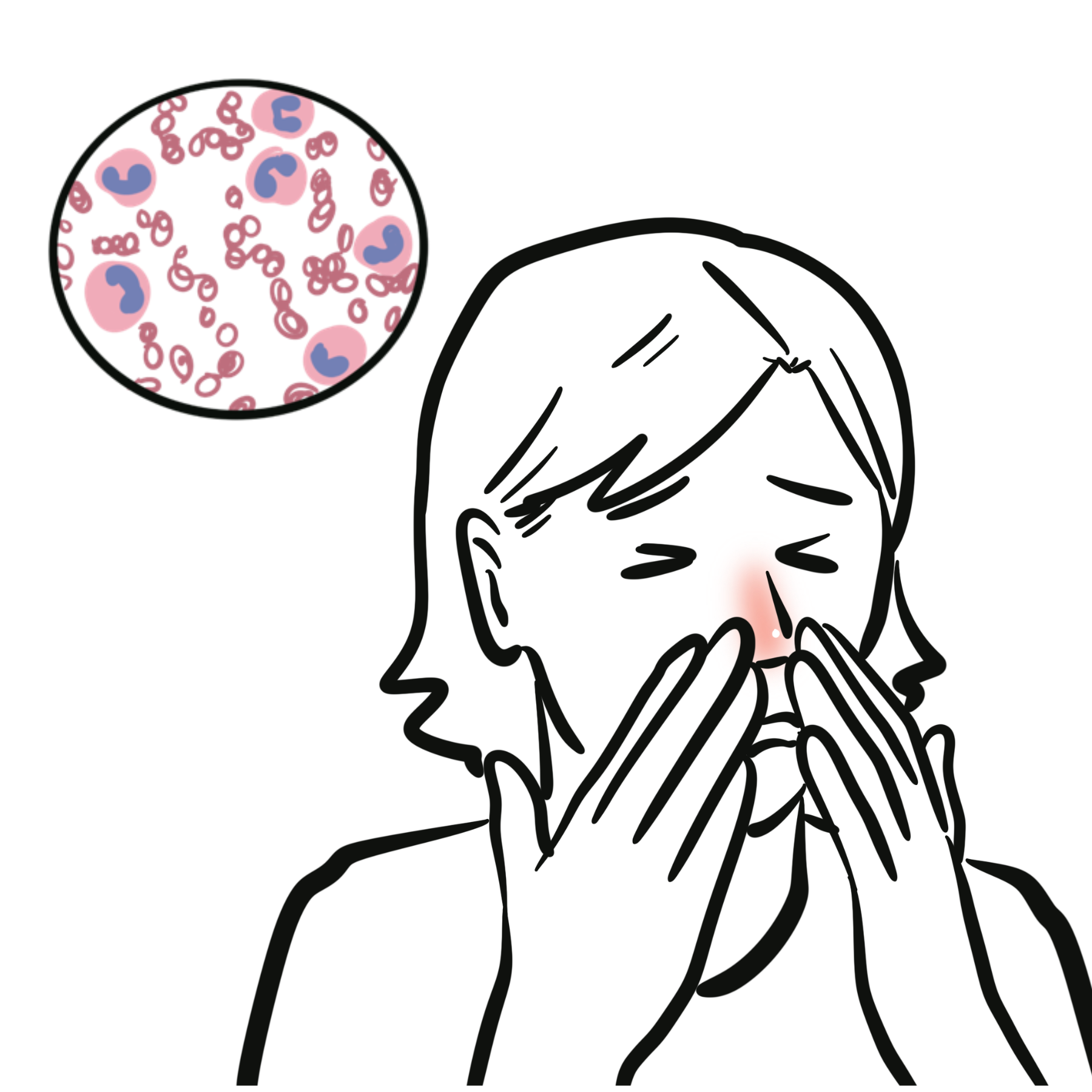
Mast cells and Eosinophils play a major role. This page will mainly focus on adult asthma
Definition
Asthma: Condition of bronchial hyperactivity and smooth muscle hypertrophy leading to a chronic inflammatory condition of the airways associated with widespread bronchospasm that is reversible.
Acute cough: Condition for less than 3 weeks, most commonly caused by acute upper respiratory infection but also may be caused by congestive heart failure, pneumonia, and pulmonary embolism.
Chronic cough: Condition for longer than 3 to 8 weeks (case definitions vary). Smoker – chronic obstructive pulmonary disease. Nonsmoker with a normal chest radiograph and not taking an ACE inhibitor, it may be due to postnasal drip, gastroesophageal reflux disease (GERD), or asthma.
Aetiology & Risk Factors
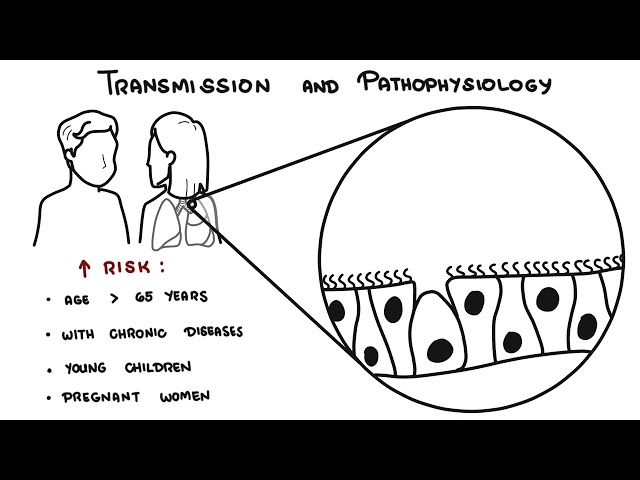
Risk Factors for asthma include having an atopic history (rhinitus, ezcema), family history and having multiple allergies (ie. dust/pollen). For children developing viral infection is a risk.
Pathophysiology
Pathology
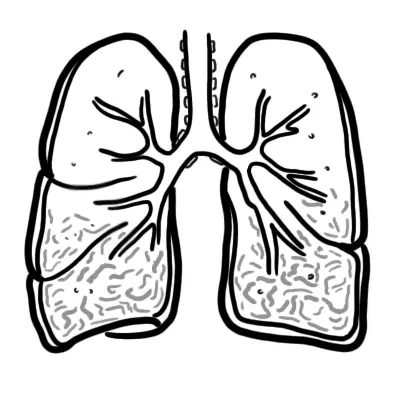
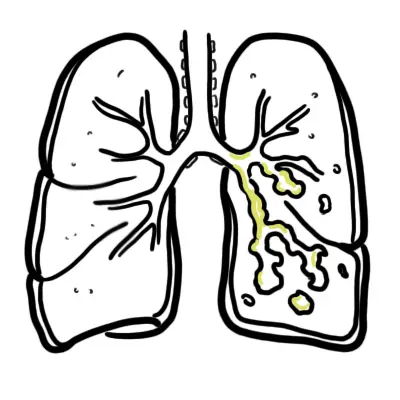
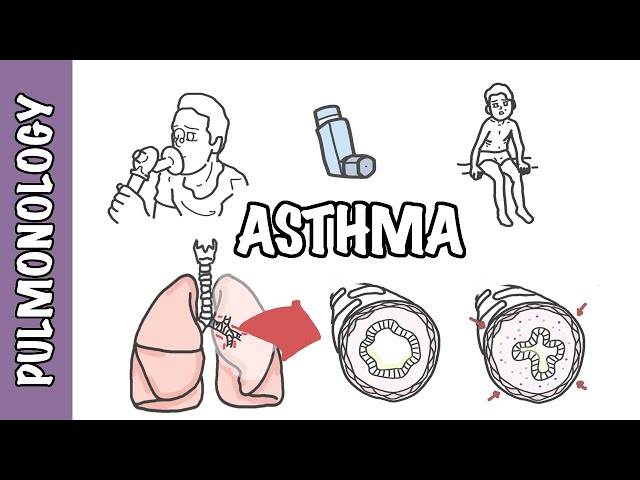
Asthma is an inflammatory condition of the airways. Postmortem studies reveal hyperinflated lungs, mucus plugging and small areas of pulmonary atelectasis are also observed. Microscopically, there is mucus hypersecretion, goblet cell hyperplasia, infiltration of mast cells and eosinophils and smooth muscle hypertrophy and proliferation.
Clinical Manifestations
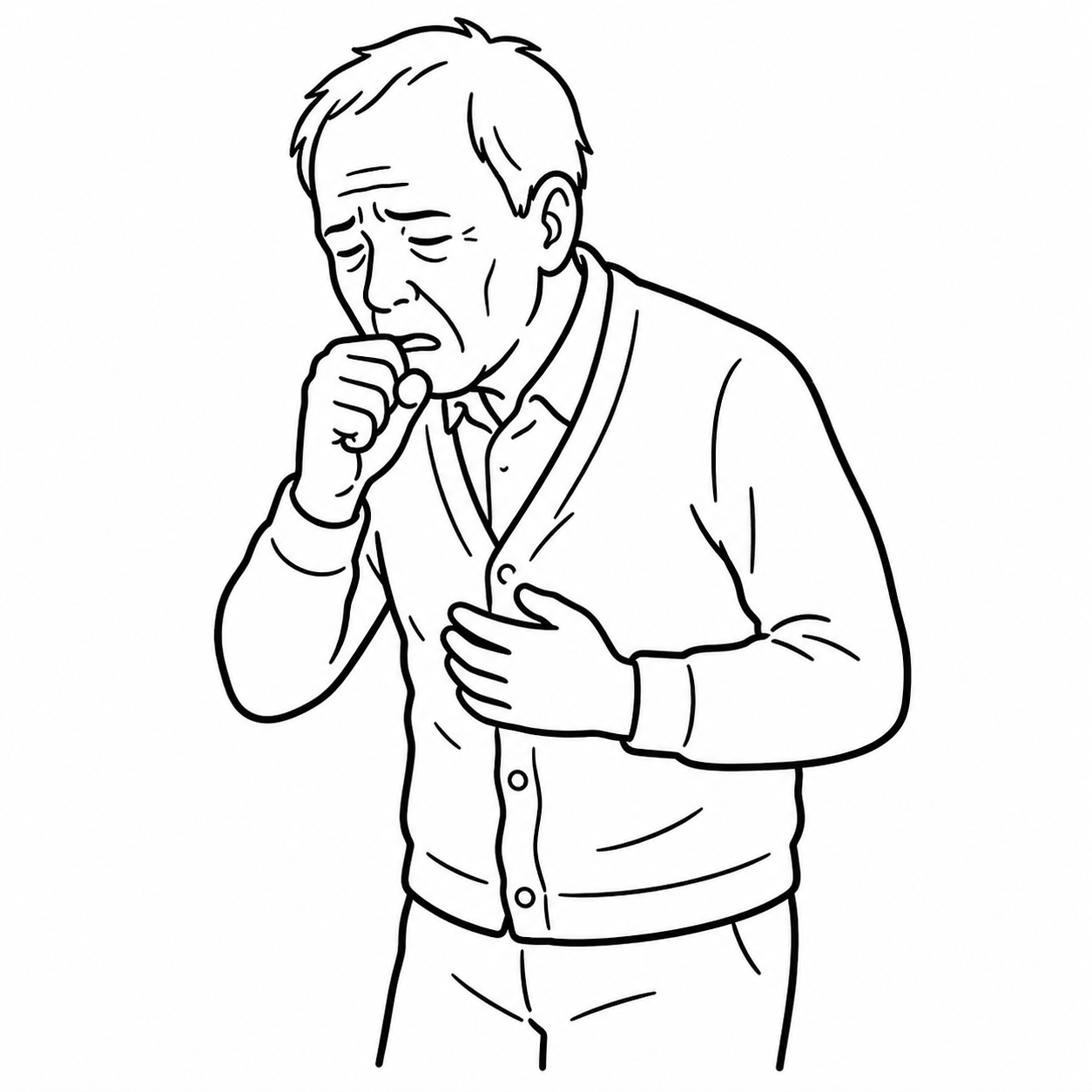
Asthma Triad CDE: Cough, Dyspnea, Expiratory wheeze
Clinical Presentation Patients may present because of an asthma exacerbation due to a recent respiratory infection. This is often the case for children. Asthma is clinically characterised by having a expiratory wheeze. Some patients may have a completely normal examination and a lung spirometry has to be performed +/- exercising to check for exercise induced asthma.
Diagnosis
- Spirometry with bronchodilator responsiveness — first-line
- Measure FEV₁, FVC and FEV₁/FVC before and after bronchodilator.
- Asthma is supported by an increase in FEV₁ of ≥12% and ≥200 mL.
- If spirometry is initially normal:
- Repeat during symptoms or early morning.
- Record peak expiratory flow twice daily for 2–4 weeks.
- Consider bronchial provocation testing with methacholine, mannitol or exercise.
- Improvement in FEV₁ after approximately 4 weeks of inhaled corticosteroid treatment can demonstrate variability.
- FeNO: supports type 2 airway inflammation; ≥40 ppb supports asthma in the appropriate clinical setting, but a normal result does not exclude it.
Additional investigations
- FBC, including blood eosinophils.
- Total IgE and allergen-specific IgE or skin-prick testing if allergic asthma suspected.
- Chest X-ray only if an alternative diagnosis or complication is suspected.
- ABG in severe or life-threatening exacerbations.
- Consider ECG, BNP, CT chest, full lung-function testing or vocal-cord assessment when the diagnosis is uncertain.
| Diagnosis |
| Clinical triad CDE |
| Airflow reversibility 12% FEV1/FVC OR 200ml |
| Day-to-day peak flow variability |
Differential Diagnosis
- Cystic Fibrosis
- Foreign body aspiration
- COPD
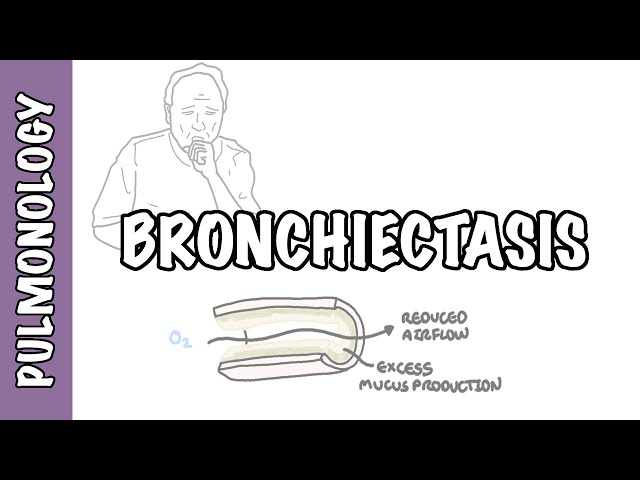
- Bronchiectasis
- Pulmonary Embolism
- Congestive heart failure
- Heart Failure
The three most common causes of chronic cough in immunocompetent nonsmokers who are not taking ACE inhibitors are postnasal drip, asthma, and gastroesophageal reflux disease.
Treatment
General management
- Provide education and an individualised written asthma action plan.
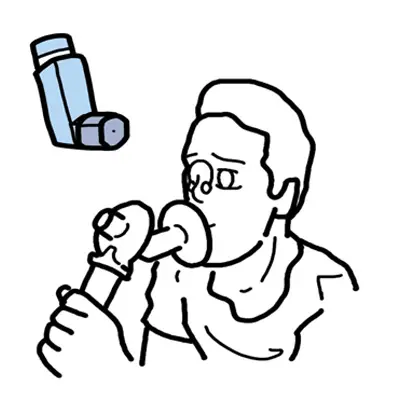
- Demonstrate and regularly check inhaler technique.
- Assess adherence before increasing treatment.
- Stop smoking and vaping; reduce relevant occupational or allergen exposure.
- Encourage exercise and weight management.
- Manage comorbidities such as allergic rhinitis, chronic rhinosinusitis, obesity, reflux, anxiety and obstructive sleep apnoea.
- Offer appropriate influenza, COVID-19 and other vaccinations.
All adults with asthma should receive ICS-containing treatment. SABA-only treatment is no longer recommended.
Preferred stepwise treatment
Level 1
- Low-dose budesonide–formoterol as required for symptoms.
- Known as anti-inflammatory reliever or AIR-only therapy.
Level 2
- Low-dose ICS–formoterol maintenance-and-reliever therapy — MART:
- Regular low-dose ICS–formoterol.
- Additional doses from the same inhaler when symptomatic.
Level 3
- Medium-dose ICS–formoterol MART.
Level 4: difficult-to-treat or severe asthma
- Refer for specialist assessment.
- Confirm diagnosis, adherence and inhaler technique.
- Address triggers and comorbidities.
- Consider:
- Higher-dose ICS–LABA.
- Add-on LAMA, such as tiotropium.
- Phenotype-directed biological treatment.
- Maintenance oral corticosteroids only as a last resort.
Biological therapy for severe asthma
- Omalizumab: severe allergic/IgE-mediated asthma.
- Mepolizumab or benralizumab: severe eosinophilic asthma.
- Dupilumab: type 2/eosinophilic asthma or raised FeNO.
- Tezepelumab: severe uncontrolled asthma, including some patients without allergic or eosinophilic biomarkers.
Acute asthma exacerbation
- Assess ABCs, ability to speak, respiratory rate, heart rate, oxygen saturation, PEF/FEV₁ and mental state.
- Salbutamol by pMDI and spacer:
- Approximately 4–12 actuations.
- Repeat every 20 minutes during the first hour according to severity and response.
- Controlled oxygen if hypoxaemic:
- Target SpO₂ 93–95% in most adults.
- Target 88–92% if at risk of hypercapnic respiratory failure.
- Prednisone/prednisolone 37.5–50 mg daily, usually for 5–10 days.
- Add inhaled ipratropium for severe or life-threatening exacerbations.
- Consider IV magnesium sulfate for severe asthma with inadequate response.
- Life-threatening asthma requires urgent hospital transfer, continuous monitoring and possible ventilatory support.
- Ensure an ICS-containing regimen and early follow-up after discharge
Complications & Prognosis
Complications
- Acute severe asthma or status asthmaticus.
- Hypoxaemic or hypercapnic respiratory failure.
- Respiratory arrest and death.
- Pneumothorax or pneumomediastinum, rarely.
- Recurrent emergency presentations and hospitalisations.
- Airway remodelling causing persistent or fixed airflow limitation.
- Reduced exercise capacity, sleep disturbance and impaired work or quality of life.
- Anxiety and depression.
Treatment-related complications
- ICS: oral candidiasis and dysphonia.
- High-dose or prolonged corticosteroids:
- Osteoporosis
- Diabetes and weight gain
- Hypertension
- Cataracts
- Adrenal suppression
- Infection
- Mood and sleep disturbance
- Beta₂-agonists: tremor, palpitations, tachycardia and hypokalaemia.
- LAMA: dry mouth, urinary retention and possible worsening of glaucoma.
Prognosis
- Most adults achieve good symptom control and near-normal activity with appropriate ICS-containing treatment.
- Asthma is variable: some patients enter prolonged remission, while others develop persistent symptoms or airflow limitation.
- Exacerbations and asthma deaths are largely preventable with appropriate anti-inflammatory treatment, adherence and an action plan.
- Poor prognostic factors include:
- Previous ICU admission, intubation or severe exacerbation
- Exacerbation during the previous year
- Poor adherence or incorrect inhaler technique
- SABA overuse
- Smoking or vaping
- Low FEV₁
- Persistent eosinophilia or raised FeNO
- Obesity, chronic rhinosinusitis and other comorbidities
- Significant psychological or socioeconomic difficulties
- Longstanding poorly controlled asthma may result in airway remodelling and irreversible airflow limitation.
Smoking: Increases the risk of asthma flare-ups in people with asthma Increases the risk of COPD Reduces the probability of achieving good asthma control Reduces therapeutic response in inhaled corticosteroid Accelerates long-term decline in lung function.
References
- Global Initiative for Asthma. Global strategy for asthma management and prevention. Fontana, WI: Global Initiative for Asthma; 2026.
- National Asthma Council Australia. Australian Asthma Handbook: the national guidelines for health professionals. Version 3.0. Melbourne: National Asthma Council Australia; 2025.
- National Institute for Health and Care Excellence. Asthma: diagnosis, monitoring and chronic asthma management. NICE guideline NG245. London: NICE; 2024.
- Louis R, Satia I, Ojanguren I, Schleich F, Bonini M, Tonia T, et al. European Respiratory Society guidelines for the diagnosis of asthma in adults. Eur Respir J. 2022;60(3):2101585. doi:10.1183/13993003.01585-2021.
- Chung KF, Wenzel SE, Brozek JL, Bush A, Castro M, Sterk PJ, et al. International ERS/ATS guidelines on definition, evaluation and treatment of severe asthma. Eur Respir J. 2014;43(2):343–373. doi:10.1183/09031936.00202013.
Members only discussions coming soon…