

Visual explanationFree resource
Visual medical education by Armando Hasudungan
Medical science, drawn into focus.
Explore visual explanations that reveal how the facts, processes and clinical patterns fit together—then discover the coming AH study platform, built to guide what you study next and check what stuck.
Connected studyComing soon
Clear visual explanations used by medical and allied-health learners around the world.
Explore the free library
Start with the topic in front of you.
Browse by subject or jump straight into the explanation you need. No account required.
Acute Respiratory Distress Syndrome
Overview ARDS is an acute, diffuse, inflammatory lung injury that leads to increased pulmonary vascular permeability, increased lung weight, and a loss of aerated tissue. Clinical hallmarks of ARDS are hypoxemia and bilateral radiographic opacities, while the pathological hallmark is diffuse alveolar damage. Pathophysiology Aetiology Indirect lung injury: sepsis, shock, trauma, pancreatitis, drug OD, intracranial haemorrhage,…
View topic ↗Cystic Fibrosis
Overview Cystic fibrosis causes the dehydration of the mucus lumen causing thick sticky mucus to build up. This occurs mainly the lungs, causing productive cough and increasing rates in respiratory infections, and the pancreas causing pancreatic dysfunction. Cystic fibrosis occurs due to a mutation in the CFTR gene. Salty sweat is also another important characteristic…
View topic ↗Bladder Carcinoma
Mainly focusing on Transitional cell tumours Overview Three main types of bladder carcinoma Transitional cell carcinoma (Most common) Squamous cell carcinoma Adenocarcinoma (Rare) Transitional cell tumours can affect any part of the urinary epithelium. It is the second most common urological malignancy (Renal Adenocarcinoma is the most common, bladder adenocarcinoma is rare ) and is one…
View topic ↗Hyperparathyroidism
This section will mainly focus on Primary Parathyroidism Overview Primary Hyperparathyroidism (PHPT) is generalised disorder calcium, phosphate and bone metabolism due to increased secretion of parathyroid hormone normally leading to hypercalcaemia and hypophosphatemia. PHPT may present with recurrent nephrolithiasis, peptic ulcers, mental and muscle changes and less frequently bone resorption. Frequently, routine blood tests will…
View topic ↗Arrythmias
Overview An arrythmia refers to any disturbance in cardiac electrical activity that is not normal sinus rhythm with normal atrioventricular conduction. This may include changes in rate, rhythm or site of origin of the electrical signal for contraction. 1 Normal conduction of the heart For the heart to pump normally 2 : SA node initiates…
View topic ↗Multiple Sclerosis
"Each patient ought to feel somewhat the better after the physician's visit irrespective of the nature of the illness." -Warfield Theobald Longcope Overview Multiple sclerosis (MS) is defined as an inflammatory demyelinating disease characterised by the presence of episodic neurological dysfunction in at least 2 areas of the CNS (brain, spinal cord, and optic nerves)…
View topic ↗Hypertension
Summary of Hypertension Hypertension can be divided into primary (essential) and secondary hypertension (a result of an underlying condition, ie. renal artery stenosis). It is important to identify wether this is an underlying cause of the hypertension based on history, risk factors and by ordering appropriate tests. Untreated, undiagnosed and poor compliancy can result in…
View topic ↗Full resource library
Browse all topics ↗Choose how you learn
One idea. More than one way to see it.
Use the format that helps the topic click, then switch formats when you need to reinforce it.
01 / WATCH02 / READ03 / SEE04 / CHECK
Videos
Hand-drawn explanations that build the big picture as the concept unfolds.
Notes
Clear written explanations for review, reference and filling in the details.
Diagrams
Visual snapshots that help you easily review topics.
Questions
Test whether the explanation stayed with you—not just whether it looked familiar.
Good places to begin
Explanations learners return to.
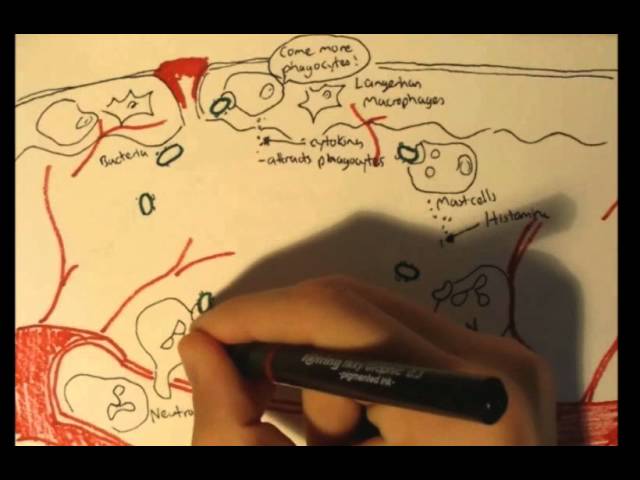
Immunology – Innate Immunity (Inflammatory Response)
Explore the Innate Immune System and Inflammatory Response in this immunology video, covering first-line defenses, key immune cells, and cytokine signaling. Learn how the body mounts a rapid response to infection—essential knowledge for exams and clinical foundations.
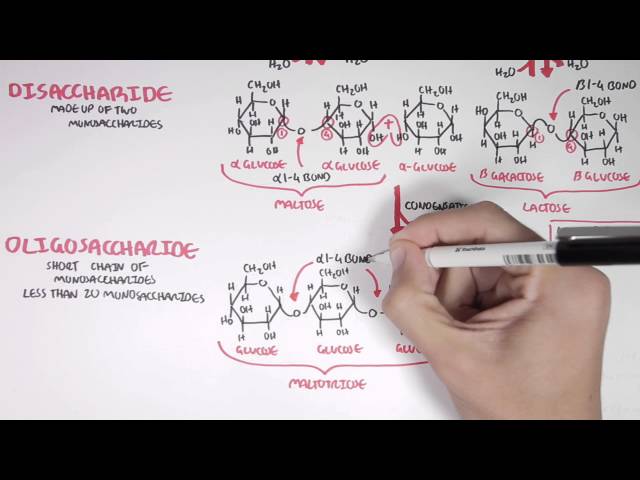
Biochemistry of Carbohydrates
Discover the biochemistry of carbohydrates, focusing on their structure, classification, and role as essential energy sources in the body. This video explains key concepts like monosaccharides, polysaccharides, and carbohydrate metabolism.

COVID-19 (SARS Coronavirus 2) – timeline, pathophysiology (ARDS), coronavirus life cycle, treatment
Explore COVID-19 caused by SARS-CoV-2, including its timeline of infection, viral life cycle, and mechanisms leading to complications like ARDS. This video also covers the pathophysiology of severe disease and highlights current treatment approaches and therapeutic targets.
Our mission
Medical science is complex. Understanding it should feel possible.
Armando Hasudungan turns difficult medical science into clear visual explanations and connected learning experiences—so learners can see the whole picture, remember what matters and find a clearer way forward.
See it clearly
Turn abstract processes and invisible relationships into something the learner can picture.
Connect the pieces
Build understanding around how concepts fit together—not a pile of isolated facts.
Make it useful
Help learners move from explanation to recall, revision and the next logical step.
What clarity feels like
When the topic stops being a blur.
Learners do not come back because the subject became easy. They come back because the explanation gave them a picture they could work with.
“Armando's teaching style gives me the foundational knowledge.
Jessica Payne-Burnett
Medical Student, Charles Sturt University
“The notes I make during his videos help me retain everything better.
Ayesha RaiStudent, Islamabad Medical and Dental College
“The drawings are amazing and super easy to remember.
Reem Mohamed Khair Abdalrazig
Student, Neelain University
Coming soon: the AH study platform
The explanation is only the start.
The free library helps you find a clear explanation. The AH platform is being built to help you connect the resources, follow a clearer path and check what actually stuck.
- Watch in a focused, ad-free study environment.
- Move between connected videos, notes, diagrams and questions.
- Know what belongs next instead of rebuilding the study path yourself.
- Test your understanding while the topic is still fresh.
New and worth a look
Keep building the picture.
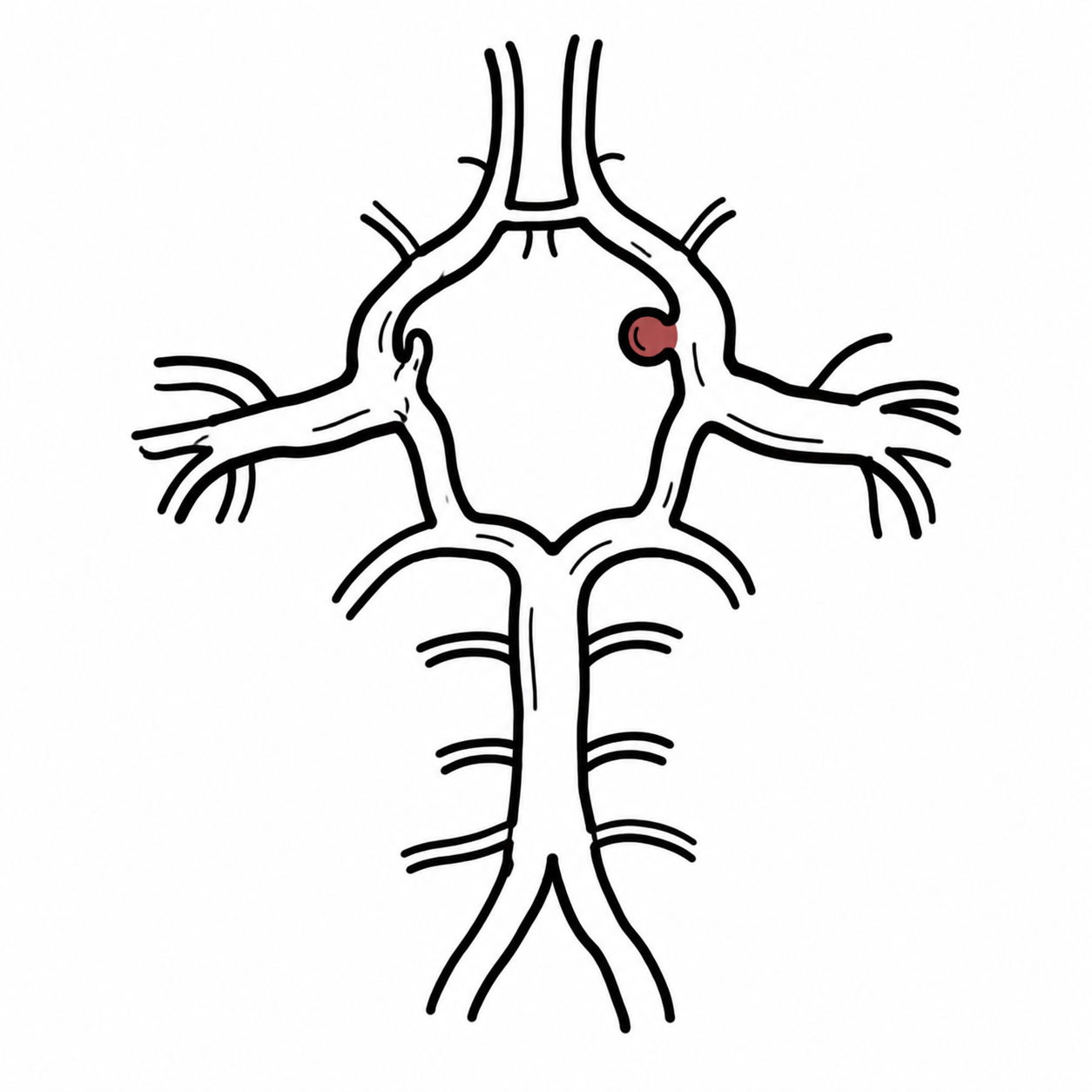
Cerebral Aneurysm
Overview Cerebral (Intracranial) aneurysm is a focal dilation of an intracranial artery due to weakness of the arterial wall. It occurs in roughly 1-5% of adults and can lead to permanent disability. The most common type is a saccular “berry” aneurysm. Most common location is anterior communicating artery. Cerebral aneurysms are typically asymptomatic until rupture,…
View this topic ↗About Visualising Medicine
Good education does not remove complexity. It makes complexity feel simple.
Visualising Medicine is the team behind Armando Hasudungan. We bring together medicine, illustration, writing and technology to make difficult ideas clearer—and build better ways for learners to use them.