

Visual explanationFree resource
Visual medical education by Armando Hasudungan
Medical science, drawn into focus.
Explore visual explanations that reveal how the facts, processes and clinical patterns fit together—then discover the coming AH study platform, built to guide what you study next and check what stuck.
Connected studyComing soon
Clear visual explanations used by medical and allied-health learners around the world.
Explore the free library
Start with the topic in front of you.
Browse by subject or jump straight into the explanation you need. No account required.
Irritable Bowel Syndrome (IBS)
Overview Complex chronic syndrome characterised by recurrent abdominal pain and bowel dysfunction, in the absence of a structural abnormality. It is not associated with an increase in mortality, however, it is associated with substantial morbidity and a significant decrease in an individual’s quality of life. IBS IBD IBS belongs to a group of disorders collectively known as Functional…
View topic ↗Ruptured Abdominal Aortic Aneurysm
Overview Abdominal Aortic Aneurysm, also known as AAA, is a permanent dilation of the abdominal aorta with a diameter of >1.5 times of the expected diameter. The adopted diameter that indicates AAA is 3cm or more. AAA is strongly associated with smoking and increasing age. Most of these aneurysms are fusiform and originate below the…
View topic ↗Addison's Disease
Overview Addison's disease is a disease characterised by adrenal insufficiency. Adrenal insufficiency results in a decrease of the adrenal gland hormones: mineralocorticoids, glucocorticoids and to an extent androgens. There are many causes of addison's disease. The most common cause in the developed world is autoimmune (approximately 70% cases). Signs and symptoms of adrenal sufficiency don't…
View topic ↗Osteomalacia / Rickets
Overview Osteomalacia (adults) and rickets (children) are disorders of impaired bone mineralisation leading to soft, poorly mineralised bone. It arises when there is insufficient calcium–phosphate supply to the mineralising matrix due to vitamin D deficiency, calcium deficiency, phosphate deficiency (often FGF23-mediated). Nutritional rickets still occurs worldwide, while hypophosphataemic forms (e.g., XLH, tumour-induced osteomalacia) are rarer…
View topic ↗Angina Pectoris
Overview Angina Pectoris refers to the pain caused by myocardial ischaemia. Myocardial Ischaemia is usually caused by stenosis within the vessel decreasing blood flow to the muscle, but it can be caused by tachycardia, anaemia, aortic stenosis, left ventricular hypertophy and many other disease. Angina "latin choking". Angina Pectoris: Pain caused by myocardial ischaemia (not myocardial…
View topic ↗Maternal infections
Overviews Maternal infections is a broad term for any infection that is acquired by a pregnant woman antepartum, intrapartum or postpartum. These infections may have detrimental impacts on the mother and the foetus/newborn. 1 Maternal infections covered in this page include TORCH infections as well as Group B Streptococcal infection and chorioamnionitis. TORCH infections are…
View topic ↗Myasthenia Gravis
Overview Myasthenia Gravis (MG) is a chronic autoimmune neuromuscular disorder where antibodies target acetylcholine receptors (AChR) or MuSK proteins at the post-synaptic membrane, impairing neuromuscular transmission and causing muscle weakness Myasthenia Gravis (MG) is a rare autoimmune disorder marked by fluctuating muscle weakness that worsens with activity and improves with rest, commonly affecting the ocular…
View topic ↗Full resource library
Browse all topics ↗Choose how you learn
One idea. More than one way to see it.
Use the format that helps the topic click, then switch formats when you need to reinforce it.
01 / WATCH02 / READ03 / SEE04 / CHECK
Videos
Hand-drawn explanations that build the big picture as the concept unfolds.
Notes
Clear written explanations for review, reference and filling in the details.
Diagrams
Visual snapshots that help you easily review topics.
Questions
Test whether the explanation stayed with you—not just whether it looked familiar.
Good places to begin
Explanations learners return to.
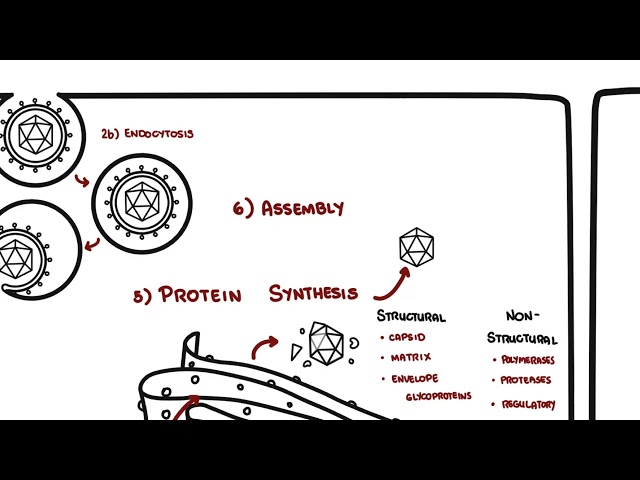
Viral Replication Enveloped vs Non-Enveloped Viruses
Enveloped vs non-enveloped viruses: learn how the lipid envelope changes viral entry, release, stability, tropism, and replication strategies. This video breaks down the seven stages of viral replication—attachment, entry, uncoating, gene expression, genome replication, assembly, and release—highlighting key differences between enveloped viruses (influenza, HIV, herpes, coronaviruses) and non-enveloped viruses (adenovirus, HPV, rotavirus). You’ll learn how…
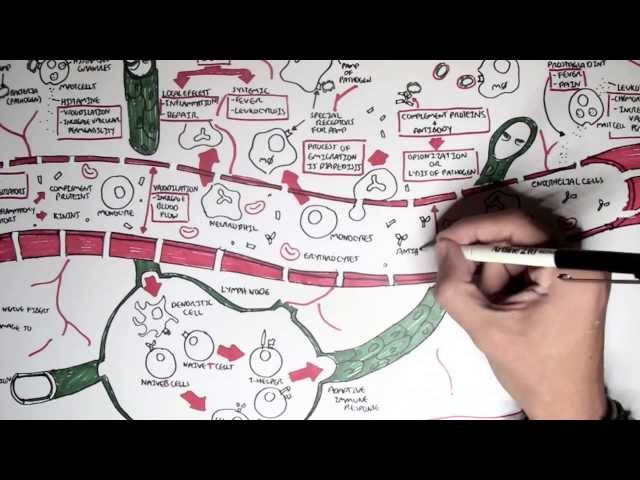
Part II – Inflammation
Delve deeper into inflammation by examining the chemical mediators that drive the inflammatory process, such as histamine, prostaglandins, and cytokines. This video explains how these molecules coordinate vascular changes, immune cell recruitment, and resolution of inflammation.
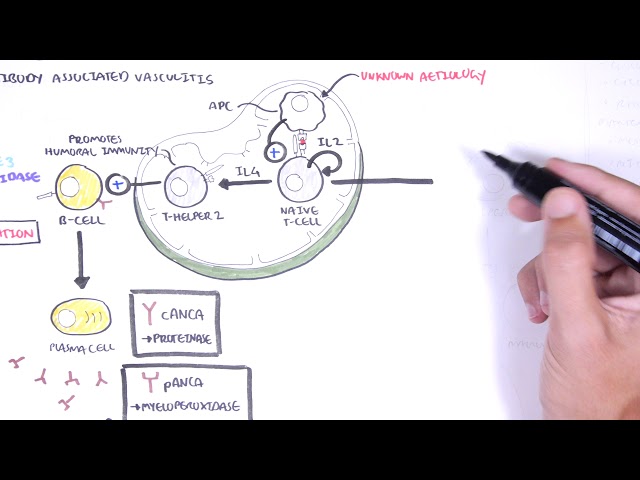
ANCA Associated Vasculitis (Anti-Neutrophil Cytoplasmic Antibody) – Causes, Pathophysiology, Types
Understand ANCA-associated vasculitis, a group of autoimmune diseases marked by inflammation of small blood vessels due to anti-neutrophil cytoplasmic antibodies. This video explains the underlying causes, immunopathology, and differentiates between major types such as GPA, MPA, and EGPA.
Our mission
Medical science is complex. Understanding it should feel possible.
Armando Hasudungan turns difficult medical science into clear visual explanations and connected learning experiences—so learners can see the whole picture, remember what matters and find a clearer way forward.
See it clearly
Turn abstract processes and invisible relationships into something the learner can picture.
Connect the pieces
Build understanding around how concepts fit together—not a pile of isolated facts.
Make it useful
Help learners move from explanation to recall, revision and the next logical step.
What clarity feels like
When the topic stops being a blur.
Learners do not come back because the subject became easy. They come back because the explanation gave them a picture they could work with.
“Armando's teaching style gives me the foundational knowledge.
Jessica Payne-Burnett
Medical Student, Charles Sturt University
“The notes I make during his videos help me retain everything better.
Ayesha RaiStudent, Islamabad Medical and Dental College
“The drawings are amazing and super easy to remember.
Reem Mohamed Khair Abdalrazig
Student, Neelain University
Coming soon: the AH study platform
The explanation is only the start.
The free library helps you find a clear explanation. The AH platform is being built to help you connect the resources, follow a clearer path and check what actually stuck.
- Watch in a focused, ad-free study environment.
- Move between connected videos, notes, diagrams and questions.
- Know what belongs next instead of rebuilding the study path yourself.
- Test your understanding while the topic is still fresh.
New and worth a look
Keep building the picture.
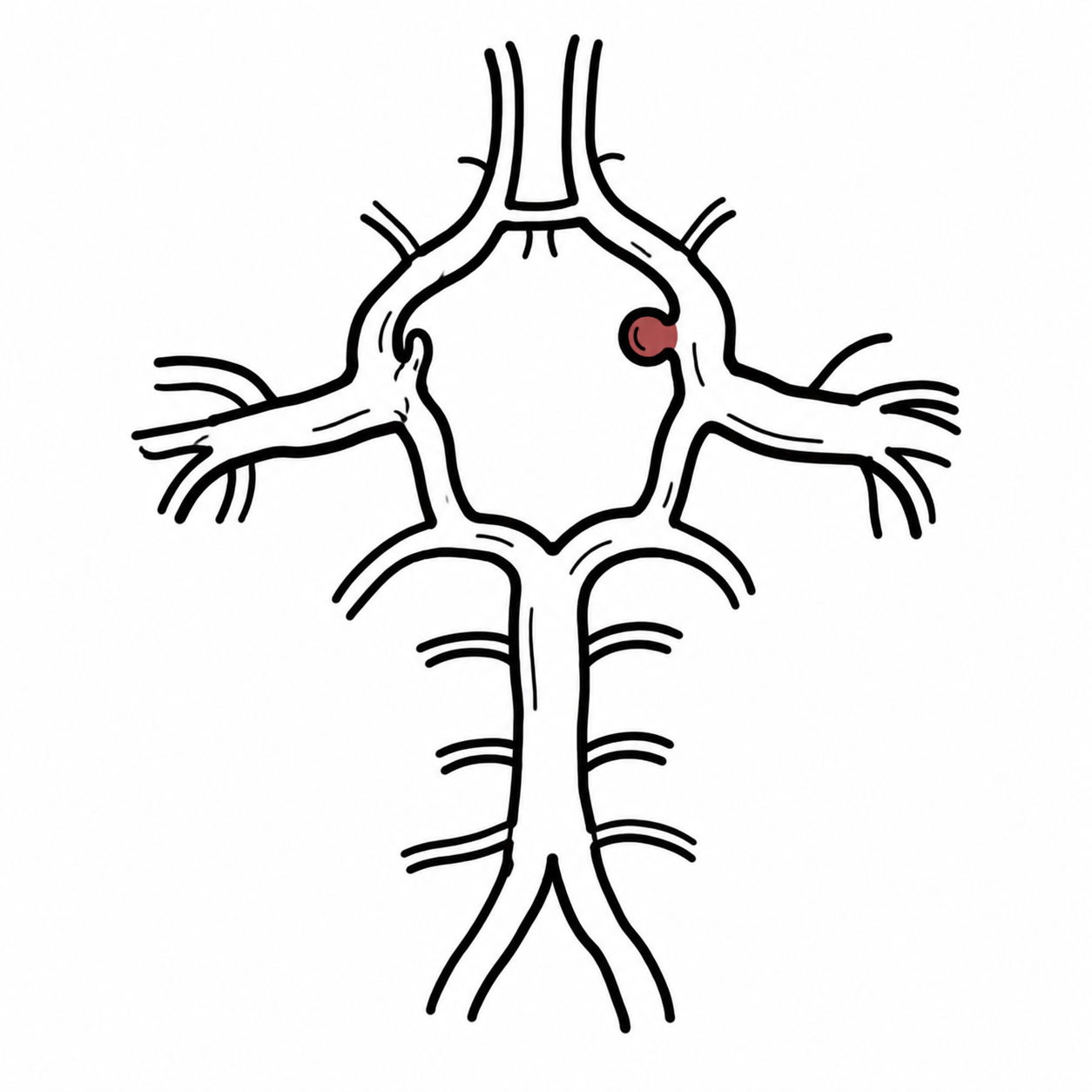
Cerebral Aneurysm
Overview Cerebral (Intracranial) aneurysm is a focal dilation of an intracranial artery due to weakness of the arterial wall. It occurs in roughly 1-5% of adults and can lead to permanent disability. The most common type is a saccular “berry” aneurysm. Most common location is anterior communicating artery. Cerebral aneurysms are typically asymptomatic until rupture,…
View this topic ↗About Visualising Medicine
Good education does not remove complexity. It makes complexity feel simple.
Visualising Medicine is the team behind Armando Hasudungan. We bring together medicine, illustration, writing and technology to make difficult ideas clearer—and build better ways for learners to use them.