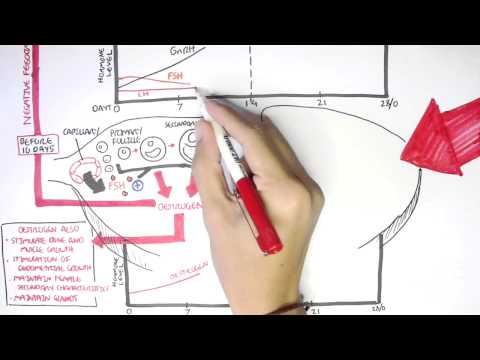
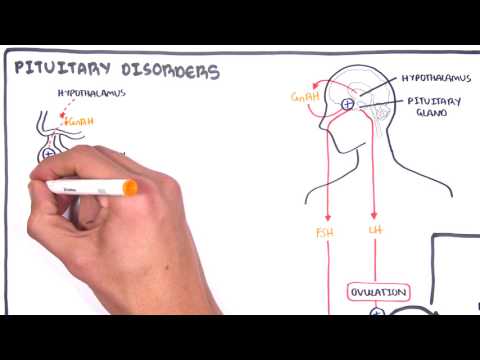
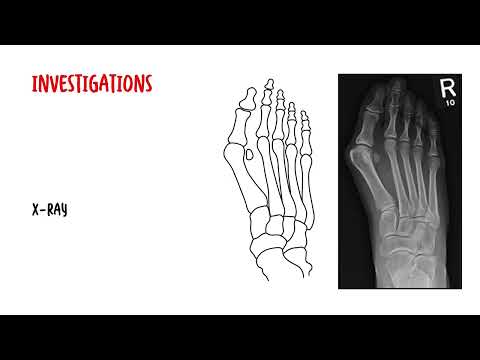
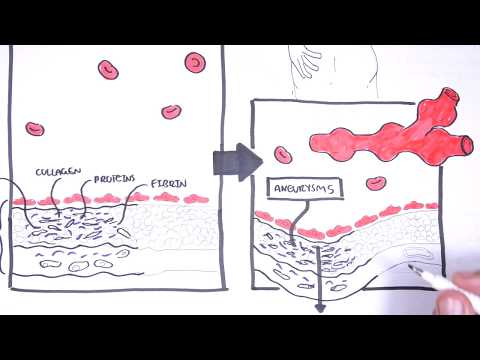
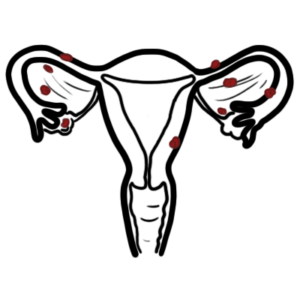
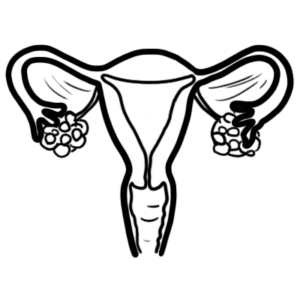
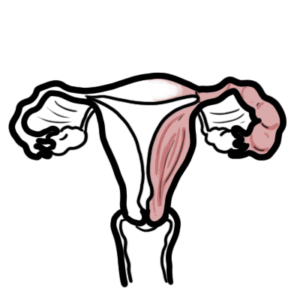
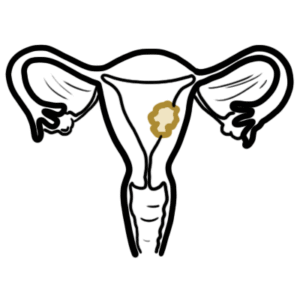
0:00 Being fertile or fertility is the ability to conceive or induce conception. 0:10 Infertility is the inability to conceive. 0:14 The proper definition is the inability to become pregnant after 12 months of 0:18 regular, 0:19 unprotected sexual intercourse. 0:21 There are two main types of infertility. 0:26 The failure of a couple to have any children at all is termed primary 0:32 infertility. 0:33 Couples who have already conceived have produced a first child but have great 0:38 difficulty in 0:39 adding to their family and are said to have secondary infertility. 0:44 Some doctors prefer the term "subfertility" to describe any form of reduced 0:47 fertility 0:48 with prolonged time. 0:50 It is important to remember that infertility can arise from female factors, 0:55 male factors 0:56 or a combination of both. 0:58 There are many factors affecting fertility for both male and female. 1:03 Fertilization is the term used to describe the successful fusion of a female 1:08 egg and 1:09 male sperm to form the new organism that is the baby. 1:14 Female factors affecting fertility include hormones, oogenesis, implantation 1:20 and potential 1:21 for pregnancy itself. 1:25 Male factors affecting fertility include hormones, spermatogenesis, maintaining 1:30 an 1:30 erection and ejaculation. 1:33 Steps in the work of an infertile couple include obtaining a thorough medical 1:38 and family history, 1:40 occupational and lifestyle history, physical examination, laboratory testing 1:45 and evaluation 1:46 of genetic factors that may affect one or more of these factors. 1:51 But what is the chance of conceiving an abnormal fertile couple? 1:56 Well this graph shows the relationship between the cumulative pregnancy rate 2:00 and the length 2:01 of time in months of couples trying to conceive. 2:05 The chance of falling pregnant increases as the months go by before it plateaus 2:10 after 2:11 about six months. 2:13 If we draw a line at one month and go across, we see there is a cumulative 2:18 pregnancy rate 2:20 of about 20%. 2:22 Therefore a normal fertile couple has approximately a 20% chance of achieving 2:27 pregnancy in any 2:28 one month of unprotected intercourse. 2:33 And this greatly increases to about 90% of successful conception and about 12 2:40 months 2:40 of unprotected sex. 2:43 Therefore a fertile couple can expect to achieve a pregnancy sometime during 2:48 first year of 2:49 trying. 2:50 But what are some potential causes then of subfertility or infertility? 2:55 Well it is thought that male factors accounts for 30% of causes. 3:01 Female factors about 30% are mix of both male and female, 30% and the remaining 3:08 10% is 3:08 idiopathic or unknown origin. 3:12 Let us now recap the female physiology briefly and then focus on the potential 3:17 causes of 3:18 infertility in women. 3:20 Important organs that play a big role in female fertility include the brain and 3:24 two 3:24 important parts of the brain, the hypothalamus and the pituitary gland. 3:30 There is also the female reproductive tract made up of the vagina, cervix, 3:35 uterus, phlopian 3:36 tube also known as the uterine tube and the ovary. 3:40 We have made, we have made the right ovary slightly larger in this video. 3:46 A region of the brain called hypothalamus produces a hormone called gonadotrop 3:51 in releasing 3:52 hormone or GNRH for short which stimulates the pituitary gland in the brain to 3:57 produce 3:58 two important hormones, follicle stimulating hormone or FSH and lutinizing 4:03 hormone or LH. 4:07 Follicle stimulating hormone targets the ovaries and essentially stimulates 4:11 some follicles within 4:13 the ovary to develop, in females of reproductive age there are many many many 4:18 follicles ready 4:19 to develop and each cycle only some of these develop. 4:23 As the follicles develops they begin producing estrogen, estrogen is an 4:27 important hormone 4:29 for the menstrual cycle, in high amounts estrogen actually will help stimulate 4:34 lutinizing hormone 4:35 production by the pituitary gland, lutinizing hormone targets the most 4:39 developed follicle 4:41 in the ovary causing ovulation. 4:44 When the follicle ovulates it releases the female egg into the fallopian tube. 4:52 The female egg is now ready to be fertilized by the male sperm. 4:57 The post ovulatory follicle then slowly degenerates and becomes the corpus lute 5:04 um. 5:04 As the corpus luteum degenerates it releases progesterone, another important 5:09 hormone that 5:10 prepares the body for potential pregnancy, progesterone is thus known as the 5:14 pregnancy 5:15 hormone. 5:16 If fertilization of the female egg does not take place, the whole cycle 5:21 continues again 5:22 after the female menstruates. 5:25 The female menstrual cycle is therefore divided into two phases, the follicular 5:29 phase where 5:30 the follicle matures and the luteal phase where the corpus luteum degenerates. 5:37 Female factors that affect any part of these phases or affecting any organ 5:42 involved in 5:43 these phases can cause infertility. 5:46 The causes of infertility can be broken down into five main groups, the first 5:50 being pituitary 5:52 disorders. 5:53 In the first example, the hypothalamus is unable to produce gonadotropin-re 5:57 leasing hormone properly. 5:59 There is therefore not enough gonadotropin-releasing hormone to stimulate the 6:03 production of follicle 6:04 stimulating hormone and luteinizing hormone from the pituitary gland. 6:11 With no follicle stimulating hormone, this means the follicles within the ov 6:15 aries don't 6:16 develop. 6:17 With no luteinizing hormone, this means no ovulation will take place. 6:22 This is an example of hypogonatropic hypogonidism, which is also classified as 6:27 an ovulation disorder 6:29 type 1. 6:30 A common cause here is hypothalamic pituitary failure. 6:36 Another example of a pituitary disorder is where there is overactivity of the 6:40 hypothalamic 6:41 pituitary axis. 6:45 Here the hypothalamus produces gonadotropin-releasing hormone, which stimulates 6:50 follicle stimulating 6:51 hormone and later luteinizing hormone release from the pituitary gland. 6:57 But the problem is the ovary does not contain many follicles, and because of 7:01 this, there 7:02 is no proper development of follicles, not much estrogen being produced, and so 7:08 no ovulation 7:09 will take place. 7:11 This is called hypergonatotropic hypogonidism, which is also classified as an 7:16 ovulation disorder 7:18 type 3. 7:19 An example in this case is ovarian failure. 7:24 The last type of pituitary disorder is due to another hormone called prolactin. 7:30 The pituitary gland also produces prolactin, an important hormone for 7:35 breastfeeding. 7:36 However, due to a variety of reasons, prolactin production may increase, and 7:41 this is what 7:42 it's called hyperprolectinemia. 7:45 When there is high prolactin in the blood, it has a negative feedback on the 7:49 hypothalamus, 7:50 inhibiting the production of gonadotropin-releasing hormone. 7:55 With low gonadotropin-releasing hormone, this means follicle stimulating 7:59 hormone and luteinizing 8:00 hormones are not produced properly, causing fertility problems. 8:05 The actual causes of hyperprolectinemia include pituitary tumors producing more 8:10 prolactin. 8:11 Normally, a hormone produced by the hypothalamus called prolactin inhibitory 8:17 factor, or PIF, 8:18 inhibits prolactin production and secretion. 8:21 But, if anything interferes with PIF, this means more prolactin can be produced 8:28 . 8:28 Certain medications can prevent prolactin inhibitory factor production. 8:33 Tumors can also block prolactin inhibitory factor function, thus leading to 8:38 hyperprolectinemia. 8:40 Finally, hypothyroidism can also stimulate prolactin production, leading to 8:45 hyperprolectinemia. 8:47 The second group of causes of infertility include ovarian disorders. 8:53 An example here is polycystic ovarian syndrome, or PCOS for short. 9:00 Polycystic ovarian syndrome is thought to be the most common cause of ovarian 9:03 dysfunction 9:04 in women of reproductive age. 9:06 Polycystic ovaries are enlarged to smooth but thicker than normal outer cover, 9:10 with multiple 9:11 cysts covering the ovary's surface. 9:13 Polycystic ovarian syndrome is also classified as an ovulation disorder, Type 2 9:18 . 9:19 One of the main features of polycystic ovarian syndrome is actually hyperand 9:23 rogenism. 9:24 Any cause of hyperandrogenism, where there is excess androgens in the blood, 9:29 can actually 9:30 influence female menstruation and, subsequently, ovulation. 9:35 Remember, the female menstrual cycle can be divided into the follicular phase 9:39 and the luteal 9:40 phase. 9:42 Premature ovarian failure is defined as a cessation of menses prior to the age 9:47 of 40, as a result 9:49 of the depletion of primordial oocytes. 9:52 Premature ovarian failure may occur due to genetic causes, autoimmune disorders 9:56 , or destruction 9:57 of ovaries by radiation therapy, chemotherapy, surgery, toxins, or unknown 10:03 factors. 10:03 Abnormal phased defects are defined as abnormalities of the corpus luteum 10:08 function, accompanied 10:10 by insufficient progesterone production. 10:14 Another proposed etiology for the condition is the inadequate effect of prog 10:19 esterone on 10:19 the endometrium, despite normal production. 10:23 The next group of the causes of infertility are the ovulation disorders, which 10:28 we have 10:28 already actually discussed. 10:30 Type 1 is the hypogonatotropic hypogonatism. 10:35 Type 2 of elation disorder is polycystic ovarian syndrome, or PCOS for short. 10:41 Type 3 of elation disorder is hypergonatotropic hypogonatism. 10:47 The fourth group of causes for infertility in women include pelvic, tubal, or 10:52 uterine 10:53 disorders. 10:56 The causes of infertility include physical aberrations of the female 11:00 reproductive system, 11:02 primarily as a result of disease or congenital defects. 11:06 Occasionally, the consequent damage to the cervix, uterus, fallopian tubes, and 11:10 ovaries 11:11 is irreparable, making conception and pregnancy impossible. 11:16 Ectopic pregnancy occurs when the ovum is fertilized and implants outside the 11:21 uterus. 11:21 Ectopic pregnancy has steadily increased in the last two decades as a result of 11:26 the prevalence 11:27 of sexually transmitted diseases and, more rarely, the use of intrauterine 11:32 devices for 11:33 contraception. 11:35 Endometriosis is defined as the presence of small implants of endometrial 11:39 tissue and stroma 11:40 abnormally embedded in tissue outside the endometrial cavity. 11:44 The misplaced endometrial tissue may implant anywhere within the abdominal 11:48 cavity and remain 11:50 responsive to the hormones. 11:53 Endometriosis thus irritates surrounding tissue when menstruation occurs and 11:56 may produce adhesions, 11:58 scar tissue around the pelvis. 12:00 Tubal factors for infertility is the result of damage or blockage of the fall 12:05 opian tubes 12:06 and is the primary factor in up to 25% of infertile women. 12:11 Tubal factors causing infertility can be caused by endometriosis, pelvic 12:16 inflammatory 12:17 disease or sexually transmitted diseases. 12:21 Another potential cause of infertility here is an abnormal cervical mucus. 12:26 During a normal menstrual cycle, the cervical mucus secreted changes and is 12:31 primarily driven 12:33 by estrogens. 12:34 With abnormality in cervical mucus production, it can cause problems in sperm 12:41 penetrating 12:42 through the cervix. 12:44 Eutrine abnormalities account for about 10% of infertility, with two presenting 12:49 congenital 12:50 anomalies. 12:52 Anatomical abnormalities may include eutrine leiomyomas, also known as eutrine 12:56 fibroids, 12:57 and intra-eutrine adhesions, or ashaman syndrome. 13:01 Malarian anomalies can lead to eutrine abnormalities such as septate uterus 13:06 amongst many others. 13:07 Finally, unexplained infertility is defined as the lack of an explainable cause 13:14 for the 13:14 inability to conceive and occurs in up to 10% of infertile couples. 13:21 This is known as idiopathic infertility. 13:24 It's important not to forget about the male factors which also play a role in 13:30 infertility 13:31 but is not discussed in this video. 13:34 This video was created with the support of Gareon Richter.