

Glomerulonephritis

Overview
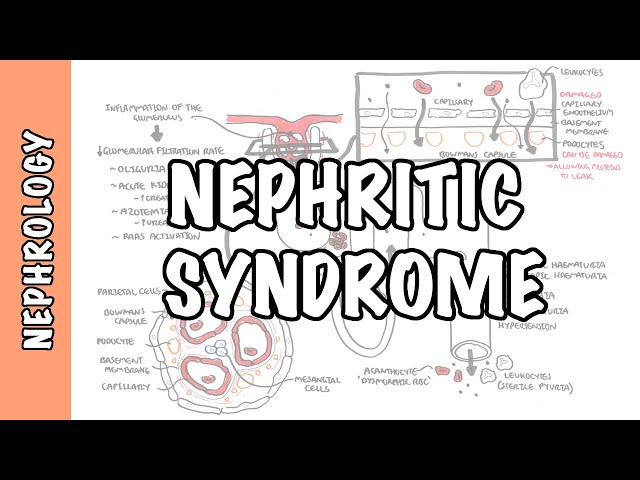
Glomerulonephritis is inflammation of the glomerulus. Glomerulonephritis is classified by clinical syndrome/presentation (e.g. nephritic or nephrotic syndrome), histological appearance , or by aetiology. We will divide glomerulonephritis broadly into two broad types: Nephritic glomerulonephritis and nephrotic glormerulonephritis.
Classification
Two Types of Glomerular disease:
| DIFFERENCE BETWEEN NEPHROTIC AND NEPHRITIS SYNDROME | ||
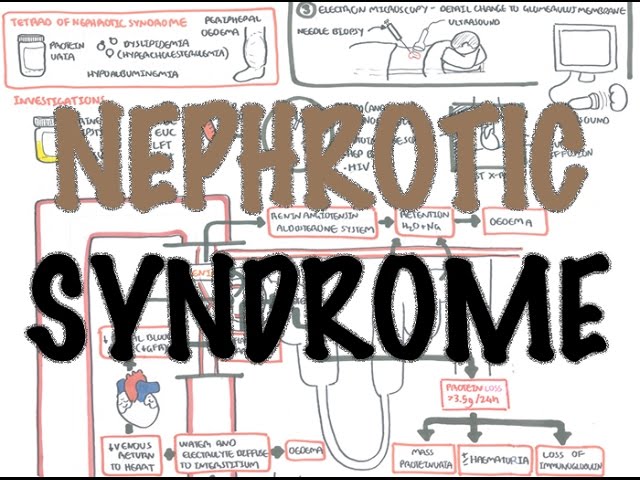
| Nephrotic Syndrome | Nephritic Syndrome | |
| Onset | Slow | Acute |
| Swelling | ++++ | ++ |
| Blood Pressure | Normal | Increased |
| Proteinuria | ++++ | ++ |
| Haematuria | +/- | +++ |
| Red cell casts | Not present | Present |
| GFR | Normal | Normal/low |
| Serum albumin | Low | Normal/low |
| Serum lipids | High | Normal |
| Most commonc cause | Diabetic Nephropathy | IgA nephropathy |
Approach
- History
- Examination
- Investigations
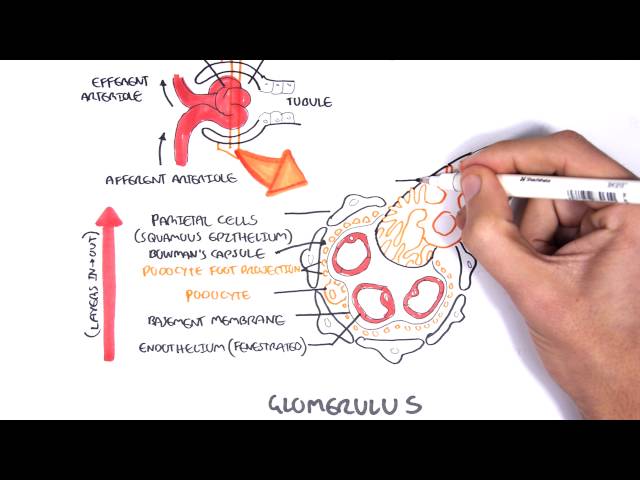
Renal biopsy looks at the histology of glomerular disease
- Light microscopy – Useful for morphology, chronicity, and diagnosis.
- Immunofluorescence – Usually by immunofluorescence but also immunoperoxidase staining. Localizes immune reactants
- Electron lightmicroscopy – Examining cell and basement membrane structure and for characterizing glomerular deposits.














Members only discussions coming soon…