

Visual explanationFree resource
Visual medical education by Armando Hasudungan
Medical science, drawn into focus.
Explore visual explanations that reveal how the facts, processes and clinical patterns fit together—then discover the coming AH study platform, built to guide what you study next and check what stuck.
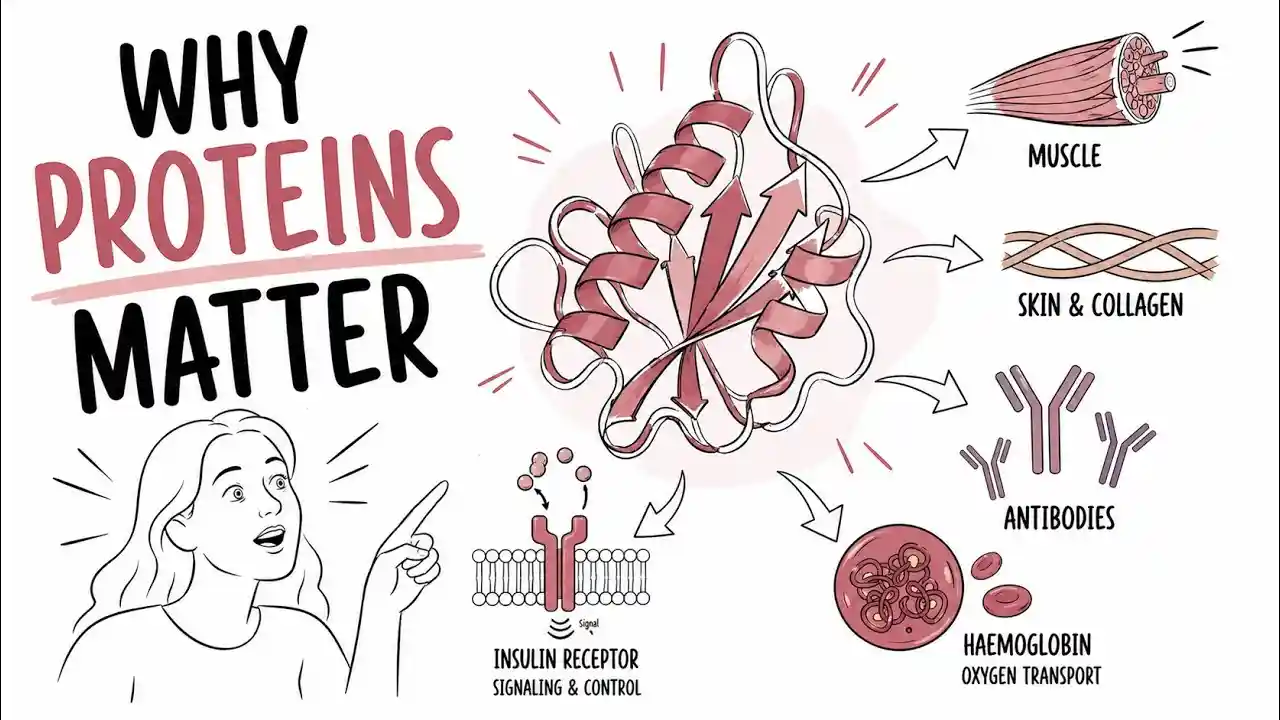
Connected studyComing soon
Clear visual explanations used by medical and allied-health learners around the world.
Explore the free library
Start with the topic in front of you.
Browse by subject or jump straight into the explanation you need. No account required.
Junctional Arrythmias
Overview Junctional rhythms occur when the AV node takes over as the primary pacemaker. Junctional rhythm usually is associated with a benign course. Mechanism SA node has failed AV node just wants to be faster and takes over Enhanced automaticity in AV nodal cells AVNRT – Seperate condition where a re-entry loop stimulates the AV node…
View topic ↗Chagas Disease
Authors Megan Miner Armando Faigl Overview Chagas disease is caused by the parasitic protozoan Trypanosoma cruzi (T. cruzi) and is potentially life-threatening. These parasites often live within triatomine bugs. Following a bite to the skin, these bugs, also known as “kissing bugs”, deposit fecal matter near the site of the bite. Their bite, unfortunately, causes…
View topic ↗Paediatric Respiratory Distress Syndrome
Overview Respiratory distress syndrome (RDS) also known as hyaline membrane disease is a pulmonary disease resulting from immature lung development and surfactant deficiency. Most frequently seen in preterm infants, the clinical presentation is characterized by signs of respiratory distress including nasal flaring, tachypnea, and grunting (an expiratory sound that is heard as the infant exhales…
View topic ↗Hyperthyroidism (Thyrotoxicosis)
Overview The most common cause of hyperthyroidism are Graves disease, multinodular goitre, an autonomously functioning thyroid nodule (adenoma) and subacute thyroiditis. Graves Disease is more common in women. Multinodular goitre is more common in the elderly. Graves disease typically manifests in middle aged women. Thyroid diseases are more common in women. Hyperthyroidism: denote conditions in which…
View topic ↗Acute Lymphoblastic Leukaemia
Overview Acute Lymphoblastic Leukaemia (ALL) is a malignancy of lymphoid cells. The two main ALL is T-cells ALL and B-cells ALL. In ALL there is uncontrolled proliferation of immature lymphoblasts in the bone marrow leading to overcrowding affecting other cell lineage. It is the commonest cancer in childhood, rare in adults and has a strong associated with…
View topic ↗Leukocyte Adhesion Deficiency
Overview Leukocyte adhesion deficiency (LAD) is a rare primary immunodeficiency characterised by recurrent bacterial and fungal infections, impaired wound healing, and absence of pus formation due to defective leukocyte adhesion and migration. It results from genetic defects in leukocyte integrins or signalling pathways, preventing neutrophil extravasation from blood vessels into tissues. LAD has an estimated…
View topic ↗Hypercholesterolaemia
Overview Higher levels of cholesterol associated with worse CV outcomes. Three main types that are measured: VLDL, LDL and HDL. High LDL is associated with a significant increase in cardiovascular problems. Hypercholesterolaemia can also run in families. Lifestyle modification aim to reduce cardiovascular risk. Pharmacological agents are lipid lowering drugs, statins being first-line. Lipid Physiology…
View topic ↗Full resource library
Browse all topics ↗Choose how you learn
One idea. More than one way to see it.
Use the format that helps the topic click, then switch formats when you need to reinforce it.
01 / WATCH02 / READ03 / SEE04 / CHECK
Videos
Hand-drawn explanations that build the big picture as the concept unfolds.
Notes
Clear written explanations for review, reference and filling in the details.
Diagrams
Visual snapshots that help you easily review topics.
Questions
Test whether the explanation stayed with you—not just whether it looked familiar.
Good places to begin
Explanations learners return to.
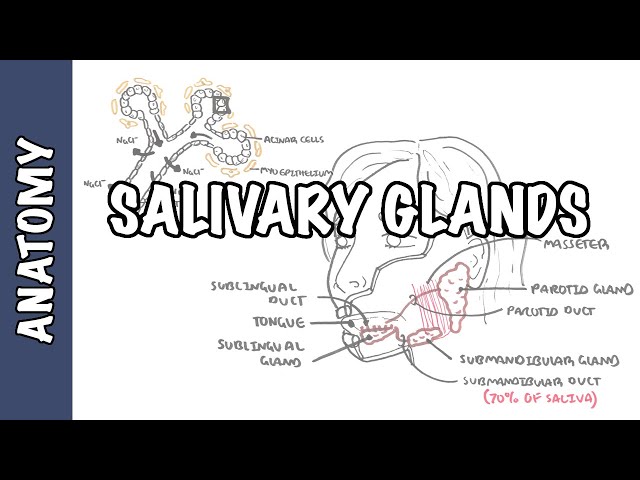
Salivary glands – Anatomy and Physiology
Learn the anatomy and physiology of the major salivary glands, including the parotid, submandibular, and sublingual glands. This video covers their structure, secretion pathways, and role in digestion and oral health.
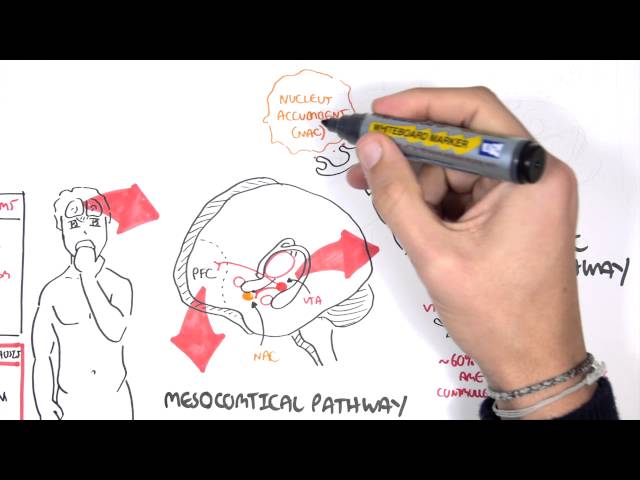
Brief Introduction to Psychosis
This video offers a concise overview of psychosis, including its core symptoms such as hallucinations, delusions, and disorganized thinking. Understand the common causes, clinical features, and importance of early intervention in managing psychotic disorders.
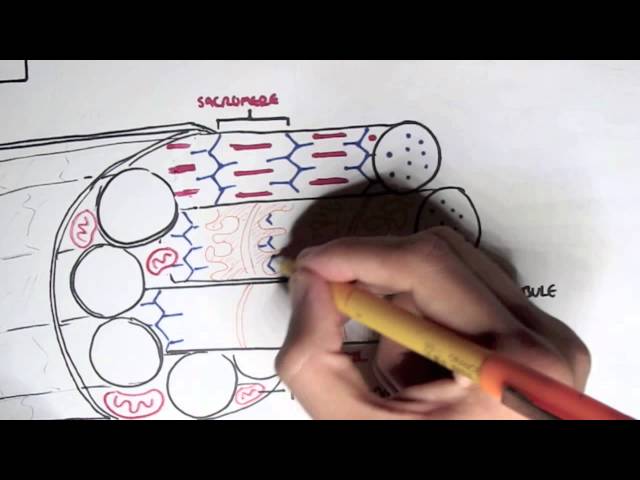
Myology – Skeletal Muscle Contraction
Explore the process of skeletal muscle contraction, from action potential initiation to cross-bridge cycling between actin and myosin. This educational video covers the role of calcium, troponin-tropomyosin complex, and ATP—essential for mastering muscle physiology and preparing for medical exams.
Our mission
Medical science is complex. Understanding it should feel possible.
Armando Hasudungan turns difficult medical science into clear visual explanations and connected learning experiences—so learners can see the whole picture, remember what matters and find a clearer way forward.
See it clearly
Turn abstract processes and invisible relationships into something the learner can picture.
Connect the pieces
Build understanding around how concepts fit together—not a pile of isolated facts.
Make it useful
Help learners move from explanation to recall, revision and the next logical step.
What clarity feels like
When the topic stops being a blur.
Learners do not come back because the subject became easy. They come back because the explanation gave them a picture they could work with.
“Armando's teaching style gives me the foundational knowledge.
Jessica Payne-Burnett
Medical Student, Charles Sturt University
“The notes I make during his videos help me retain everything better.
Ayesha RaiStudent, Islamabad Medical and Dental College
“The drawings are amazing and super easy to remember.
Reem Mohamed Khair Abdalrazig
Student, Neelain University
Coming soon: the AH study platform
The explanation is only the start.
The free library helps you find a clear explanation. The AH platform is being built to help you connect the resources, follow a clearer path and check what actually stuck.
- Watch in a focused, ad-free study environment.
- Move between connected videos, notes, diagrams and questions.
- Know what belongs next instead of rebuilding the study path yourself.
- Test your understanding while the topic is still fresh.
New and worth a look
Keep building the picture.
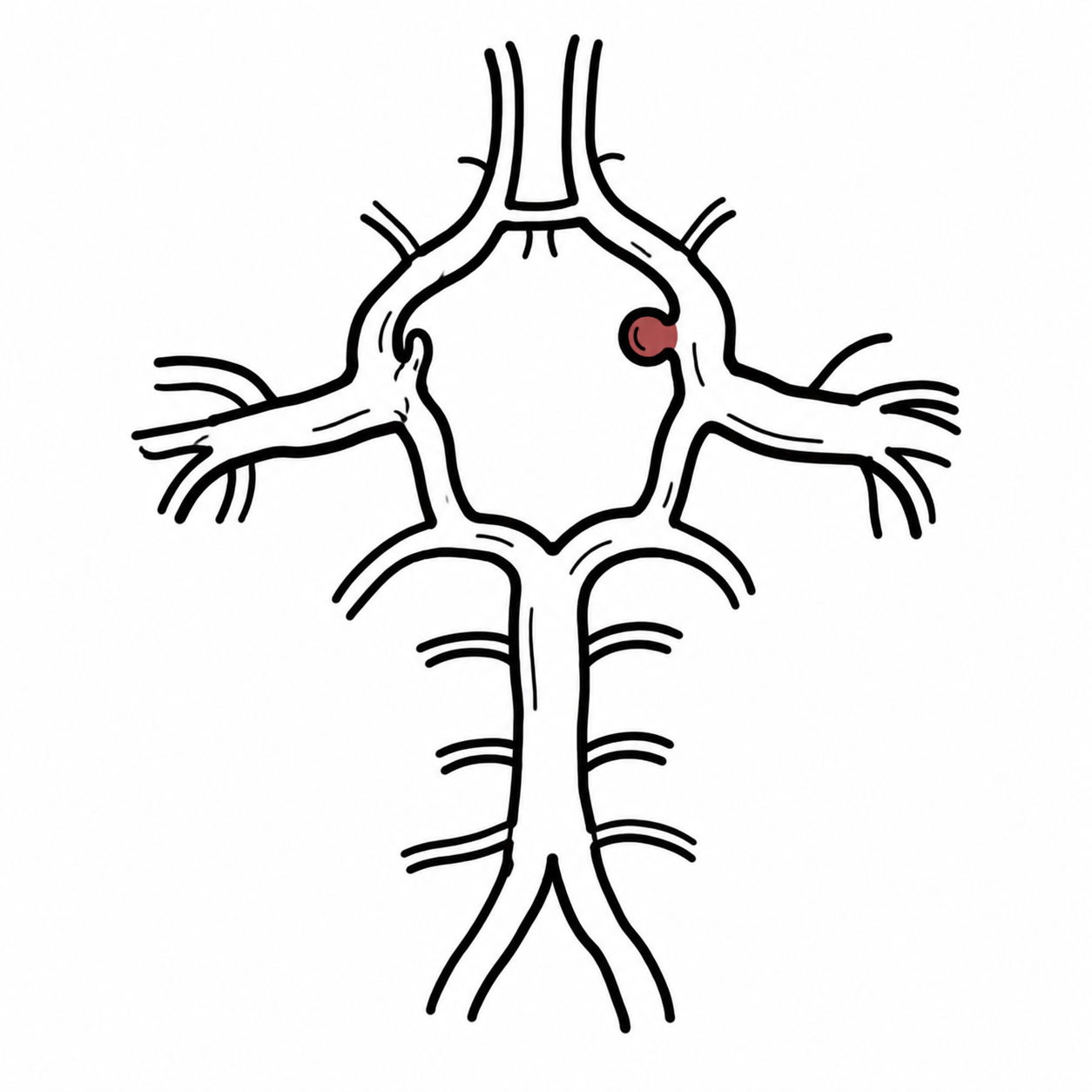
Cerebral Aneurysm
Overview Cerebral (Intracranial) aneurysm is a focal dilation of an intracranial artery due to weakness of the arterial wall. It occurs in roughly 1-5% of adults and can lead to permanent disability. The most common type is a saccular “berry” aneurysm. Most common location is anterior communicating artery. Cerebral aneurysms are typically asymptomatic until rupture,…
View this topic ↗About Visualising Medicine
Good education does not remove complexity. It makes complexity feel simple.
Visualising Medicine is the team behind Armando Hasudungan. We bring together medicine, illustration, writing and technology to make difficult ideas clearer—and build better ways for learners to use them.